Enhance your child's math skills with our engaging Math Skills Improvement Worksheets designed specifically for ages 6-7. These worksheets offer a fun and interactive way for young learners to develop essential math concepts, including addition, subtraction, counting, and number recognition. With a variety of exercises that cater to different learning styles, your child will explore math through games and creative methods. These resources not only improve math proficiency but also build confidence. Easy to print and perfect for home or classroom use, our worksheets are an excellent way for children to build a strong foundation in math. Explore our collection today!

Check out this FREE "Math skills improvement" Trial Lesson for age 6-7!

What’s the Rule - Part 2

Favorites
With answer key
Interactive
  • 6-7
  • Math skills improvement
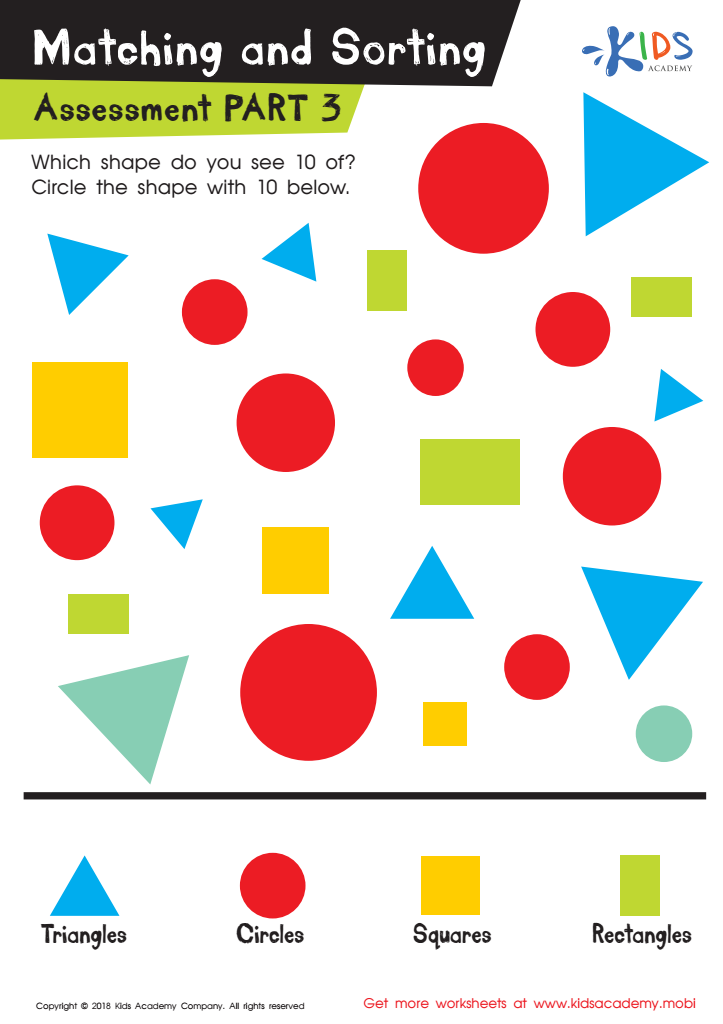
Matching and Sorting  for Kindergarten: Assessment 3 Worksheet
Matching and Sorting for Kindergarten: Assessment 3 Worksheet

Assess your child's basic geometry skills and properties with a colorful worksheet! Utilize visual discrimination and number sense to identify groups of ten and sort objects by bold colors. Challenge them to differentiate shapes and sizes.
Matching and Sorting for Kindergarten: Assessment 3 Worksheet
Worksheet
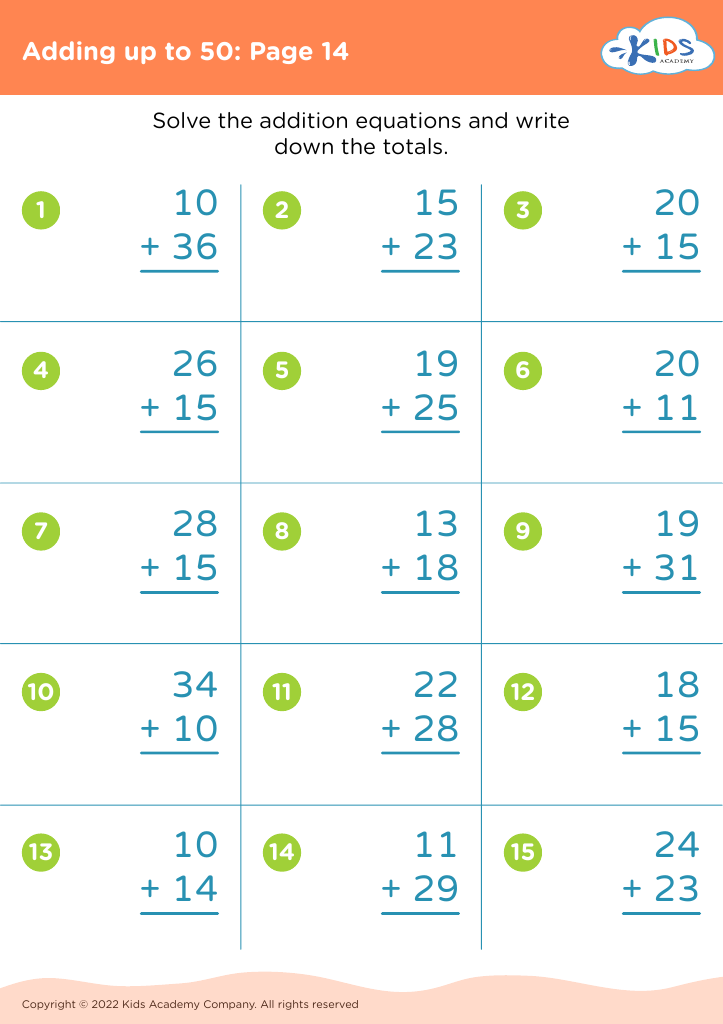
Adding up to 50: Page 14

Adding up to 50: Page 14

Adding up to 50: Page 14
Worksheet
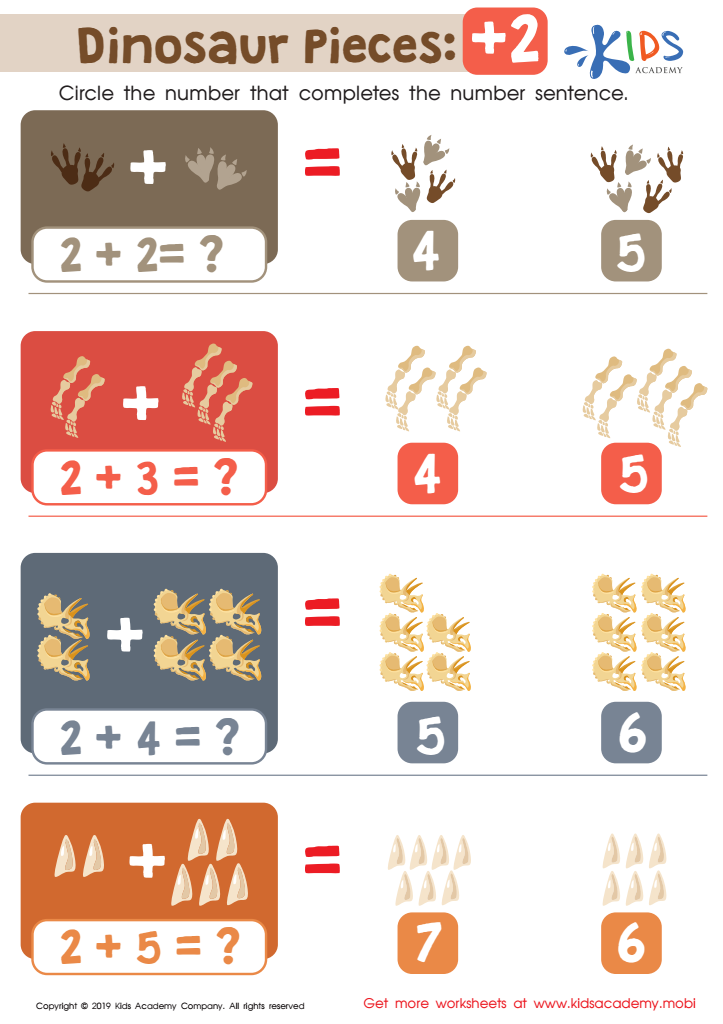
Dinosaur Pieces: +2 Worksheet

Dinosaur Pieces: +2 Worksheet

Kids love dinosaurs! See if your kids can solve these three equations featuring the mysterious creatures. Download the PDF and have them circle the number that completes each equation. Dinosaurs are extinct, not seen for thousands of years, but they can still help kids work on their math skills!
Dinosaur Pieces: +2 Worksheet
Worksheet
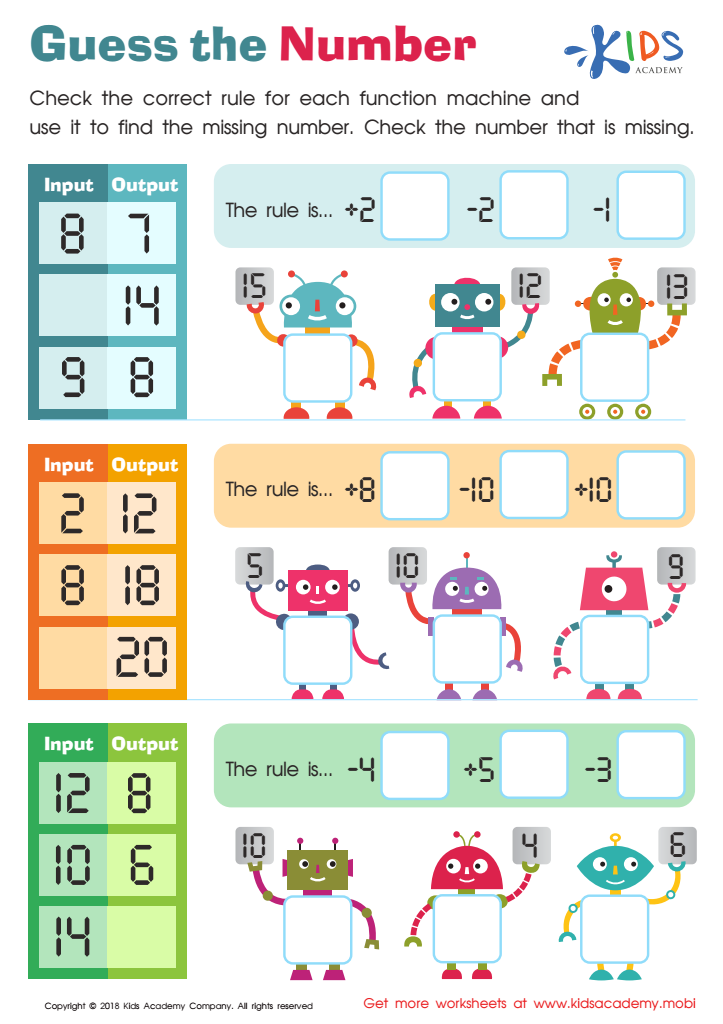
Guess the Number Worksheet

Guess the Number Worksheet

Kids need a solid number sense to succeed in math. This fun, robot-illustrated worksheet will help them identify patterns between numbers. They will examine the function machine, find the rule, and use it to solve for the missing number. It's a great way to learn!
Guess the Number Worksheet
Worksheet
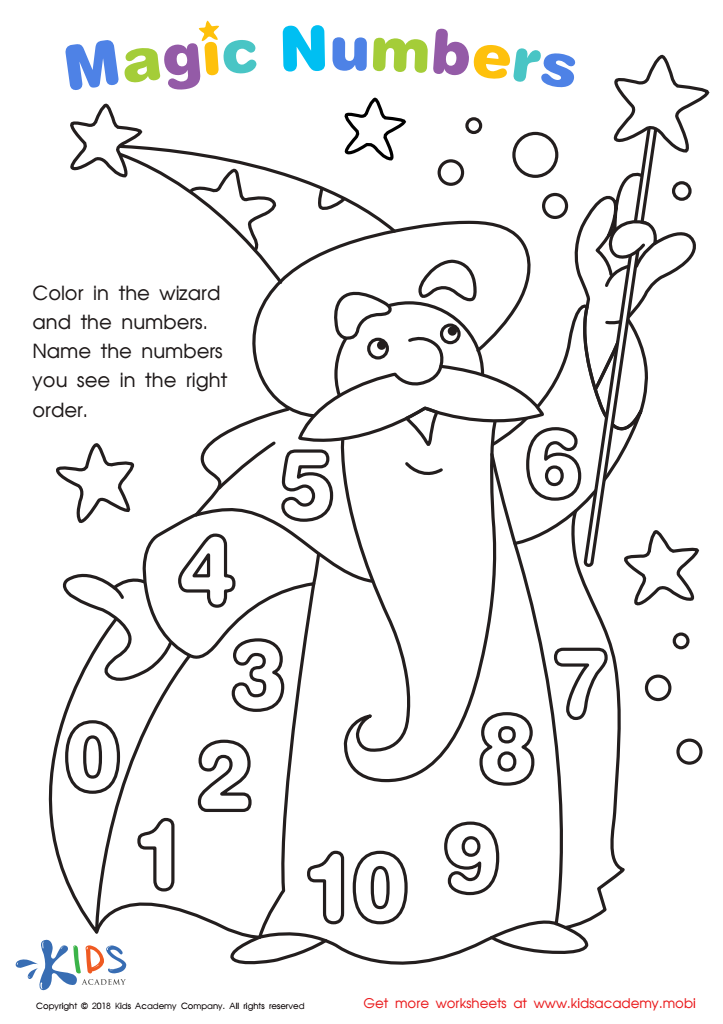
Magic Numbers Worksheet

Magic Numbers Worksheet

Does your child have an interest in magic? Here's something they'll love - a coloring sheet featuring a wizard! Ask them to name the numbers from smallest to highest, then let them pick colors to color in the wizard and the numbers. It's sure to excite them!
Download (PDF)
Assign to My Students
Magic Numbers Worksheet
Worksheet
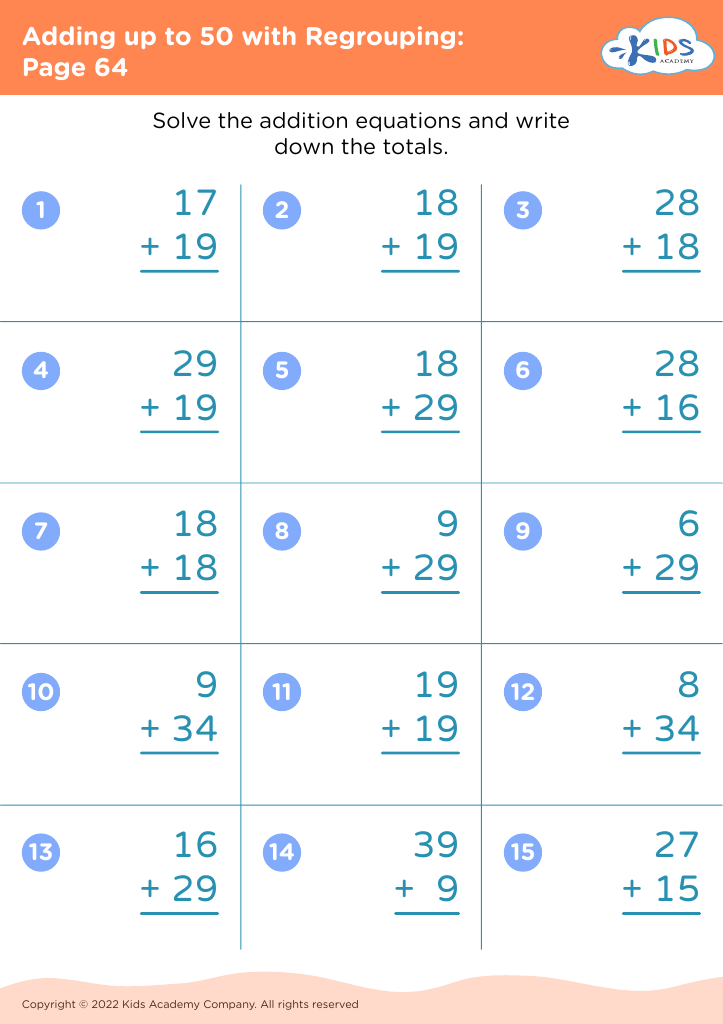
Adding up to 50 with Regrouping: Page 64
Worksheet
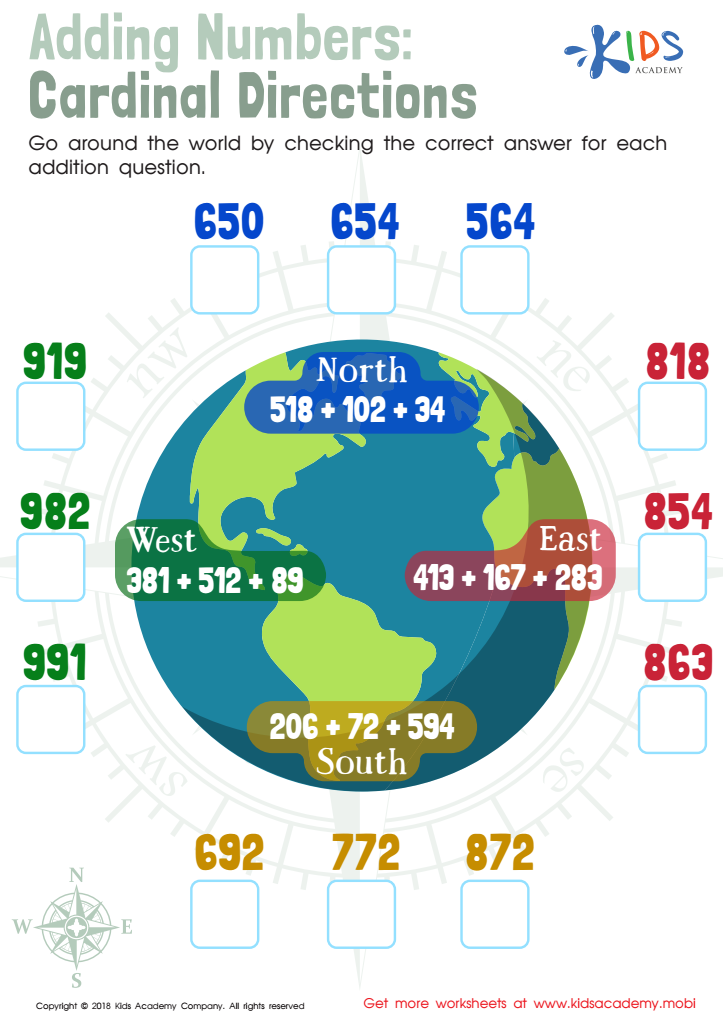
Adding Numbers: Cardinal Directions Worksheet

Adding Numbers: Cardinal Directions Worksheet

Are your students familiar with cardinal points? Teach them there are four: North, South, East, West. Used to navigate and mark places, use this worksheet to have your kids go round the world by checking the correct answer for each addition question in the pdf.
Adding Numbers: Cardinal Directions Worksheet
Worksheet
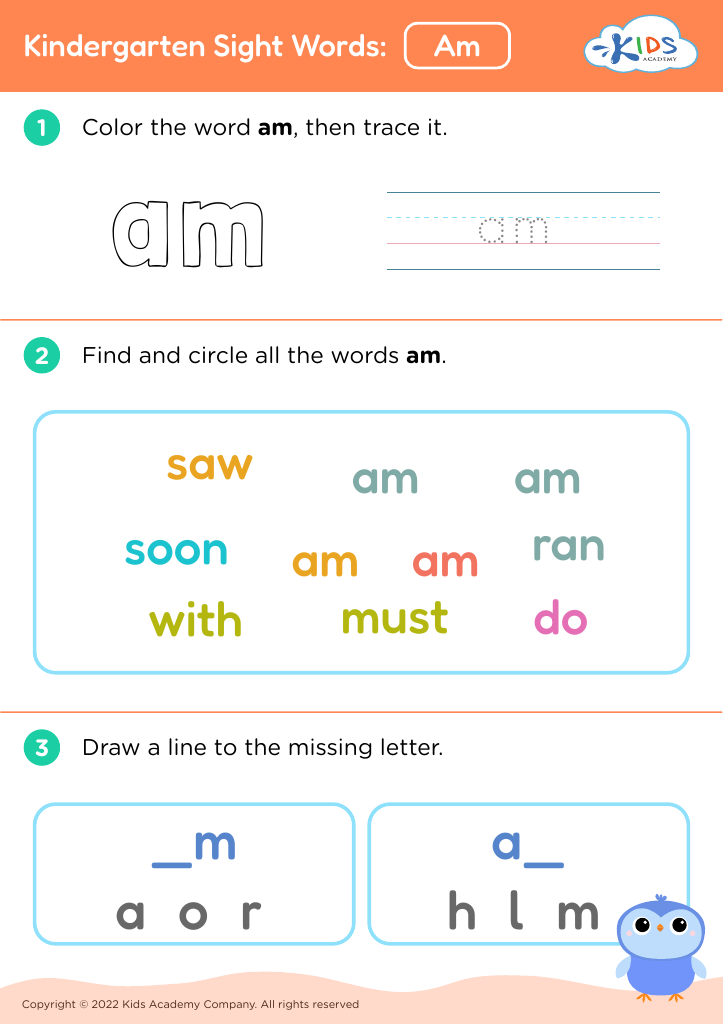
Kindergarten Sight Words: Am

Kindergarten Sight Words: Am

Kindergarten Sight Words: Am
Worksheet


Parents and teachers should prioritize math skills improvement for children ages 6-7 because this stage is crucial for building a strong foundation in mathematics. During these formative years, children develop essential cognitive skills, including problem-solving, logical reasoning, and critical thinking, all of which are pivotal in navigating the world around them. Early math skills not only enhance academic performance in subsequent grades but also foster a sense of confidence and curiosity.

Moreover, proficiency in math is linked to everyday life skills, such as budgeting, cooking, and time management, that children will encounter as they grow older. Developing a positive attitude toward math early on can help combat math-related anxiety and dispel the notion that mathematical ability is inherent.

Investing in math education at this age can help identify and address learning gaps early, ensuring that students do not fall behind as they progress. Collaborative efforts between parents and teachers can create an enriching learning environment, incorporating games, interactive activities, and practical applications to make math enjoyable. Ultimately, improving math skills at ages 6-7 lays the groundwork for academic success, lifelong learning, and informed decision-making in various aspects of life.