
Mathematical Comprehension Worksheets for Ages 6-7
3 filtered results
Difficulty Level
Grade
Age
-
From - To
Subject
Activity
Standards
Discover our engaging Mathematical Comprehension Worksheets designed specifically for children ages 6-7. These worksheets aim to enhance young learners’ foundational math skills through fun and interactive activities. Each worksheet focuses on essential concepts such as number recognition, basic addition and subtraction, and pattern identification, making math both enjoyable and educational. Our resources encourage problem-solving and critical thinking, empowering kids to gain confidence in their mathematical abilities. Perfect for classroom use or at-home learning, our worksheets provide clear instructions and vibrant designs to keep kids motivated. Explore our collection and help your child excel in mathematical comprehension today!
Favorites
With answer key
Interactive
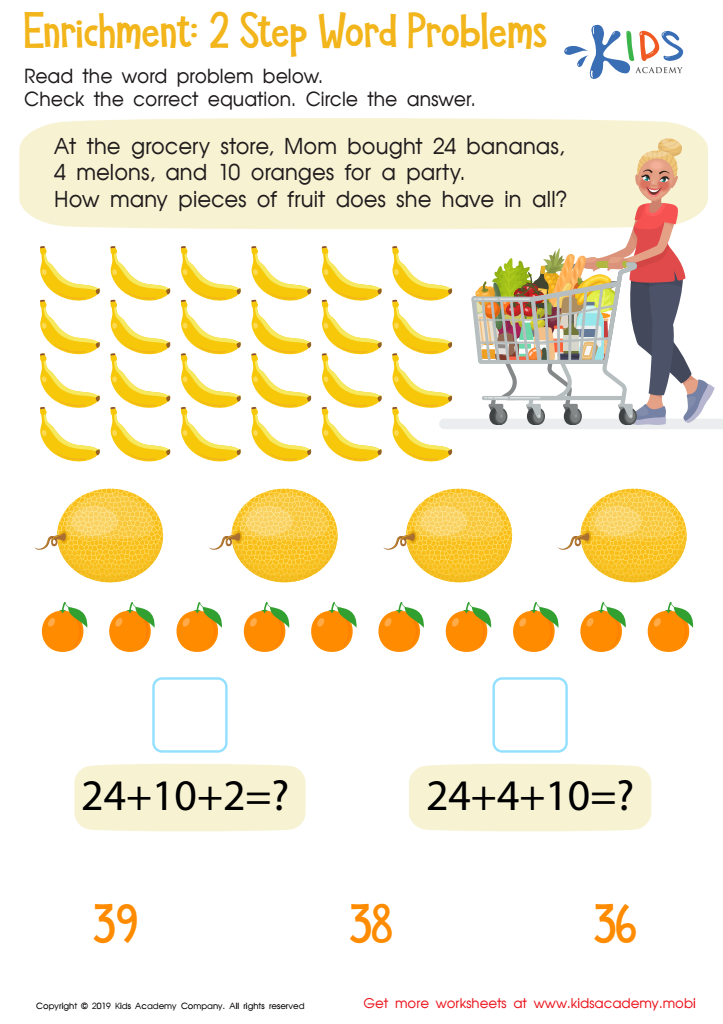
Enrichment -2 Step Word Problems Worksheet
Help your students learn math easier and faster with this colorful worksheet. Read the word problem and then guide them in checking the correct equation and finding the answer. Your students will benefit from the extra help, as they work through new concepts each day.
 Assign to My Students
Enrichment -2 Step Word Problems Worksheet
Worksheet
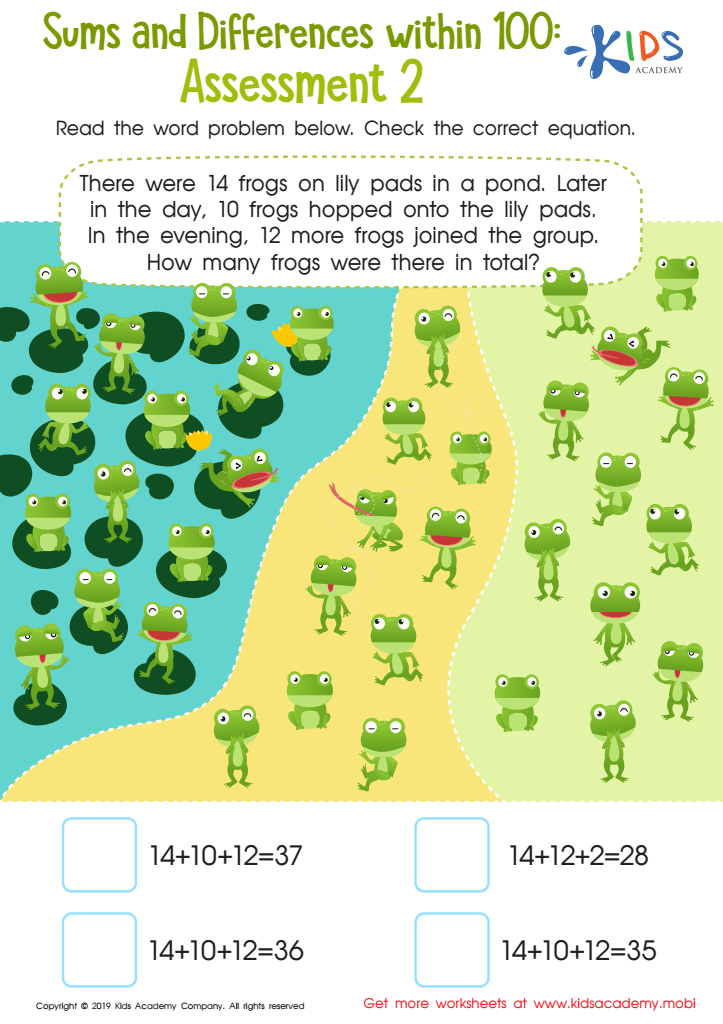
Sums and Differences Within 1 - Assessment 2 Worksheet
Help your kids practice math with these simple word problems. Read the question, discuss with them to form the equation and then check the answer. Give them a chance to sharpen their math skills!
Sums and Differences Within 1 - Assessment 2 Worksheet
Worksheet
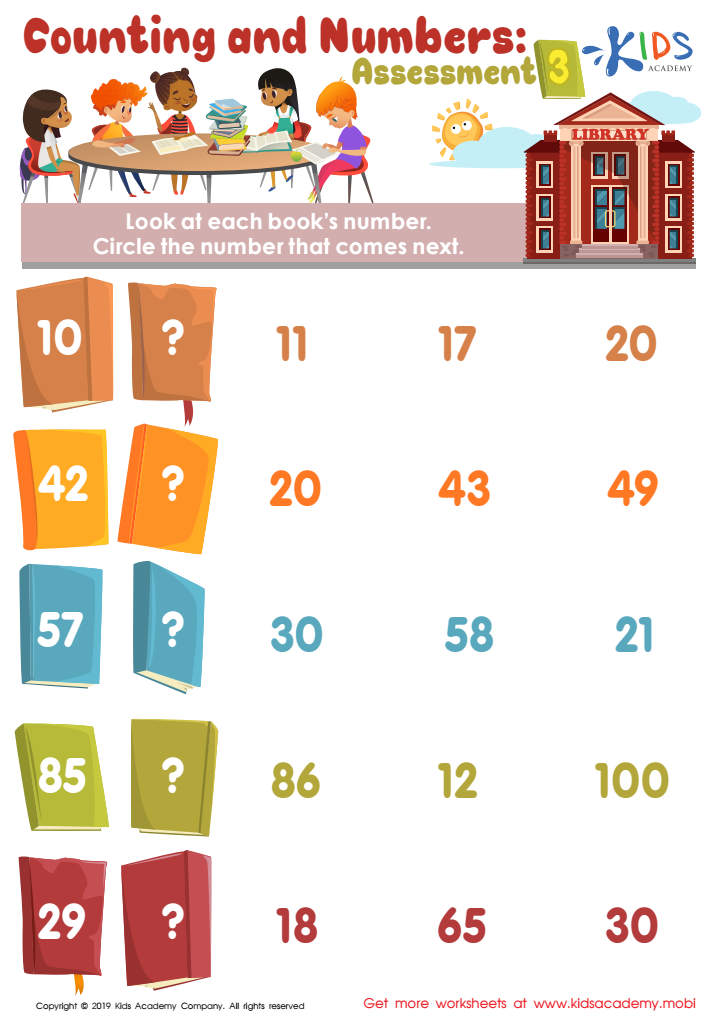
Counting and Numbers: Assessment Worksheet
Number line thinking is an essential math skill. Kids using this skill can compute math problems accurately and quickly. Our free assessment tests number line recognition; have your child pick the right number from the given options to follow the current number on the line. This assessment will give you an idea of their counting skills.
Counting and Numbers: Assessment Worksheet
Worksheet
Join Kids Academy for Free
Who is primarily going to use this learning content?








Mathematical comprehension for children aged 6-7 is crucial as it lays the foundational skills for their future learning in math and related subjects. At this age, children begin to develop critical thinking and problem-solving abilities essential not only for math but for all academic areas and everyday life. Understanding mathematical concepts helps children make sense of the world around them, enhancing their analytical skills and fostering a growth mindset.
Moreover, strong mathematical comprehension instills confidence in children. When they grasp fundamental concepts, like addition and subtraction, they are more likely to engage with challenging problems and persist through difficulties. This resilience is essential in today’s fast-paced learning environments.
For parents and teachers, fostering mathematical comprehension promotes engagement, as children learn to see connections between numbers and their real-world applications. This understanding can empower them to make informed decisions, whether they are budgeting, measuring, or navigating tasks involving basic math skills.
By prioritizing mathematical comprehension, parents and educators are not only helping children excel academically but are also equipping them with vital life skills that will serve them well into adulthood. Therefore, investing in their mathematical understanding is an investment in their future success and self-reliance.








