
Motor skills Worksheets for Ages 6-7
3 filtered results
Difficulty Level
Grade
Age
-
From - To
Subject
Activity
Standards
Unlock your child's potential with our engaging Motor Skills Worksheets for ages 6-7! Designed to enhance coordination, balance, and fine motor abilities, these worksheets provide a fun and interactive way for young learners to develop essential skills. From tracing and cutting activities to kleur- and draw exercises, our resources foster creativity while promoting hand-eye coordination. Perfect for at-home practice or classroom use, these worksheets encourage children to express themselves and build confidence in their abilities. Explore a variety of activities tailored to keep learners engaged and excited about developing their motor skills, paving the way for academic success. Dive in today!
Favorites
With answer key
Interactive
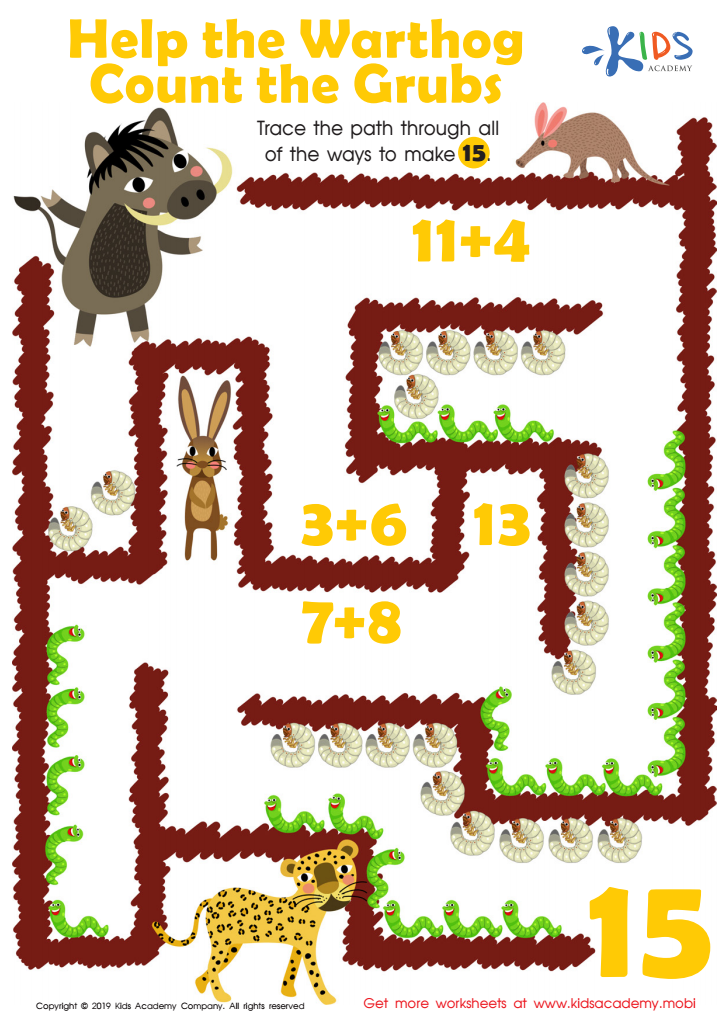
Help the Warthog Count the Grubs Worksheet
Test your kids' knowledge of wild animals. Ask them to name some they know, then have them identify the animals on this worksheet. If they can't, take the time to tell them the names. Finally, trace the warthog's path through the maze by solving the equations and going through paths that make 15.
 Assign to My Students
Help the Warthog Count the Grubs Worksheet
Worksheet
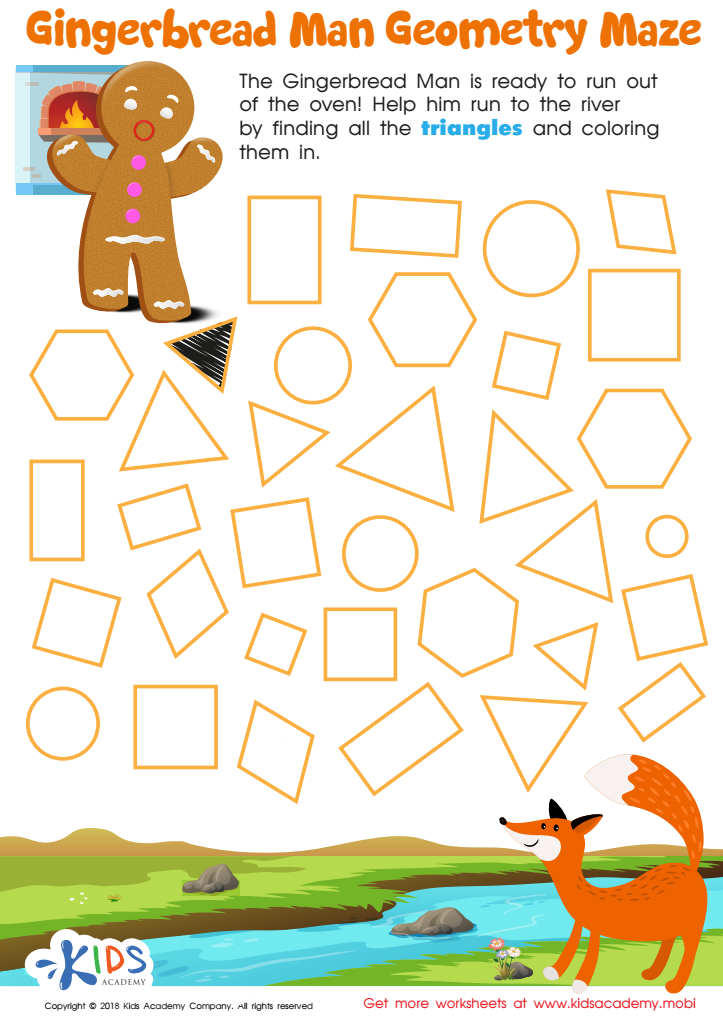
Gingerbread Man Geometry Maze Worksheet
Help a beloved character escape the oven! Kids race through a sea of geometrical shapes, searching for triangles of various sizes. With this free worksheet, they can have fun while learning about similarity of geometrical shapes concepts. Run, run, run as fast as they can!
Gingerbread Man Geometry Maze Worksheet
Worksheet
Join Kids Academy for Free
Who is primarily going to use this learning content?






Parents and teachers should prioritize the development of motor skills in children aged 6-7 because these skills are crucial for overall physical, cognitive, and social development. During this age, children transition into more complex activities requiring enhanced fine and gross motor skills. Fine motor skills—such as grasping, drawing, and using utensils—are essential for academic tasks like writing and art, which help develop hand-eye coordination and dexterity. Gross motor skills, involving larger movements like running, jumping, and climbing, are important for physical fitness, confidence, and social interactions during play.
Furthermore, proficient motor skills contribute to a child’s ability to engage in group activities, fostering social skills and teamwork. They also influence a child’s self-esteem; as children master new physical skills, they feel empowered and motivated to tackle challenges.
Additionally, motor skill development is linked to cognitive functions; studies show that physical activity can enhance brain function, thus improving learning outcomes. Therefore, focusing on motor skill development through play, structured activities, and encouragement can lay a strong foundation for children, promoting not just physical health but also emotional and intellectual growth during these formative years.








