Number counting Worksheets for Ages 6-7
3 filtered results
-
From - To
Boost your child's math skills with our engaging Number Counting Worksheets for Ages 6-7! Designed to build a strong foundation in early mathematics, these worksheets offer fun and interactive activities to help young learners master counting, number recognition, and basic arithmetic. Each sheet is tailored to captivate and challenge, combining vibrant visuals with hands-on exercises to ensure effective learning. Whether for classroom use or extra practice at home, our worksheets promote confidence and a love for numbers. Unlock your child's potential with resources that make learning both enjoyable and educational. Explore now and watch your child excel!
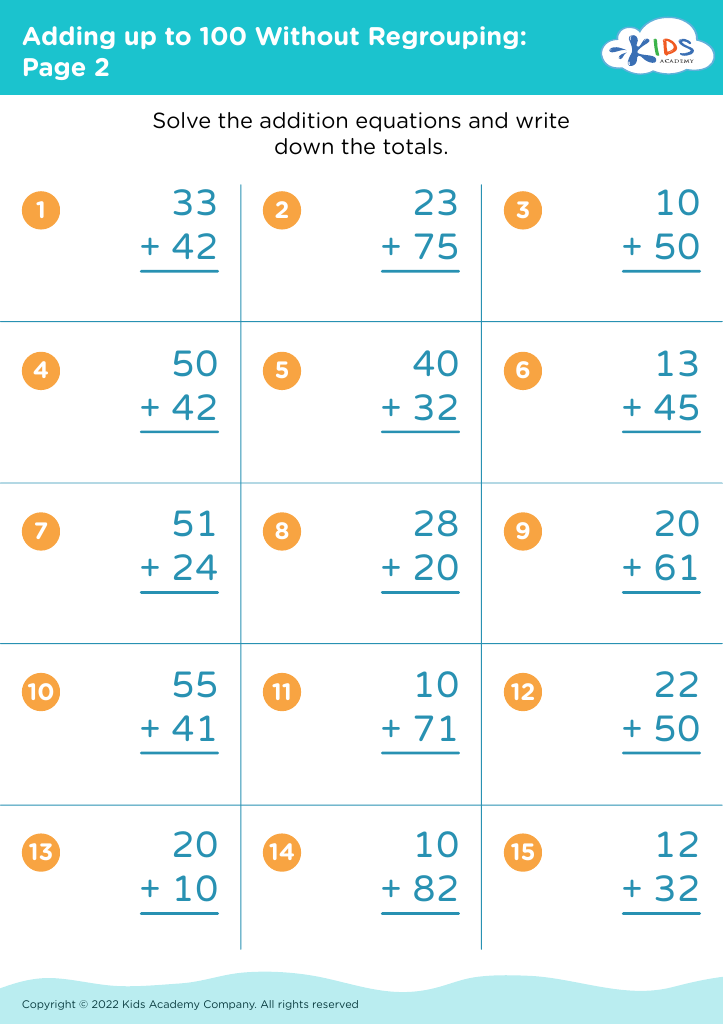
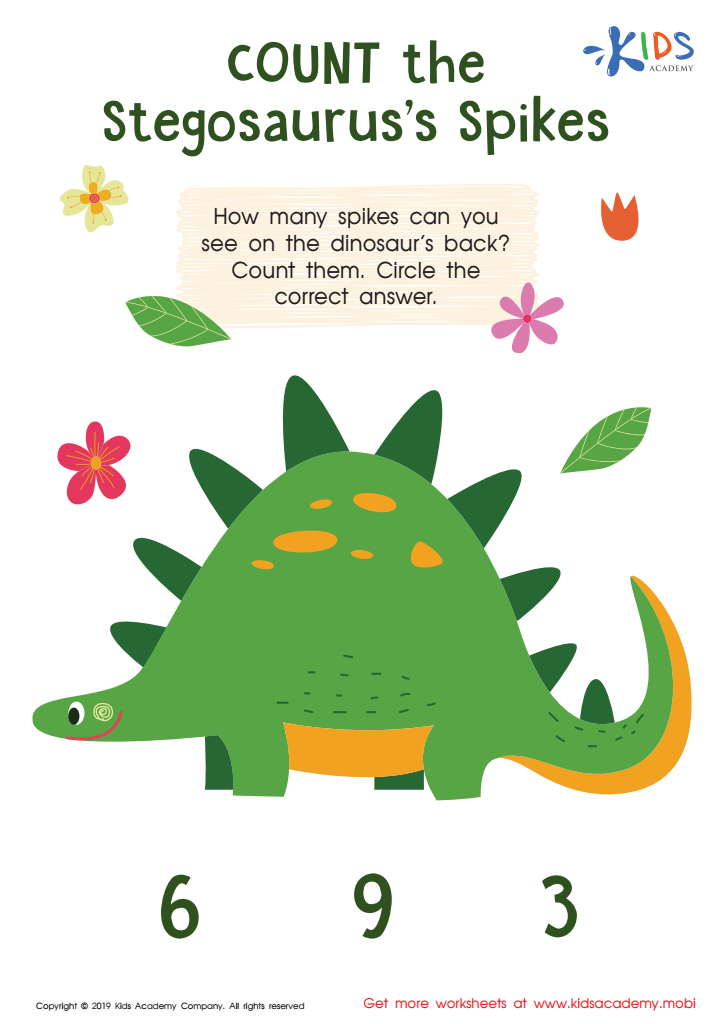
Count the Stegosaurus's Spikes Worksheet
 Assign to My Students
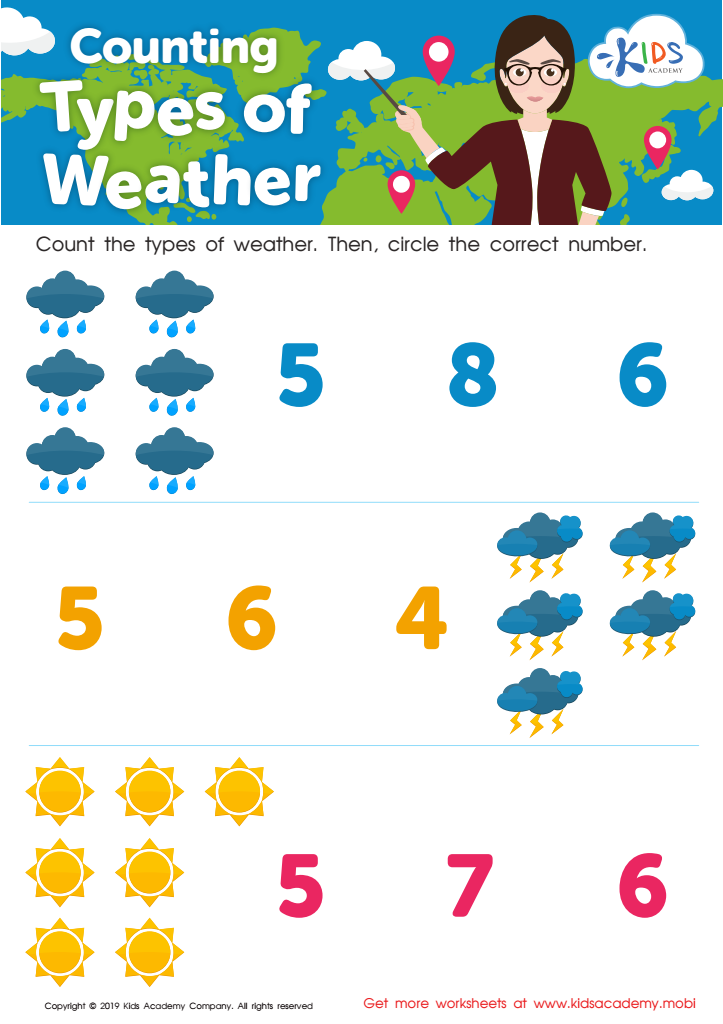
Counting Types of Weather Worksheet







Number counting is a foundational skill crucial for children aged 6-7, serving as the gateway to more complex mathematical concepts. At this age, children are developing cognitive abilities that enable them to understand not only the concept of number order but also the notion of quantifying objects and solving simple math problems. Mastery of counting helps boost their number sense, which is critical for future mathematical learning.
When parents and teachers emphasize number counting, they are essentially providing tools for a multitude of everyday activities. From following a recipe to handling money, numerical literacy is pervasive in daily life. Early counting experiences help children develop the skills needed to perform addition, subtraction, and eventually, multiplication and division.
Additionally, developing strong counting skills fosters cognitive development by enhancing memory, attention, and problem-solving abilities. It also promotes confidence and a positive attitude toward learning. Knowledge in counting paves the way for success in a variety of subjects that involve logical thinking and organization, such as science and engineering.
Therefore, dedicating time and resources to teach children how to count won't just help them in their early years; it will instill critical thinking skills that benefit them throughout their entire lives.








