Phonological awareness Worksheets for Ages 6-7
4 filtered results
-
From - To
Discover our engaging phonological awareness worksheets designed specifically for ages 6-7, aimed at enhancing early reading skills. These thoughtfully crafted activities help young learners recognize and manipulate sounds in words, boosting their listening and critical thinking capabilities. From rhyming exercises to syllable counting and sound matching tasks, our worksheets provide a fun and interactive way to support literacy development. Perfect for classrooms or at-home learning, these resources foster a strong foundation for reading success. Explore our collection today and assist your child in unlocking the power of phonemic awareness, setting them on a path toward confident and proficient reading.
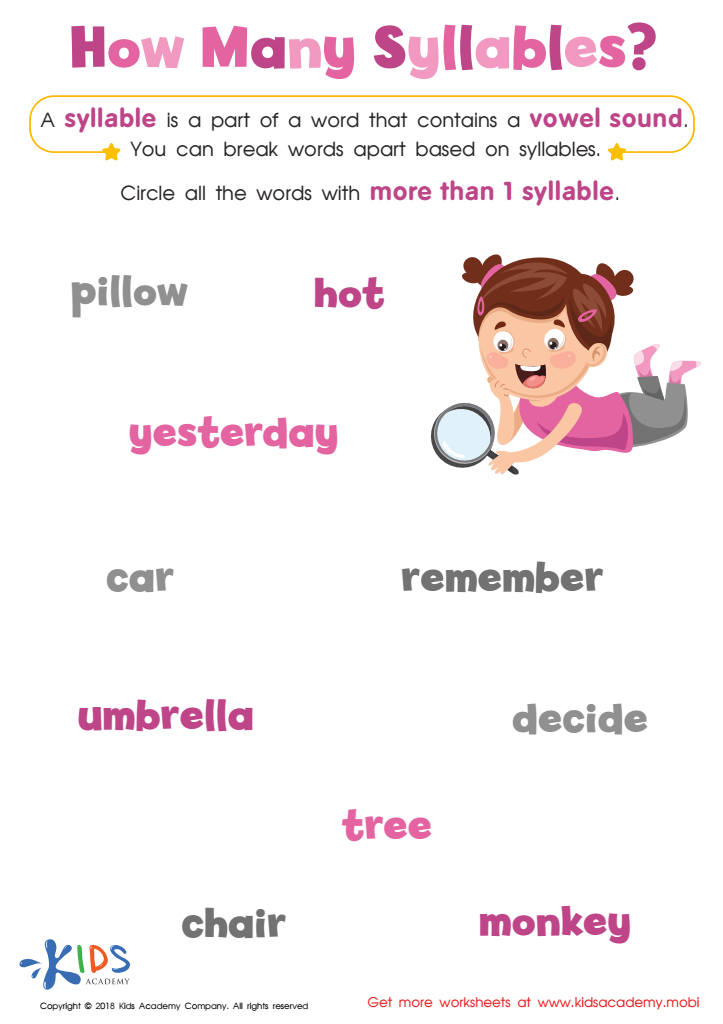
Reading: How Many Syllables Worksheet
 Assign to My Students
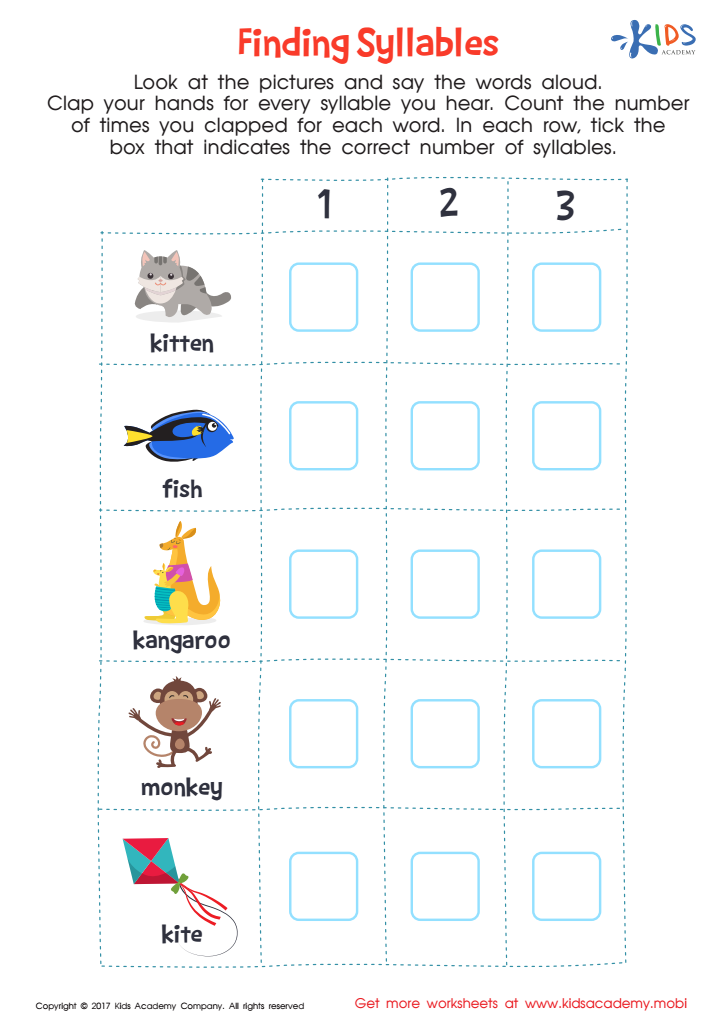
Finding Syllables Word Structure Worksheet
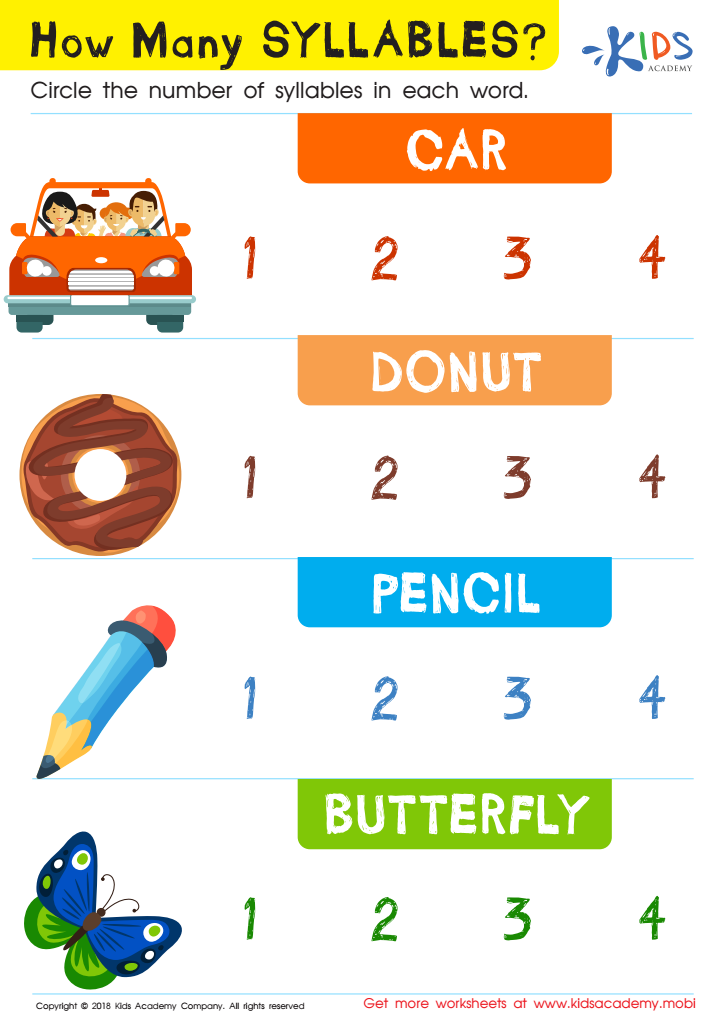
How Many Syllables? Worksheet
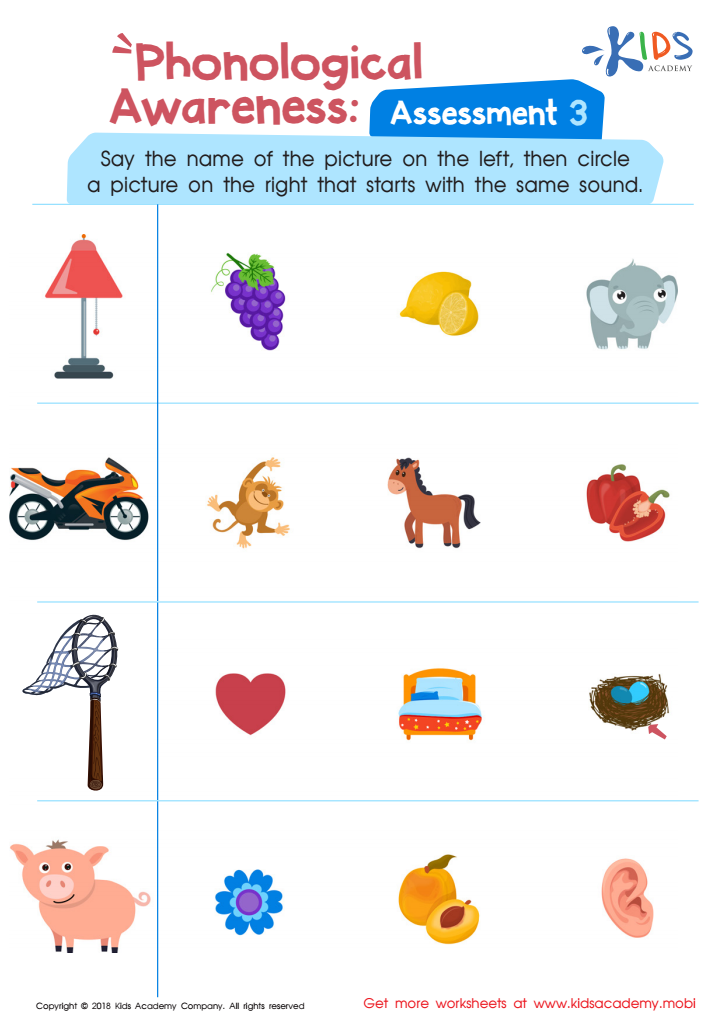
Phonological Awareness: Assessment 3 Worksheet


.jpg)





Phonological awareness is crucial for children aged 6-7 as it lays the foundation for their reading and writing skills. At this age, children are typically starting to read independently, making it essential for them to understand the sounds that make up words. By developing phonological awareness, they can decode new words, recognize rhymes, and comprehend syllable structure, which are key skills for literacy development.
Parents and teachers should care about phonological awareness because it directly impacts a child's academic success. A strong grasp of phonological skills can lead to improved reading fluency and comprehension, essential for effective learning across subjects. It also contributes to greater confidence in their ability to tackle reading tasks.
Additionally, phonological awareness can help identify students who may struggle with reading, allowing for earlier intervention and support. By engaging in activities that promote these skills—like rhyming games, clap syllables, or sound play—adults can foster a love for language and literacy in children.
Ultimately, investing time in phonological awareness means equipping children with essential tools for communication and academic achievement, setting them up for lifelong learning success.








