Practice counting Worksheets for Ages 6-7
6 filtered results
-
From - To
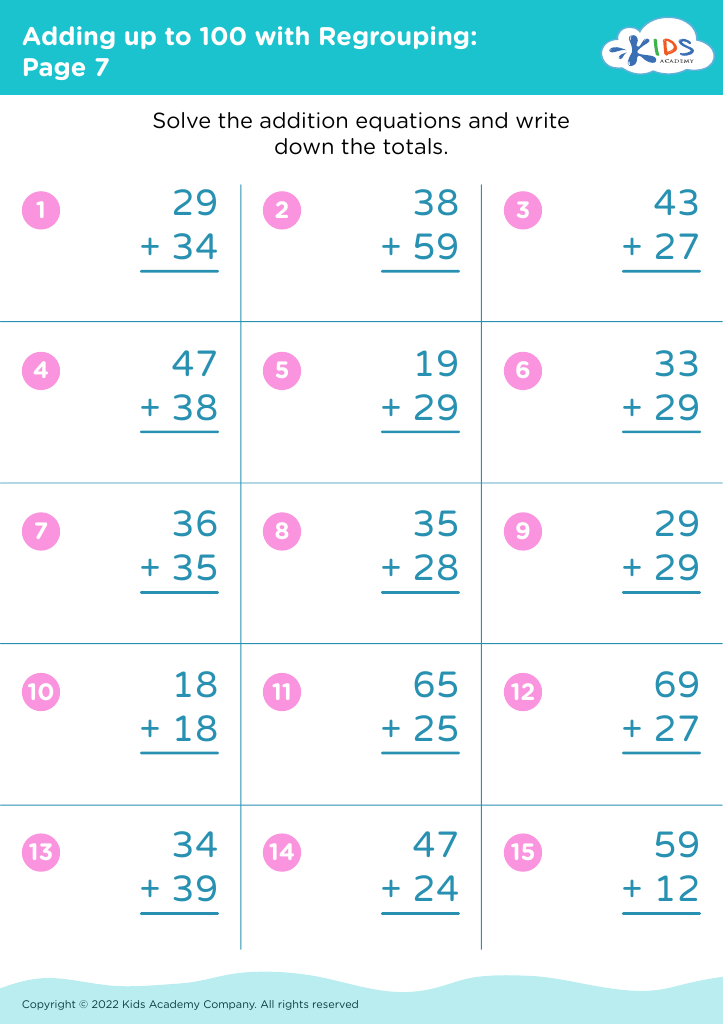
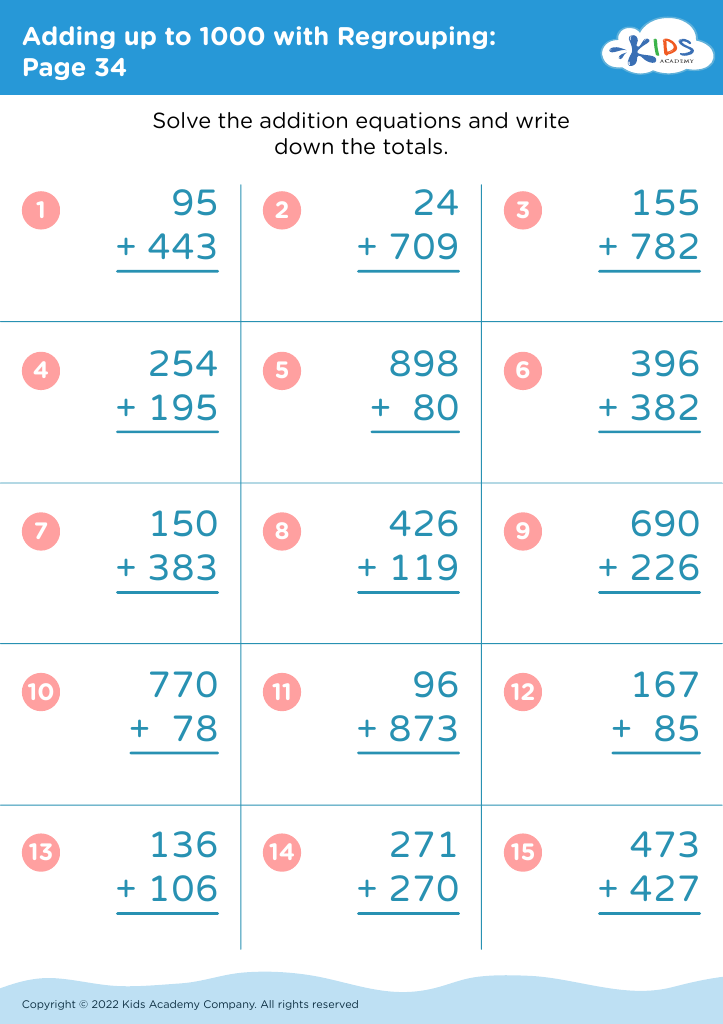
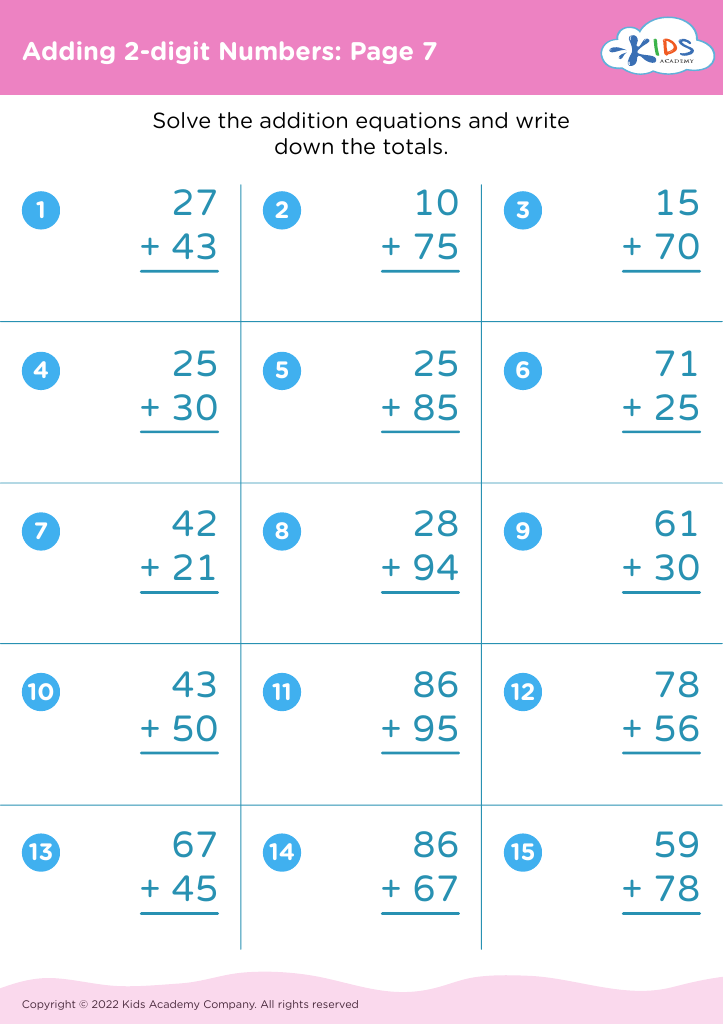
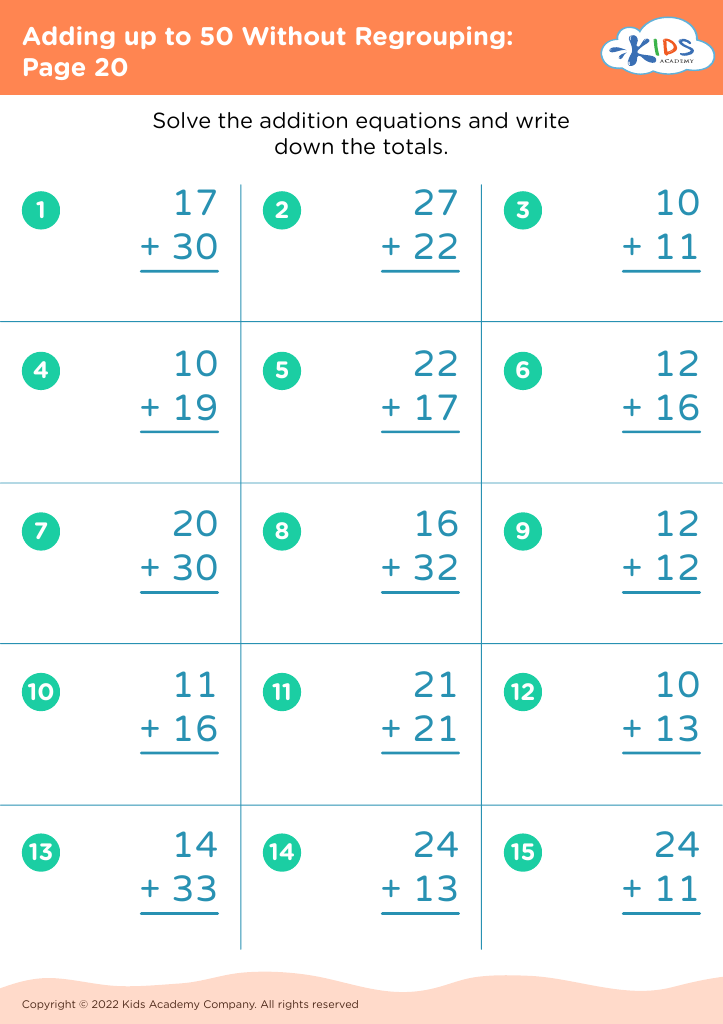
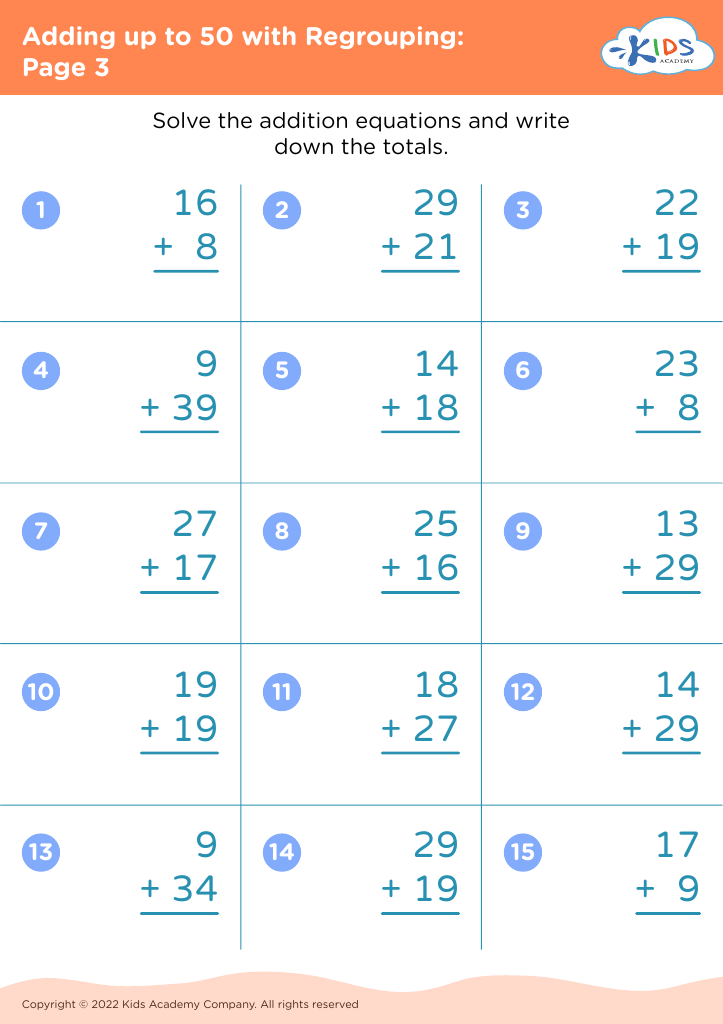
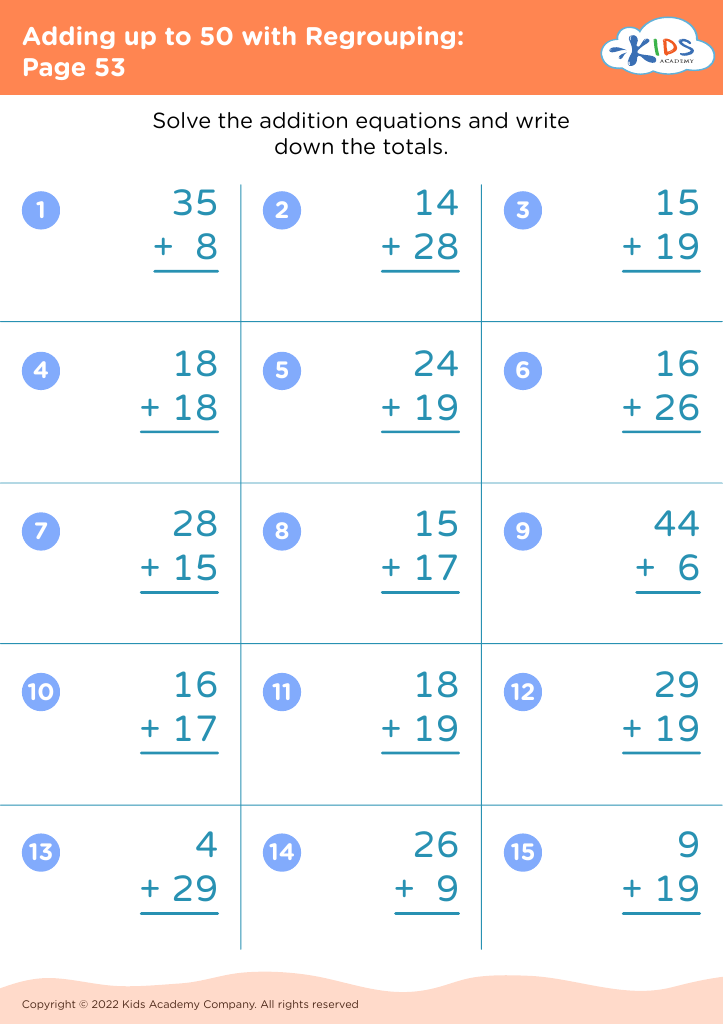
Our "Practice Counting Worksheets for Ages 6-7" are specially designed to help young learners develop strong numerical skills. These engaging and interactive worksheets focus on counting, number recognition, and foundational math concepts, making learning both fun and effective. Perfect for early grade students, each activity is tailored to stimulate critical thinking and enhance problem-solving abilities. With vibrant visuals and age-appropriate challenges, our resources aim to foster a love for numbers and pave the way for future math success. Ideal for both classroom and home use, these worksheets are a valuable addition to your child's educational journey.





.jpg)


Practice counting for ages 6-7 is fundamental as it lays the groundwork for more advanced mathematical skills. During this crucial developmental phase, children's brains are particularly receptive to learning numerical concepts. Counting helps foster a strong number sense, critical in understanding more complex mathematical topics like addition, subtraction, multiplication, and division.
Moreover, early counting practice builds cognitive abilities such as memory and attention to detail. It aids in recognizing patterns, sequencing, and problem-solving, all essential skills for academic success and everyday life. Counting also introduces the concept of quantification, helping children grasp the notion of "how many," which is necessary for more abstract mathematical reasoning later on.
Additionally, counting bolsters language development by introducing terms and concepts that bolster children's vocabulary and communication skills. It can also be a social activity that fosters patience, turn-taking, and cooperative learning when practiced in a group setting or with parents.
Parents and teachers should care deeply about practicing counting because it empowers children with the confidence and competence needed to tackle more complex educational challenges. Keeping sessions engaging and fun can spark a lifelong interest in mathematics, making early counting practice a cornerstone of a child's developmental journey.








