
Recognizing Patterns Worksheets for Ages 6-7
33 filtered results
Difficulty Level
Grade
Age
-
From - To
Subject
Activity
Standards
Explore our engaging "Recognizing Patterns Worksheets" designed for ages 6-7! These expertly crafted worksheets are perfect for developing critical thinking and problem-solving skills through fun, interactive exercises. Your child will enjoy identifying sequences and visually exploring complex patterns, promoting essential analytical abilities. Ideal for both classroom and home settings, these activities will captivate young learners while laying a strong foundation in mathematics and logical reasoning. Boost your child's confidence and academic growth with our dynamic, age-appropriate content. Join us on Kids Academy and make learning fun and effective with our "Recognizing Patterns Worksheets."
Favorites
With answer key
Interactive
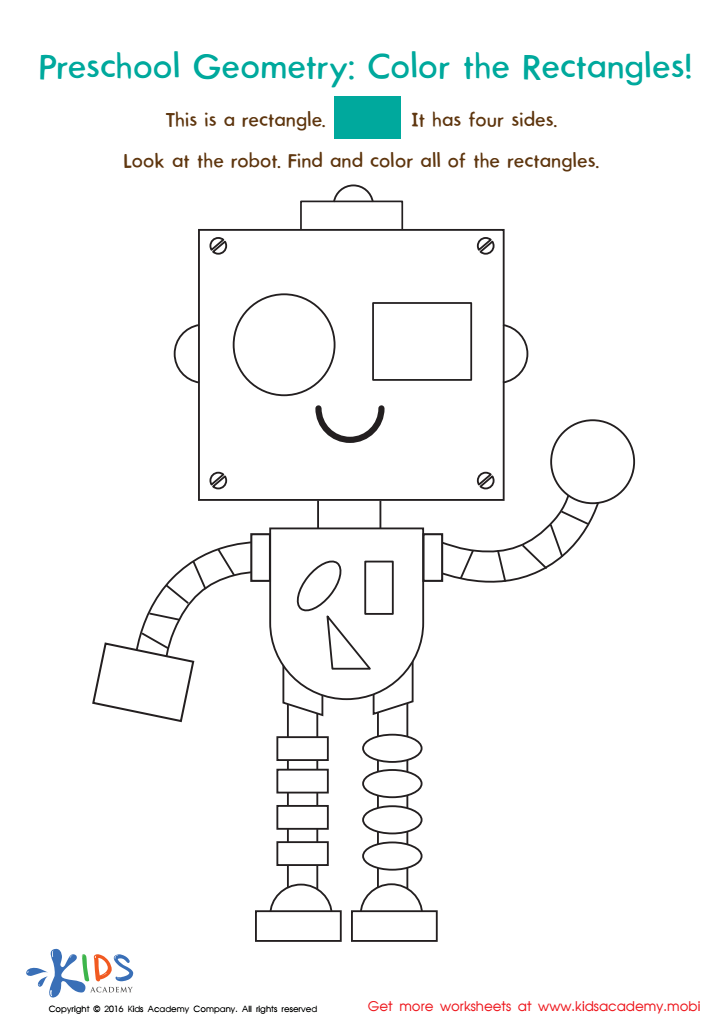
Geometry Worksheet
Geometry can be fun for kids! They explore shapes that create their favorite pics and objects. This preschool worksheet explains that rectangles have four sides, then kids color rectangles on a funny robot!
 Assign to My Students
Geometry Worksheet
Worksheet
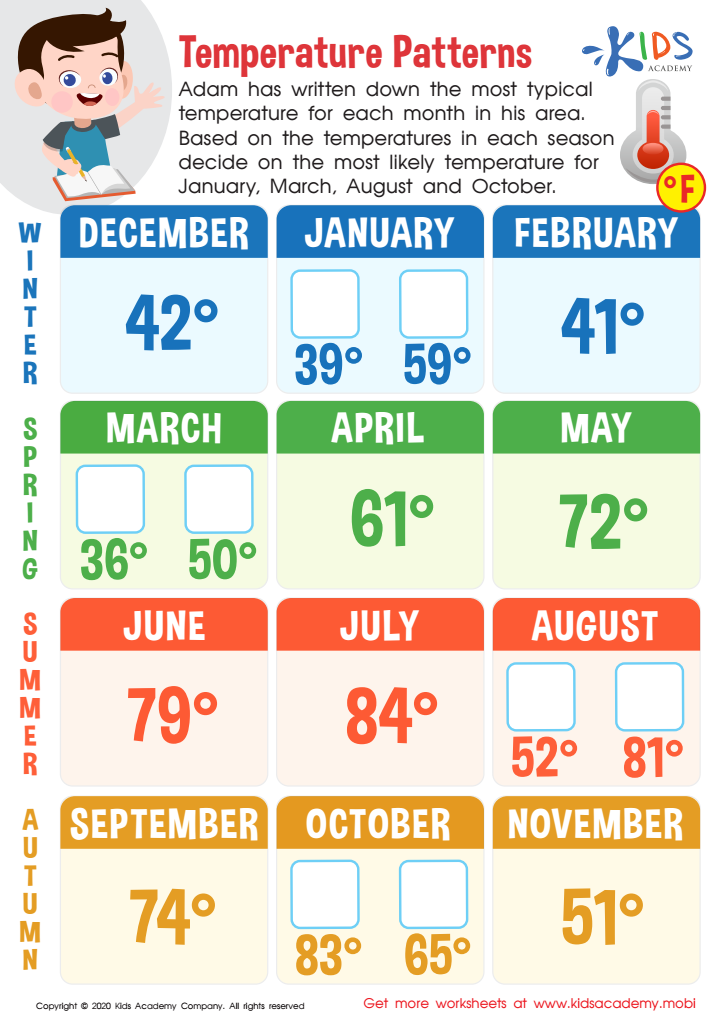
Temperature Patterns Worksheet
Adam has recorded temperatures in his area. Help your child use the data to predict temperatures for one month in each season. Check the box next to the correct temperature for each row in this worksheet. In America, temperatures vary by climate and season - colder in winter, hotter in summer.
Temperature Patterns Worksheet
Worksheet
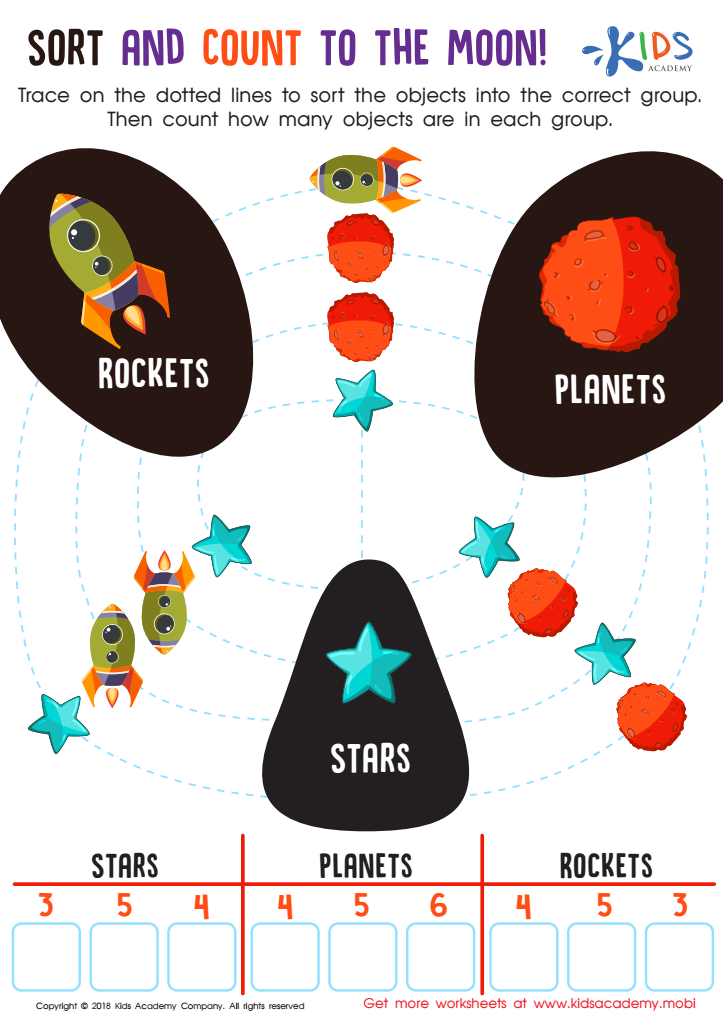
Sort and Count to the Moon Worksheet
Little space explorers will love counting, sorting and strengthening number sense with this galactic worksheet! They'll use traceable lines to sort pictures of stars, planets and rockets into categories according to properties. After sorting, they'll count each item and fill in the boxes. Bold pictures make it fun and build critical thinking skills.
Sort and Count to the Moon Worksheet
Worksheet
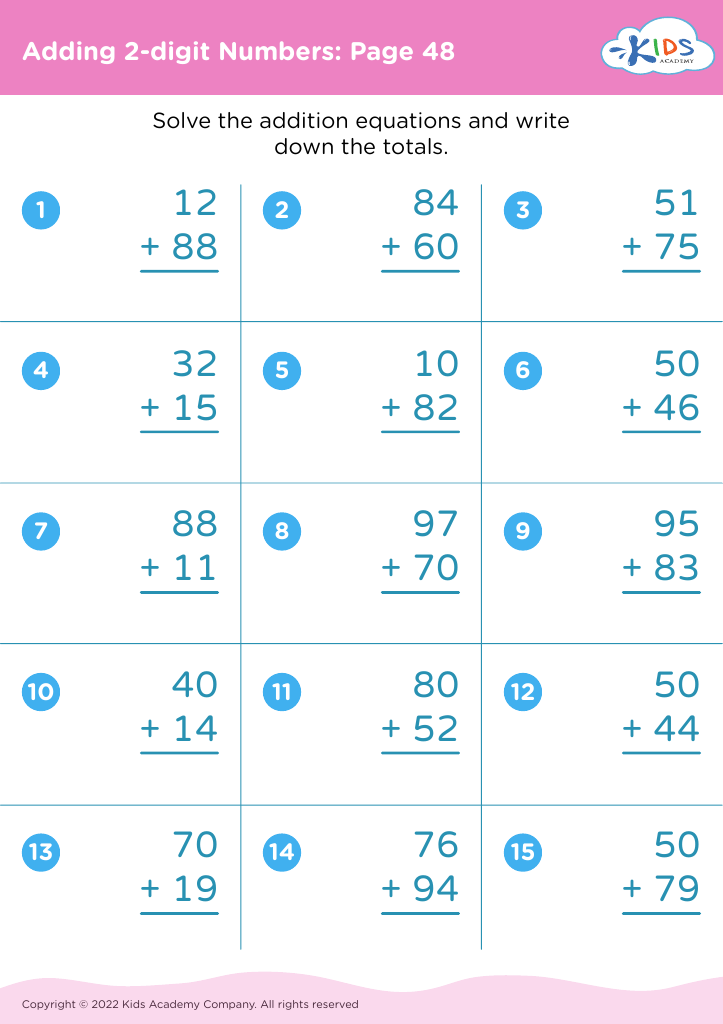
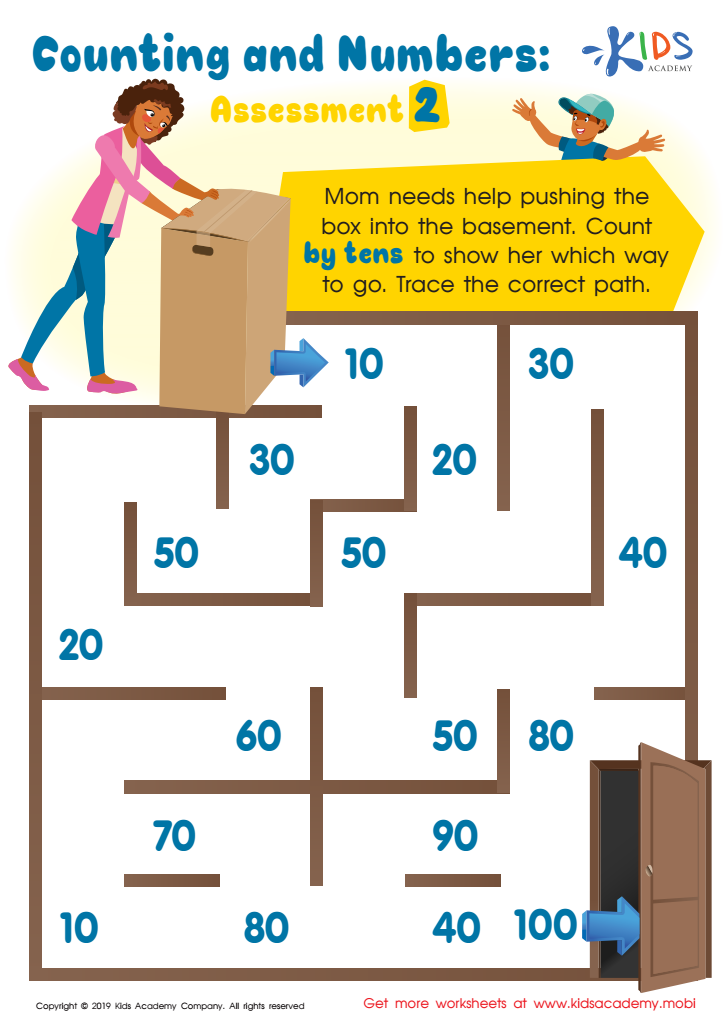
Counting and Numbers: Assessment 2 Worksheet
Kids love mazes and this free assessment worksheet helps them master counting by 10s. As they navigate the path, they'll improve their math skills and reach 100! It's a fun way to check your child's understanding of counting and chunking, and you'll quickly know their skill level.
Counting and Numbers: Assessment 2 Worksheet
Worksheet
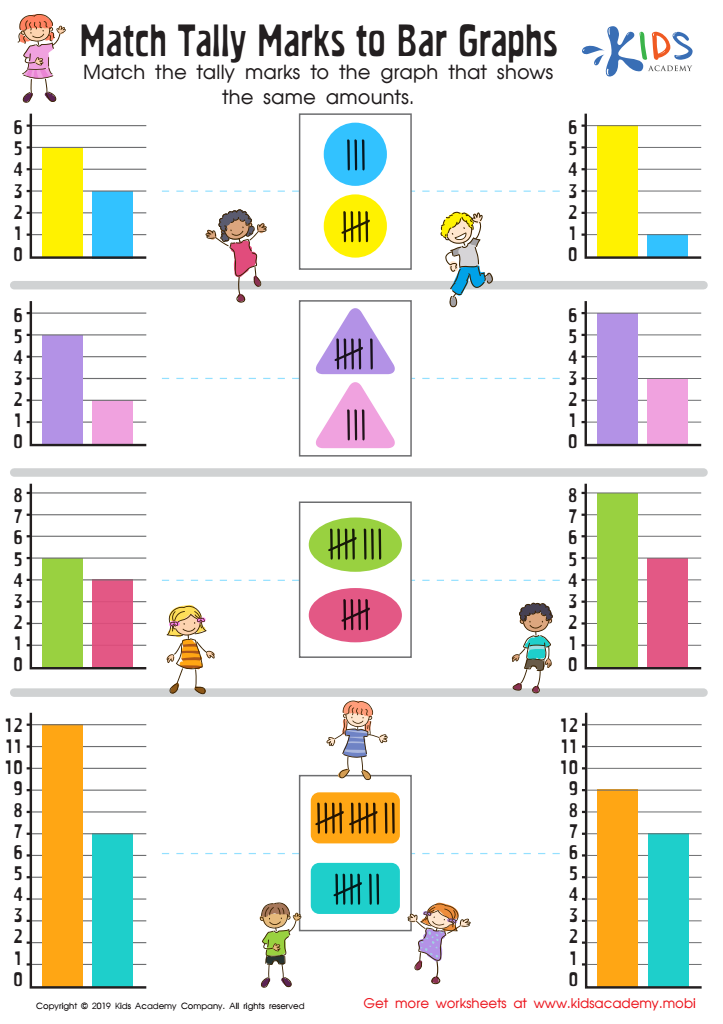
Match Tally Marks to Bar Graphs Worksheet
Learning math can be tough for kids. Rules and formulas can be confusing. Don't worry, this worksheet can help them understand graphs better. Show them how to match the tally marks with the graph that shows the same amount. It will help them grasp the basics and prepare them for more complex equations.
Match Tally Marks to Bar Graphs Worksheet
Worksheet
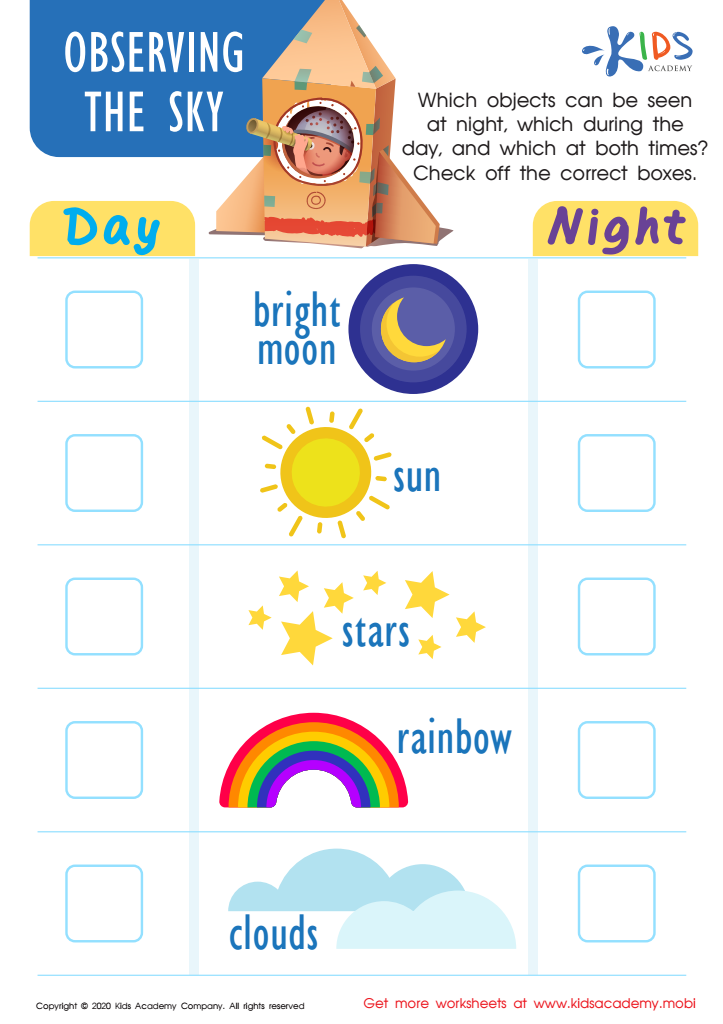
Observing the Sky Worksheet
Look up to the sky and observe day and night objects! See a rainbow or some clouds by day and stars and the moon at night. Help your little learner review this science concept with Kids Academy's fun and colorful worksheet. Have them sort and check off the objects seen by day or night, going down the column in the center.
Observing the Sky Worksheet
Worksheet
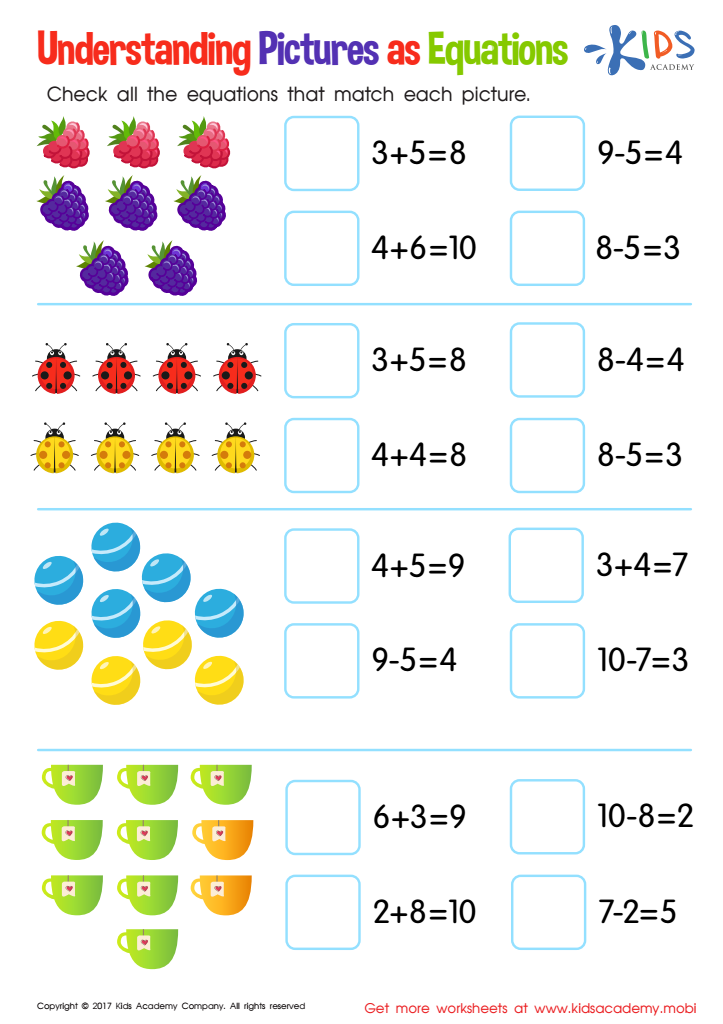
Understanding Pictures as Equations Worksheet
This worksheet helps your child interpret pictures into numbers and equations. Colourful grapes, ladybirds, balls and cups represent numbers which must be added to reach the total. Your child must also choose the equations that match the pictures correctly. A great way to practice math!
Understanding Pictures as Equations Worksheet
Worksheet
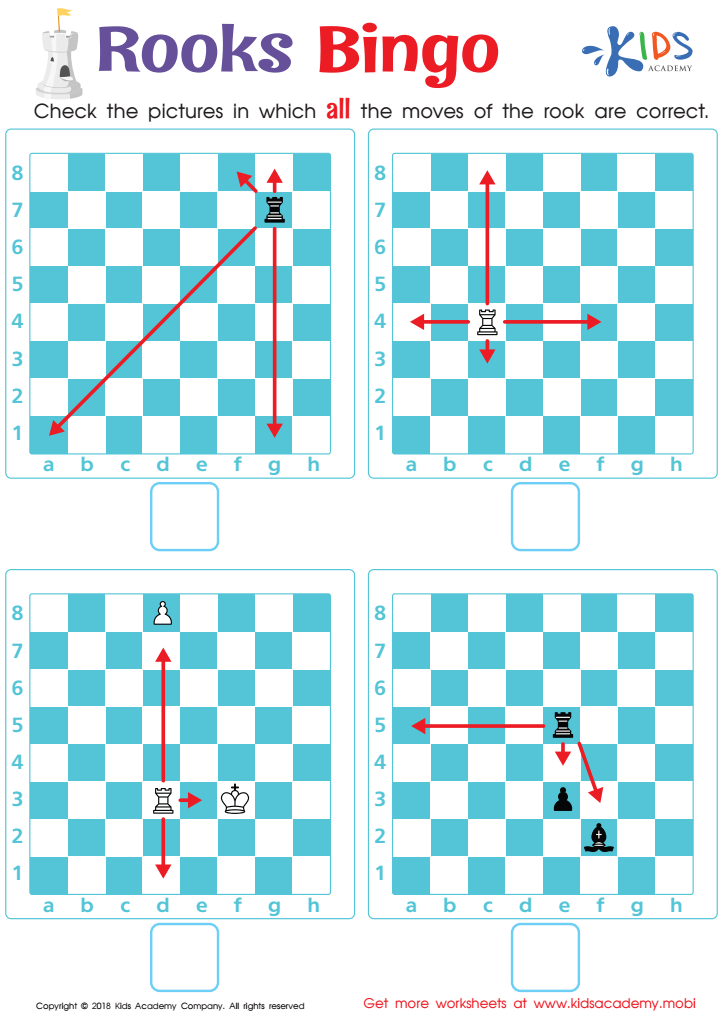
Rooks Bingo Worksheet
Can your child accurately move the rook pieces in a game of chess? Do they understand the moves a rook can and can't make? Check the worksheet with them to ensure the pictures correctly depict the rook's movements. Confirm only those with correct moves.
Rooks Bingo Worksheet
Worksheet
Join Kids Academy for Free
Who is primarily going to use this learning content?





.jpg)
Recognizing patterns is fundamental for children aged 6-7, providing a critical foundation for their cognitive development and problem-solving skills. For parents and teachers, emphasizing this skill holds numerous benefits. Firstly, pattern recognition fosters critical thinking. Children learn to observe, predict, and make logical connections, which prepares them for more complex mathematical concepts like addition, subtraction, and eventually algebra. Additionally, it bolsters memory and attention to detail, enhancing overall academic performance.
In literacy, patterns help kids understand the structure of stories, recognize word families, and improve phonemic awareness, which contributes to successful reading development. In science, spotting patterns can spark curiosity about the natural world, from understanding the life cycle of plants to observing weather changes.
Furthermore, pattern recognition promotes creativity and artistic skills. Children can express creativity through art and music, noticing rhythmic patterns and symmetrical designs, which boosts self-expression and emotional well-being.
Socially and emotionally, recognizing routines and sequences provides children with a sense of stability and predictability, crucial for regulating emotions and understanding their environment. This foundational skill, therefore, benefits a child's mathematical, linguistic, artistic, and social domains of learning. Recognizing patterns is not merely an academic skill but a vital life skill that nurtures holistic development.








