
Sequencing Skills Worksheets for Ages 6-7
20 filtered results
Difficulty Level
Grade
Age
-
From - To
Subject
Activity
Standards
Discover our engaging Sequencing Skills Worksheets designed specifically for ages 6-7! These resources help young learners develop essential critical thinking and organizational skills. Through fun activities, children will practice arranging events in logical order, enhancing their comprehension and storytelling abilities. Our worksheets feature vibrant illustrations and age-appropriate tasks that mirror real-life scenarios, making learning enjoyable and relatable. Perfect for classroom use or at-home learning, these worksheets support cognitive development and build a strong foundation for future success. Explore our collection now and watch your child's sequencing skills flourish as they tackle challenges with confidence!
Favorites
With answer key
Interactive
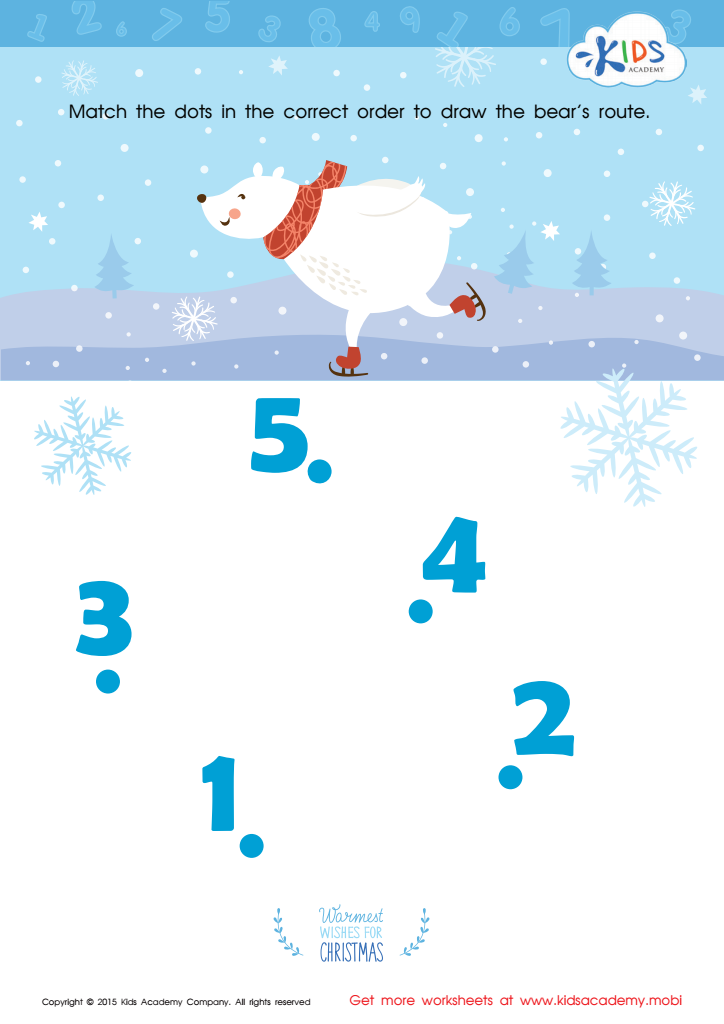
Drawing the Bear's Route by Number Worksheet
This winter-themed math worksheet is perfect for counting practice. Have fun learning and celebrating the season with your kindergartener as they trace and recognize numbers. It also helps develop fine motor muscles. For more fun, check out the math worksheets on Kids Academy.
 Assign to My Students
Drawing the Bear's Route by Number Worksheet
Worksheet
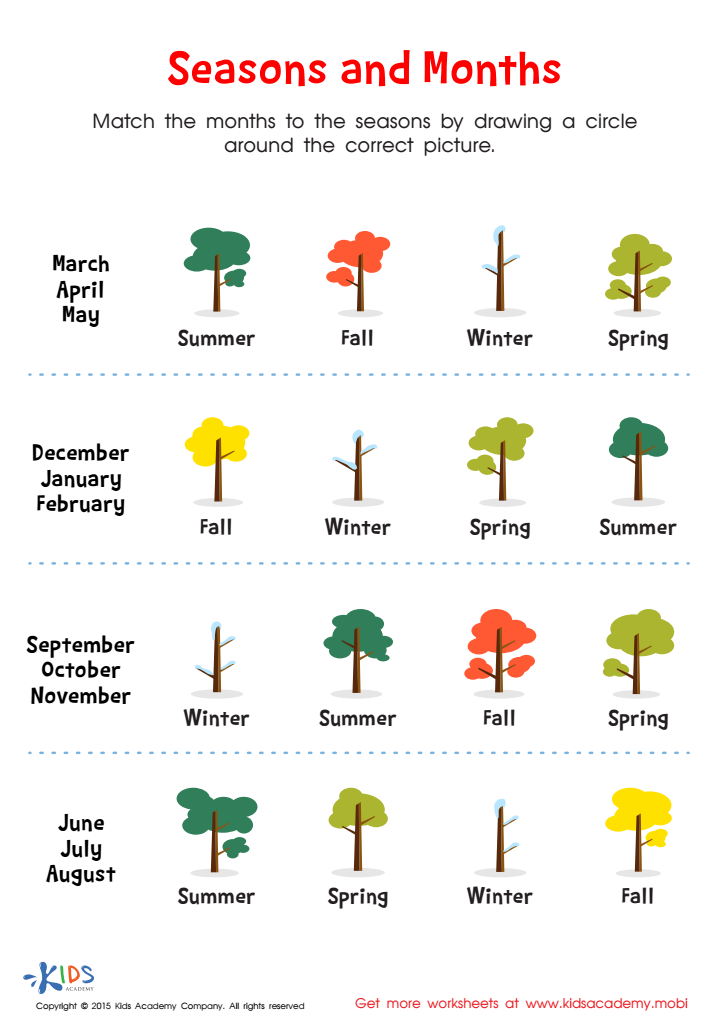
Seasons and Months Worksheet
Help your child explore the world around them with this fun seasons and months printable worksheet. It'll help them understand the months of the year and the seasons connected to them, teaching valuable science knowledge and skills. Plus, engaging in conversations about the current month and season will extend their learning!
Seasons and Months Worksheet
Worksheet
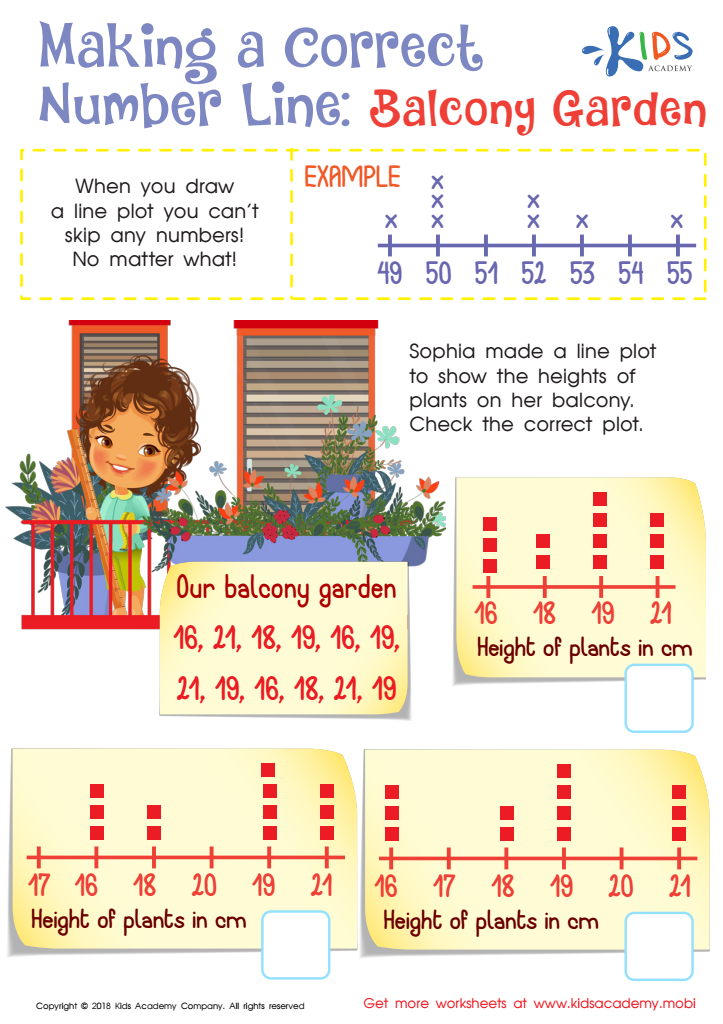
Making a Correct Number Line: Balcony Garden Worksheet
Teach your child to draw and identify a line plot with this worksheet. Have them help Sophia check her plot for the heights of plants in her balcony, ensuring no numbers are skipped. Line plots are a great way to quickly organize information and an essential skill your child needs.
Making a Correct Number Line: Balcony Garden Worksheet
Worksheet
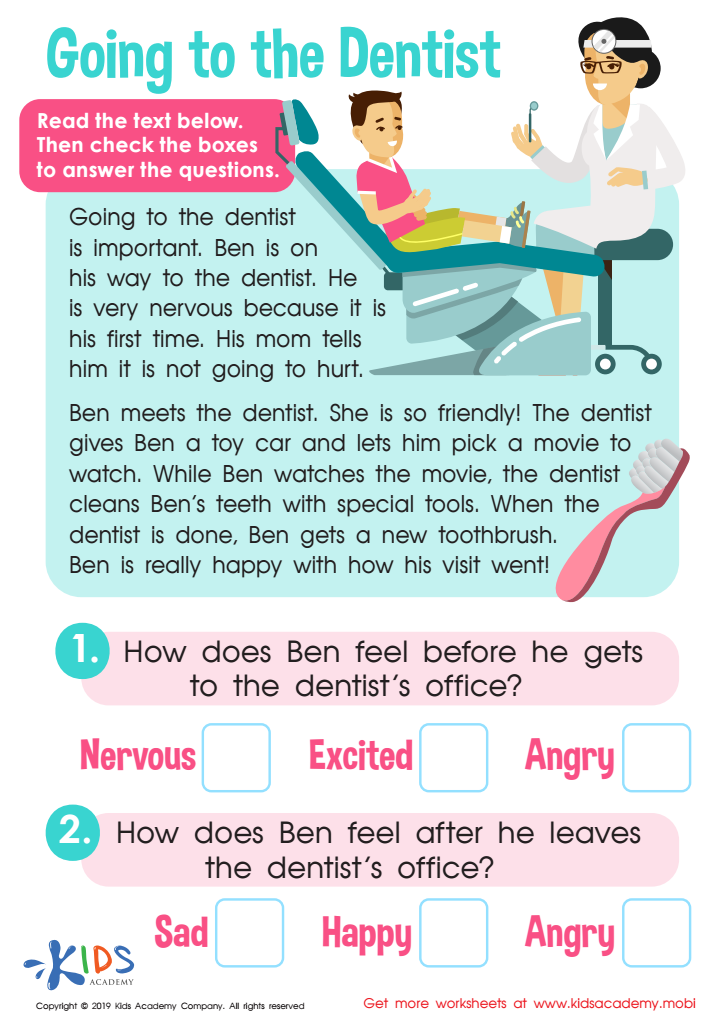
Going to the Dentist Worksheet
Kids can feel anxious when going to the dentist, but understanding why they go helps them cope. This free text helps them learn, as they read and answer questions about Ben's visit. They'll gain insight into Ben's emotions, while honing their critical thinking skills.
Going to the Dentist Worksheet
Worksheet
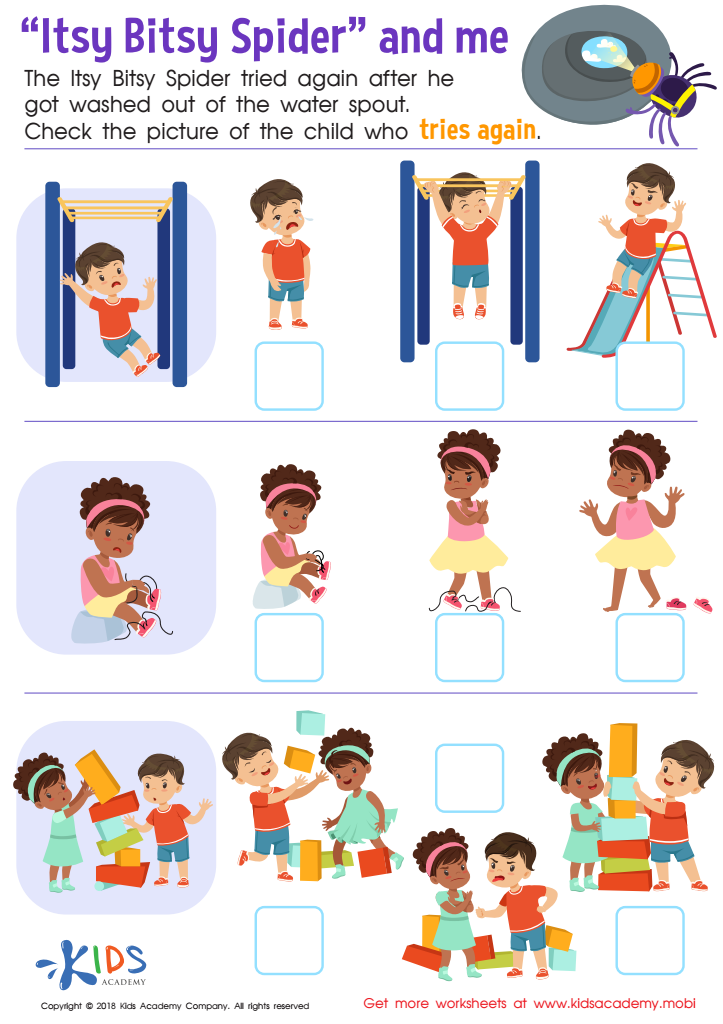
Itsy Bitsy Spider and Me Worksheet
Ensure your child's success - teach them determination and perseverance! Introduce them to the Itsy-Bitsy spider and this fun worksheet. It shows kids working hard and teaches them to 'try again.' Have them identify scenes and check the box for those who succeeded.
Itsy Bitsy Spider and Me Worksheet
Worksheet
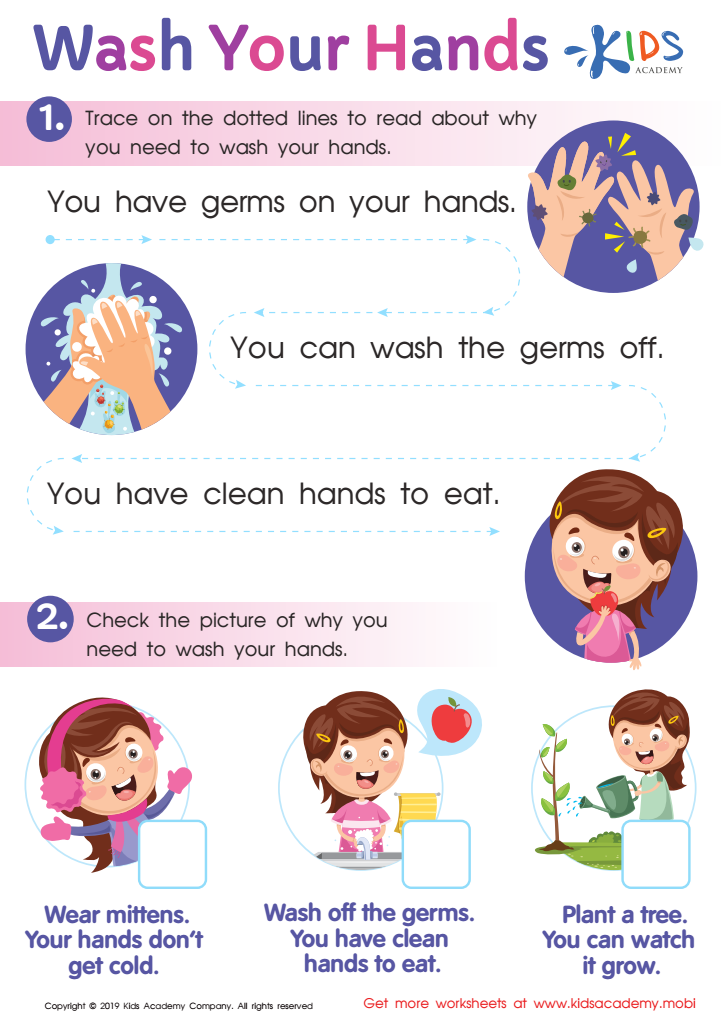
Wash Your Hands Worksheet
Kids learn best when they understand why they need to do something. This free worksheet uses traceable lines and pictures to teach them about germs and why washing hands is important. The child follows a left-to-right sequence and must check the correct picture to show they understand.
Wash Your Hands Worksheet
Worksheet
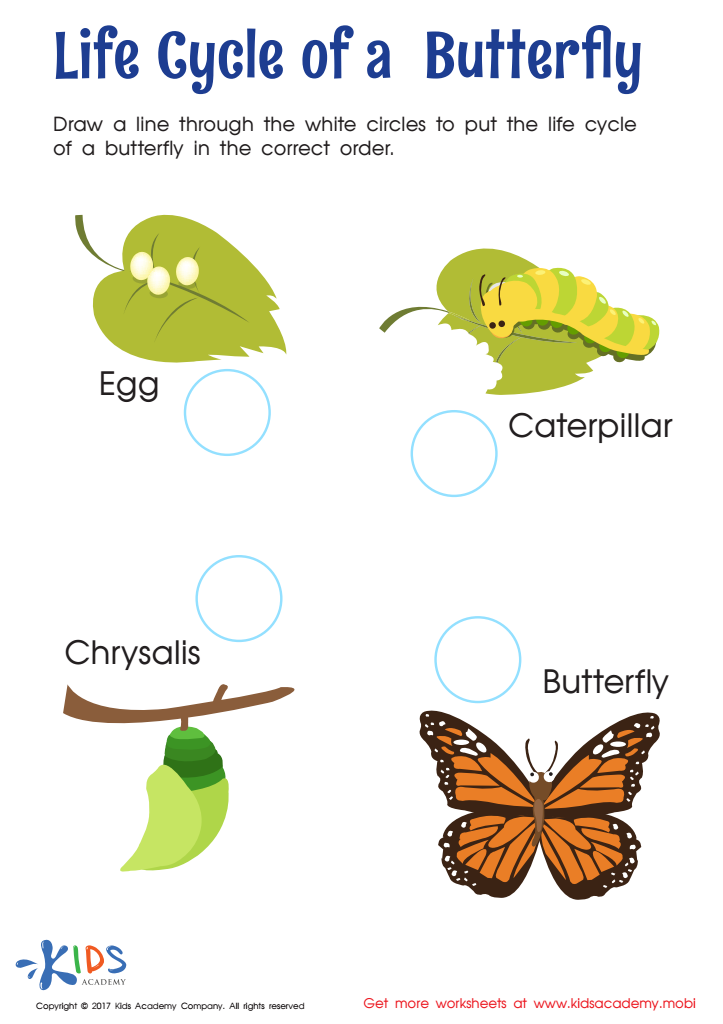
Life Cycle of Butterfly Worksheet
Kids Academy offers an exciting activity – a Life Cycle of a Butterfly Worksheet PDF. It shows four stages in the lifecycle of a butterfly with vivid pictures. Kids put the stages in the correct order to study the lifecycle.
Life Cycle of Butterfly Worksheet
Worksheet
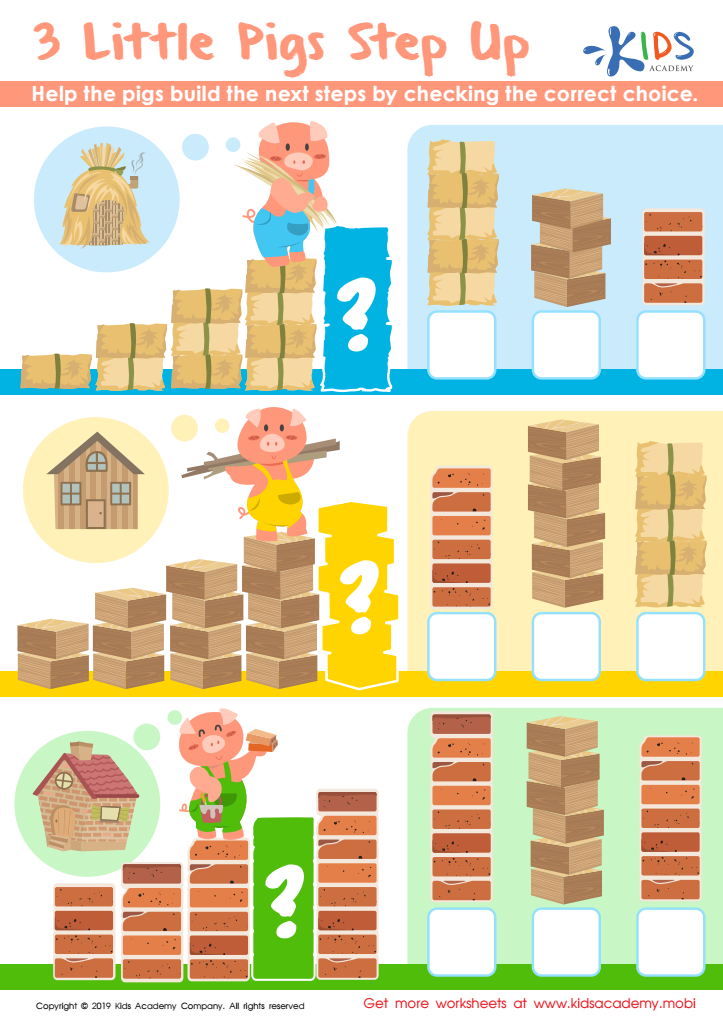
3 Little Pigs Step Up Worksheet
Test your kids' knowledge of the three little pigs' story. Ask them to tell you the important parts and then look at the pictures in this worksheet. Can they identify what's going on? They'll need to count the materials and help build the next steps by choosing the right option.
3 Little Pigs Step Up Worksheet
Worksheet
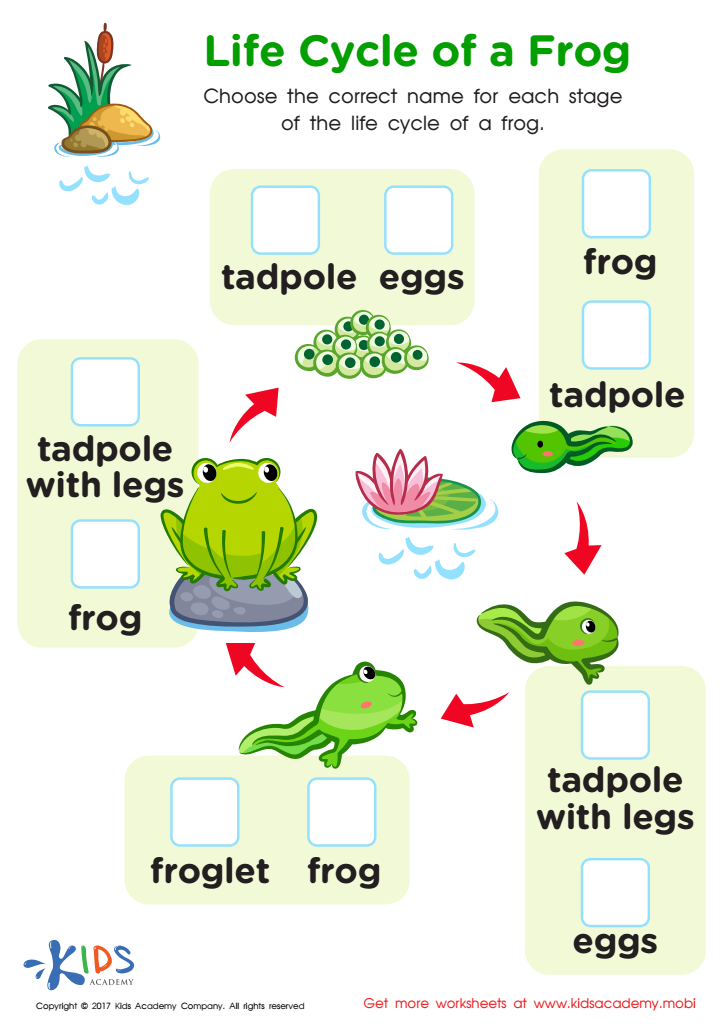
Life Cycle Frog Printable
Kids can explore the life cycle of frog with this fun worksheet! Draw lines from one stage to the next to follow the transformation from tadpole to frog and learn about the cycle of life.
Life Cycle Frog Printable
Worksheet
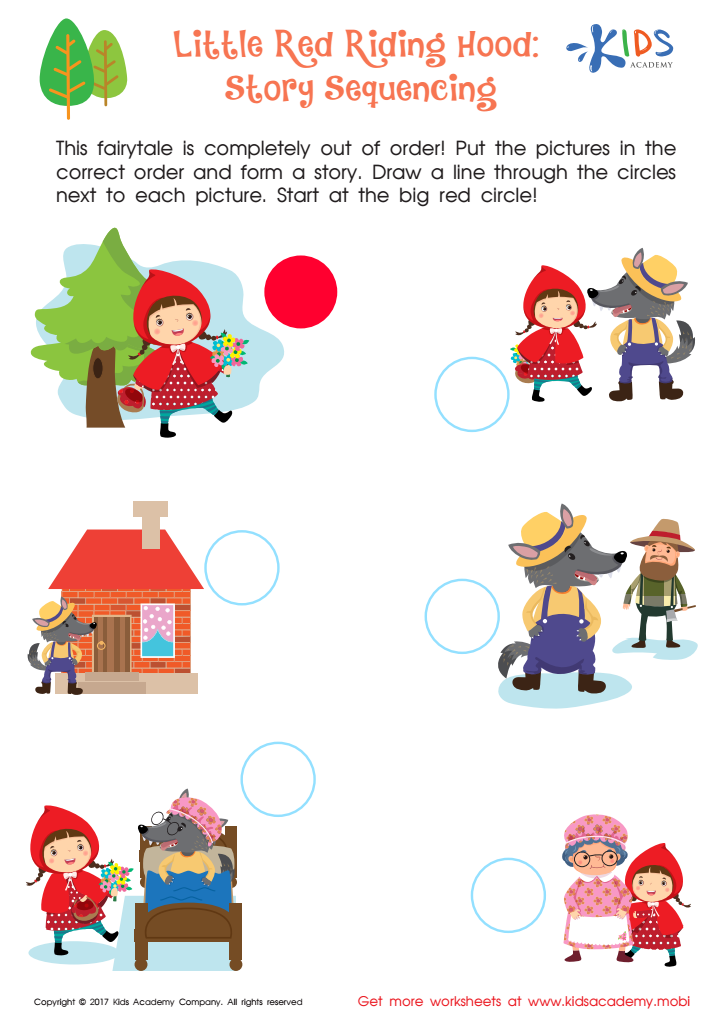
Story Sequencing Printable
Children must identify story events in sequential order to build a better understanding of plot.
Help your child learn how to understand plot with this fun comprehension worksheet: Little Red Riding Hood! Guide them to identify story events and order them correctly to boost their reading skills.
Story Sequencing Printable
Worksheet
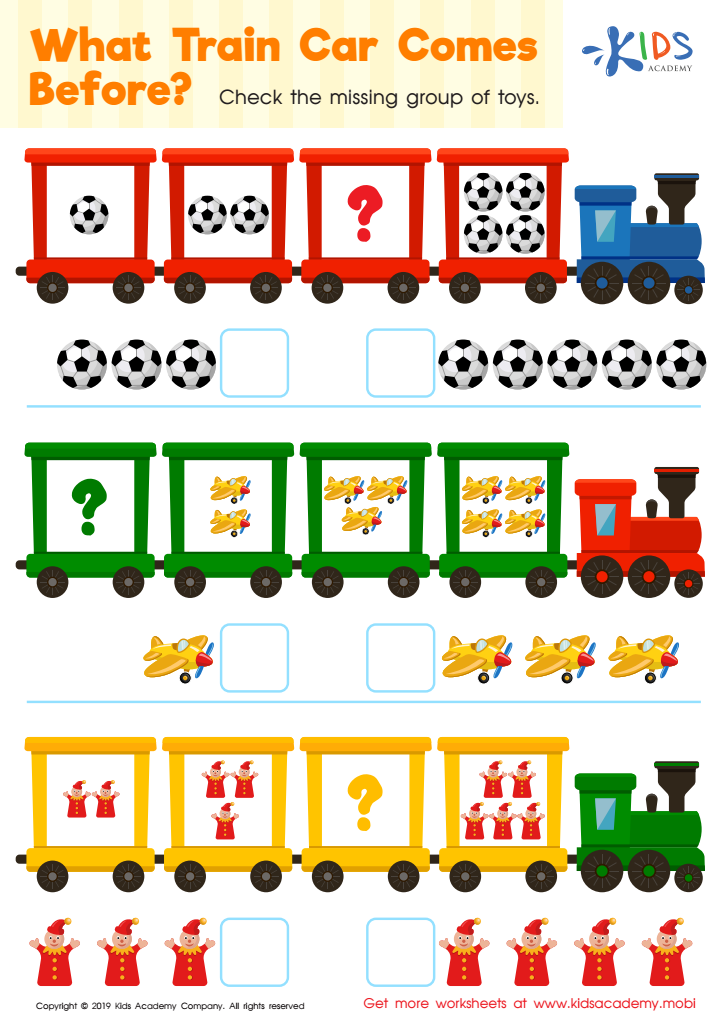
What Train Car Comes Before? Worksheet
Download this worksheet with your kids and have them identify the colorful objects pictured. Count the toys in the three trains together, then check the missing group of toys from the options provided. Have fun! (80 words)
What Train Car Comes Before? Worksheet
Worksheet
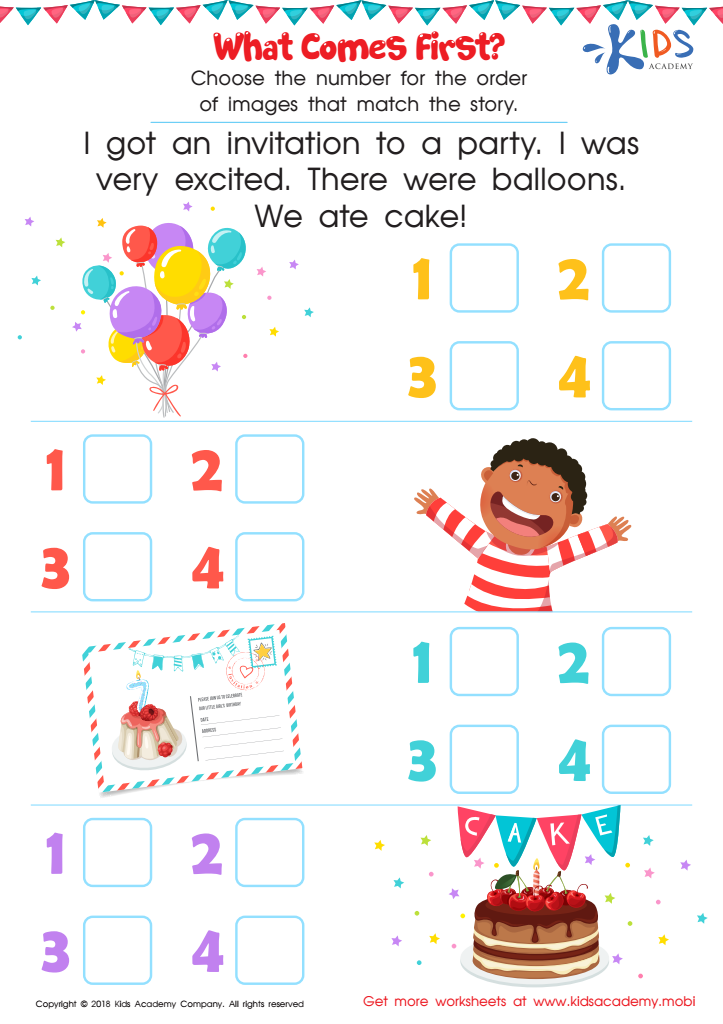
What Comes First Worksheet
Before you start, ask your child what they see in the picture. Read the story aloud together, then show them the images in order, numbered 1-5. Ask them to choose the numbers that match the story. Have fun and enjoy this party worksheet with your little one! (80 words)
What Comes First Worksheet
Worksheet
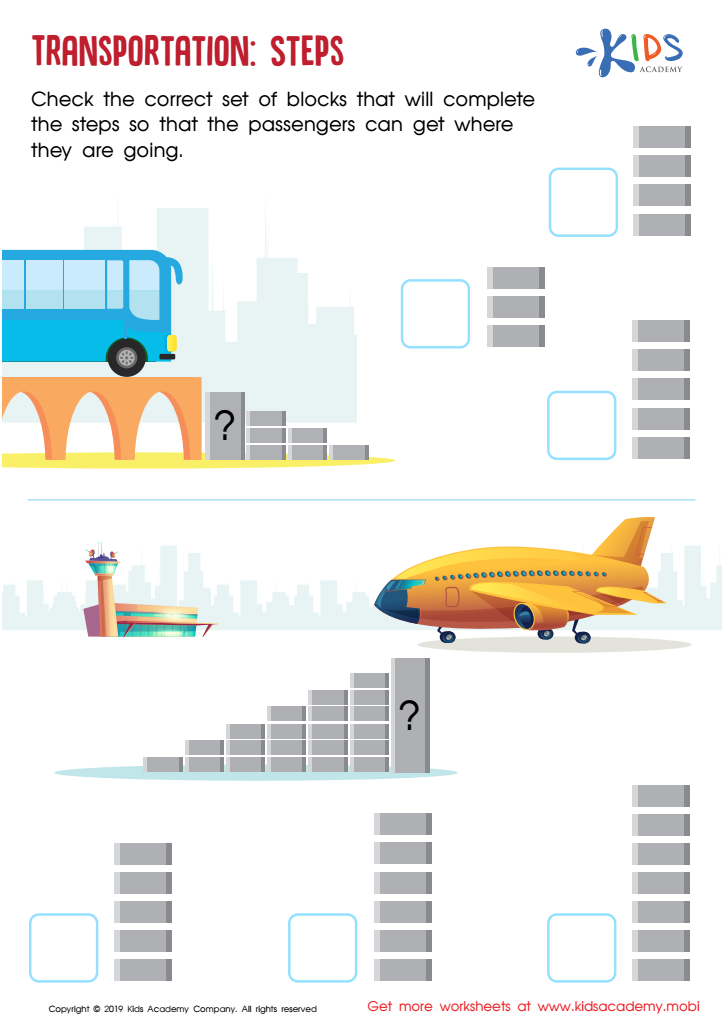
Transportation: Steps Worksheet
Trips are important to all - transportation and its modes have made travelling easier and quicker. Ask your kids to identify the transport in the picture then help them check the right blocks so passengers can reach their destination.
Transportation: Steps Worksheet
Worksheet
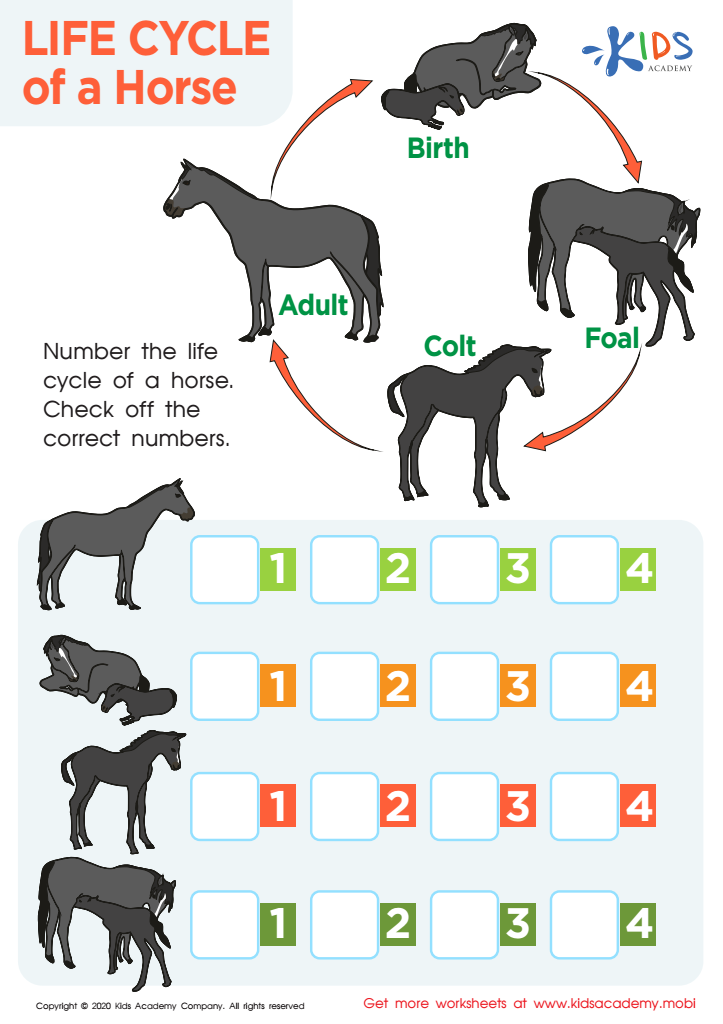
Life Cycle of a Horse Worksheet
Kids Academy's science worksheet on horses' lifecycles offers an engaging way for kids to learn! They'll study the diagram and label each stage of life, from birth to adulthood, and then number the pictures to mark the correct sequence. Fun and educational - a perfect way to get your kids learning!
Life Cycle of a Horse Worksheet
Worksheet
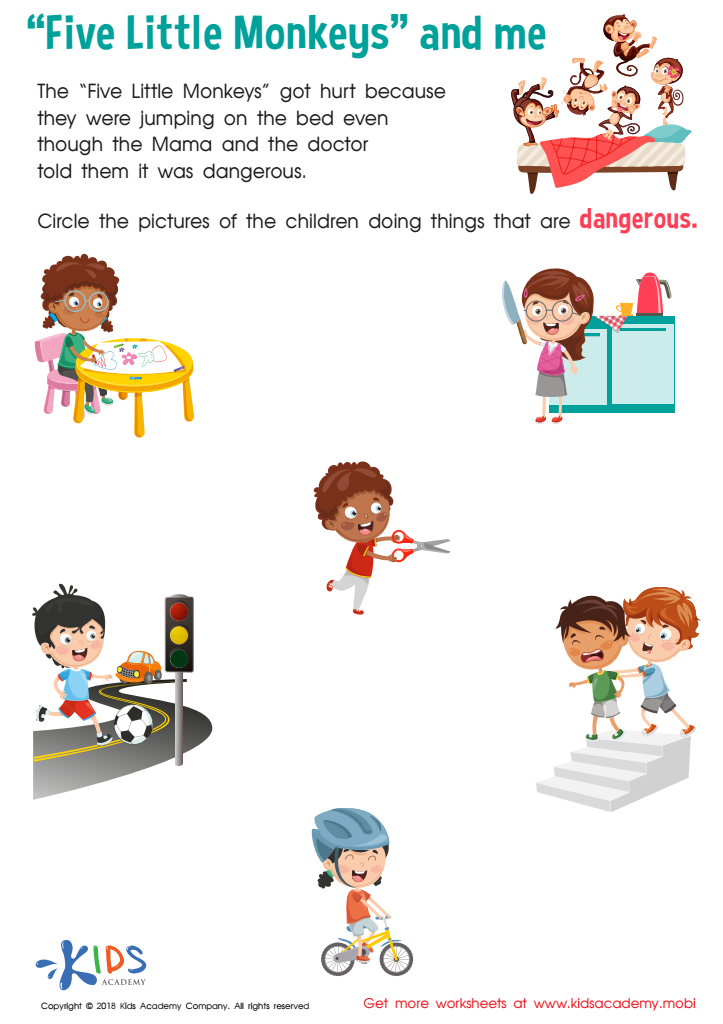
Five Little Monkeys and Me Worksheet
This free PDF worksheet provides preschoolers an understanding of danger and appropriate play. It allows them to recognize dangerous situations and why they can be risky, granting kids perspective from both parents and teachers. It's a fun, safe way to help them internalize what's dangerous and what's not.
Five Little Monkeys and Me Worksheet
Worksheet
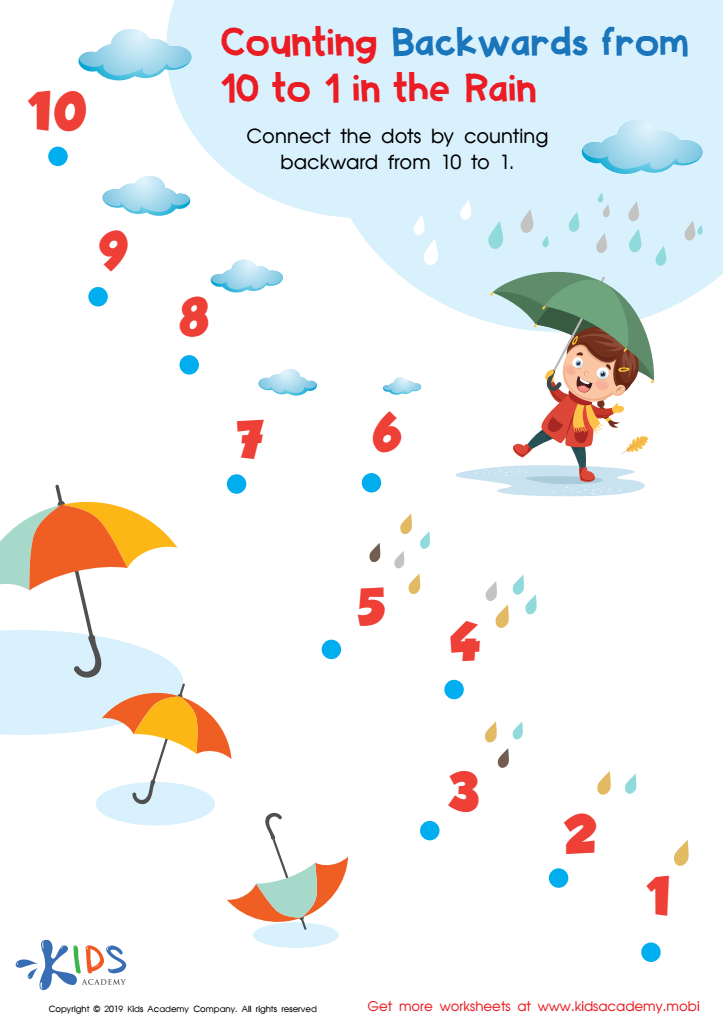
Counting Backwards from 10 to 1 in the Rain Worksheet
A rainy day can be fun - have your kids tell you their favorite activities! Then, look at the worksheet and ask them to identify the items. Count the numbers together, then help connect the dots from 10 to 1. It's an easy and fun way to spend time on a rainy day!
Counting Backwards from 10 to 1 in the Rain Worksheet
Worksheet
Join Kids Academy for Free
Who is primarily going to use this learning content?







Sequencing skills are an essential part of a child's cognitive development, particularly for children aged 6-7. At this stage, children begin to embrace more complex thoughts and ideas, and strengthening their sequencing abilities can significantly enhance their overall learning experience. Understanding sequences helps children to organize information logically, leading to improved reading comprehension and writing skills.
Moreover, sequencing plays a crucial role in mathematical problem-solving. Young learners use sequencing to develop skills in counting, addition, and recognizing patterns, laying the foundation for more advanced math concepts. Teachers and parents should foster these skills through storytelling, daily routines, and hands-on activities, allowing children to practice putting events in order and recognizing cause-and-effect relationships.
Additionally, sequencing skills contribute to a child's executive functioning, enhancing their ability to plan and follow steps in various tasks. It also reinforces language development as children learn to articulate their thoughts and recount events coherently. Thus, nurturing sequencing skills not only supports academic success but also builds essential life skills, preparing children for future challenges. By recognizing the importance of sequencing, teachers and parents can actively engage in activities that promote this fundamental ability.








