Shape comparison Worksheets for Ages 6-7
3 filtered results
-
From - To
Our Shape Comparison Worksheets for ages 6-7 make learning geometry engaging and fun! These printable activities help young learners identify, compare, and analyze different shapes, enhancing their spatial awareness and critical thinking skills. Students will enjoy hands-on practice with visual puzzles, matching games, and shape identification exercises designed to align with educational standards. Perfect for both classroom and at-home use, our worksheets are crafted to support the cognitive development and growing math proficiency of children. Foster a love for learning and geometrical concepts with our expertly designed shape comparison printables today!
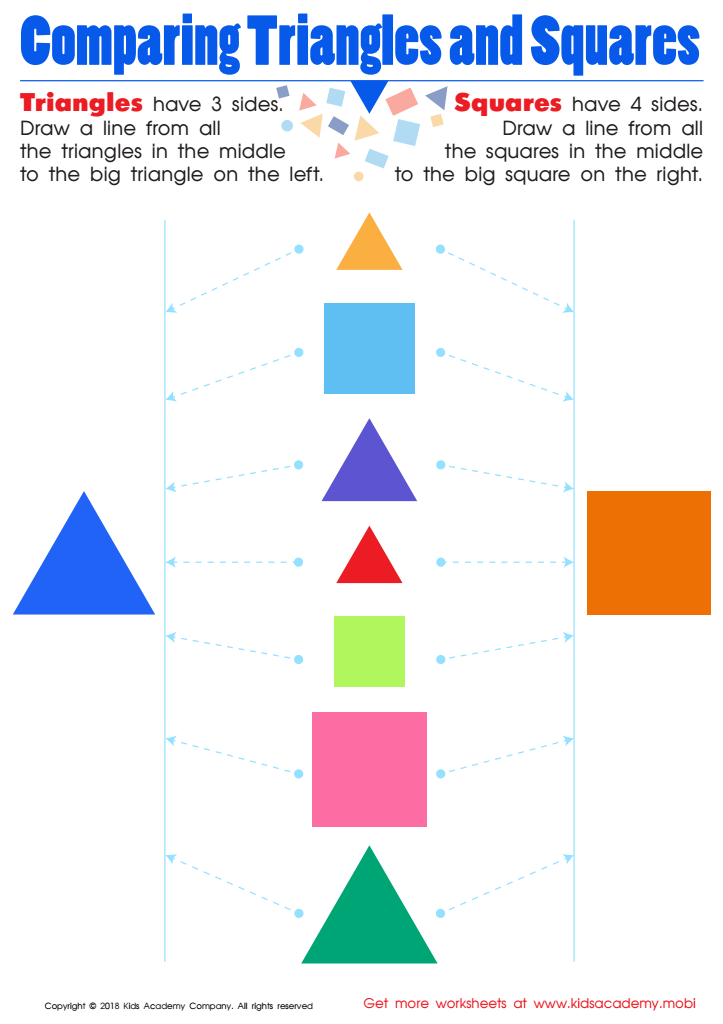
Comparing Triangles Squares Worksheet
 Assign to My Students
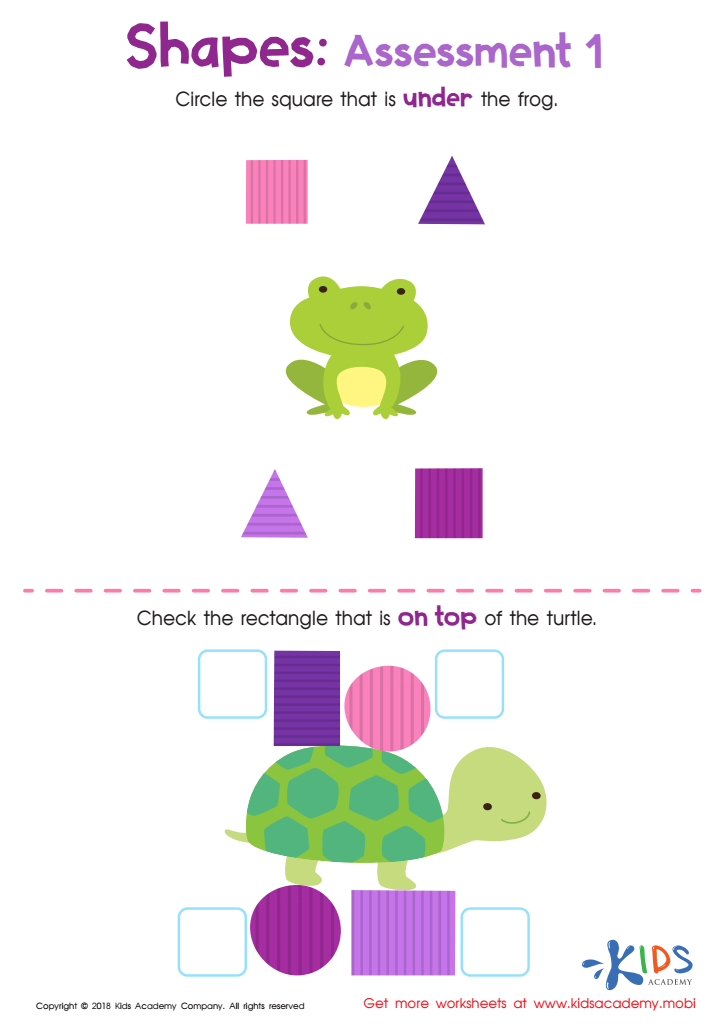
Geometry – Assessment 1 Worksheet
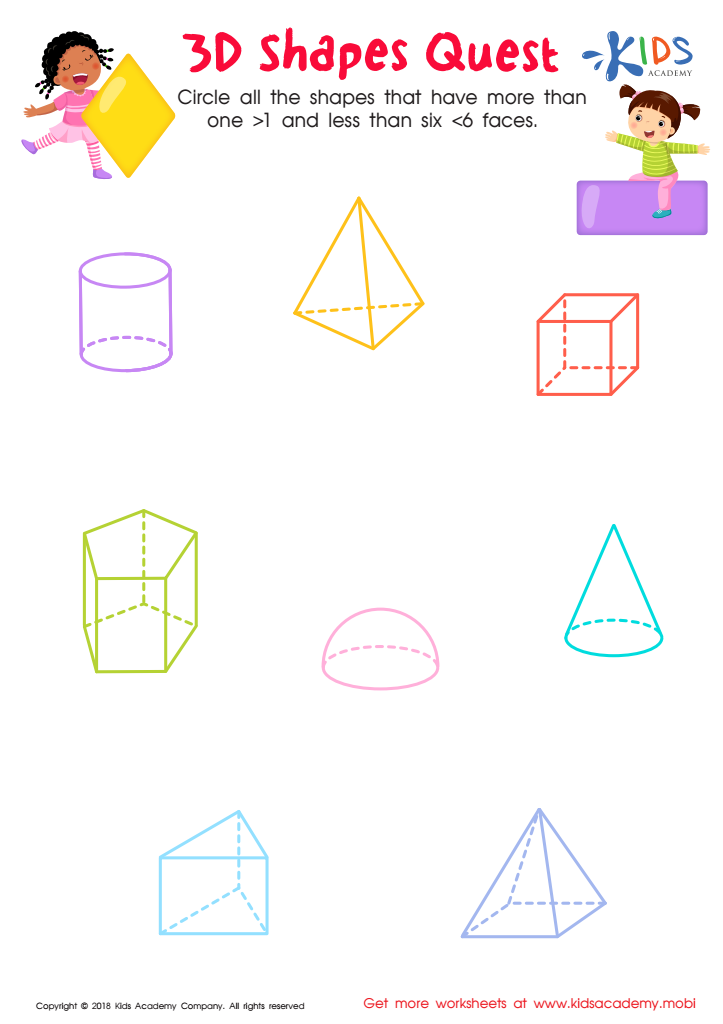
3D Shapes Quest Worksheet






Shape comparison is a crucial aspect of early childhood development, especially for children ages 6-7. It fosters foundational skills in geometry, measurement, and critical thinking. When children learn to compare shapes, they enhance their spatial awareness, which is essential for understanding the world around them. This skill translates into better abilities in problem-solving and logical reasoning, which are integral parts of mathematics and science education.
Moreover, understanding shapes and their properties lays the groundwork for more advanced mathematical concepts. For instance, recognizing that a square and rectangle are different but also noticing their similarities can help children later comprehend the properties of different geometric figures, symmetry, and congruence.
Shape comparison activities, such as sorting objects by shape or identifying shapes in the environment, also improve fine motor skills and hand-eye coordination. These tasks require precision and control, aiding in writing readiness and other daily activities.
Parents and teachers should support shape comparison to build a child's confidence and motivation in learning. The playful yet structured approach to geometry enhances curiosity and engagement, making learning enjoyable. In essence, shape comparison is not just about identifying shapes but equipping children with universally applicable skills, preparing them for future academic and life success.








