Check out this FREE "Shape identification" Trial Lesson for age 6-7!

Order objects and Describe your Findings

Favorites
With answer key
Interactive
  • 6-7
  • Shape identification
Bicycle Shapes Worksheet Preview

Bicycle Shapes Worksheet

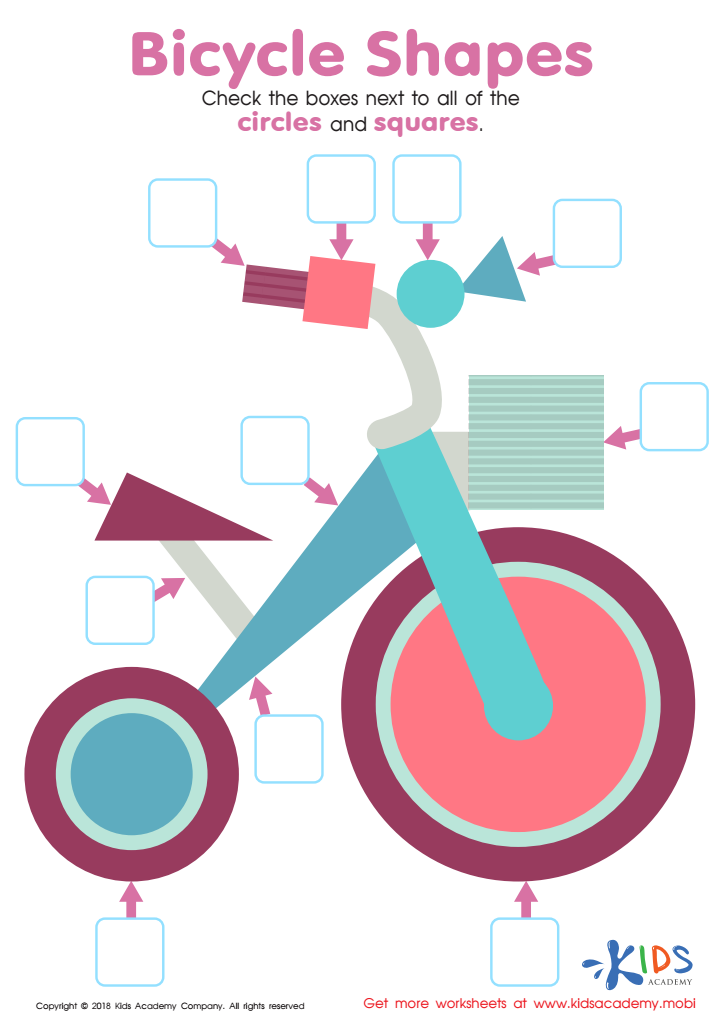
This fun geometry worksheet for preschoolers asks the child to spot hidden shapes (circles, squares) in a colorful bicycle. Each shape varies in size and the child checks the box when it's found. It's a visual way to teach shapes.
Bicycle Shapes Worksheet
Worksheet
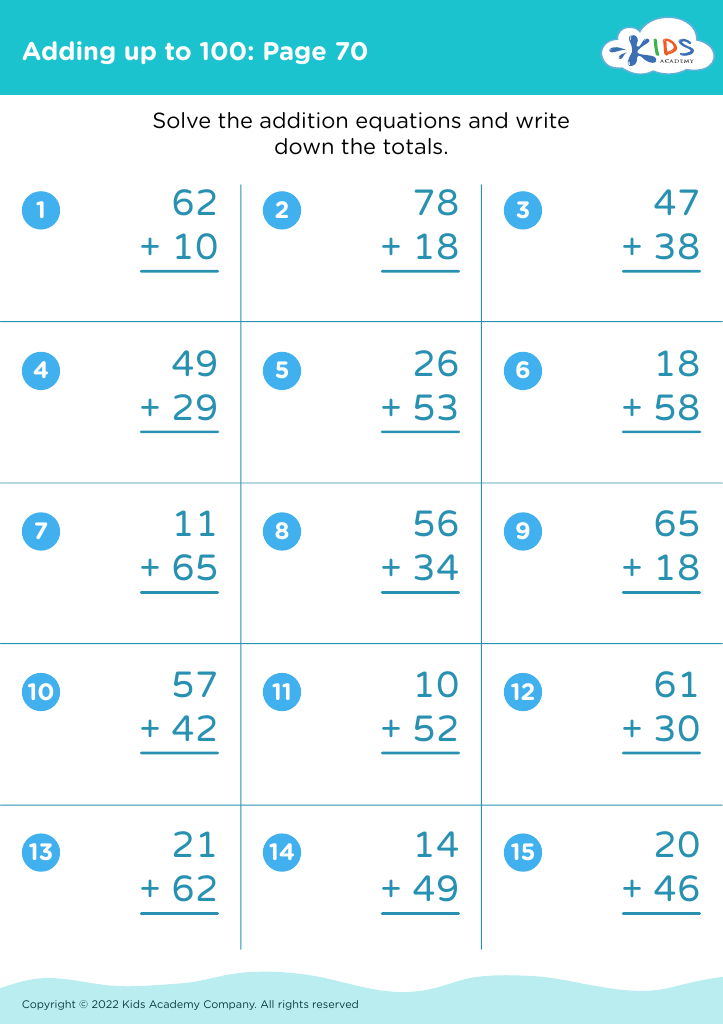
Adding up to 100: Page 70

Adding up to 100: Page 70

Adding up to 100: Page 70
Worksheet
Compare and Describe: Part 1 Worksheet
Compare and Describe: Part 1 Worksheet

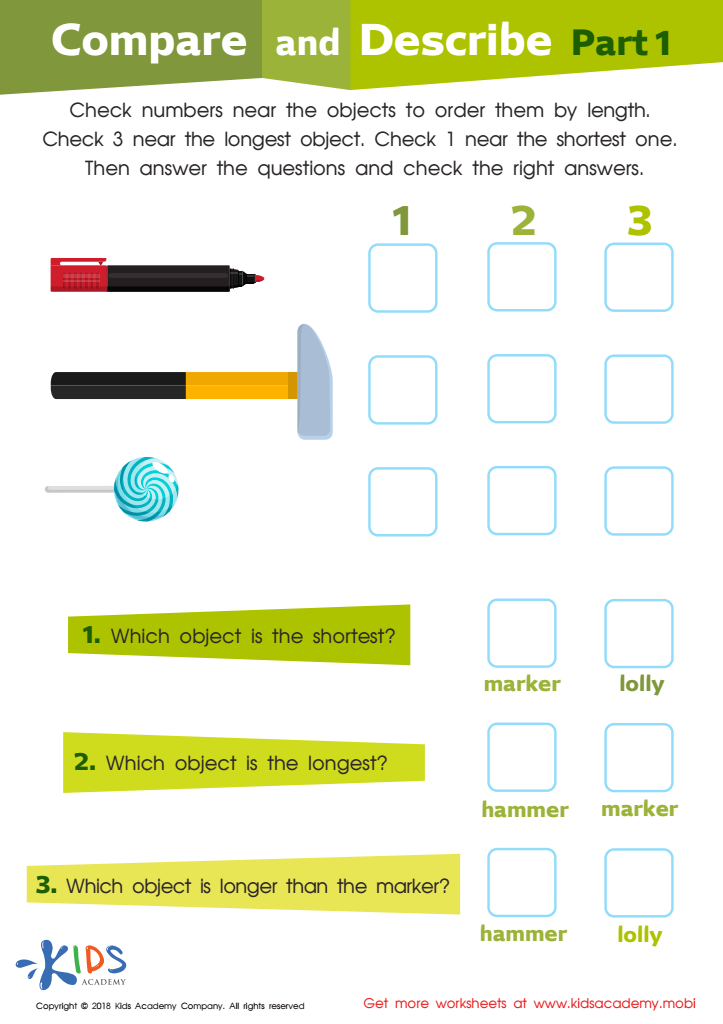
In this worksheet from Kids Academy, kids can start learning measurement in stages. Observe the images, then compare their length - which one is shortest? Which one is longest? Answer the questions at the bottom to complete the sheet. It's an easy way to help kids understand measurement basics.
Compare and Describe: Part 1 Worksheet
Worksheet
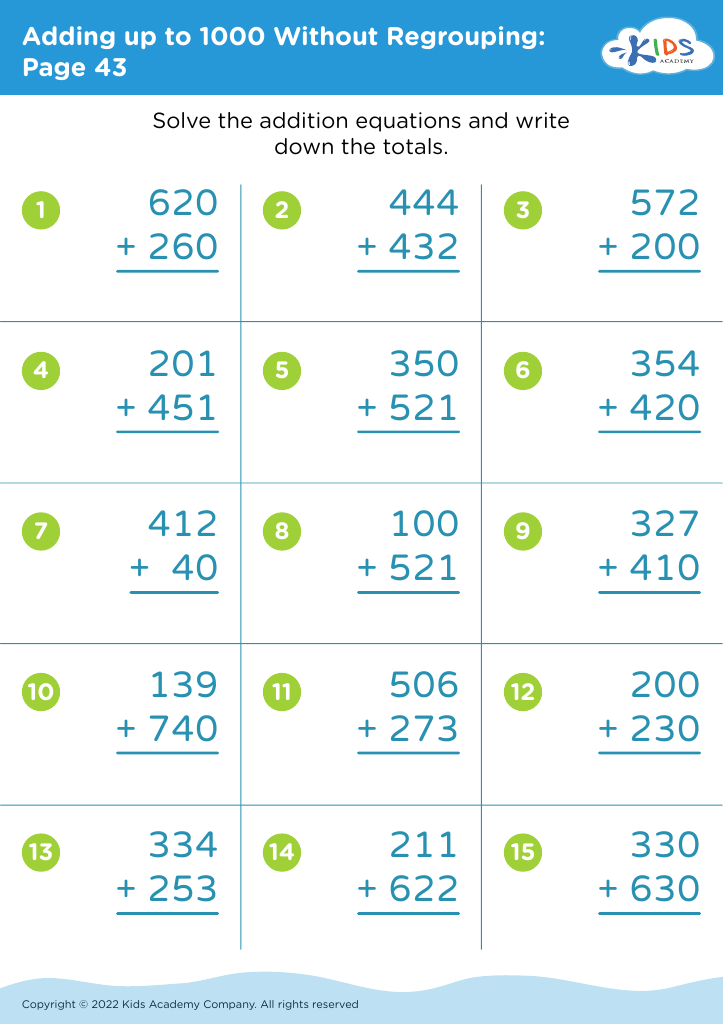
Adding up to 1000 Without Regrouping: Page 43
Worksheet
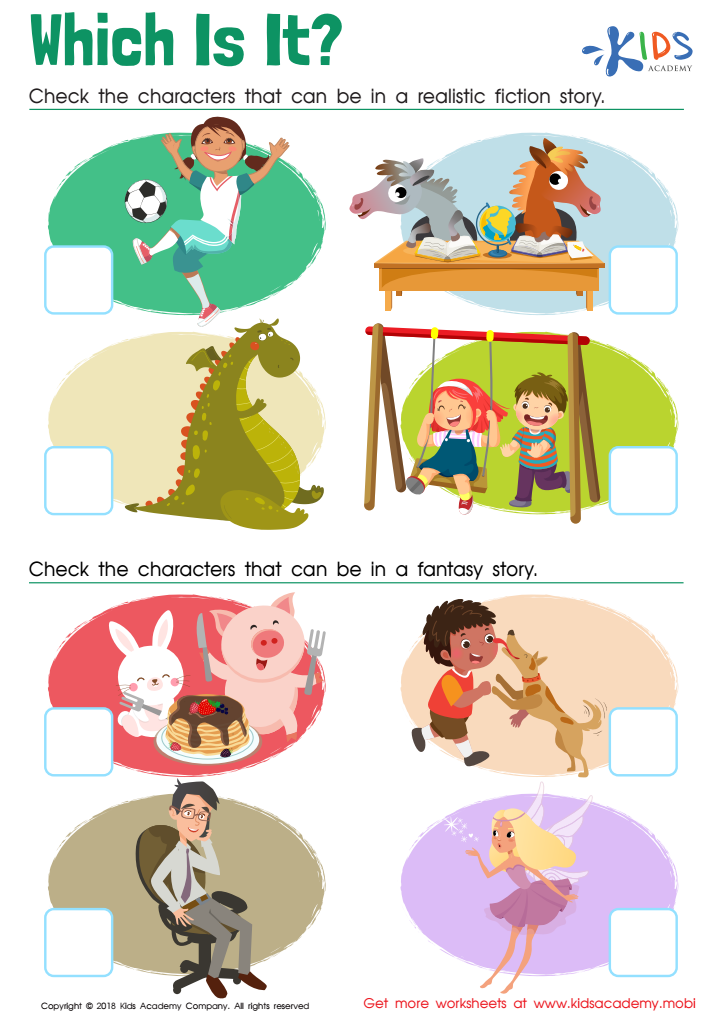
Which Is It? Worksheet

Which Is It? Worksheet

This colorful worksheet helps young readers identify elements of fact and fiction using fun picture clues. They can check off characters who exist in realistic fiction stories, which makes learning the difference between the two genres fun and engaging.
Which Is It? Worksheet
Worksheet
Geometry riddles worksheet

Geometry Riddles Printable

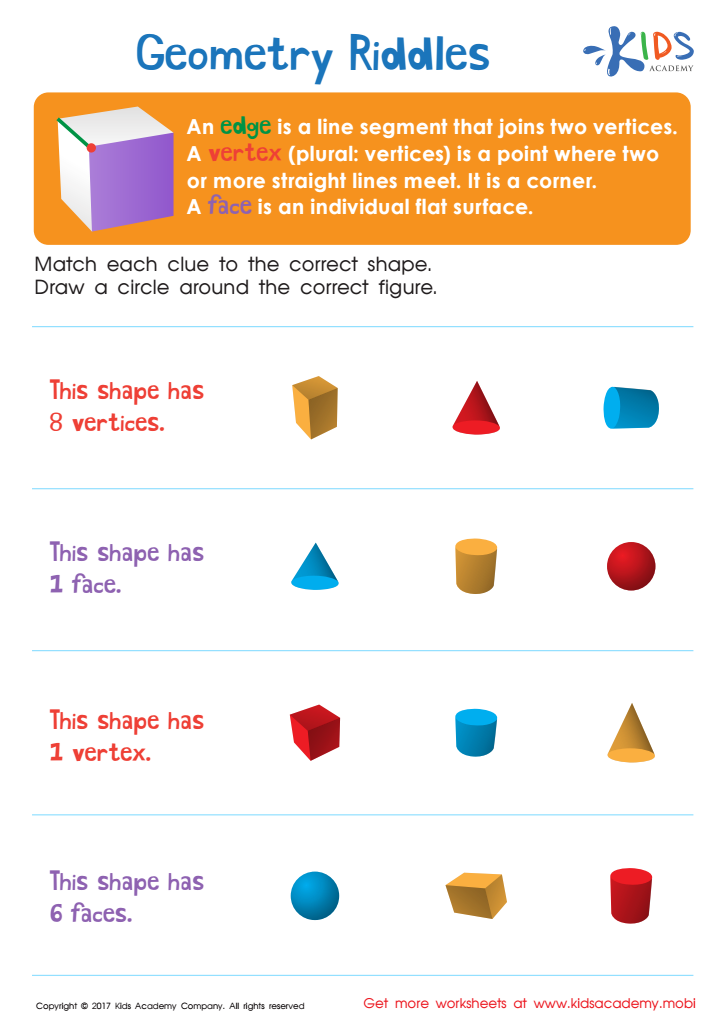
Review geometry terms with your child using this challenging worksheet of tricky riddles. Identifying and counting vertices, edges, and faces of shapes becomes fun as they solve the riddles!
Geometry Riddles Printable
Worksheet
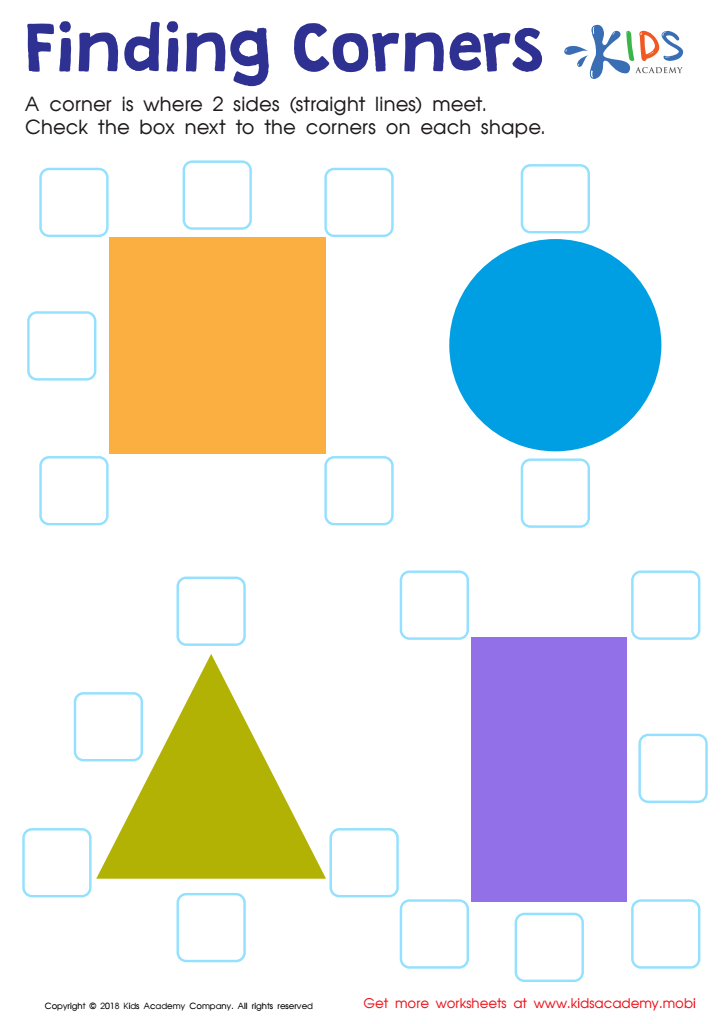
Finding Corners Worksheet

Finding Corners Worksheet

This vibrant worksheet introduces young learners to the fundamentals of geometric shapes. Through the downloadable PDF, they'll develop an understanding of corners - the intersection of two line segments - and how to identify them on different shapes. Fun colors and boxes let them label corners, helping them master this concept for future geometric reasoning.
Finding Corners Worksheet
Worksheet
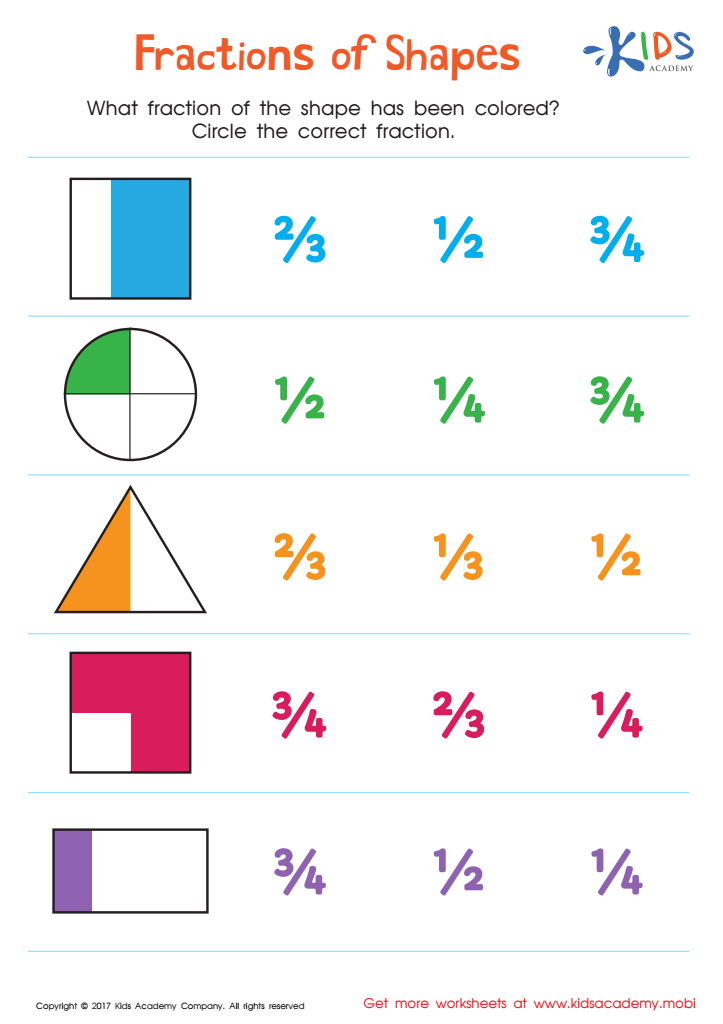
Fractions of shapes worksheet

Fractions of Shapes: Math Concept Worksheet
Fractions can be tricky, but with pictures to illustrate them, they become much easier to understand. Our fractions of shapes worksheet is a great way to help children visualize fractions and gain a better understanding of them.
Fractions of Shapes: Math Concept Worksheet
Worksheet
Preschool Matching Worksheet

Shapes Worksheet

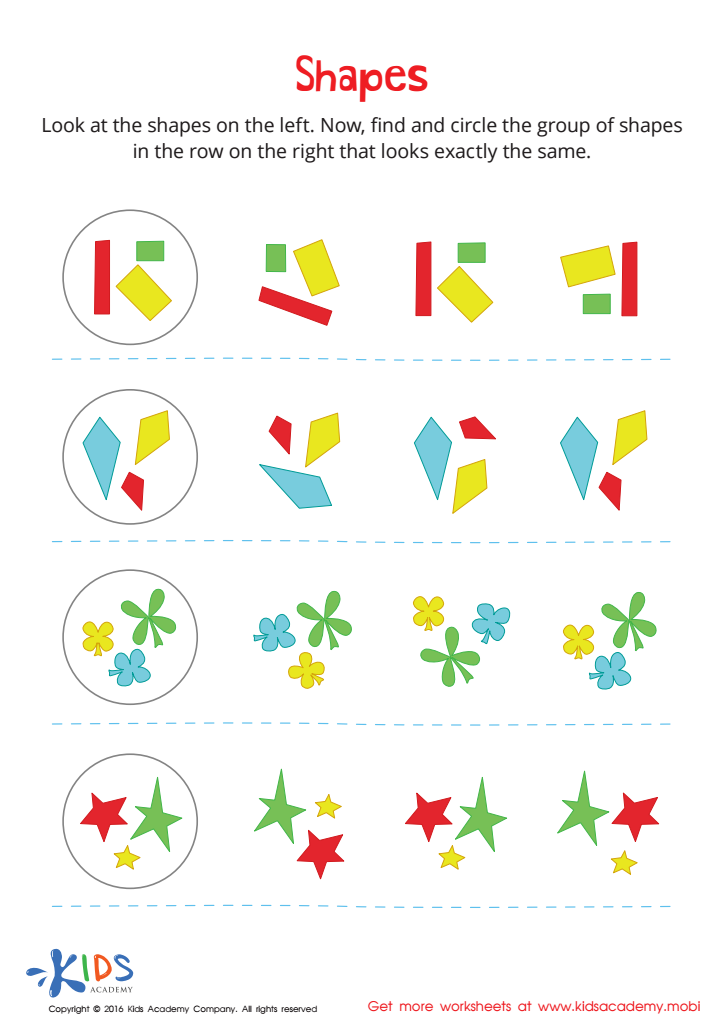
This fun worksheet will challenge your child to recognize tricky patterns, sort through similar ones, and create strategies to get the right answer. It'll also help them to strengthen problem-solving skills and build confidence. With more challenging tasks, your child will be ready to tackle higher level math and sequencing skills.
Shapes Worksheet
Worksheet
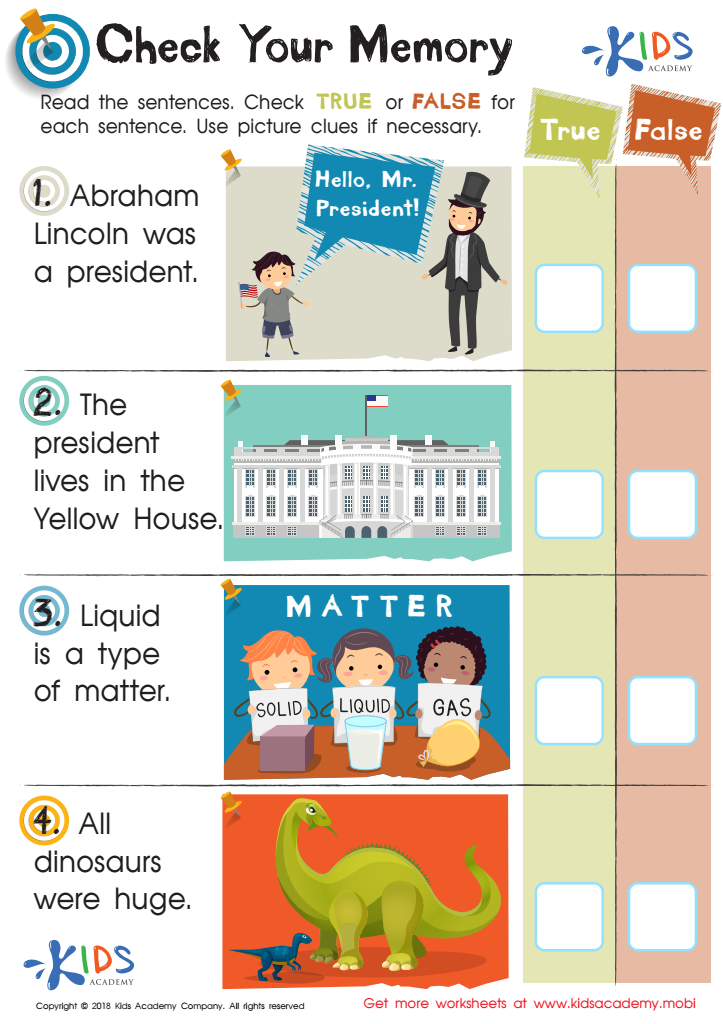
Check Memory Worksheet

Check Memory Worksheet

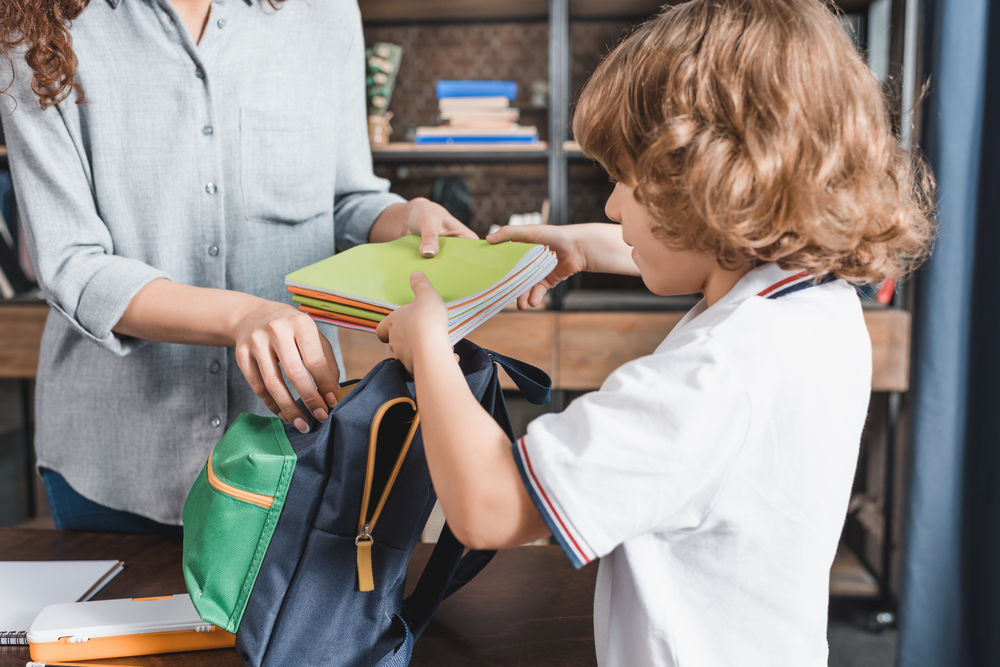
Assisting your kids with their homework and using worksheets is a great way for them to learn. The vibrant visuals in this printout can help stimulate the mind and motivate your child. Have them read the sentences and then point to the associated images. Afterwards, ask them to state True or False for each sentence. If they are still uncertain, offer them the picture clues to assist further.
Check Memory Worksheet
Worksheet
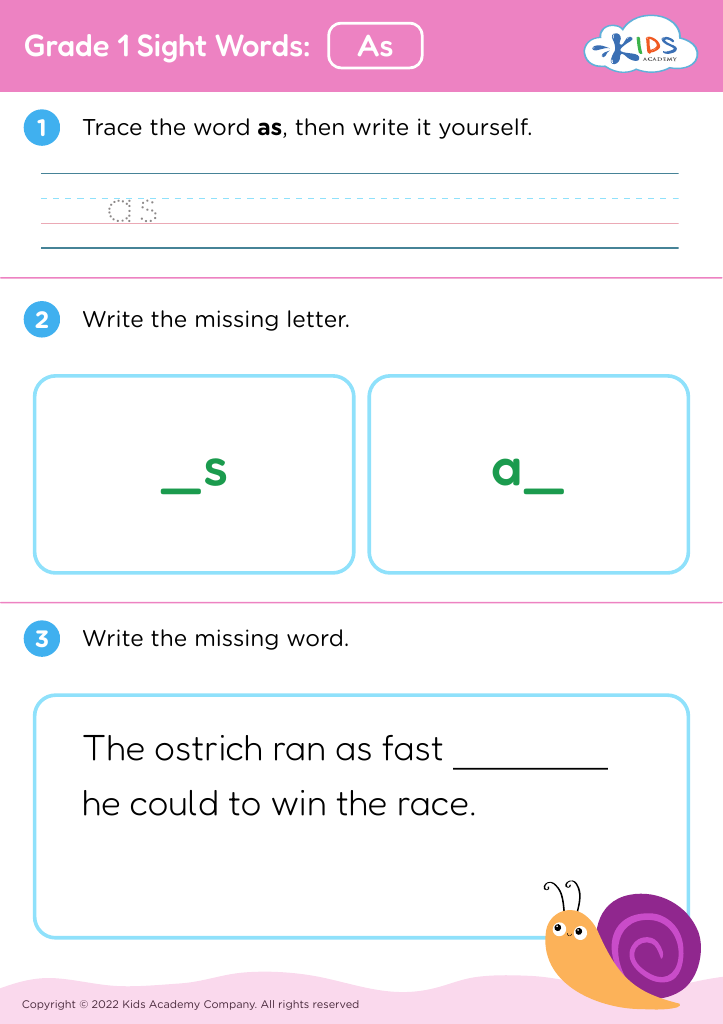
Grade 1 Sight Words: As

Grade 1 Sight Words: As

Grade 1 Sight Words: As
Worksheet
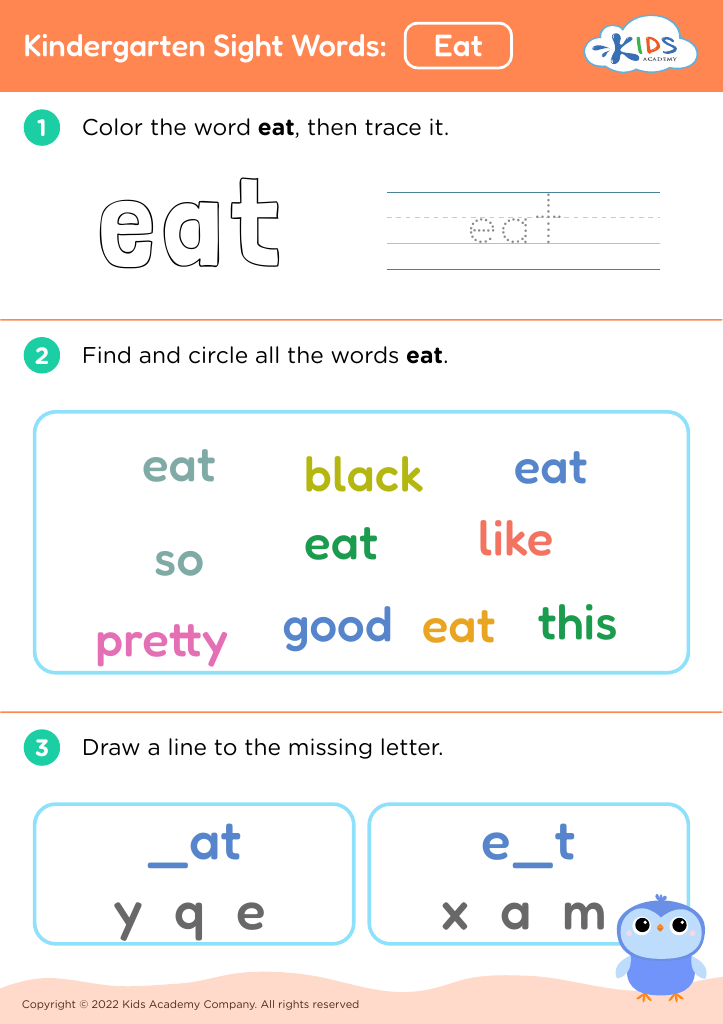
Kindergarten Sight Words: Eat

Kindergarten Sight Words: Eat

Kindergarten Sight Words: Eat
Worksheet


Shape identification is a critical skill for children aged 6-7, and both parents and teachers should prioritize its development for several reasons. First, shape recognition lays the groundwork for fundamental mathematical concepts. Understanding shapes enhances children’s ability to grasp geometry and spatial awareness, which are foundational to more complex mathematical tasks.

Additionally, identifying shapes supports cognitive development. It encourages analytical thinking as children learn to categorize and differentiate between various shapes, fostering problem-solving skills. Moreover, real-world applications of shape recognition are abundant; for example, recognizing shapes in architecture, nature, and everyday objects supports a child's understanding of their environment.

From a creative perspective, shapes are the building blocks of art and design. Encouraging children to explore and create with shapes allows for self-expression while developing fine motor skills. Furthermore, shape identification enhances language development as children learn to describe shapes and their attributes.

Involving parents in this process strengthens the learning experience. Families can engage in activities that promote shape recognition, reinforcing what is learned in school. By prioritizing shape identification, parents and teachers enrich children's development across multiple domains, ultimately setting them up for future academic success.