Sound-letter correlation Worksheets for Ages 6-7
3 filtered results
-
From - To
Enhance your child's literacy skills with our engaging Sound-Letter Correlation Worksheets designed for ages 6-7! These interactive worksheets help young learners explore the essential connections between sounds and their corresponding letters, promoting phonemic awareness. Through playful activities, children will identify letters, match sounds, and complete fun exercises, making learning both enjoyable and effective. Each worksheet is tailored to support early reading development, ensuring kids grasp the fundamentals of sound-letter relationships in a creative way. Perfect for parents and educators, these resources provide valuable reinforcement for classroom learning or at-home practice. Start your child's journey to reading success today!
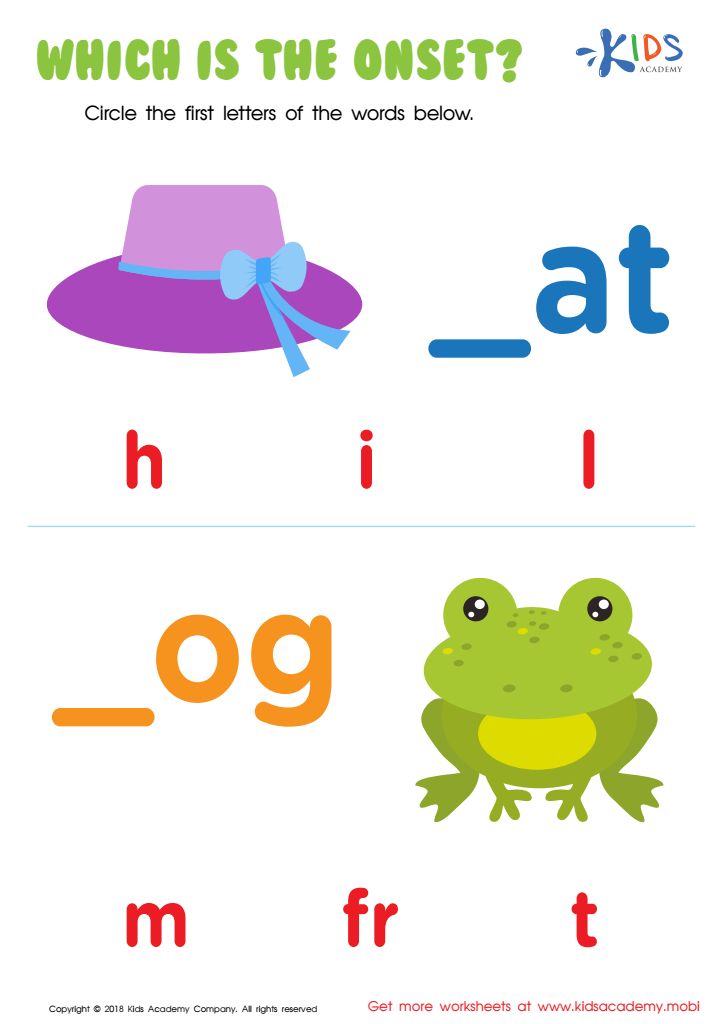
Which Is the Onset? Worksheet
 Assign to My Students
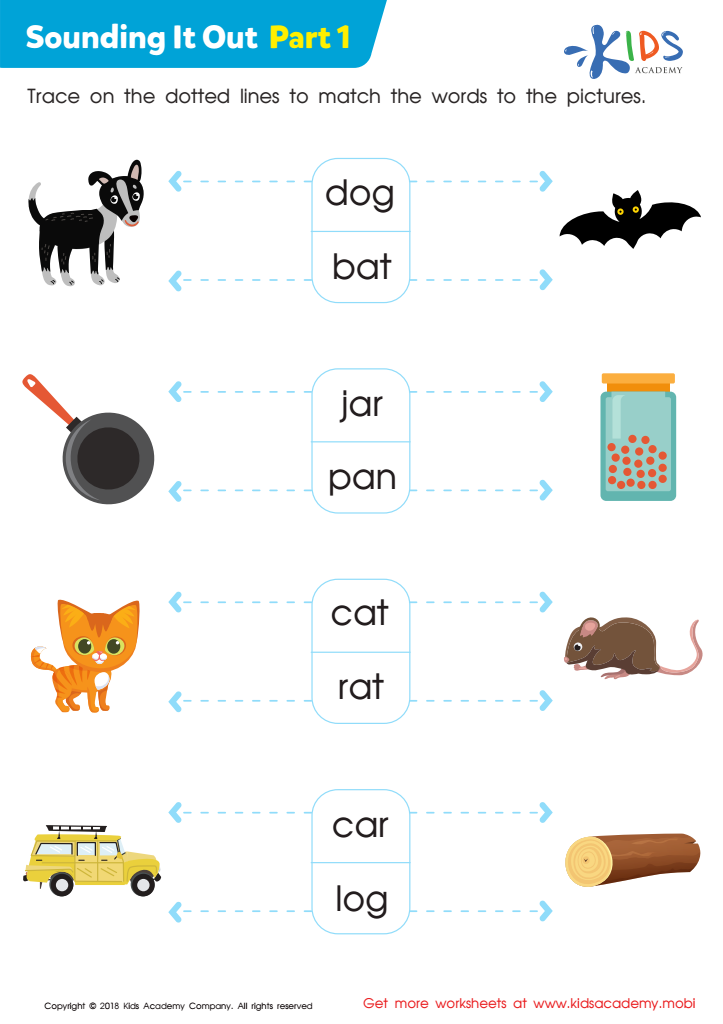
Sounding it Out: Part 1 Worksheet
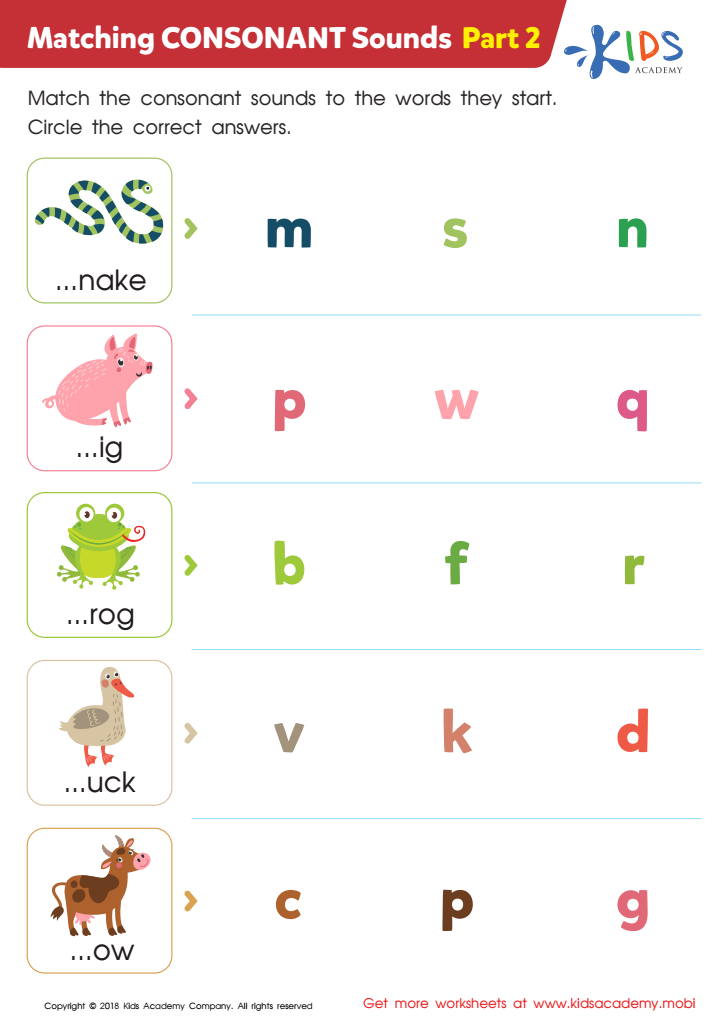
Matching Consonant Sounds: Part 2 Worksheet






Sound-letter correlation, or phonics, is crucial for children aged 6-7 as it lays the foundation for reading and writing skills. At this developmental stage, children are rapidly acquiring language skills, and understanding the relationship between sounds and letters significantly enhances their literacy journey. When parents and teachers prioritize sound-letter correlation, they empower children to decode words effectively, promoting fluency in reading.
This age group is marked by cognitive growth, where kids start recognizing patterns. Sound-letter correlation helps them understand that letters represent specific sounds, enabling them to sound out words independently. Additionally, this knowledge builds confidence; children who grasp phonics are more likely to attempt unfamiliar words, fostering a love for reading.
Furthermore, mastering sound-letter relationships aids in spelling and writing. Children who can identify sounds are better equipped to spell phonetically, increasing their writing competency.
It’s essential for core academic success, as reading proficiency is linked to overall learning in all subjects. Both parents and teachers play a vital role by engaging children in phonics activities, such as rhyming games and reading together, which solidifies these crucial skills. Strong foundational literacy skills set children on a path toward lifelong learning and academic achievement.








