Strategic thinking Worksheets for Ages 6-7
3 filtered results
-
From - To
Introducing our "Strategic Thinking Worksheets for Ages 6-7," designed to nurture young minds and enhance problem-solving skills! These engaging worksheets encourage children to explore various scenarios, develop their reasoning abilities, and foster creativity through fun activities. With a blend of puzzles, logic games, and critical thinking exercises, children will learn to approach challenges systematically and think ahead. Perfect for home and classroom use, our resources promote independent thinking and confidence. Help your child unlock their full potential and embrace the joy of learning with our strategic thinking worksheets, tailored specifically for curious learners aged 6-7! Explore the world of strategy with us!
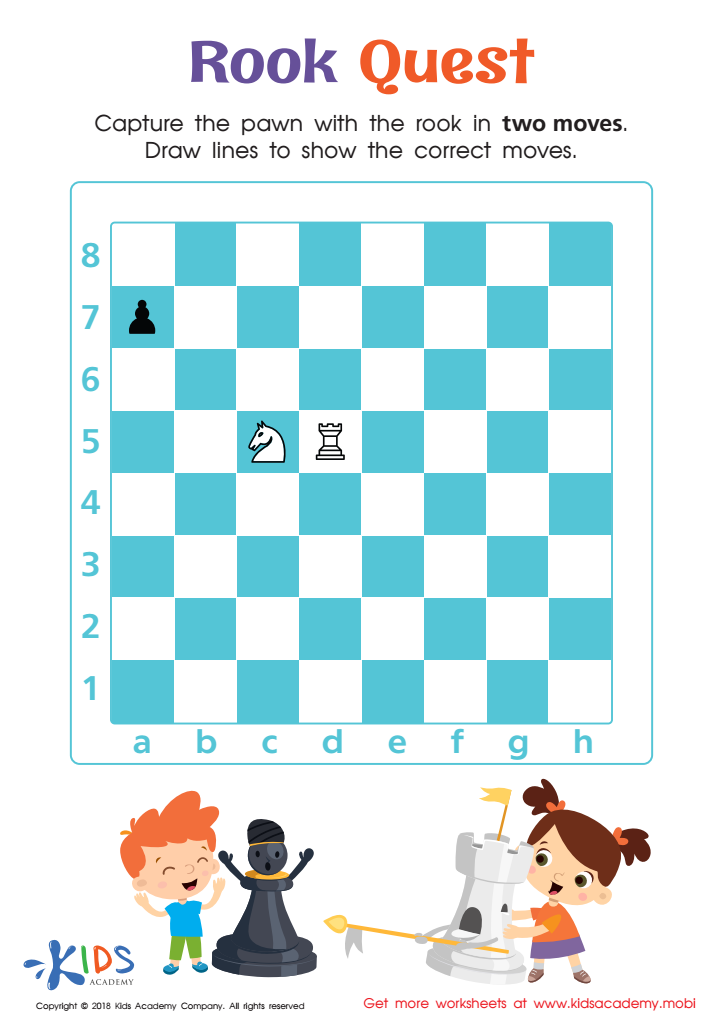
Rook Quest Worksheet
 Assign to My Students
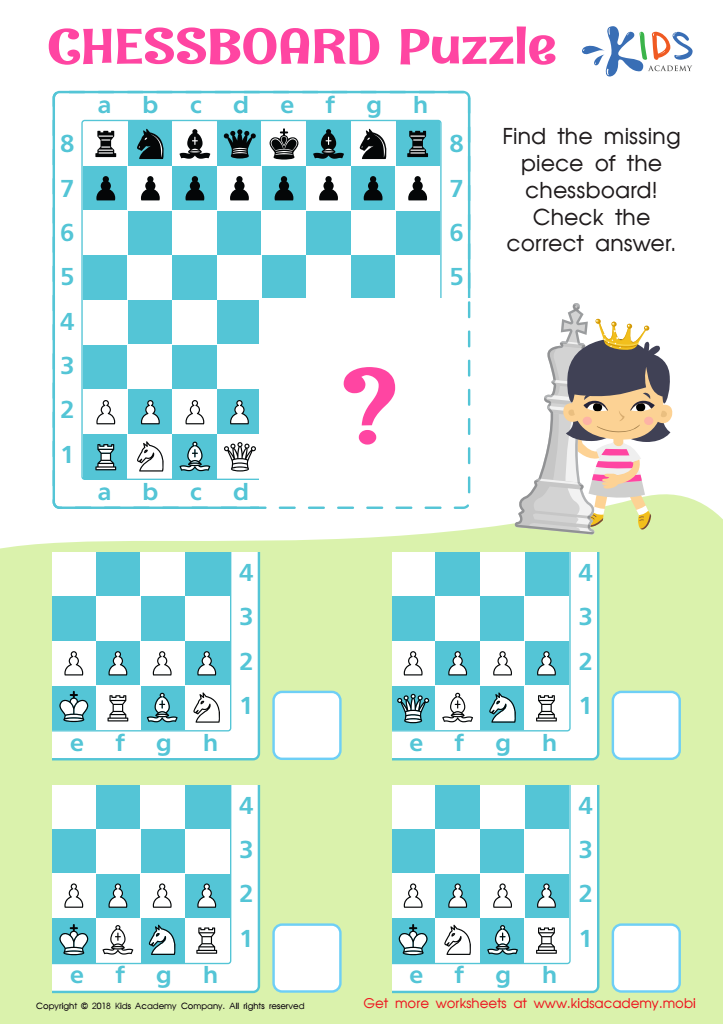
Chessboard Puzzle Worksheet
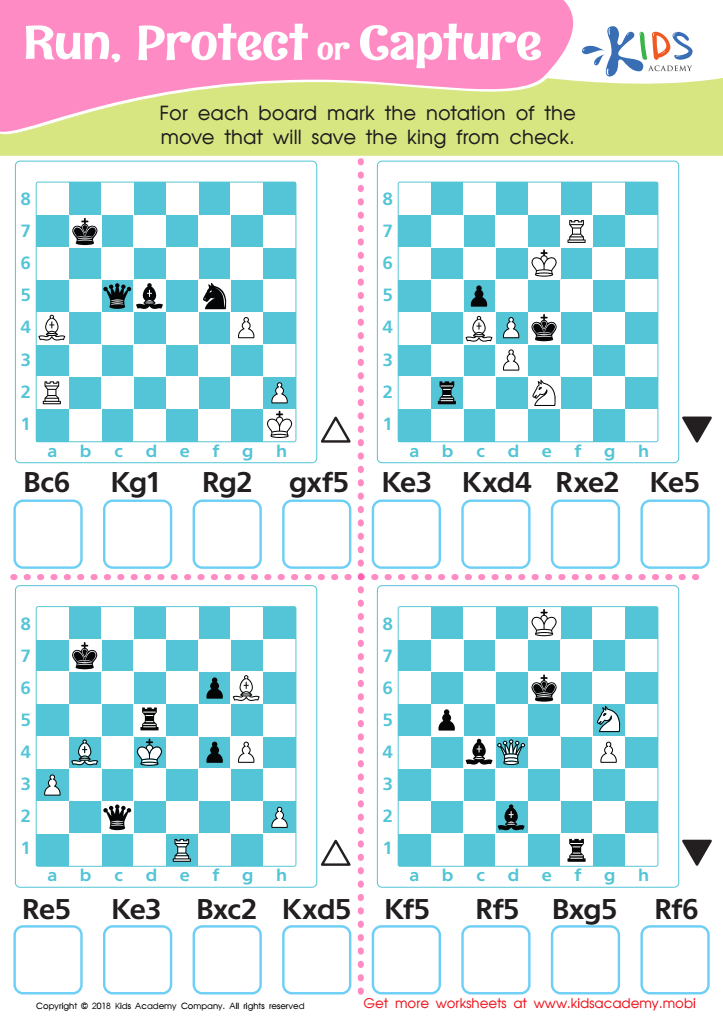
Run, Protect or Capture Worksheet








Strategic thinking at the ages of 6-7 is crucial for cognitive development and laying the foundation for lifelong problem-solving skills. At this stage, children begin to enhance their ability to plan, organize, and analyze different situations, which are key components of strategic thinking. Parents and teachers should care about fostering this skill as it helps children understand the consequences of their actions, make informed decisions, and cultivate creativity.
Engaging children in games that require foresight, like chess or even simple board games, encourages them to think multiple steps ahead. This process enhances critical judgment and promotes resilience as they learn to handle both success and failure. Furthermore, integrating strategic thinking into everyday lessons can make learning more enjoyable and impactful, supporting subjects such as math and literacy through interactive experiences.
As children practice strategic thinking, they become more effective communicators and collaborators. These social skills are essential for their future interactions in school and beyond. In a rapidly changing world, encouraging strategic thinking not only prepares children for academic success but also equips them with adaptability and foresight they will need in life. Therefore, by prioritizing this skill, parents and teachers set children on a path to becoming thoughtful, responsible adults.








