Unlock the power of language for children ages 6-7 with our engaging "Understanding Adjectives" worksheets! Designed to enhance vocabulary and comprehension, these interactive activities teach young learners how to identify and use adjectives effectively. Kids will explore various descriptive words through fun exercises that involve matching, filling in the blanks, and creative writing prompts. Perfect for at-home study or classroom use, these worksheets build essential communication skills while keeping children entertained. Help your child discover the colorful world of adjectives and improve their writing abilities with our thoughtfully crafted resources. Dive into language learning today!

Check out this FREE "Understanding adjectives" Trial Lesson for age 6-7!

Identify the Main Purpose of a Text, Including what the Author wants to Answer, Explain, or Describe

Favorites
With answer key
Interactive
  • 6-7
  • Understanding adjectives
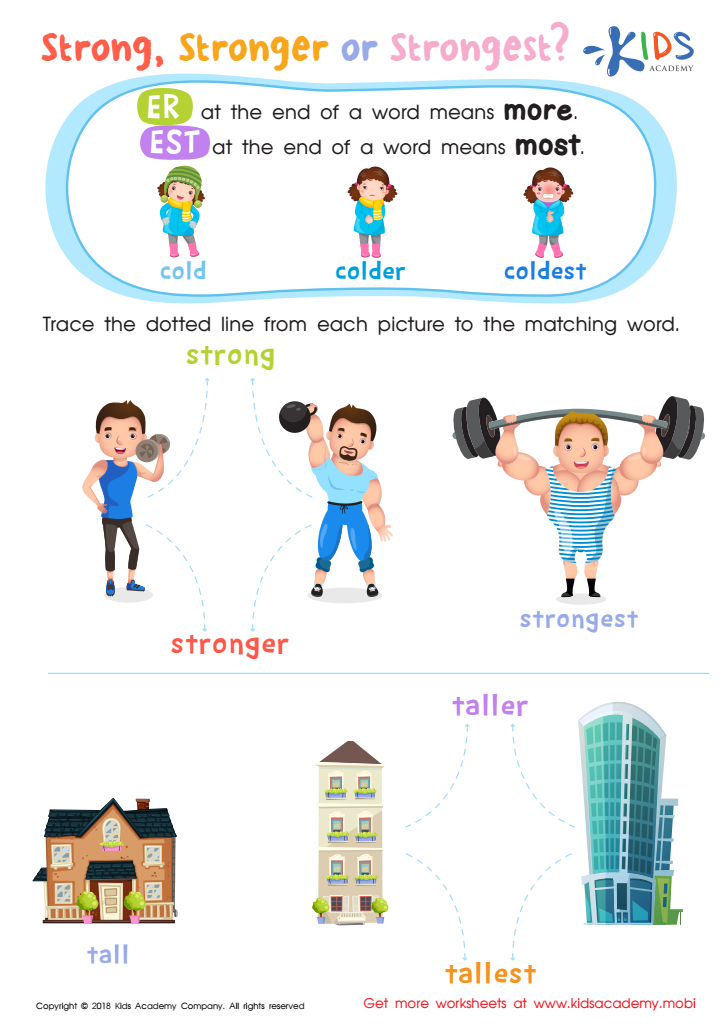
Strong or Stronger? Worksheet

Strong or Stronger? Worksheet

Help your child understand the concept of size gradients with a fun worksheet. Explain to them that adding "-er" to words means "more" and "-est" means "most". Point to the pictures and have your little one trace the dotted line to the corresponding words to learn the concept of highest and lowest.
Strong or Stronger? Worksheet
Worksheet
Adjective Maze Worksheet

Adjective Maze Worksheet

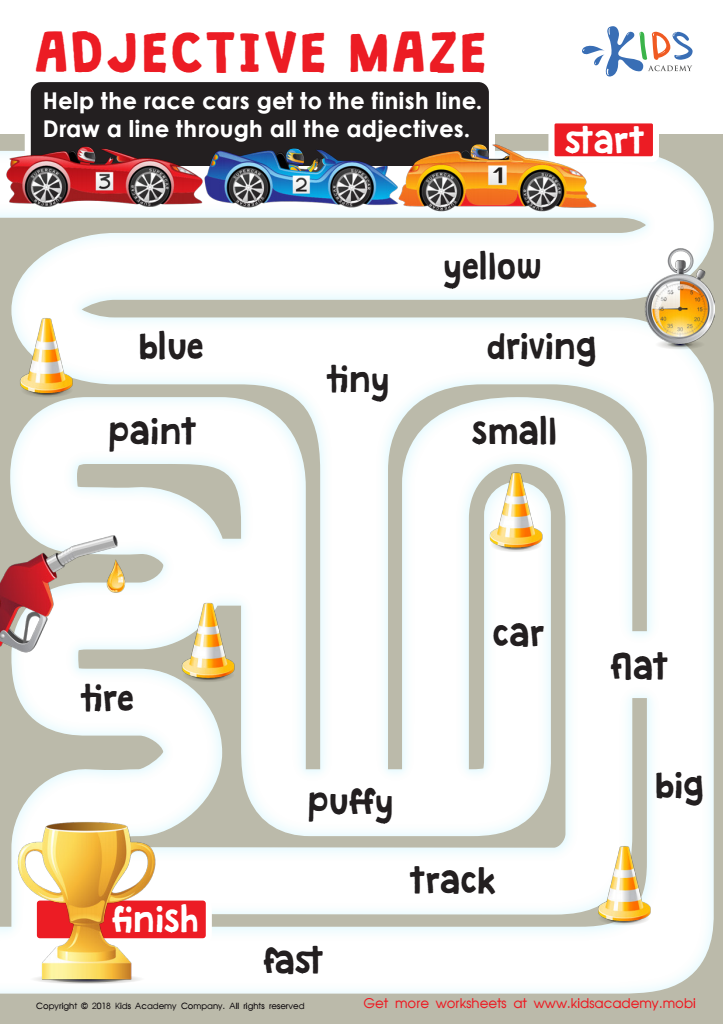
Race your pencil to the finish line with Kids Academy's exciting maze worksheet! Remind your little racer that adjectives describe nouns - looks, sounds, and more. On your mark, get ready - zoom through the track and circle each adjective you see!
Adjective Maze Worksheet
Worksheet
Adding up to 50: Page 47

Adding up to 50: Page 47

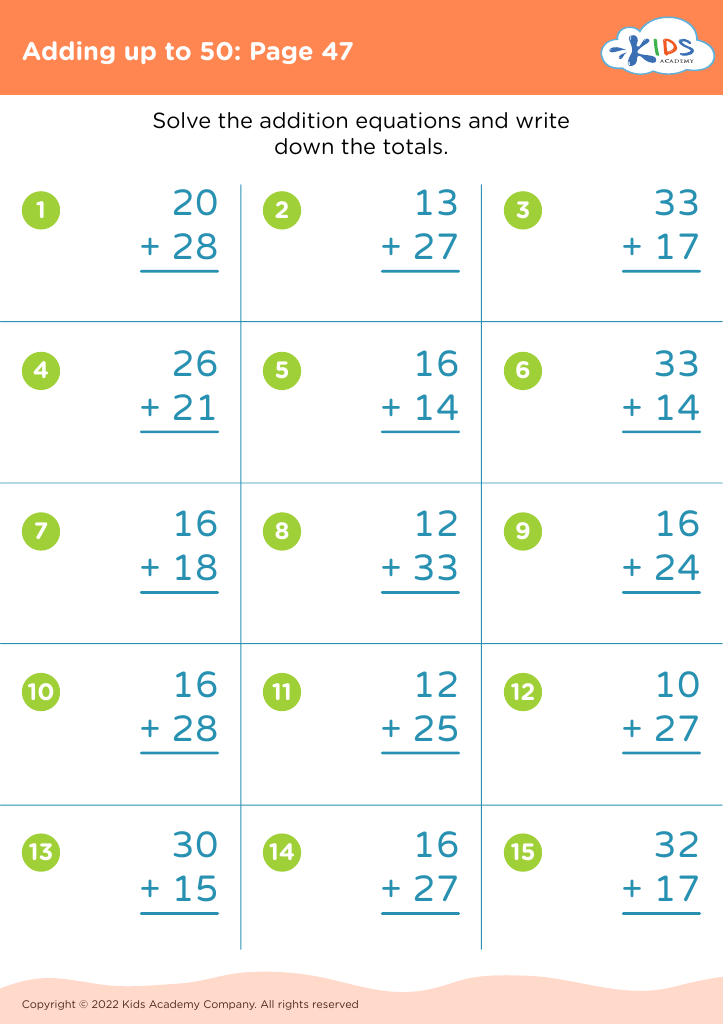
Adding up to 50: Page 47
Worksheet
Descriptive Writing Worksheet: Part 2
Descriptive Writing Worksheet: Part 2

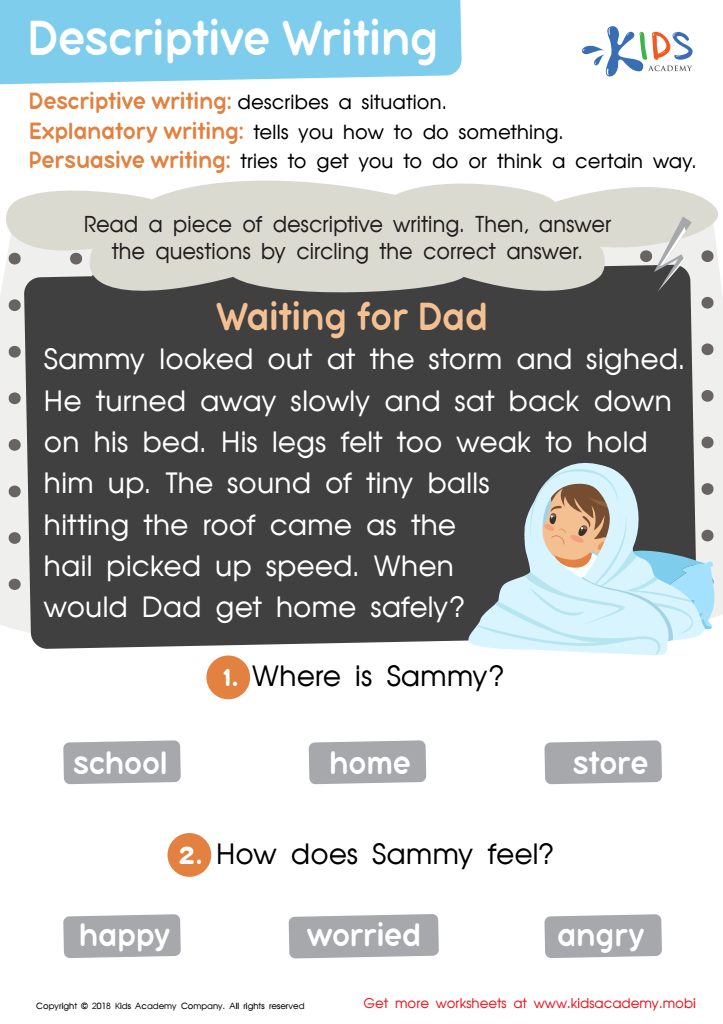
In this worksheet, your kids will explore writing styles like descriptive, explanatory and persuasive. Read them the descriptive text, then have them answer the questions. Writing is an art – it's a way to express emotions, tell stories and share information.
Descriptive Writing Worksheet: Part 2
Worksheet
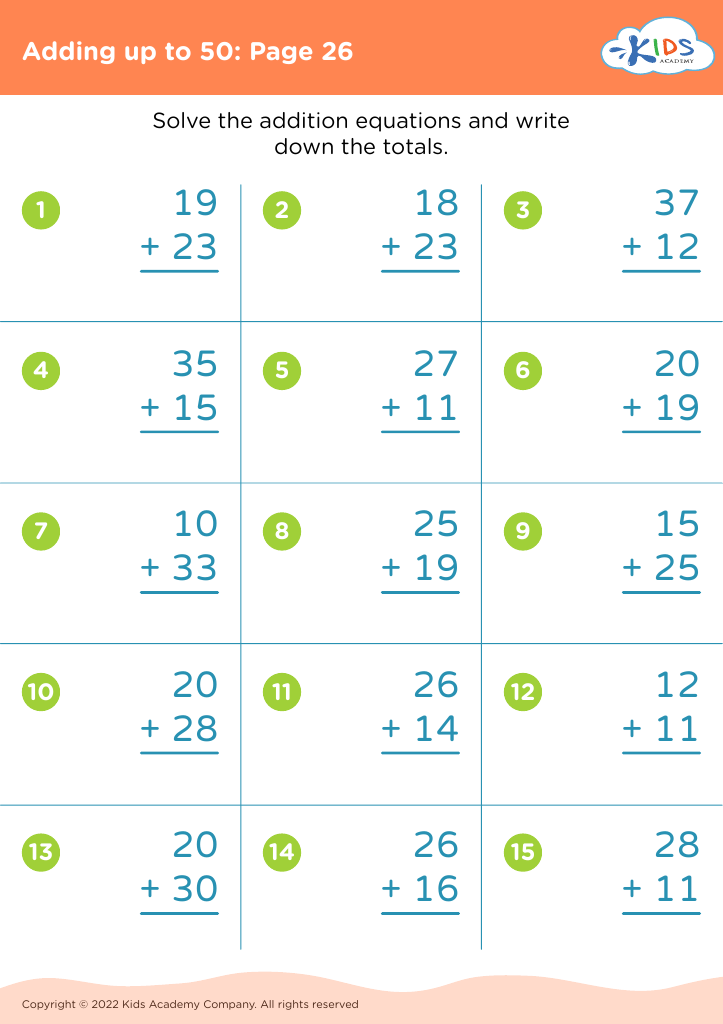
Adding up to 50: Page 26

Adding up to 50: Page 26

Adding up to 50: Page 26
Worksheet
Seeing and Hearing Worksheet

Seeing and Hearing Worksheet

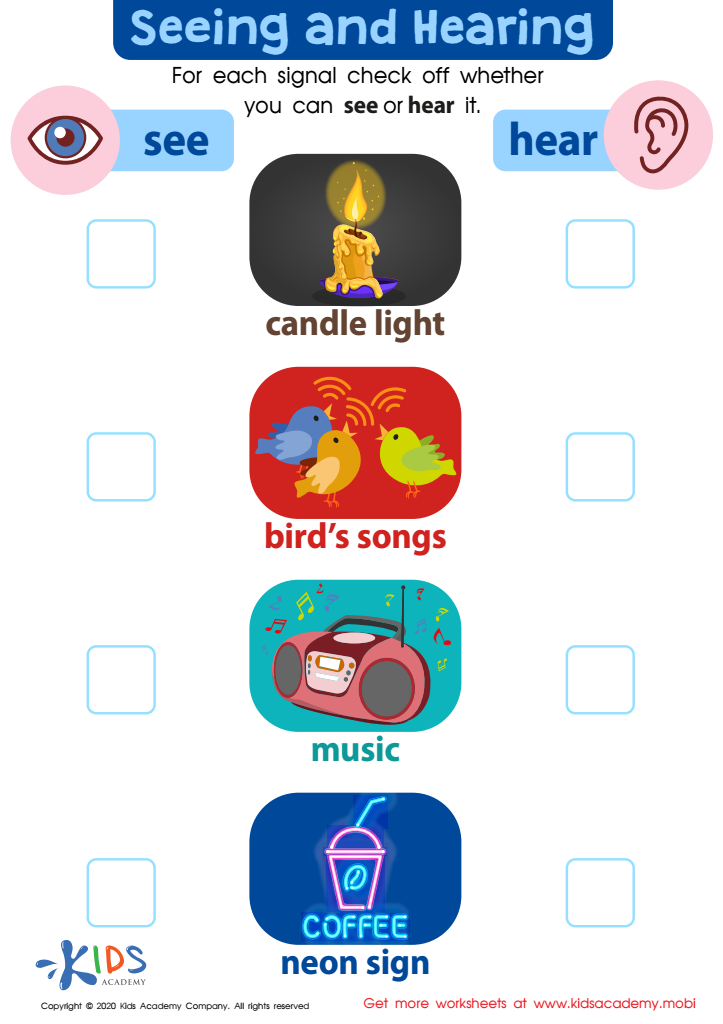
Before beginning this worksheet, ensure your students know that we have five senses: eyes (seeing), tongue (tasting), skin (feeling), nose (smelling), and ears (hearing). This worksheet will explore seeing and hearing - ask your students what they can see/hear in the picture and get them to check it off.
Seeing and Hearing Worksheet
Worksheet
Adjectives in Sentences Worksheet
Adjectives in Sentences Worksheet

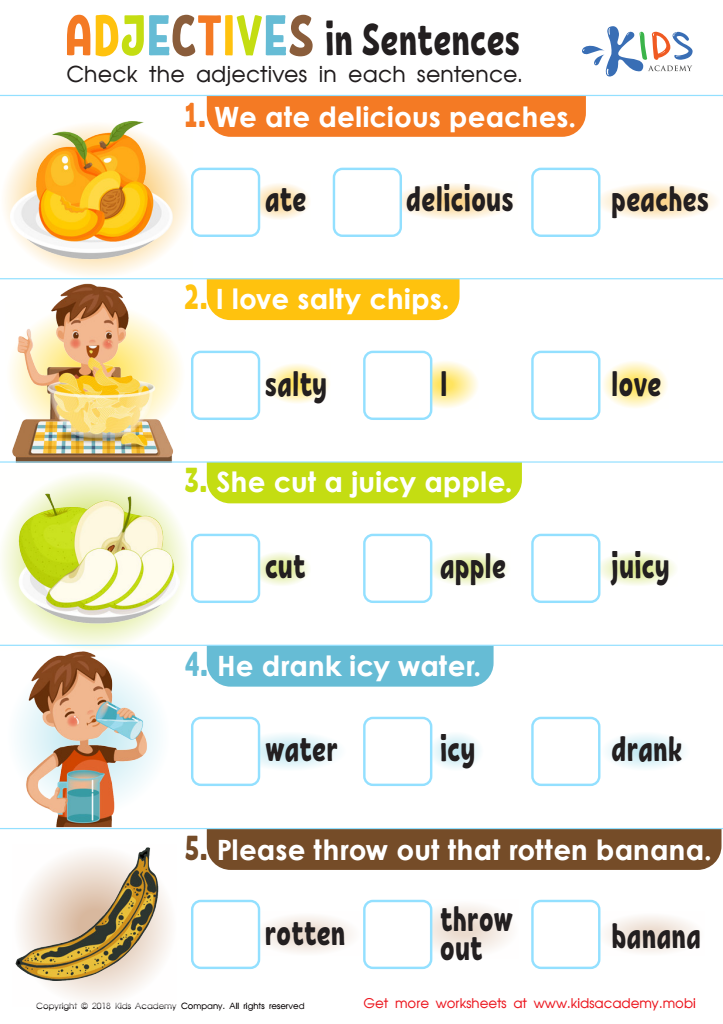
Our learners can find it hard to use writing to add detail, but adjectives can help. With this fun worksheet, kids can identify adjectives that describe food and drink. Guide them through each sentence, discussing the words and having them choose the one that gives information about the food/drink.
Adjectives in Sentences Worksheet
Worksheet
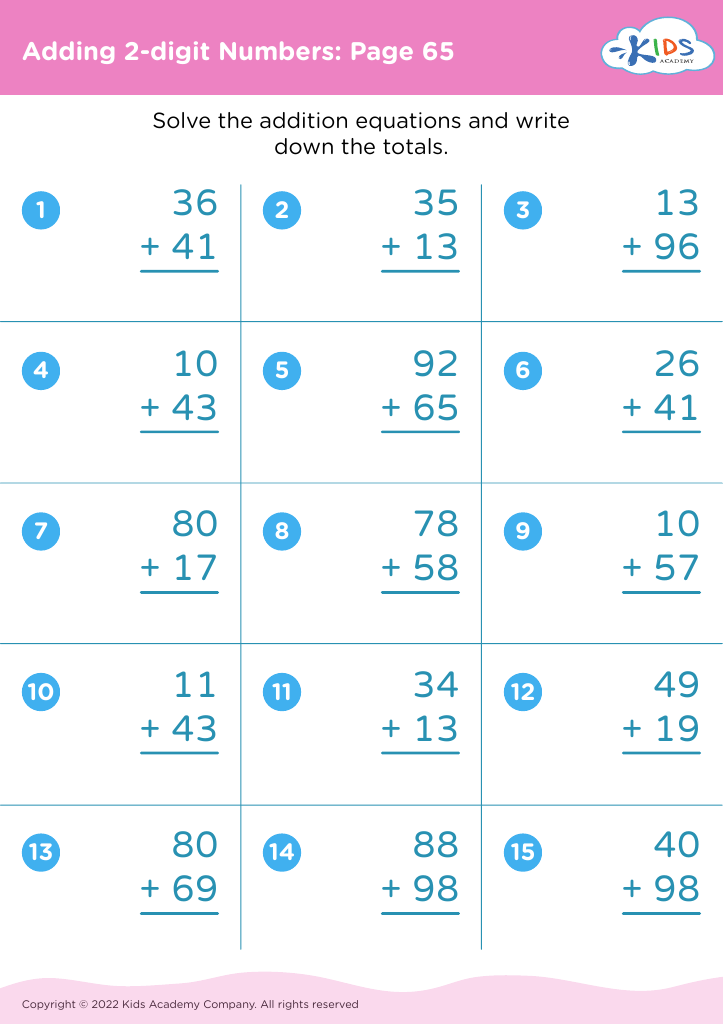
Adding 2-digit Numbers: Page 65

Adding 2-digit Numbers: Page 65

Adding 2-digit Numbers: Page 65
Worksheet
Size Worksheets for Preschoolers

Fairy Tale Worksheet: Let's Compare

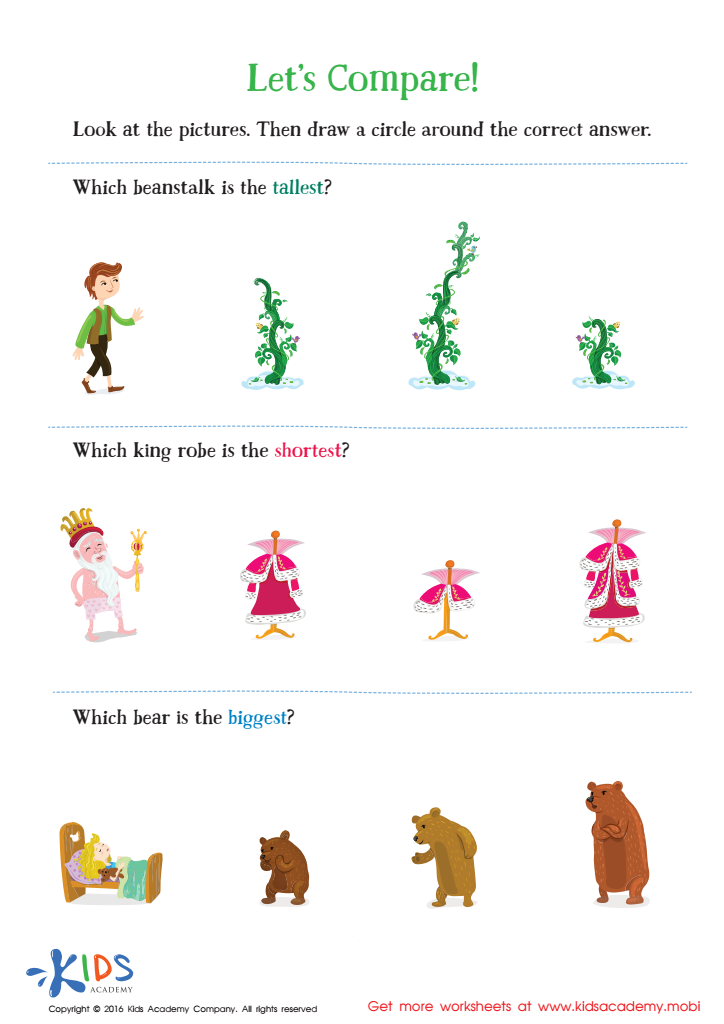
Preschoolers need to recognize different sizes of objects. This worksheet combines fun fairy tales with size practice, helping them read, problem solve, and sort through pictures. Your child will love the images and be eager to complete it. Enhance their learning by talking about the tales to build comprehension.
Fairy Tale Worksheet: Let's Compare
Worksheet
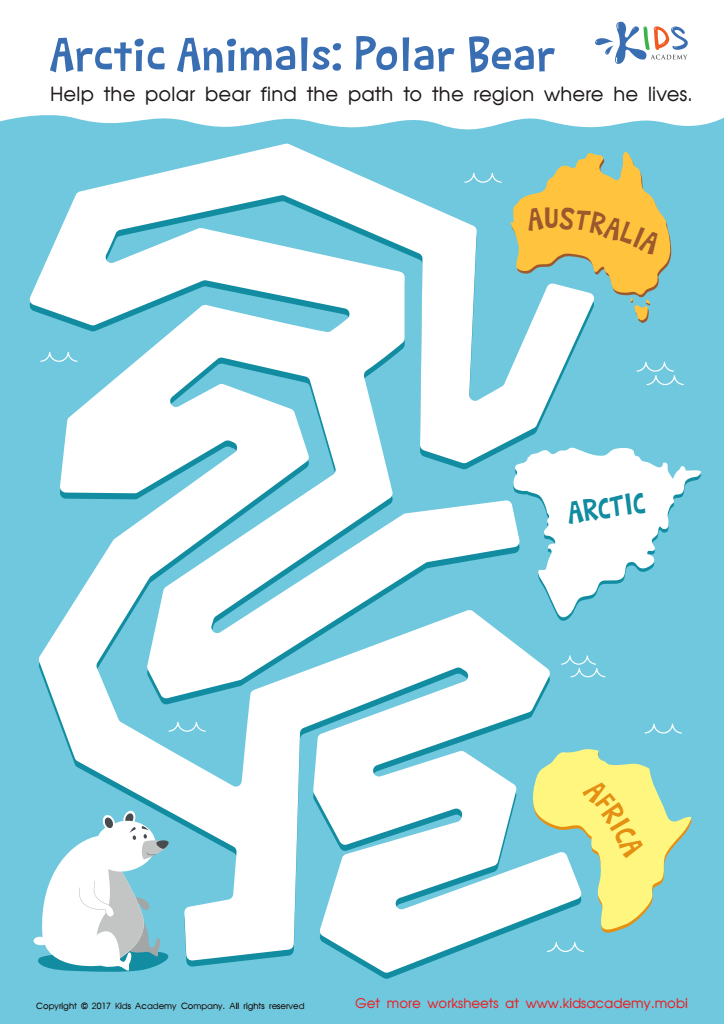
Polar Bear Worksheet

Arctic Animals: Polar Bear Worksheet
Oh no! Our polar bear friend is lost! Let's help him find his way back to the arctic with this fun worksheet. It reinforces science and social studies and kids will learn about the climate and habitats of different continents. They'll also develop logical reasoning skills! You can enrich the experience by looking up pictures of real polar bears after the worksheet is complete.
Arctic Animals: Polar Bear Worksheet

Worksheet
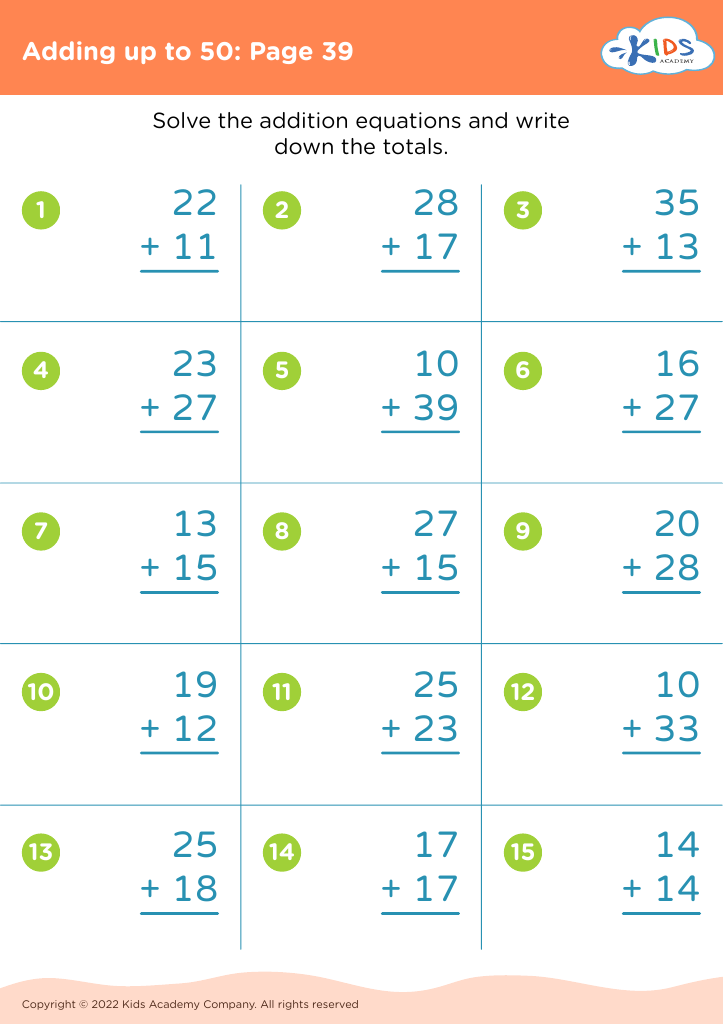
Adding up to 50: Page 39

Adding up to 50: Page 39

Adding up to 50: Page 39
Worksheet
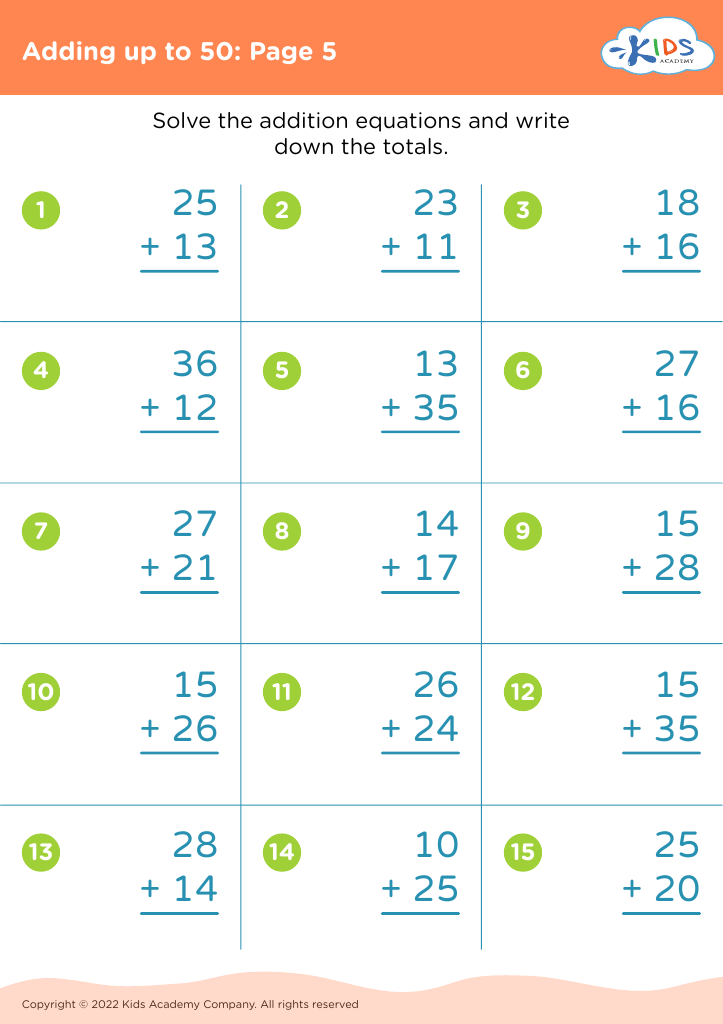
Adding up to 50: Page 5

Adding up to 50: Page 5

Adding up to 50: Page 5
Worksheet


Understanding adjectives is vital for children ages 6-7 as it significantly enhances their language and literacy development. At this stage, children are rapidly expanding their vocabulary and learning to express themselves more vividly. Adjectives add detail and interest to their speech and writing, allowing them to convey their thoughts and feelings more clearly.

When parents and teachers emphasize adjectives, they help children make their descriptions more colorful and engaging. For instance, instead of saying “The dog is big,” a child can say, “The fluffy brown dog is big.” This development fosters creativity and encourages storytelling skills, which are essential for academic success.

Additionally, comprehension improves when children understand adjectives. They gain the ability to interpret texts more deeply by recognizing descriptive words that enhance meaning. This is crucial as they engage with increasingly complex texts in school.

By focusing on adjectives, parents and teachers also aid in broadening children's cognitive skills. It cultivates critical thinking, as children learn to make connections and comparisons, such as recognizing similarities and differences between objects. Therefore, embracing adjectives is a simple yet powerful strategy to boost a child's communication, comprehension, and creativity.