Discover effective "Understanding Context" worksheets designed for children ages 6-7 at Kids Academy. Our engaging activities help young learners grasp the nuances of context through fun and interactive exercises. Whether decoding words or comprehending text in varied scenarios, these worksheets nurture critical thinking and reading comprehension skills. Tailored for first and second graders, every page is easy-to-follow and education-centered, ensuring kids not only learn but also enjoy the process. Enhance your child’s learning journey today with our expertly crafted "Understanding Context" worksheets. Perfect for classroom and home use, they are a valuable resource for building essential literacy skills.
Check out this FREE "Understanding context" Trial Lesson for age 6-7!

Key Details

Favorites
With answer key
Interactive
  • 6-7
  • Understanding context
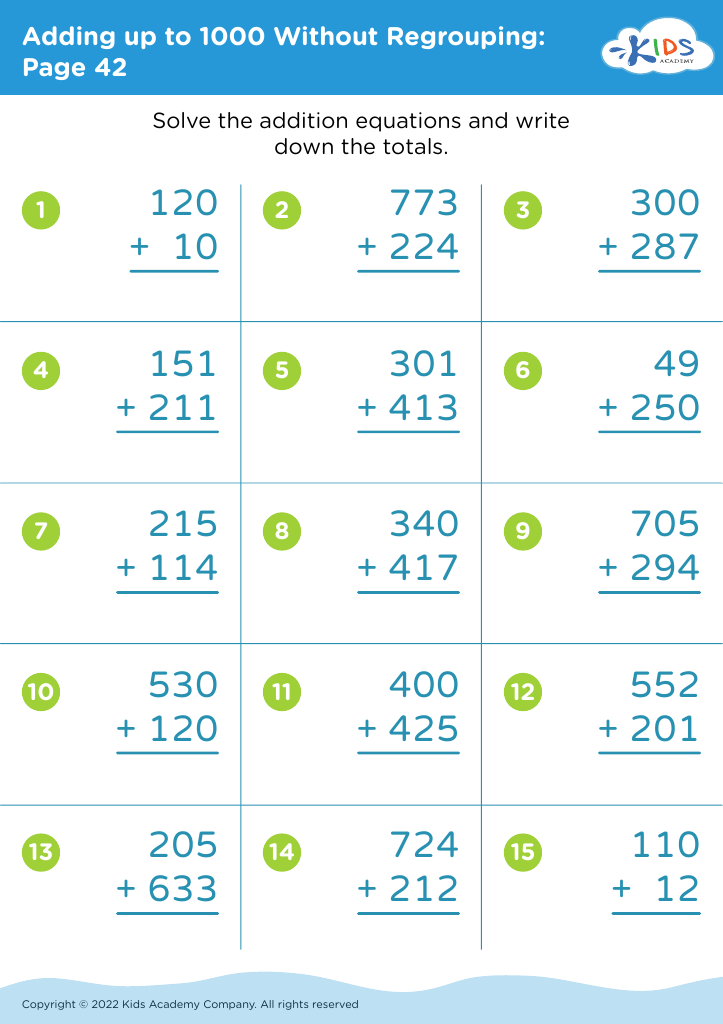
Adding up to 1000 Without Regrouping: Page 42
Worksheet
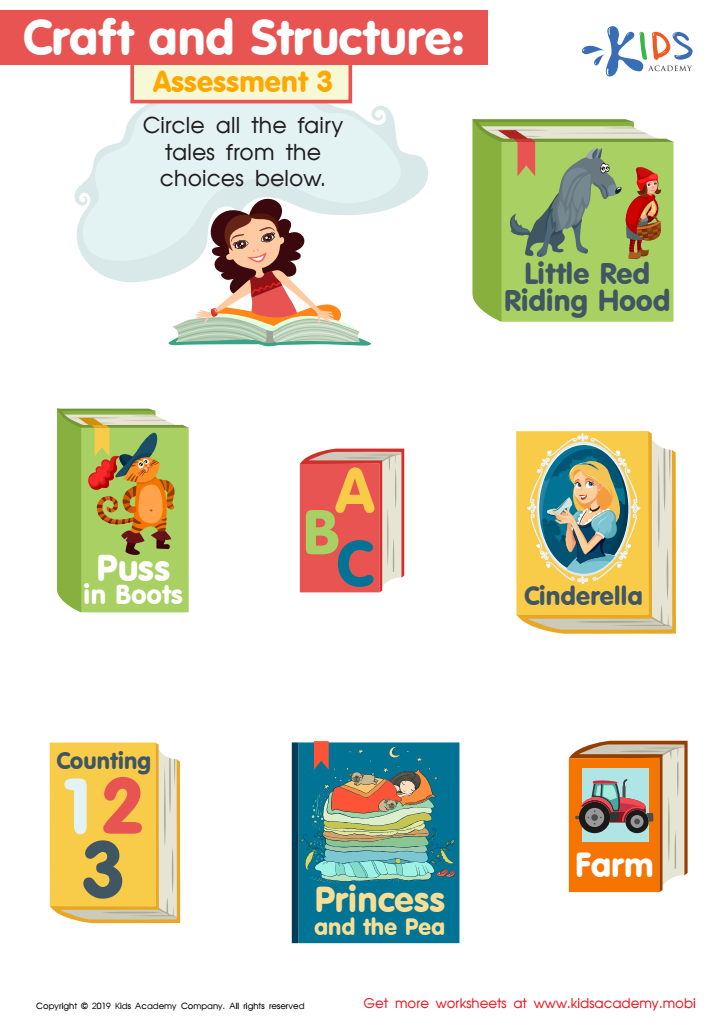
Craft and Structure: Assessment 3 Worksheet

Craft and Structure: Assessment 3 Worksheet

Before starting the worksheet, ask your kids to recall their favorite bedtime stories. What characters and events can they remember? Four popular children's stories are hidden among pictures of other objects - help them search and circle the fairy tales in this PDF.
Craft and Structure: Assessment 3 Worksheet
Worksheet
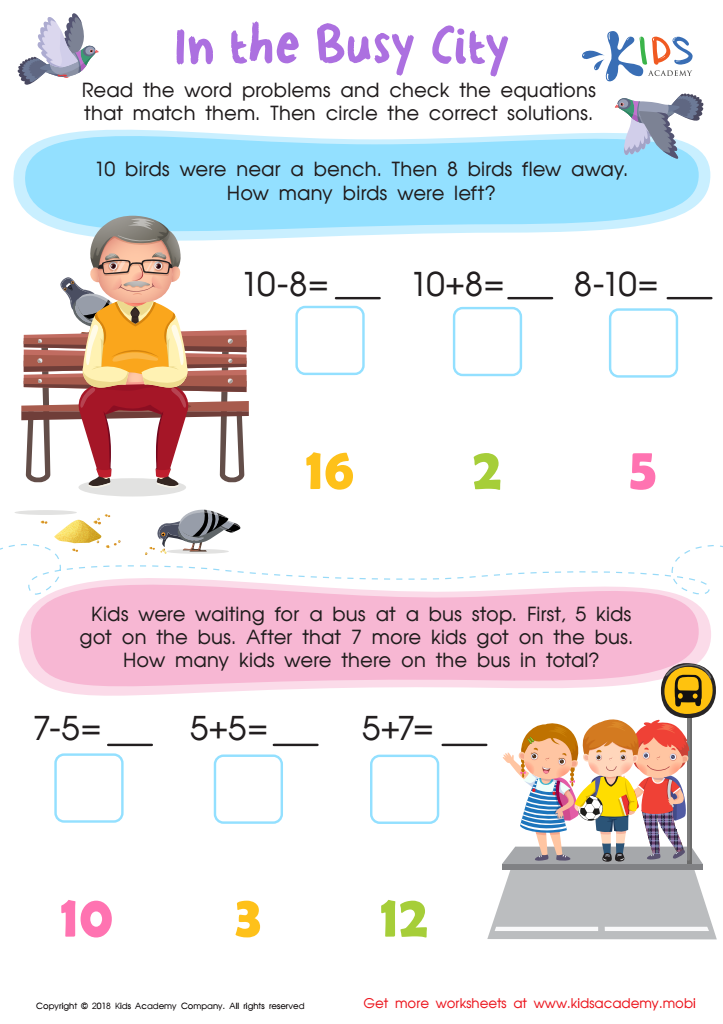
In the Busy City Word Problems Worksheet

In the Busy City Word Problems Worksheet

Take a stroll and help your child solve math word problems with this fun printable from Kids Academy! Colorful images make the scenarios more enjoyable. Have them read the problem carefully and solve the matching equation. Check the box next to the answer to mark it as correct!
In the Busy City Word Problems Worksheet
Worksheet
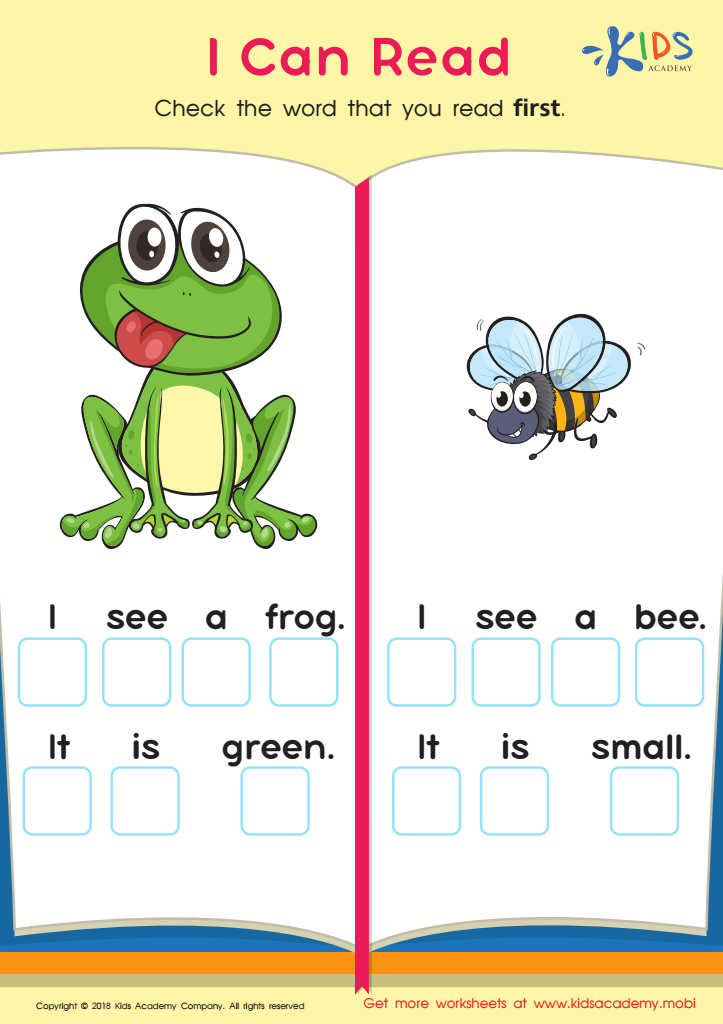
I Can Read Worksheet

I Can Read Worksheet

Test your child's reading skills with this fun worksheet. See how well they know one-letter, two-letter, and five-letter words. Ask your little one to read the sentences and tick the word they identify first. It's a great way to track their progress and help them become more confident readers.
I Can Read Worksheet
Worksheet
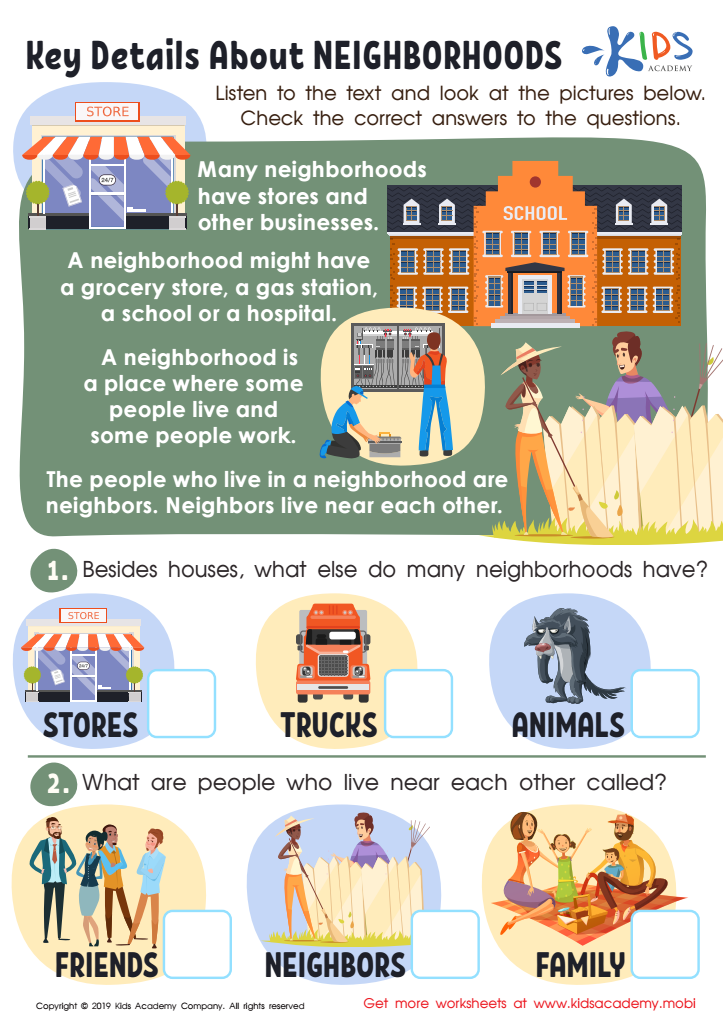
Key Details Neighborhoods Worksheet

Key Details Neighborhoods Worksheet

This worksheet helps your child strengthen reading comprehension by teaching them to pull out key details and store them in their memory. It includes words and pictures that demonstrate how the two can work together to create better understanding. As they learn about a neighborhood, they'll practice these skills by answering comprehension questions.
Key Details Neighborhoods Worksheet
Worksheet
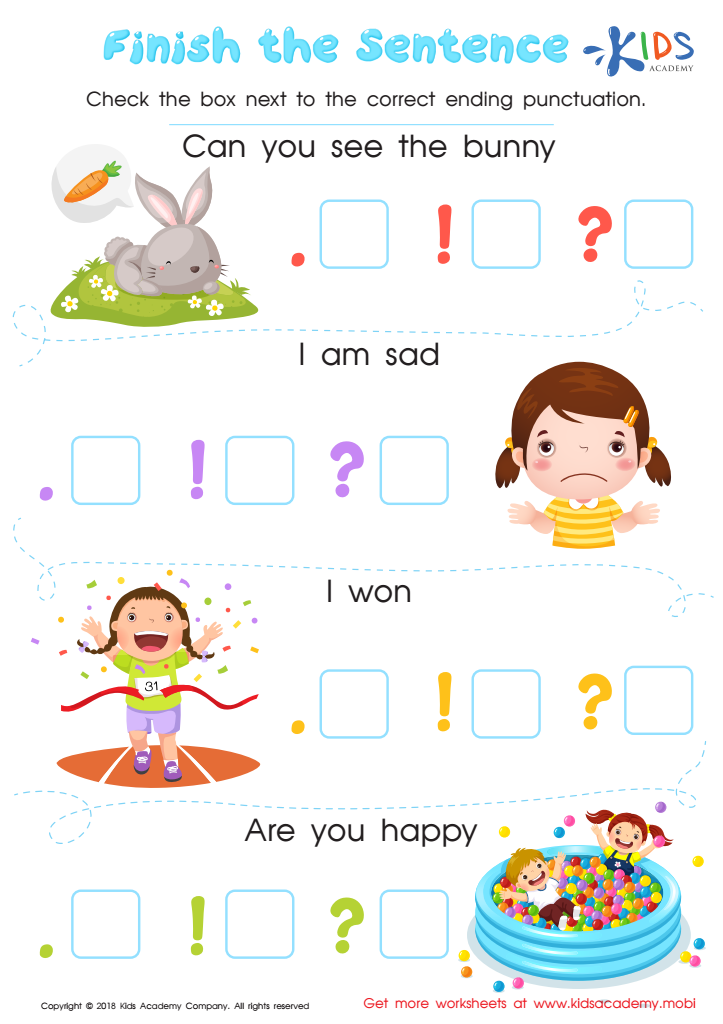
Finish the Sentence Worksheet

Finish the Sentence Worksheet

If your students have difficulty with punctuation, have them read sentences aloud and check the box next to the correct ending punctuation with this simple worksheet. Punctuation signals the tone and meaning of sentences. It helps students understand what is being communicated.
Finish the Sentence Worksheet
Worksheet
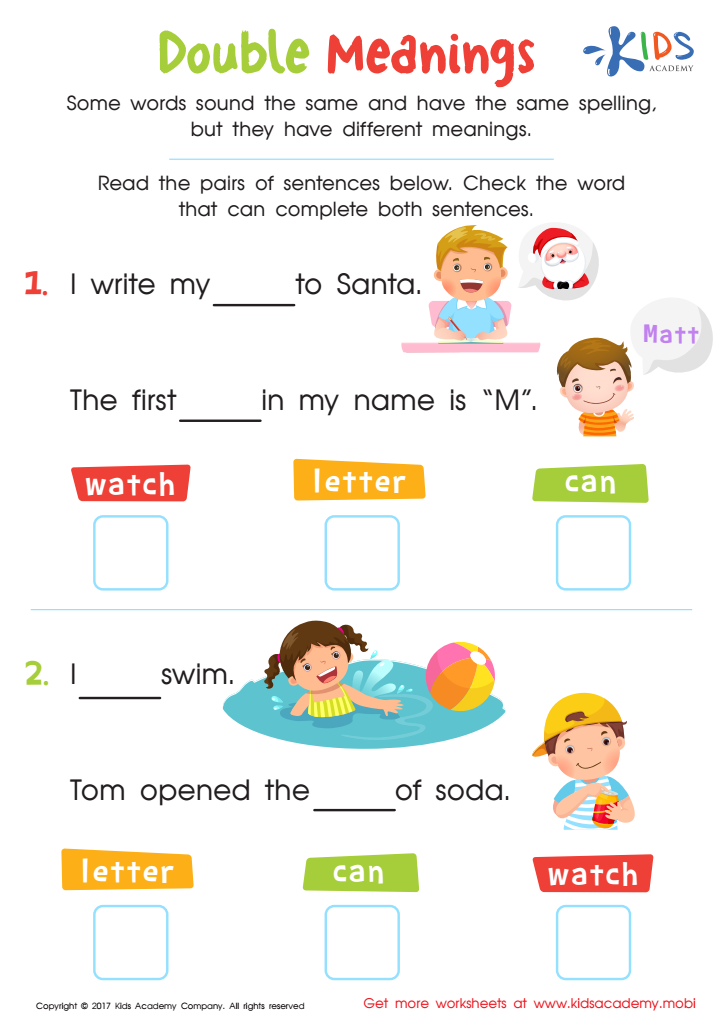
Double Meanings Worksheet

Double Meanings Worksheet

Homographs are words that look and sound the same, but have different meanings. This worksheet uses pictures to help young authors learn to use them correctly. Context and exposure to the words' meanings help them understand the difference. Total: 80 words
Double Meanings Worksheet
Worksheet
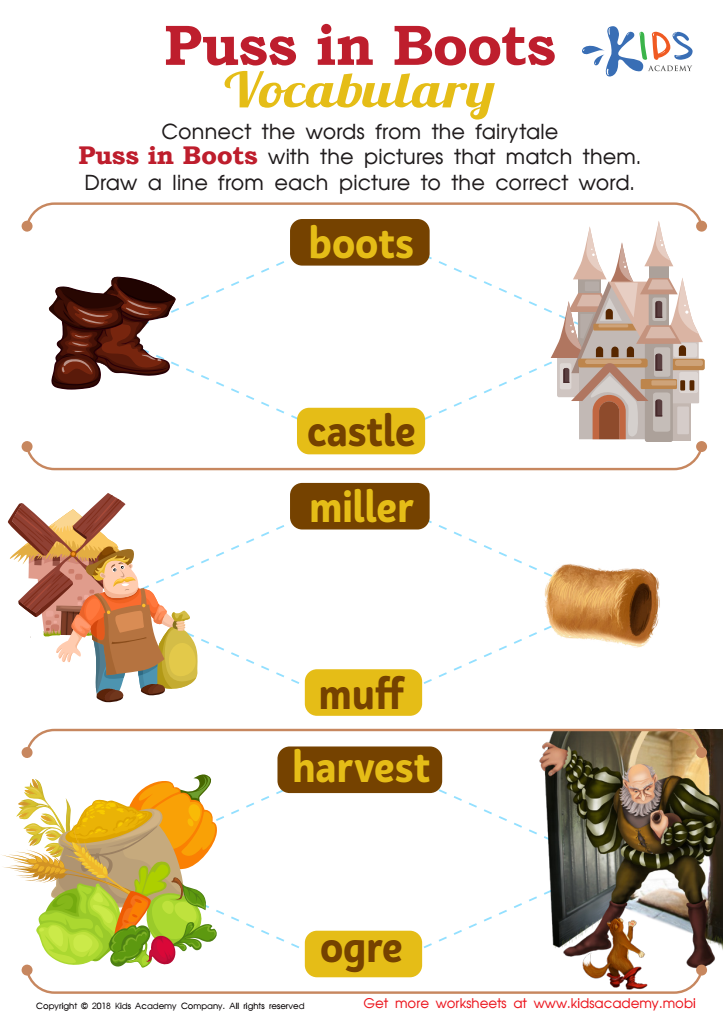
Puss in Boots Vocabulary Worksheet

Puss in Boots Vocabulary Worksheet

Let your kids enjoy story-telling while learning at the same time. Help them learn from the fairytale, Puss in Boots, by connecting words from the worksheet with the matching pictures. Ask them to draw a line between each picture and corresponding word to build their vocabulary.
Puss in Boots Vocabulary Worksheet
Worksheet
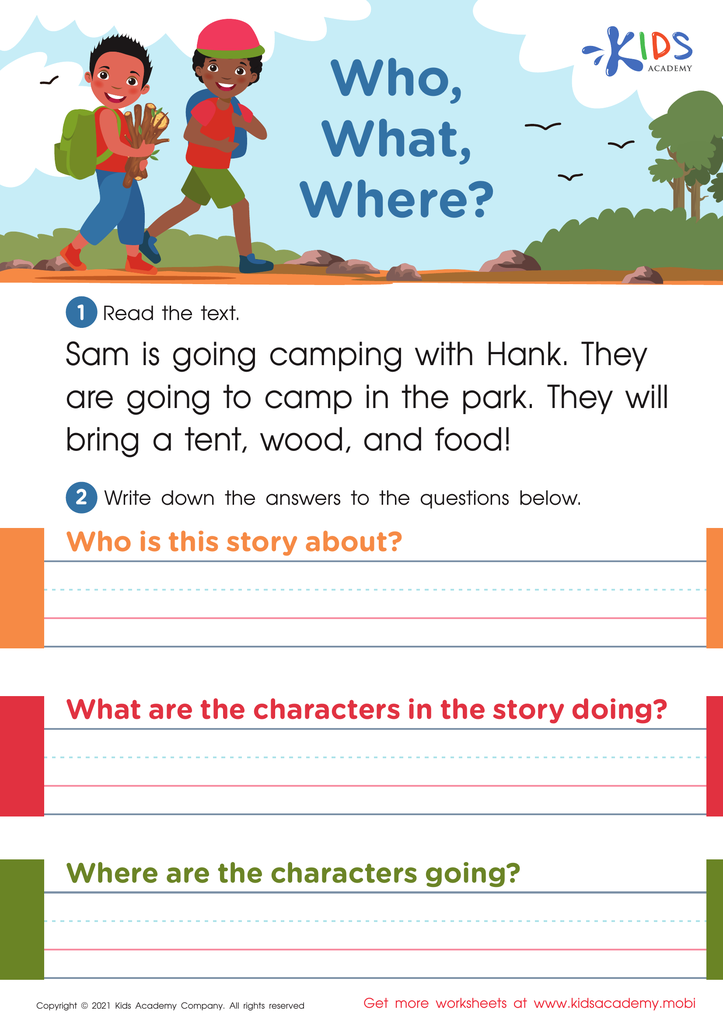
Who, What, Where? Worksheet

Who, What, Where? Worksheet

The availability of technology has changed the way students learn and interact with their environment in a very meaningful way. Technology has revolutionized learning and interaction for students. It offers an array of opportunities to engage with their surroundings, leading to a more meaningful educational experience.
Who, What, Where? Worksheet
Worksheet
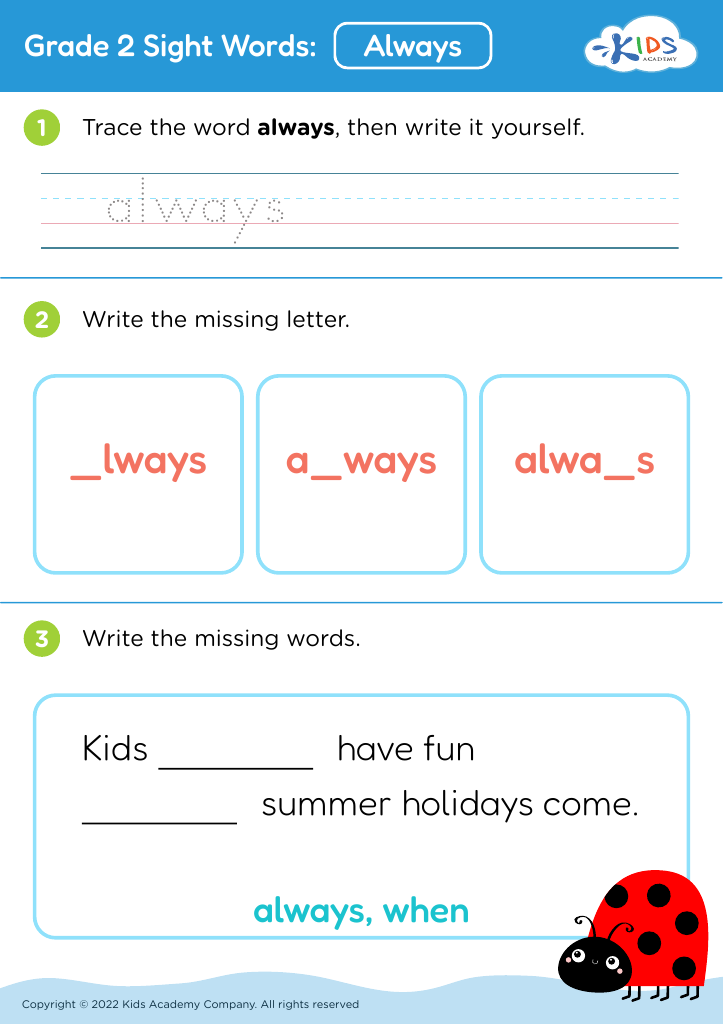
Grade 2 Sight Words: Always

Grade 2 Sight Words: Always

Grade 2 Sight Words: Always
Worksheet


Understanding context is pivotal for children aged 6-7 because it enhances their learning and communication abilities. At this stage of cognitive and social development, kids are expanding their vocabulary and starting to grasp more complex sentences. Understanding context helps them interpret words, actions, and events more accurately.

For instance, knowing whether "bat" refers to a winged animal or a piece of sports equipment depends on the surrounding words and the situation. By understanding context, children can avoid misunderstandings and improve their reading comprehension, which is crucial for academic success.

Furthermore, context aids in social interactions. It helps children understand social cues and respond appropriately in varying situations, fostering better relationships with peers and adults. Recognizing how their words and actions may be perceived depending on the context can also inhibit disruptive behaviors, cultivating a more harmonious classroom environment.

Moreover, context builds critical thinking skills. When children learn to consider the circumstances surrounding a message, they become better problem solvers and decision makers. This not only furthers their academic achievements but also their overall emotional and social development.

Ultimately, a solid grasp of context lays the groundwork for lifelong learning and effective communication, reasons enough for parents and teachers to prioritize its understanding.