Understanding equality Worksheets for Ages 6-7
3 filtered results
-
From - To
Explore our engaging "Understanding Equality Worksheets" designed specifically for ages 6-7! These thoughtfully crafted worksheets help young learners grasp the concept of equality through fun and interactive activities. Students will enhance their critical thinking skills as they compare quantities, recognize equal and unequal sets, and solve simple equations. With vibrant illustrations and relatable scenarios, children will enjoy practicing their math skills while building a solid foundation for future learning. Perfect for both in-class and at-home use, our worksheets provide a comprehensive approach to understanding equality. Equip your child with the necessary tools for mathematical success today!
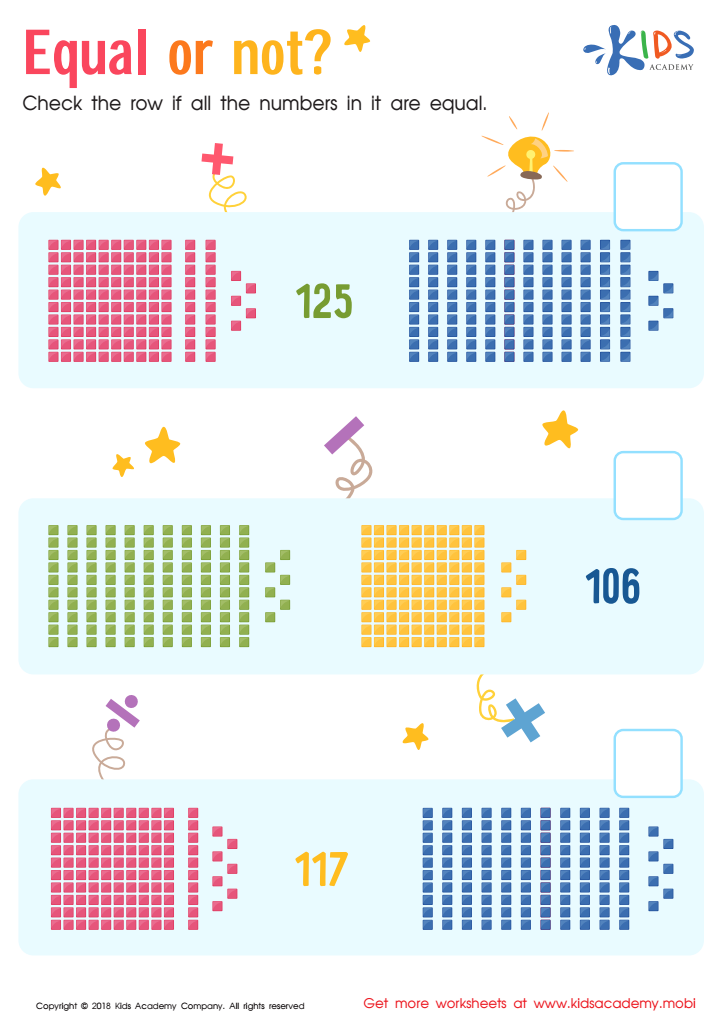
Equal or not Worksheet
 Assign to My Students
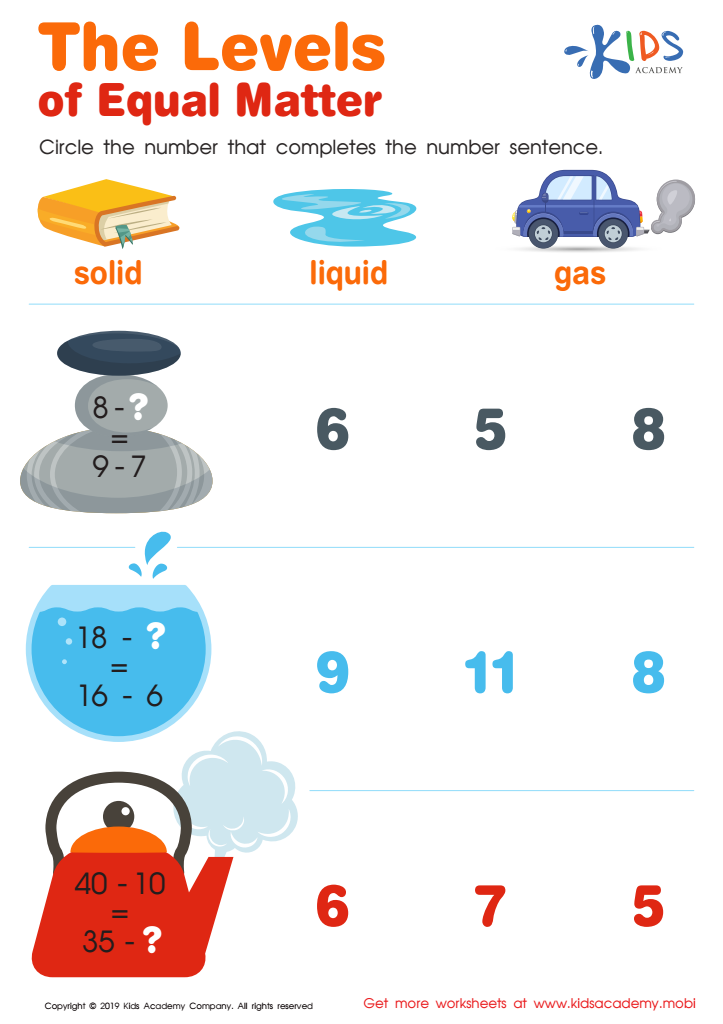
The Levels of Equal Matter Worksheet





Understanding equality is crucial for children aged 6-7, as this foundational concept shapes their social interactions and moral development. At this age, children begin to recognize differences in abilities, background, and opinions. Teachers and parents play a vital role in guiding them to appreciate these differences while fostering a sense of fairness and respect among peers.
Firstly, instilling the value of equality helps children build empathy, encouraging them to understand and respect diverse perspectives and experiences. When children learn to treat everyone equally, they contribute to a more inclusive environment, reducing instances of bullying and discrimination.
Secondly, discussing equality empowers young learners to voice their thoughts and feelings, as they understand that everyone deserves to be heard and valued. This early acknowledgment of equality enhances their self-esteem and encourages cooperative learning, where collaboration outweighs competition.
Moreover, understanding equality sets the stage for responsible citizenship later in life. Children who grasp the importance of fairness and inclusion are more likely to become compassionate adults who advocate for social justice and equity in their communities.
In conclusion, fostering a sense of equality at this developmental stage lays the groundwork for healthier friendships, better emotional health, and a more equitable society.








