Unlock your child's linguistic potential with our "Understanding Plurals Worksheets for Ages 6-7." Designed to make learning engaging and fun, these worksheets help young learners grasp the concept of plurals through various interactive activities. From singular to plural transformations to recognizing and using plurals correctly in sentences, each worksheet ensures comprehensive understanding and practice. Ideal for first graders, our carefully crafted sheets include colorful illustrations, matching exercises, and fill-in-the-blanks tasks to keep kids motivated. Turn plural learning into an exciting adventure and watch your child’s reading and writing skills flourish with Kids Academy!

Check out this FREE "Understanding plurals" Trial Lesson for age 6-7!

Form Regular Plural Nouns

Favorites
With answer key
Interactive
  • 6-7
  • Understanding plurals
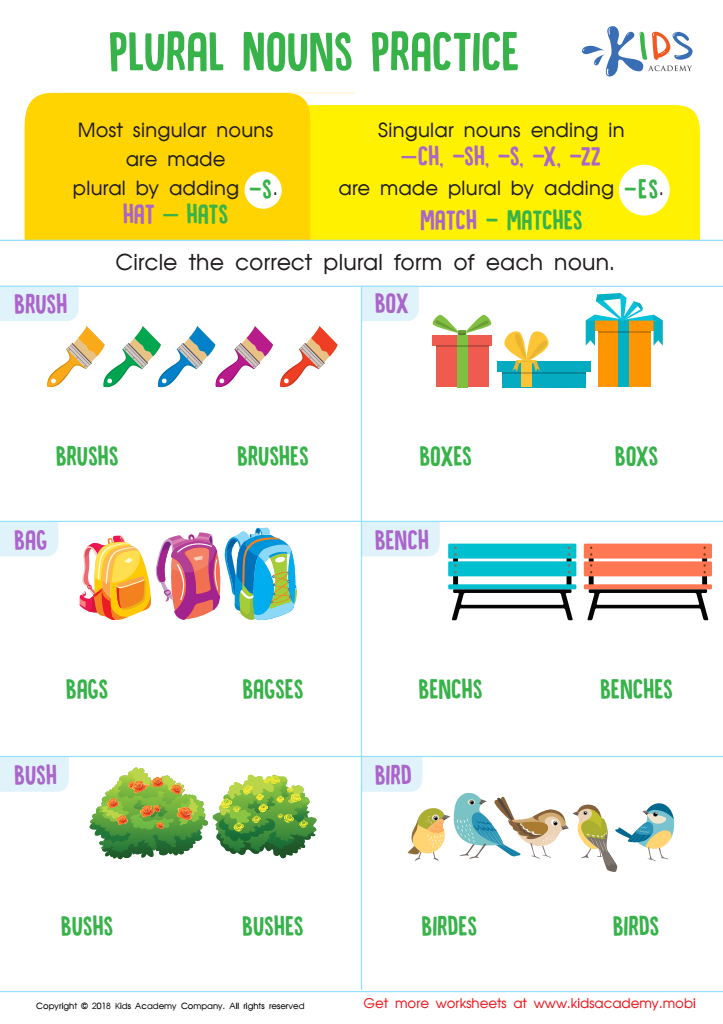
Plural Nouns Practice Worksheet

Plural Nouns Practice Worksheet

Explain to your child that most singular nouns become plural by adding "-s". E.g. "cat"->"cats". For words ending in "-ch", "-sh", "-s", "-x", or "-zz", add "-es". E.g. "buzz"->"buzzes". Then, get them to circle the right plural form of each noun on the worksheet.
Plural Nouns Practice Worksheet
Worksheet
Plural Endings Maze Worksheet

Plural Endings Maze Worksheet

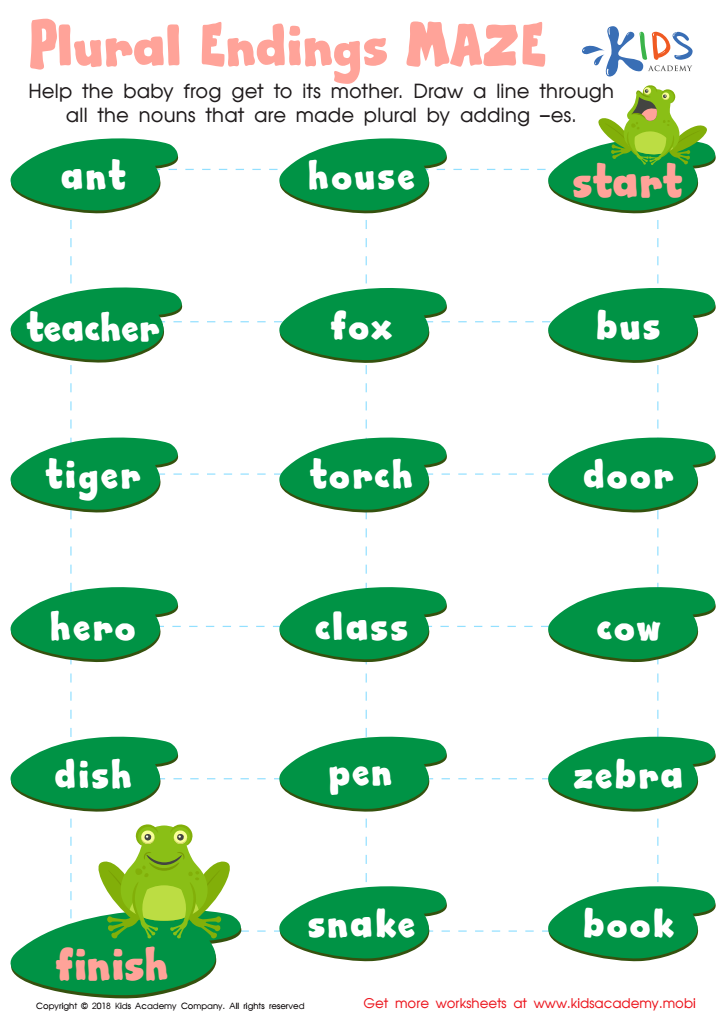
Help your child have fun while learning new things with this worksheet. Does your child know that some nouns require '-es' to make them plural? Use this pdf to teach them the rule and get the little frog to its mother – draw a line through the words with '-es' plural forms.
Plural Endings Maze Worksheet
Worksheet
Plural Nouns Maze Worksheet
Plural Nouns Maze Worksheet

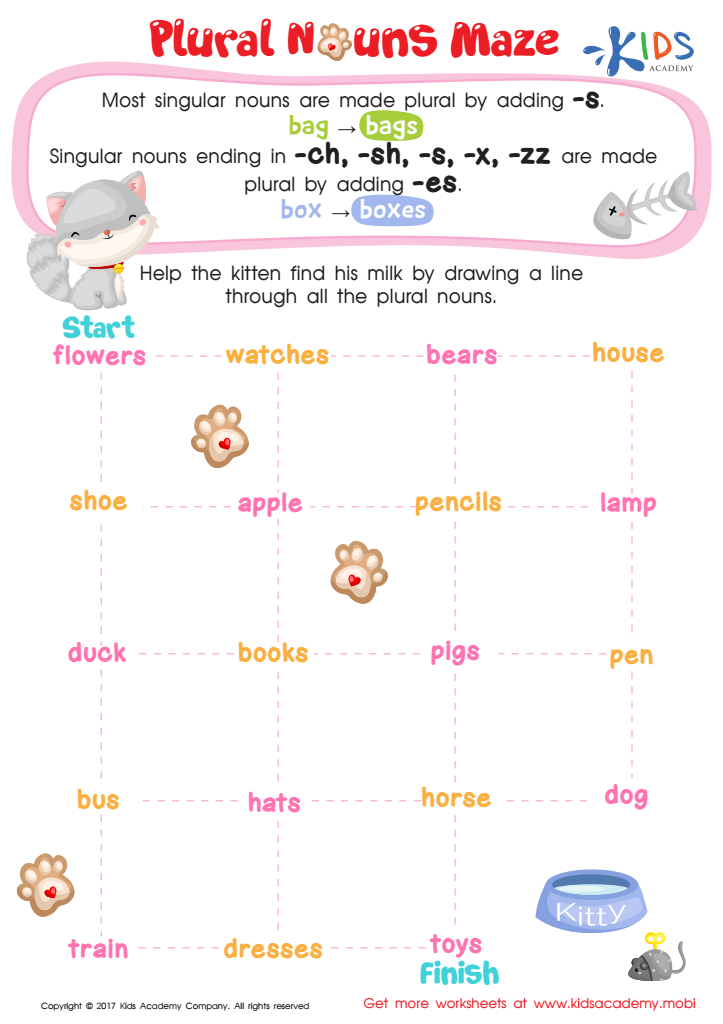
Oh no, the kitty needs her milk! Help your learner navigate the maze by drawing a line through the plural words. Review the grammar rules on -s and -es endings, then get to work to guide the kitten to her bowl! Download this PDF worksheet to start.
Plural Nouns Maze Worksheet
Worksheet
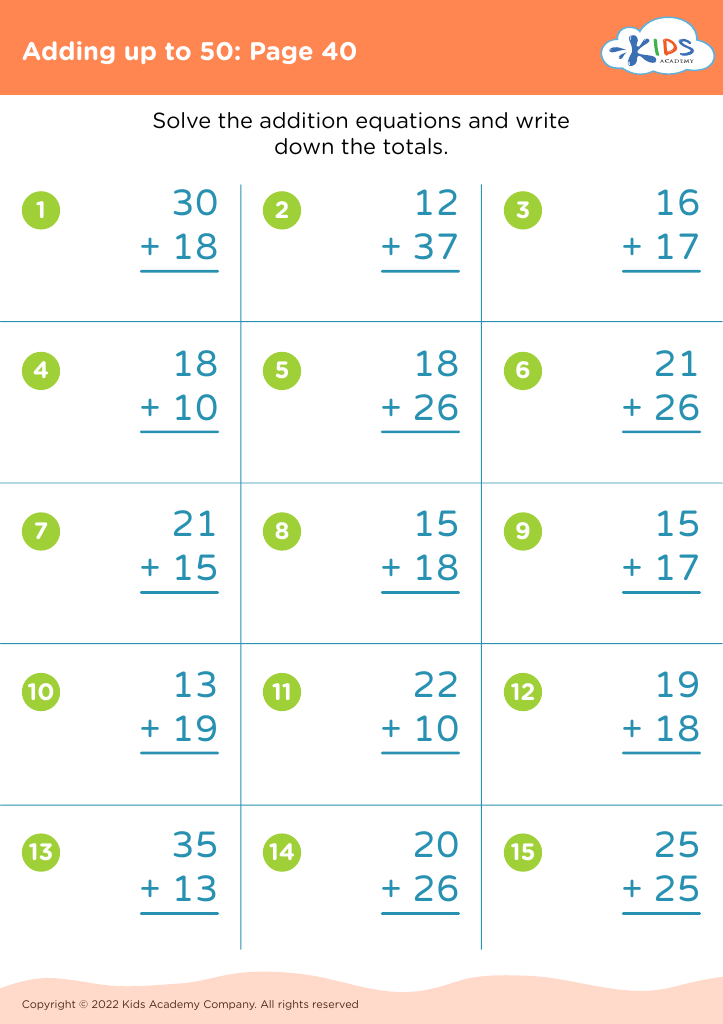
Adding up to 50: Page 40

Adding up to 50: Page 40

Adding up to 50: Page 40
Worksheet
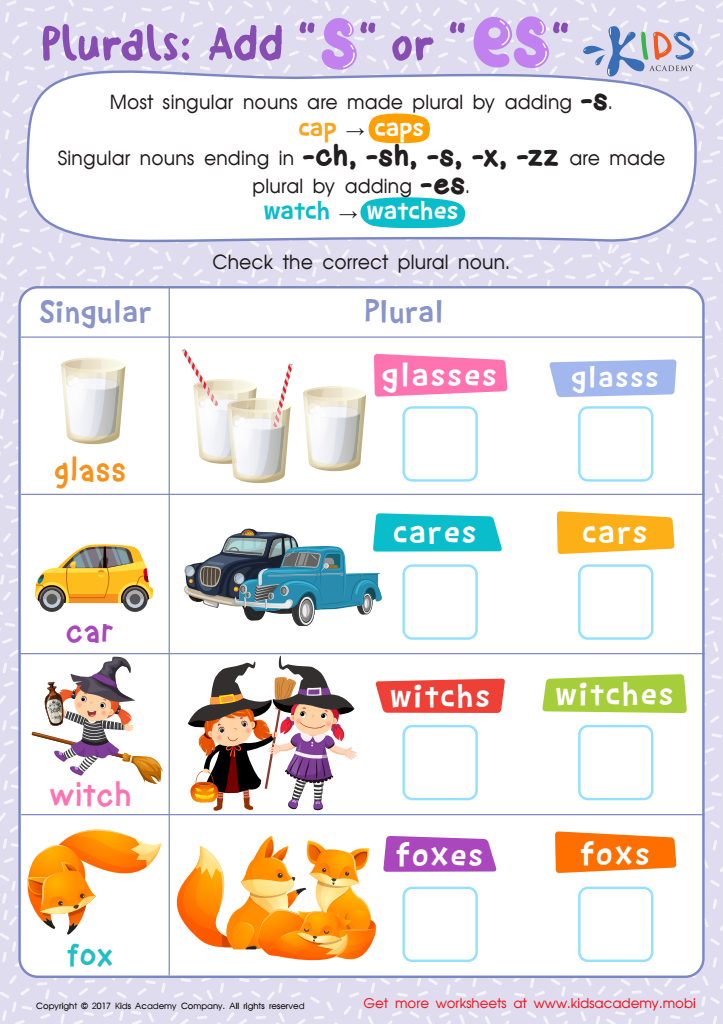
Plurals: "–es" or "–es"? Worksheet

Plurals: "–es" or "–es"? Worksheet

Learning plural nouns can be tough for young readers. This worksheet shows them the difference between singular and plural spelling with cute images. Read each word and check the correct version. Remind them why the other ending can't be used.
Plurals: "–es" or "–es"? Worksheet
Worksheet
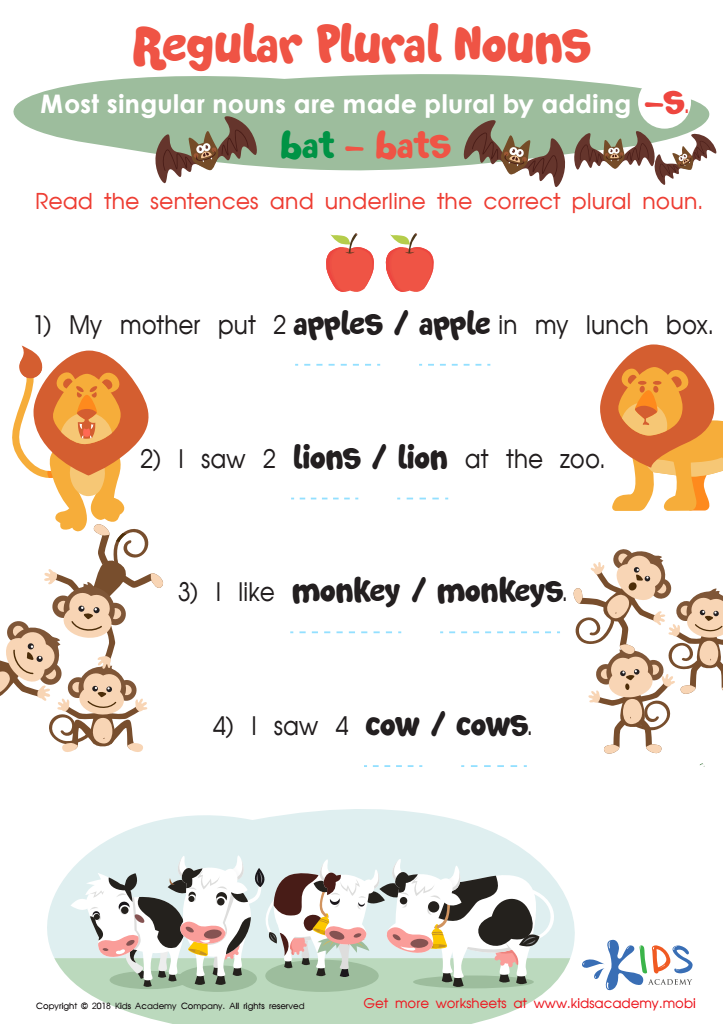
Regular Plural Nouns Worksheet

Regular Plural Nouns Worksheet

Your child should know the rule of adding '-s' to form plurals of nouns by now. Examples: bat-bats, cat-cats, song-songs etc. If they understand this, the task in the worksheet should be easy. Read the sentences and ask them to underline the correct plural noun.
Regular Plural Nouns Worksheet
Worksheet
Make it Plural Worksheet


Make it Plural Worksheet

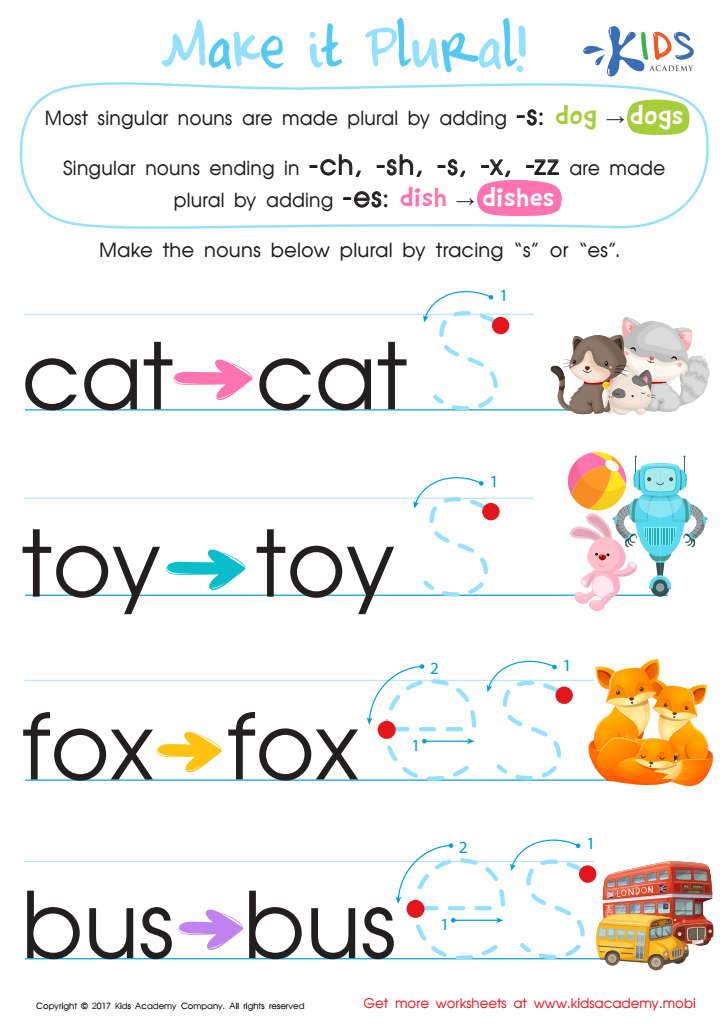
Changing words from singular to plural can be tricky as there are many word endings with special rules. Most words just need an -s, while endings like -ch, -sh, -s, -x or -zz need -es. This worksheet helps kids read words and trace the correct ending for each, making it easier to master these rules!
Make it Plural Worksheet
Worksheet


Understanding plurals is crucial for children aged 6-7 because it forms a foundational element in their language and literacy development. At this age, kids are rapidly expanding their vocabulary and beginning to grasp more complex language rules. Learning how to correctly use plurals helps them communicate more effectively and precisely.

Grasping plural rules also aids early readers in decoding text they encounter in books, leading to improved reading comprehension. For example, reading the word "cats" instead of "cat" allows children to understand context and quantity, contributing to a more accurate interpretation of stories and information.

Teacher and parent involvement in this aspect of learning reinforces consistent use and recognition of plurals. Adults can model proper pluralization and provide correction in everyday conversation, creating a rich linguistic environment. This encouragement helps solidify the concept, making it second nature.

Furthermore, mastery of plurals is linked to overall grammatical development. It enhances writing skills, enabling children to construct more complex and varied sentences, which is essential for academic success. Caring about and teaching plurals effectively, therefore, sets a strong groundwork for children’s future achievements in both spoken and written language.