Understanding prepositions Worksheets for Ages 6-7
6 filtered results
-
From - To
Enhance your child's language skills with our "Understanding Prepositions Worksheets for Ages 6-7." Designed specifically for early learners, these engaging worksheets help children master the concept of prepositions through fun and interactive activities. Each worksheet is crafted to improve students' reading, writing, and comprehension abilities. Perfect for both classroom and home use, these exercises build a solid foundation in grammar, ensuring your child understands how words relate to each other within a sentence. Boost your child’s confidence in language arts with these comprehensive and educational worksheets today. Download now from Kids Academy!
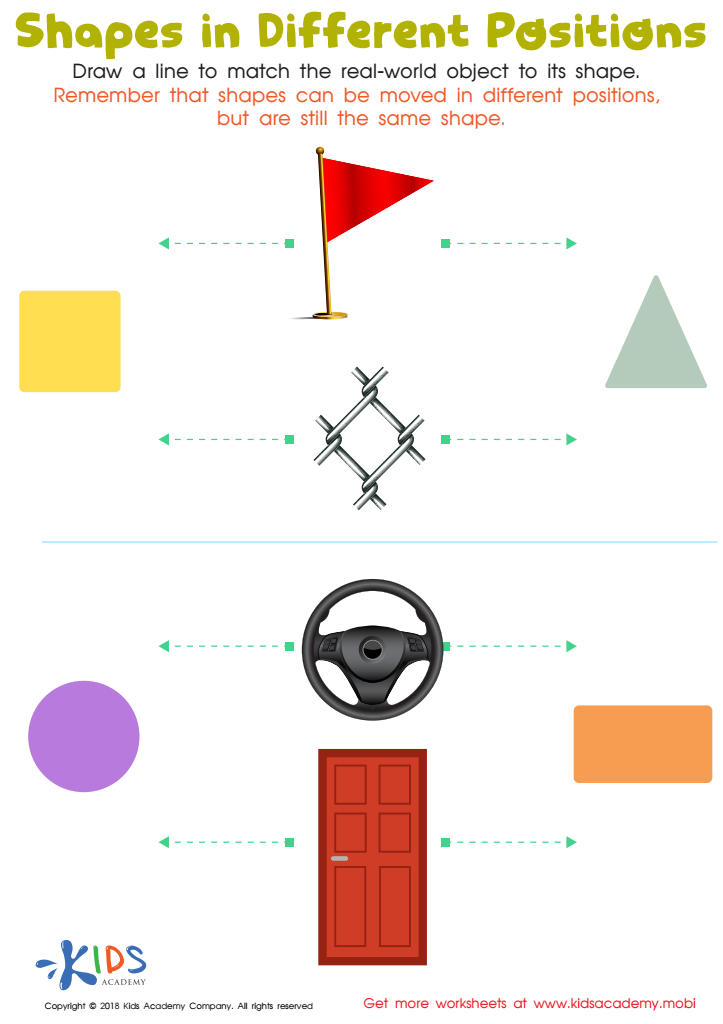
Shapes in Different Positions Worksheet
 Assign to My Students
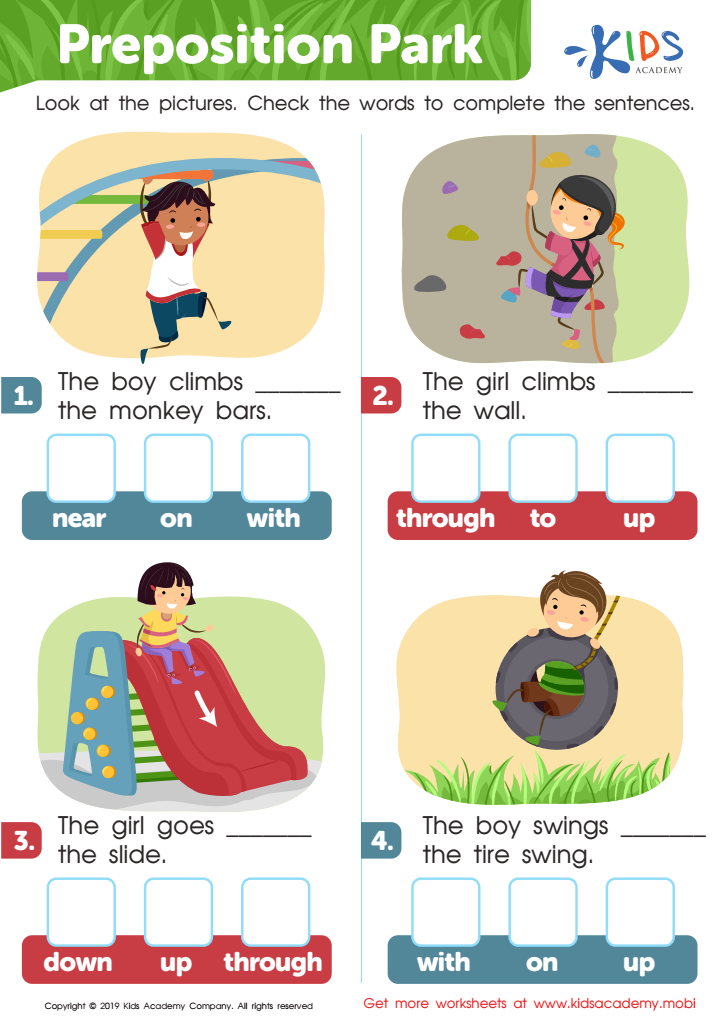
Preposition Park Worksheet
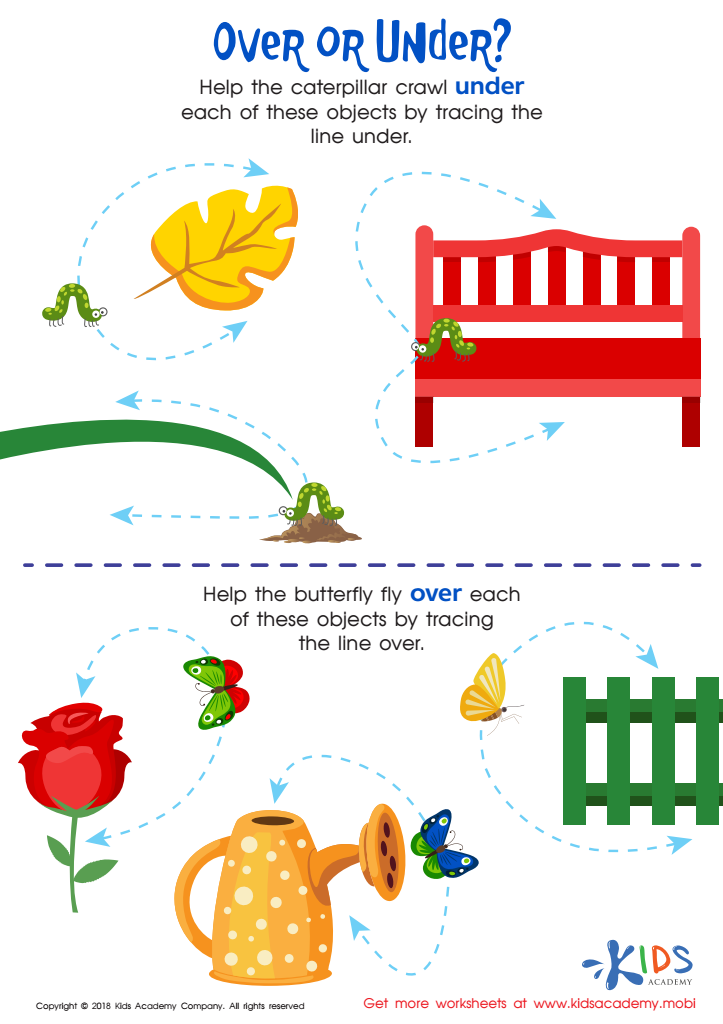
Over or Under? Worksheet
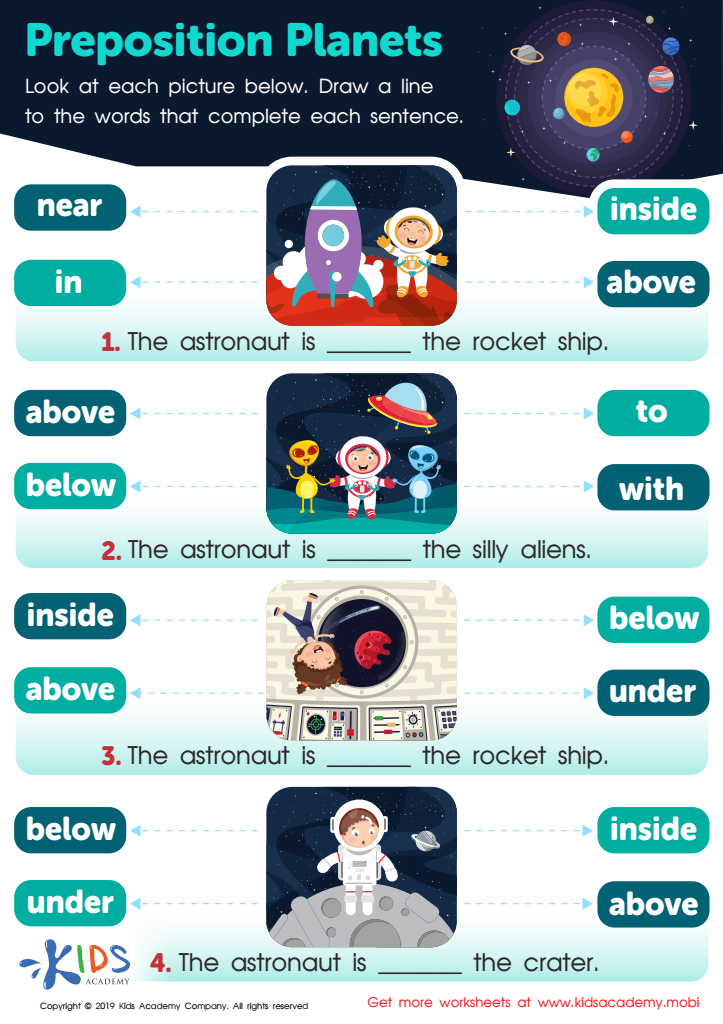
Preposition Planets Worksheet
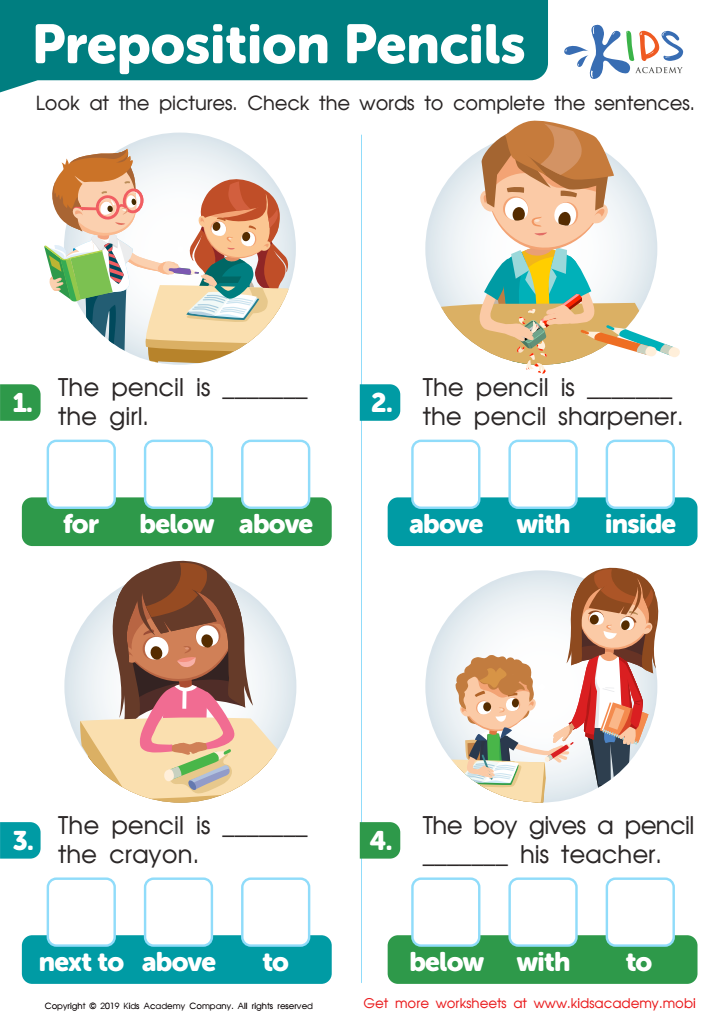
Preposition Pencils Worksheet
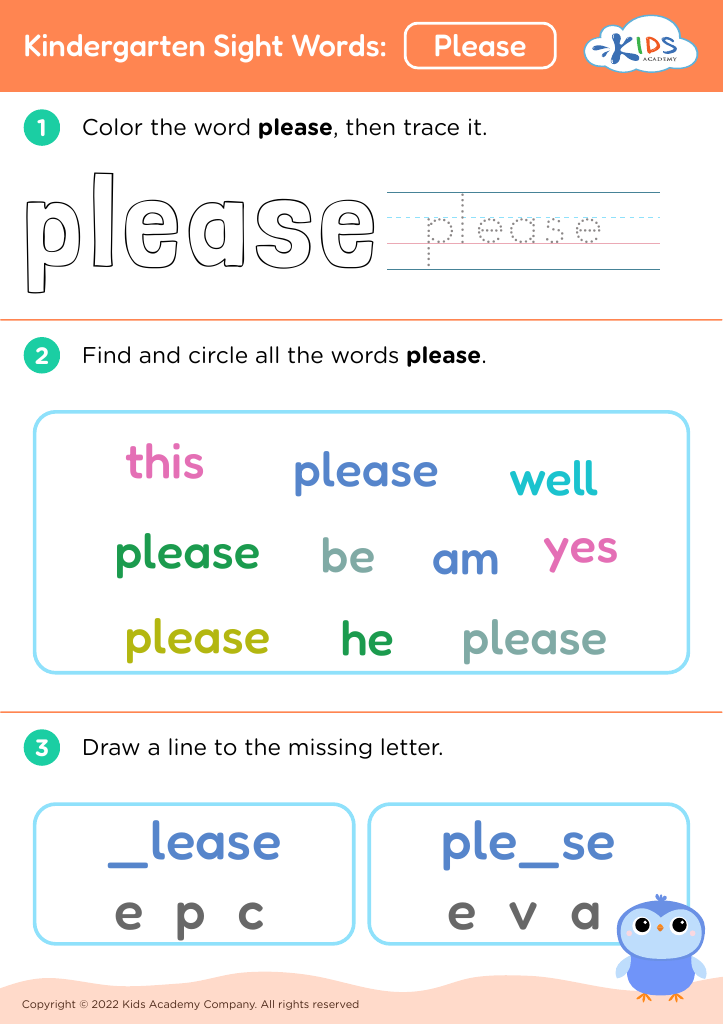



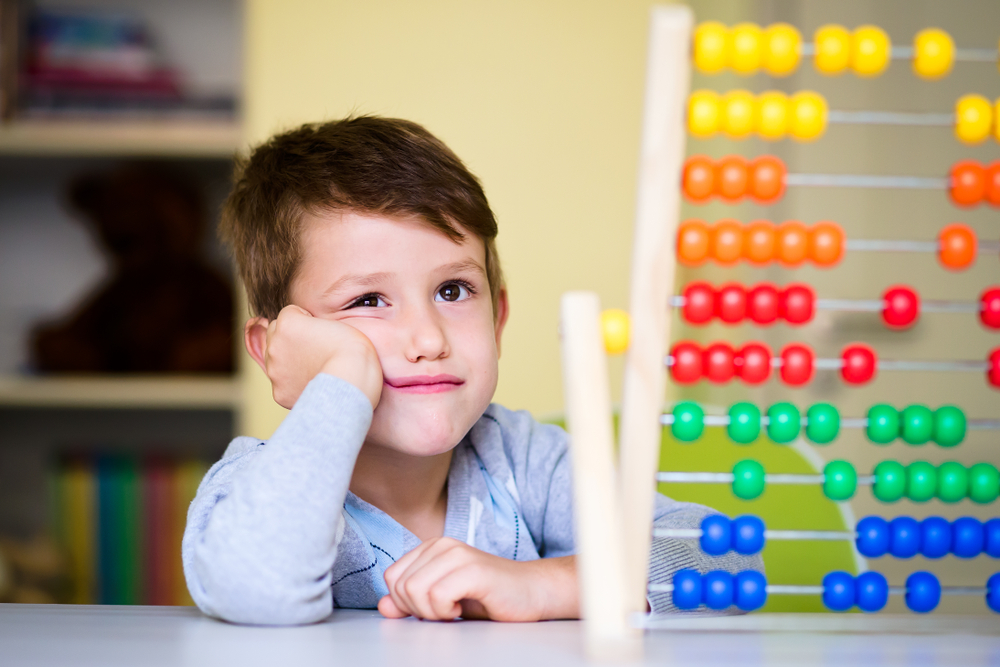


Understanding prepositions is fundamental for young children, as it enhances their communication skills and comprehension. At the ages of 6-7, children are expanding their vocabulary and starting to construct more complex sentences. Prepositions – words like "in," "on," "under," and "beside" – indicate relationships between different objects and actions, and are crucial for giving clear instructions, telling stories, and describing experiences accurately.
Mastering prepositions aids in developing spatial awareness, which is essential not only for language development but also for skills in math, art, and physical activities. For example, understanding the preposition "over" helps a child follow an instruction to put the book over a table and can also support understanding geometrical shapes and spatial relationships in math.
Furthermore, a strong grasp of prepositions fosters better understanding and empathy, as children can more effectively comprehend the actions and instructions from others. Misunderstanding prepositions can result in confusion or even safety issues, as with the difference between “stand beside me” and “stand on me.”
For these reasons, parents and teachers need to emphasize and correctly model prepositions in their daily interactions with children. Through engaging activities, reading, and conversations which naturally include prepositions, adults can significantly contribute to the child’s cognitive development and their capacity to interact successfully with the world around them.








