Understanding Rhymes Worksheets for Ages 6-7
4 filtered results
-
From - To
Welcome to our Understanding Rhymes Worksheets for Ages 6-7! These engaging worksheets are designed to help young learners recognize, identify, and create rhymes through fun activities tailored for early literacy development. Our worksheets promote phonemic awareness, enhance vocabulary, and spark creativity while making learning enjoyable. Children will explore various rhyming words and complete exciting tasks that encourage independent thinking and language skills. Perfect for classroom use or at-home practice, our resources are aligned with educational standards to support your child's growth in reading and writing. Dive into the world of rhymes and make learning a joyful experience today!
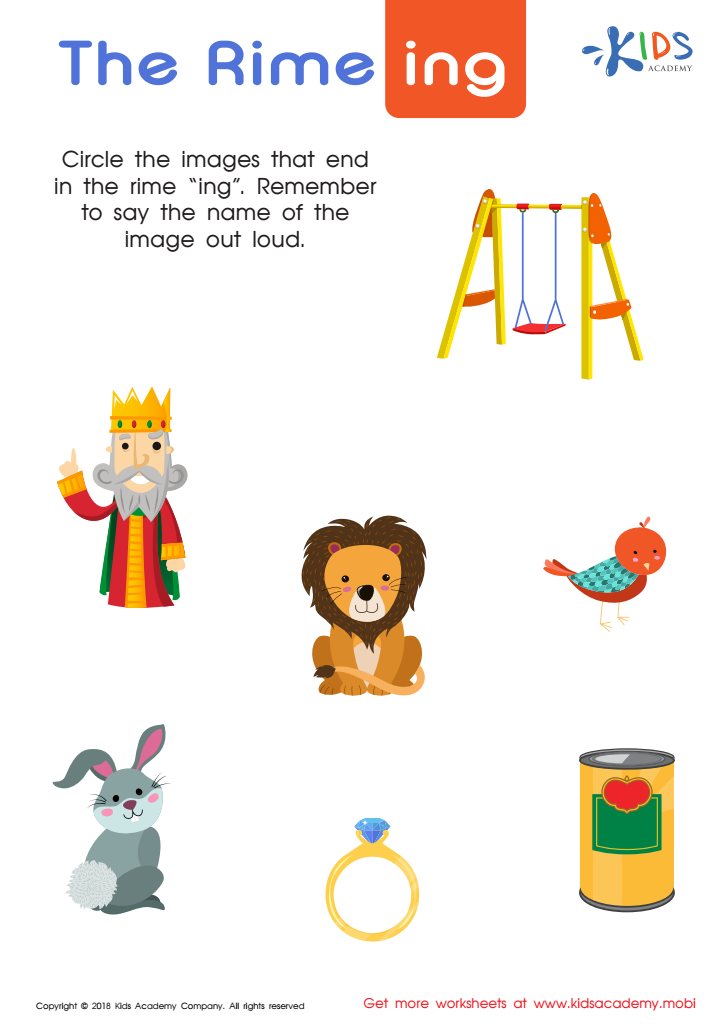
The Rime "ing" Worksheet
 Assign to My Students
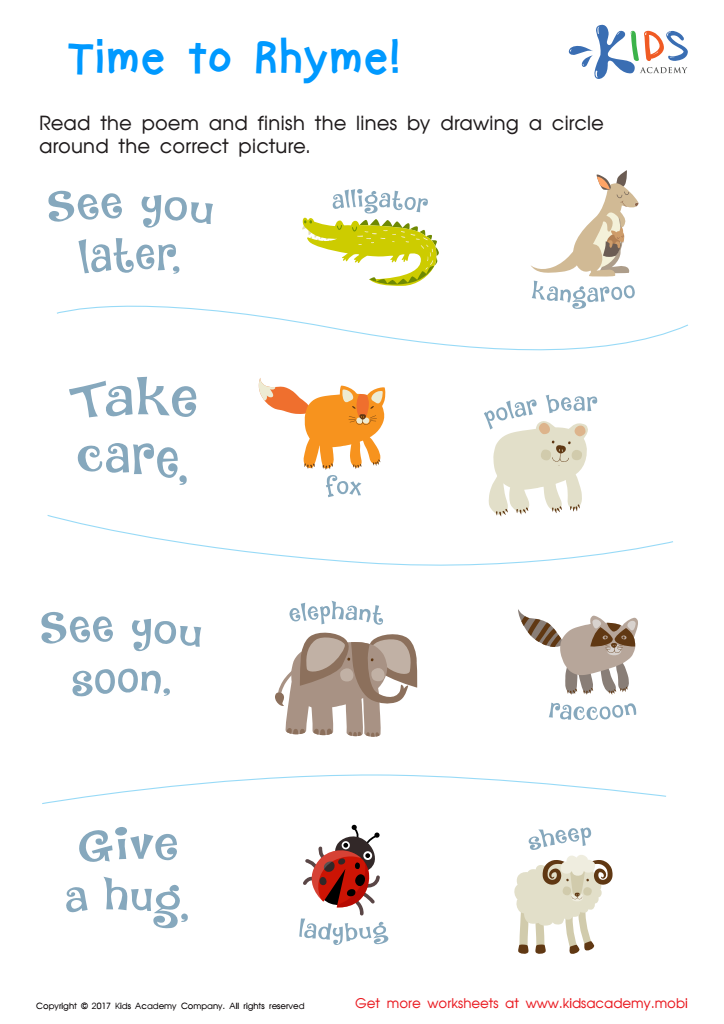
Time to Rhyme Rhyming Worksheet
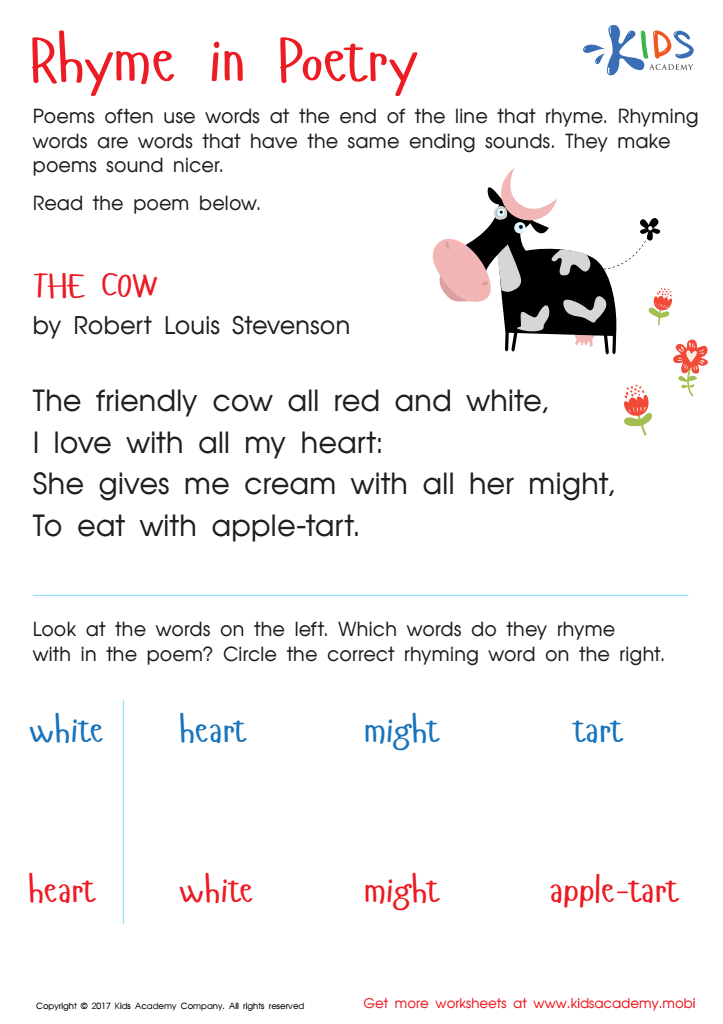
Rhyme In Poetry Worksheet








Understanding rhymes is crucial for children aged 6-7 because it significantly enhances their literacy skills while fostering a genuine love for language. At this stage, children are developing phonemic awareness, which is the ability to hear and manipulate sounds in words. Engaging with rhymes helps them recognize similar sounds, improving their ability to decode words and enhancing reading fluency.
Additionally, rhyming activities promote vocabulary expansion. When children encounter and experiment with rhyming words, they are exposed to new language concepts, broadening their linguistic repertoire. This playful exploration of words makes learning enjoyable, encouraging a positive attitude towards reading and language arts.
Furthermore, understanding rhymes aids in memory retention. Rhyming patterns can create mnemonic devices that help children remember information more easily, which is beneficial not just in literacy but across all subjects. Lastly, rhymes contribute to creative expression and critical thinking. Children learn to appreciate rhythm and sound in language, fueling their imagination and fostering a lifelong interest in poetry, music, and storytelling. For these reasons, both parents and teachers should prioritize rhyming activities as a foundational element of early education to support holistic language development.








