Basic geometry knowledge 2D Shapes Worksheets for Ages 6-7
3 filtered results
-
From - To
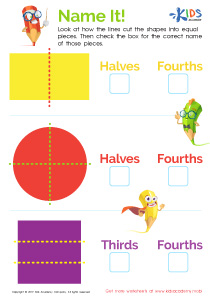
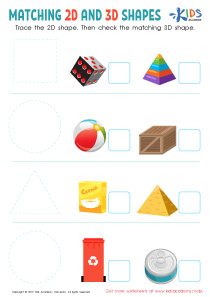
Unlock the magic of shapes with our Basic Geometry Knowledge 2D Shapes Worksheets designed for ages 6-7! These printable worksheets from Kids Academy introduce young learners to the foundational concepts of geometry, focusing on identifying, naming, and distinguishing various 2D shapes such as circles, squares, triangles, and rectangles. Fun, colorful, and engaging exercises help children develop essential math skills while enjoying the learning process. Perfect for classroom and home use, these resources aim to build confidence and a strong geometric understanding in a playful and educational environment. Get ready to turn your child into a budding geometry expert!
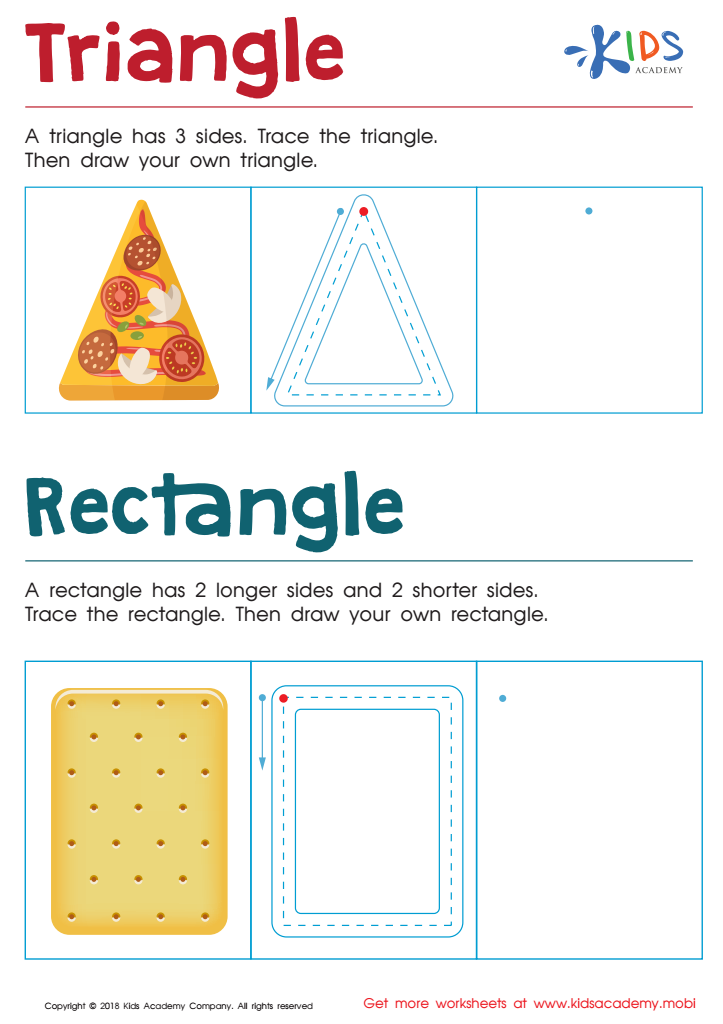
Triangle Rectangle Worksheet
 Assign to My Students

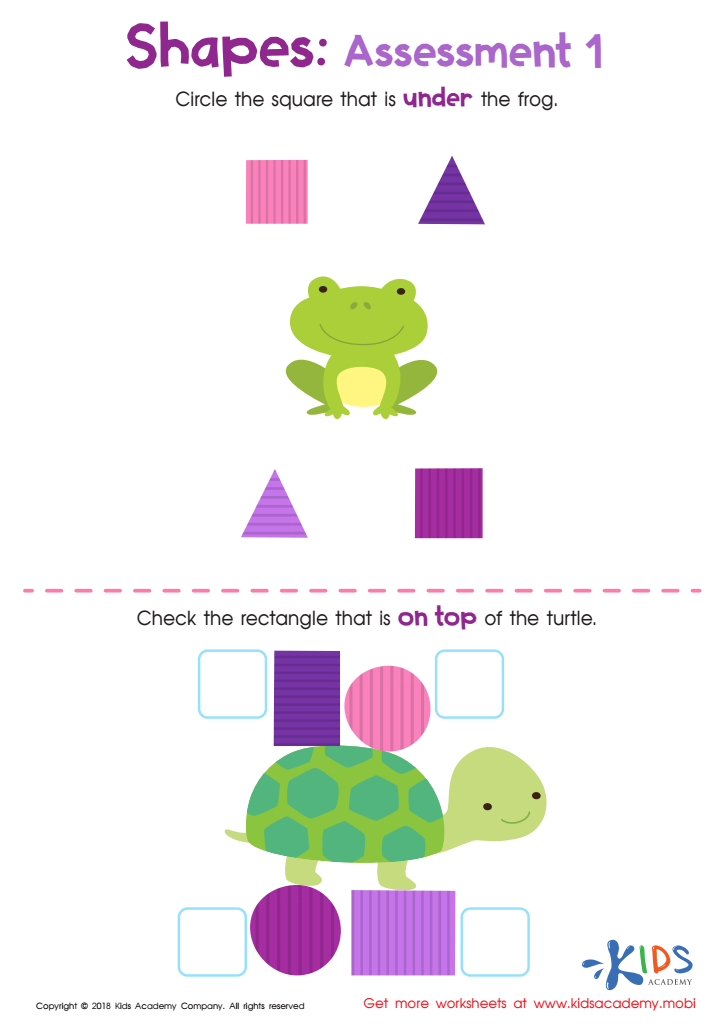
Geometry – Assessment 1 Worksheet
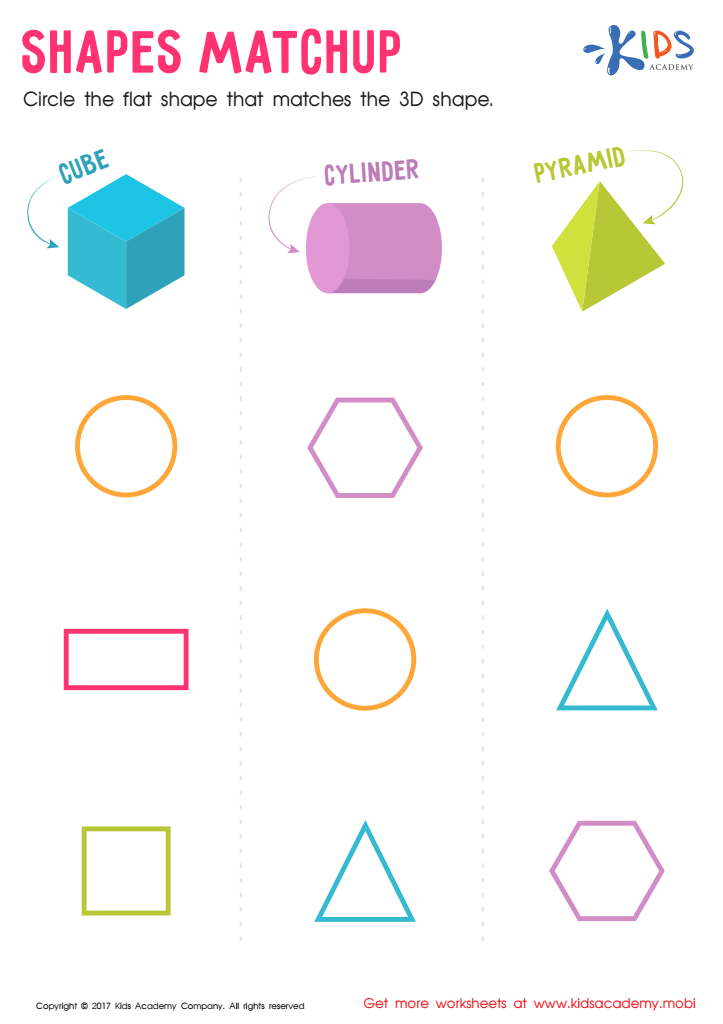
Shapes Matchup Worksheet








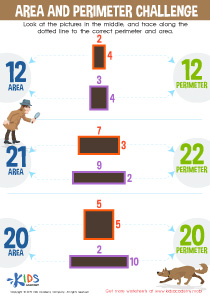
Parents and teachers should care about basic geometry knowledge for ages 6-7 because understanding 2D shapes lays the groundwork for a variety of essential cognitive and practical skills. At this age, children are developing critical thinking and problem-solving abilities, and recognizing and working with shapes helps strengthen these skills in a highly visual and intuitive manner. Knowledge of 2D shapes such as circles, squares, triangles, and rectangles serves as a fundamental building block for more advanced mathematical concepts, including area, perimeter, symmetry, and geometric reasoning.
Moreover, familiarity with shapes is vital for spatial awareness, which is crucial not just in math, but across various disciplines like science, engineering, and art. Early geometry lessons help children make sense of their physical world, enhancing their ability to describe and navigate it. This spatial reasoning also supports everyday tasks, like understanding maps or arranging objects efficiently.
Additionally, recognizing shapes in different contexts promotes observational skills and attention to detail. It encourages children to notice patterns and relationships, fostering creativity and aesthetic appreciation. On a social level, mastering basic geometry boosts confidence and participation in classroom activities, setting a positive tone for future learning endeavors. By prioritizing geometry in early education, parents and teachers ensure a well-rounded, engaging, and robust foundation for a child’s academic and personal growth.