Filters

7 filtered results

Clear all filters
Favorites
With answer key
Interactive

7 filtered results

Difficulty Level

Grade


Boost your child's vocabulary and geometry skills with our engaging "Vocabulary Enhancement 2D Shapes Worksheets for Ages 6-7." These meticulously designed worksheets combine interactive activities with shape recognition, ensuring an enjoyable learning experience. Your child will learn essential 2D shape names such as circles, squares, triangles, and more while enhancing descriptive vocabulary and critical thinking skills. Perfect for home or classroom use, these expertly crafted worksheets provide a solid foundation in both language and mathematics. Elevate your child’s education and make learning fun with our 2D Shapes Vocabulary Enhancement Worksheets, tailored specifically for young learners.

Check out this FREE Trial Lesson on 2D Shapes for age 6-7!

Count Forward Starting From Any Number

Favorites
With answer key
Interactive
  • 6-7
  • Vocabulary enhancement
  • 2D Shapes
Shapes in Different Positions Worksheet

Shapes in Different Positions Worksheet

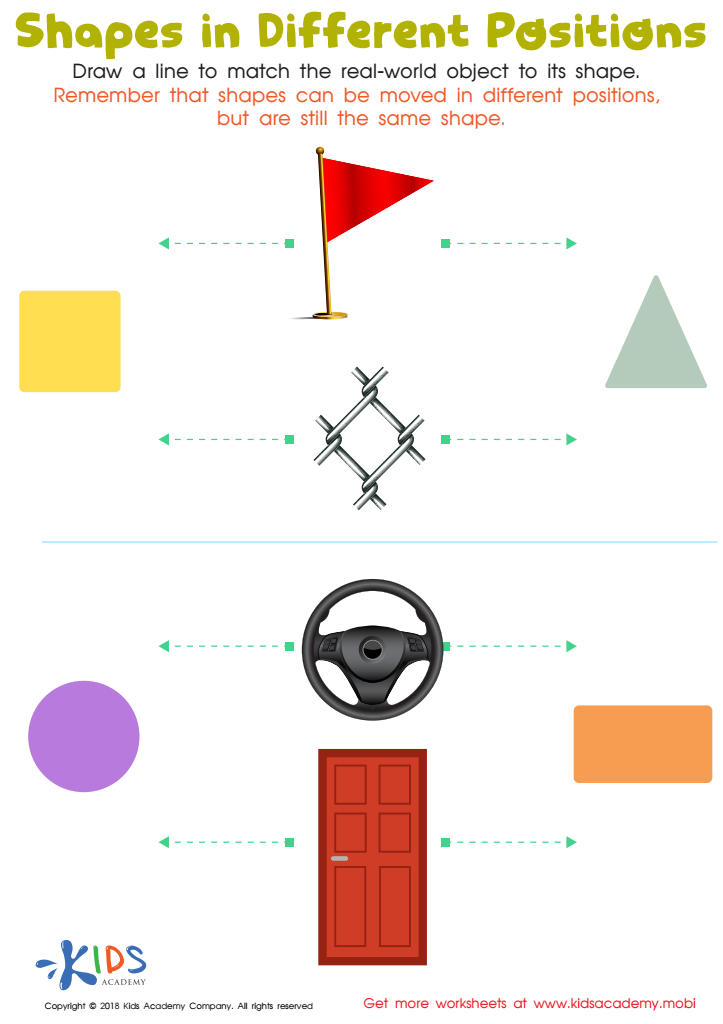
Children can practice and strengthen their visual-discernment, hand-eye coordination and neural connections by manipulating shapes in their minds and matching them with the right answer. This PDF with bright colors gives your kids the opportunity to do so.
Shapes in Different Positions Worksheet
Worksheet
Peter Pan Worksheet Preview

Peter Pan Worksheet

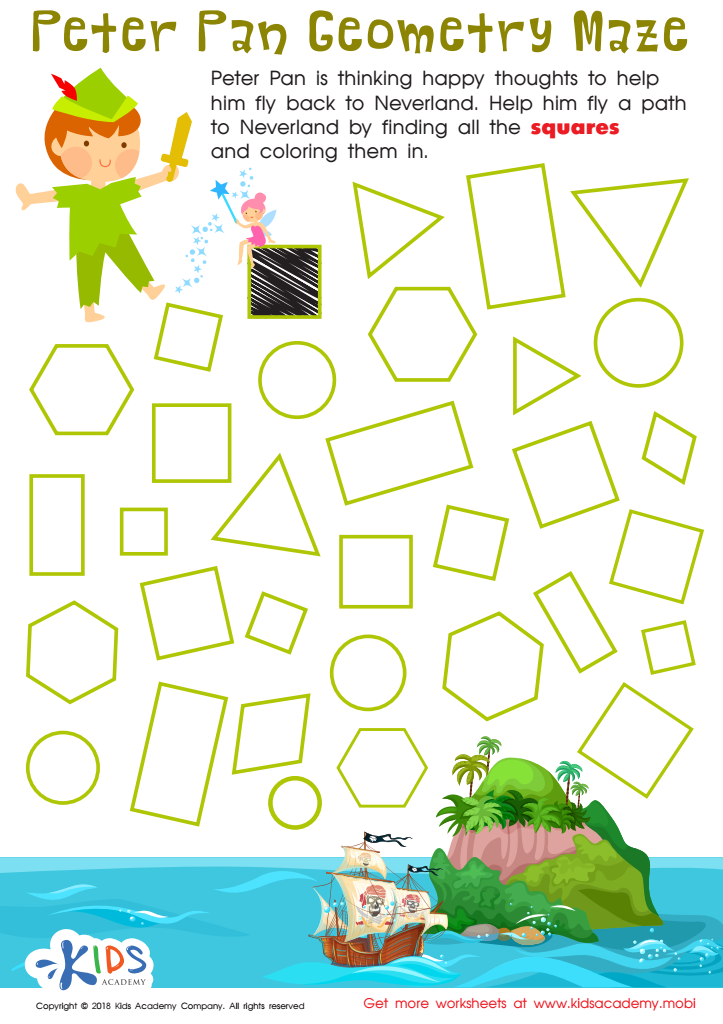
Kindergarteners can join Peter Pan on an adventure to Neverland! They can help him by coloring squares to create a path, strengthening their shape identification skills in a fun maze. Let the journey begin!
Peter Pan Worksheet
Worksheet
Match It up Worksheet

Match It up Worksheet

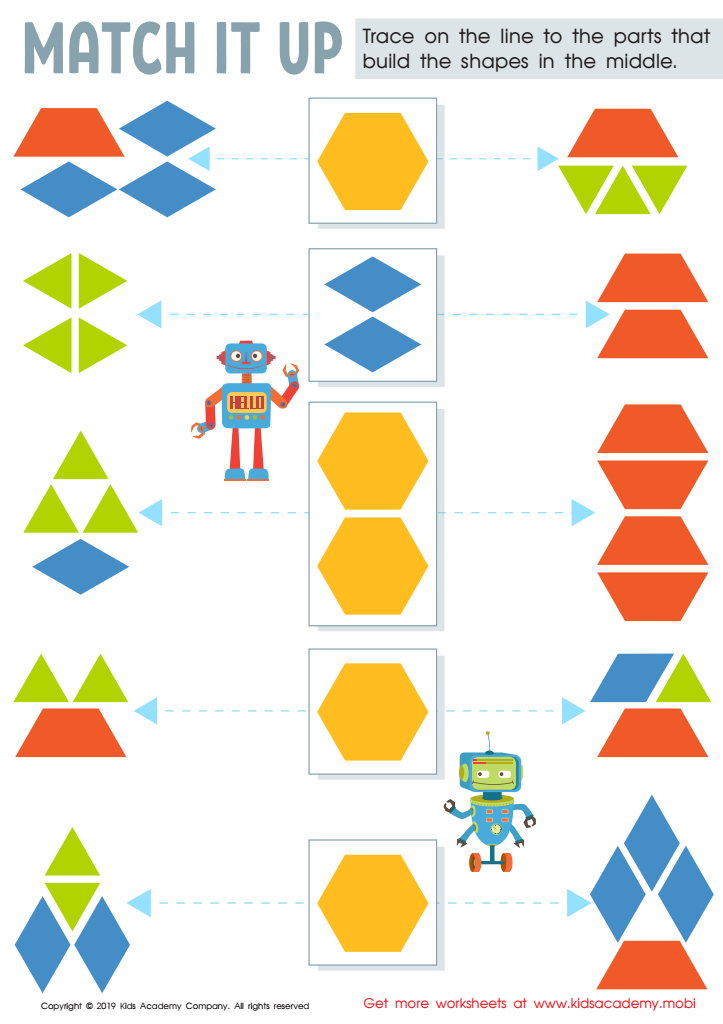
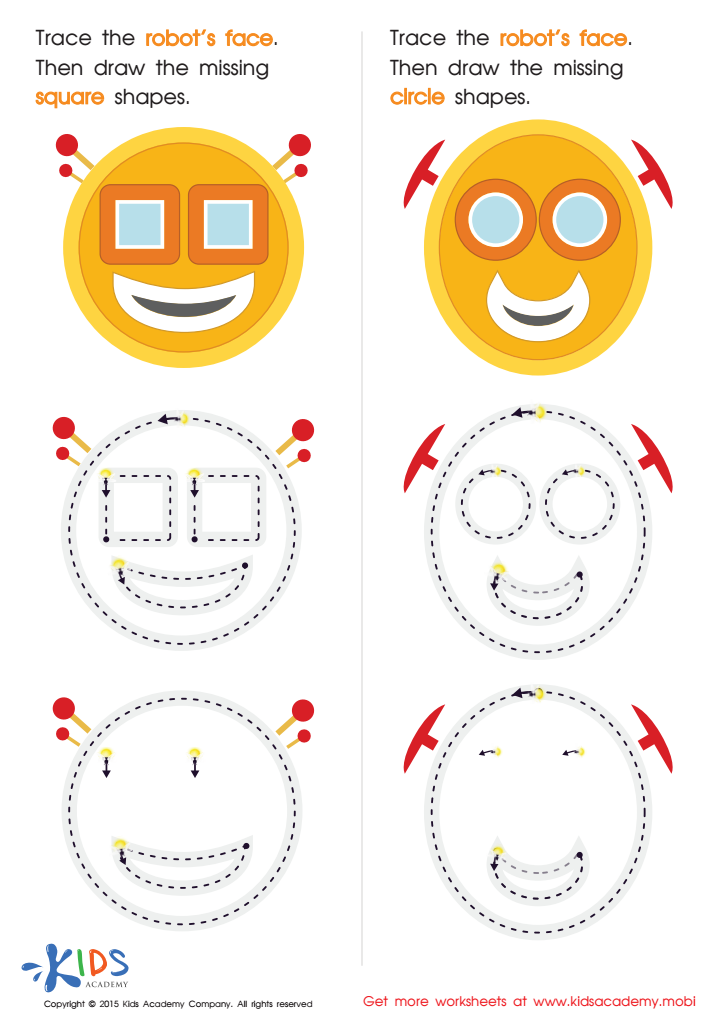
If your kids are into robots, they'll be thrilled to work on this worksheet. Ask them to name shapes they know, and help them draw and identify these shapes. Look at the shapes in the middle, and the sides. Finally, help your kids trace the lines to build the shapes in the middle.
Match It up Worksheet
Worksheet
Faces of 3D Shapes Worksheet

Faces of 3D Shapes Worksheet

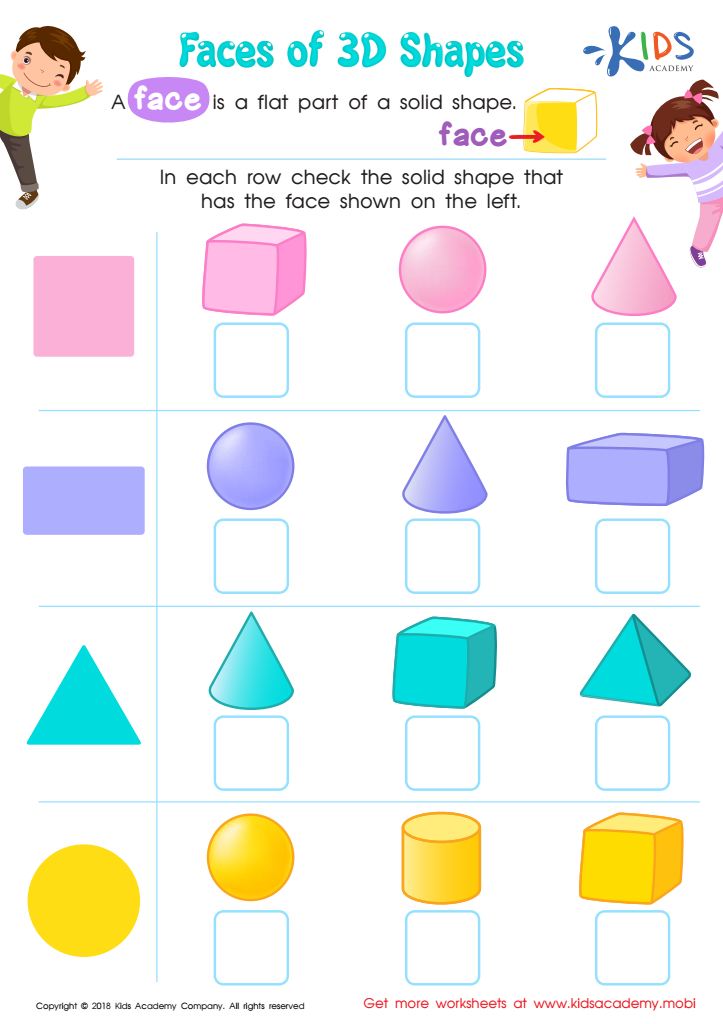
Point at random body parts and ask your child to name them. Point to their face and ask them to identify it. Use this worksheet to show how "face" doesn't just refer to body parts - it can also mean the flat surface of a solid shape. Check the picture to find the matching solid shape for each face shown.
Faces of 3D Shapes Worksheet
Worksheet
Geometric Shapes for Kids: Practicing to Draw Circles And Squares PDF

Practicing to Draw Circles And Squares Printable
Download our free printable geometry worksheets to learn shapes with your preschoolers. Trace Robot's face, draw the square parts and round shapes, remember the names for each one. Get more materials for kids at Kids Academy and make learning fun with our free printable geometry worksheets.
Practicing to Draw Circles And Squares Printable
Worksheet
What Shape Am I? Worksheet

What Shape Am I? Worksheet

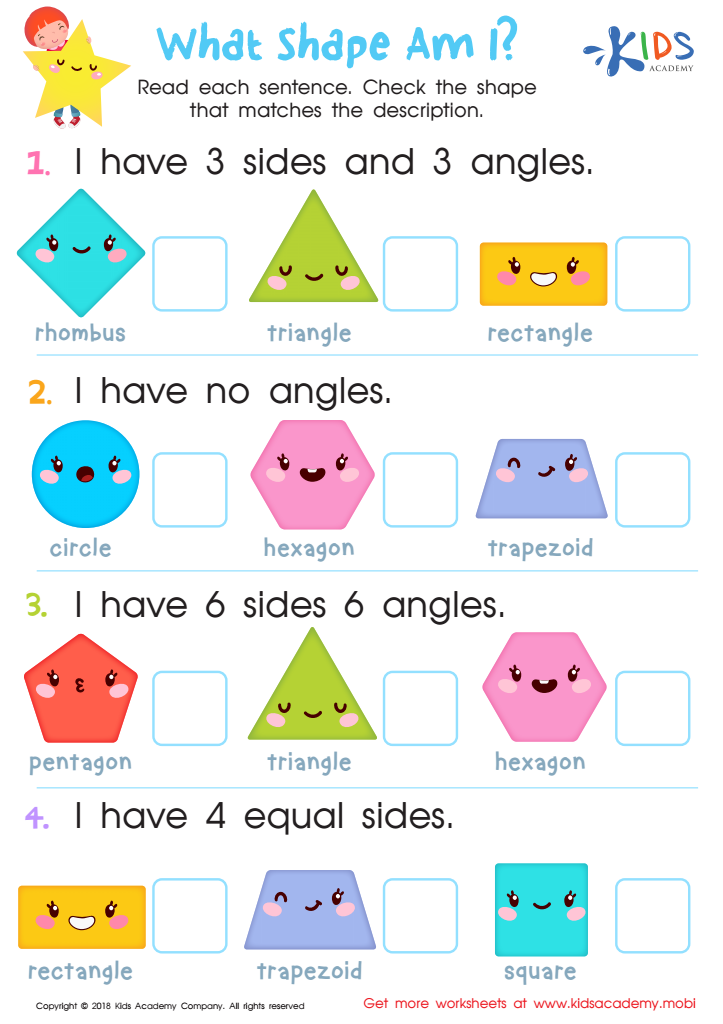
Help your child read each sentence in this colorful worksheet. Have them identify the shapes described and check the boxes. To prepare, ask simple questions like "How many sides does a triangle have?" and "Which shape has 4 equal sides?" Your child will become more skilled at shapes by the end of this activity.
What Shape Am I? Worksheet
Worksheet
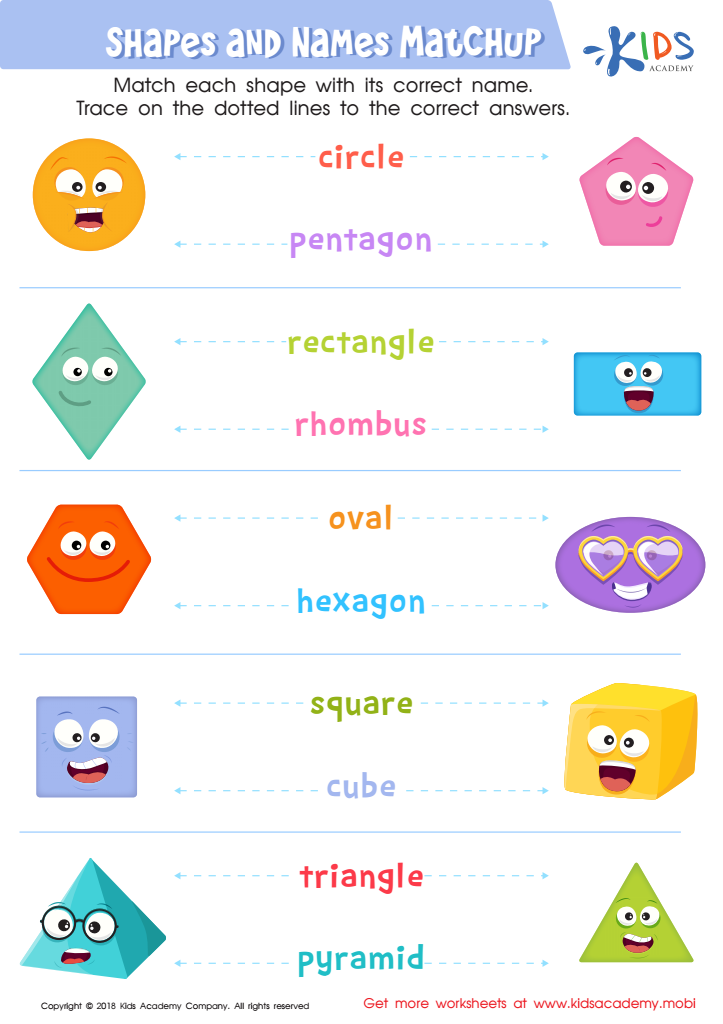
Shapes and Names Matchup Worksheet


Shapes and Names Matchup Worksheet

Introduce your students to shapes if they aren't familiar. Look at the sheet with them and ask them to identify shapes. Help them match each shape to its name, then trace the dotted lines to the answers. Even if they haven't seen shapes before, this exercise will be easy - with your help!
Shapes and Names Matchup Worksheet
Worksheet


Vocabulary enhancement for young children, particularly in reference to 2D shapes, is fundamental to cognitive and academic development. At ages 6-7, children are in a critical period where their brains are highly receptive to acquiring new words and concepts. Introducing 2D shapes, such as circles, squares, and triangles, enriches their mathematical vocabulary and lays the groundwork for geometry, spatial awareness, and problem-solving skills.

Knowing the names and properties of different shapes equips children with the tools they need for effective communication and comprehension in both mathematics and everyday life. This vocabulary expansion aids in the description and categorization of objects, fostering better observational skills and attention to detail. For instance, being able to distinguish and name a rectangle versus a square promotes precision and understanding of shapes' specific attributes.

Parents and teachers who invest time in vocabulary activities related to 2D shapes also support language development, reading comprehension, and the ability to follow and give directions. Additionally, such early foundational knowledge instills confidence and enthusiasm in learning, contributing to a child's long-term academic success. Ultimately, enhancing vocabulary about 2D shapes primes children for more complex concepts in both mathematics and beyond, making it a crucial aspect of early education.