Comparing Fractions Adding 2-digit Numbers Worksheets for Ages 6-7
6 filtered results
-
From - To
Discover engaging "Comparing Fractions and Adding 2-digit Numbers Worksheets" specifically designed for ages 6-7! These fun educational resources help young learners master essential math concepts. Each worksheet combines activities that focus on comparing fractions and adding two-digit numbers, building foundational skills in a visually appealing manner. With colorful illustrations and interactive exercises, children will gain confidence as they work through various problem-solving challenges. Perfect for classroom use or at-home practice, our worksheets promote critical thinking and encourage a love for math. Start your child’s math journey today by exploring these valuable resources tailored for early learners!
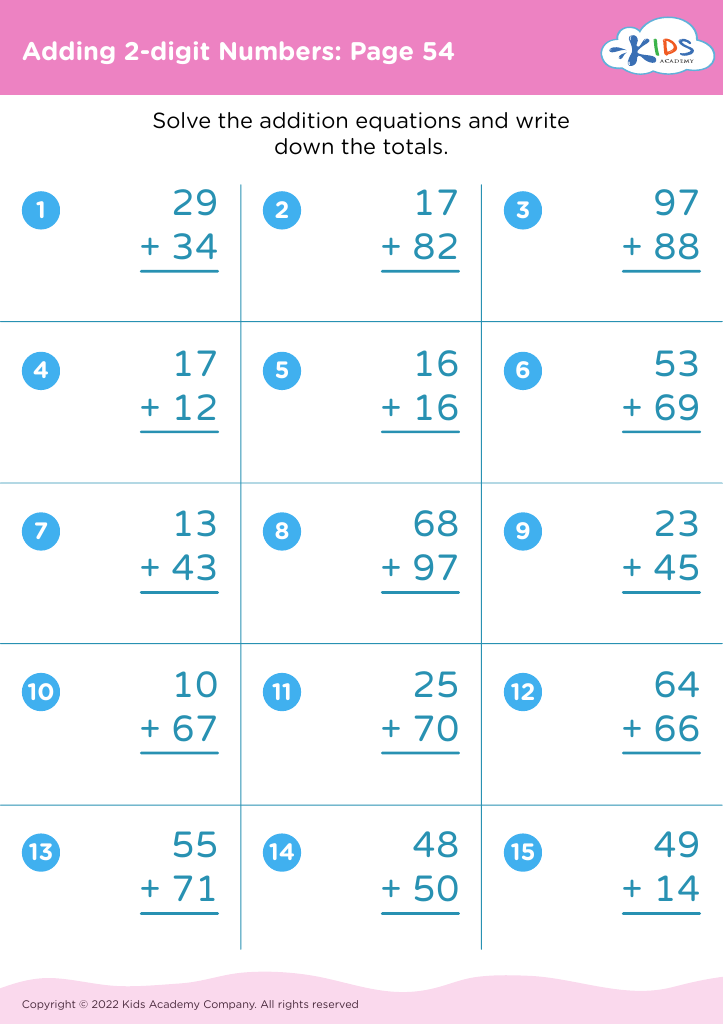
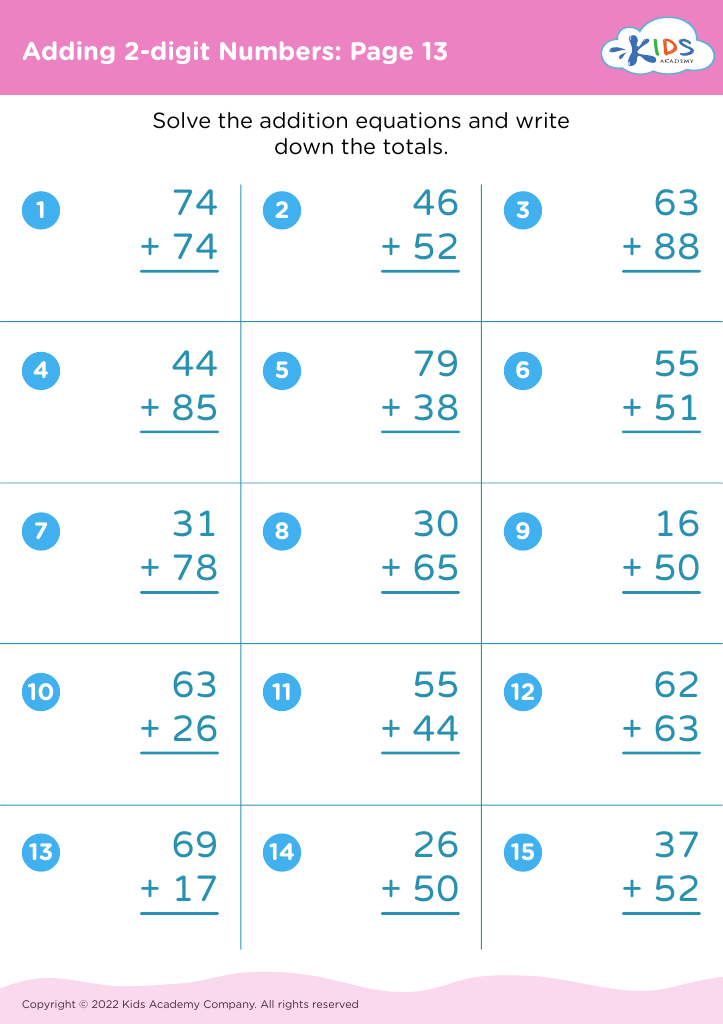
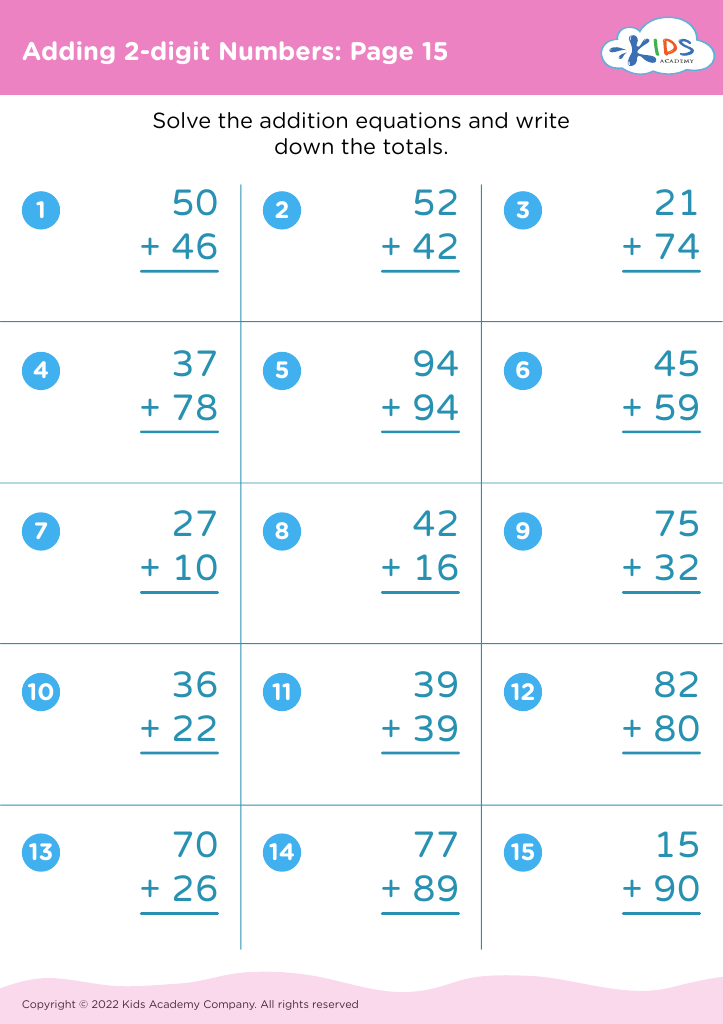
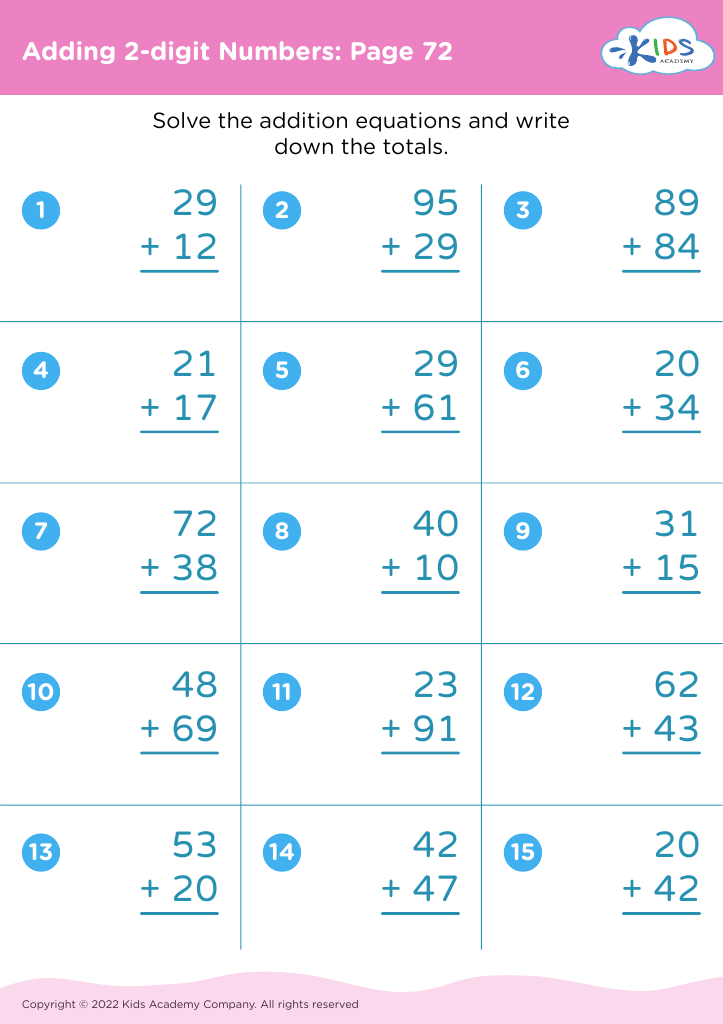
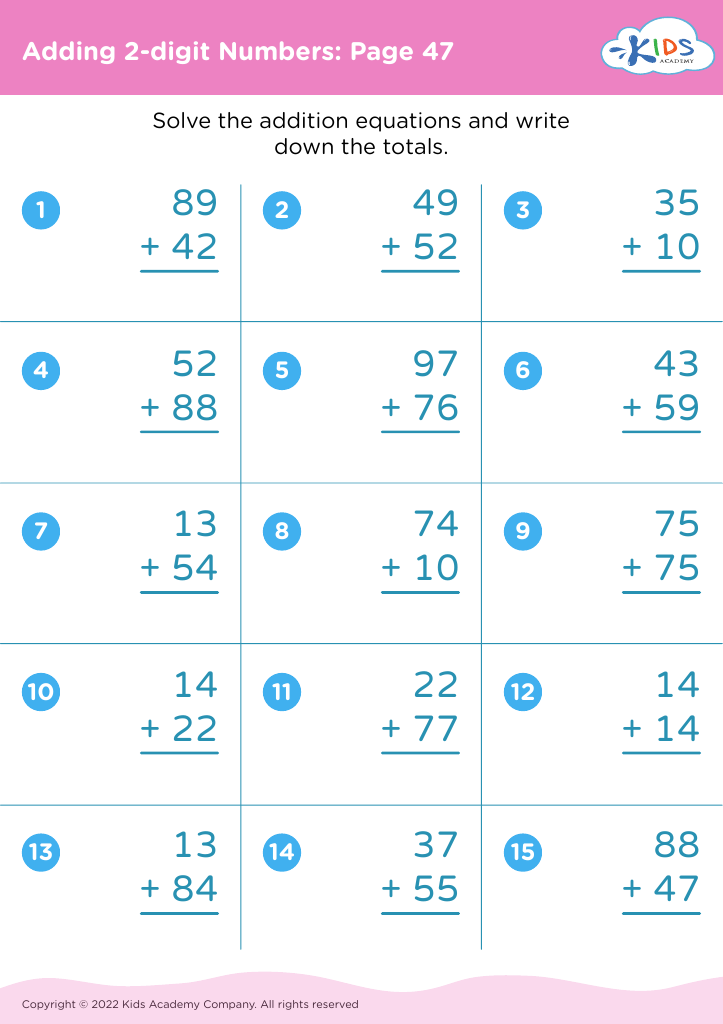
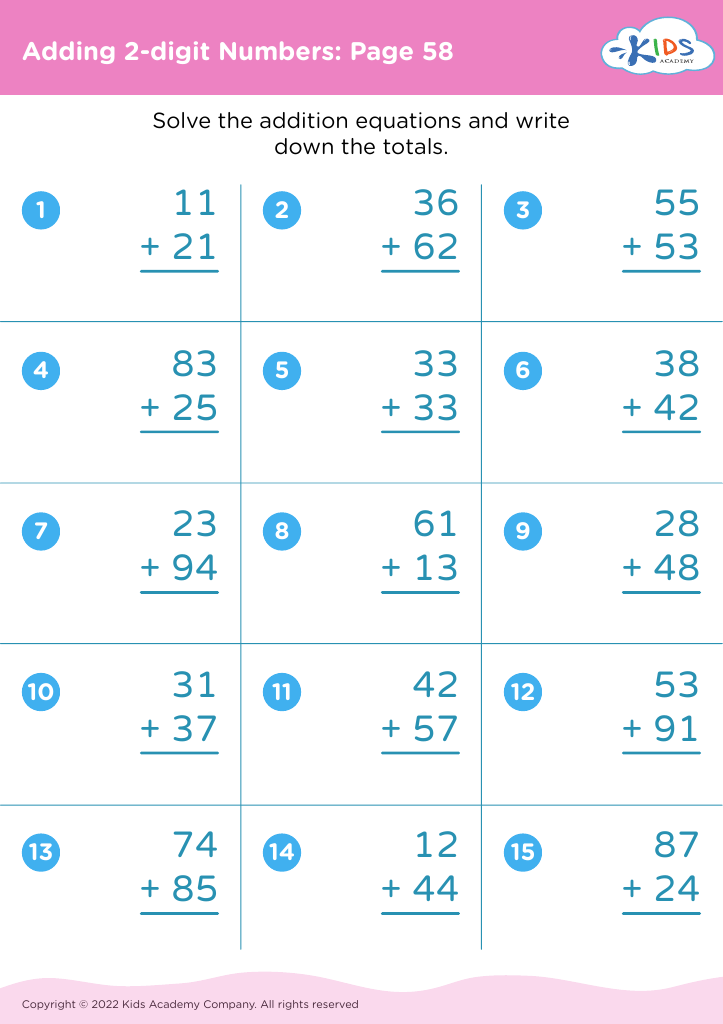








Understanding how to compare fractions and add 2-digit numbers is crucial for children ages 6-7, laying the foundation for their future math skills. At this age, children are developing critical thinking and problem-solving abilities. Comparing fractions helps them grasp the concept of part-to-whole relationships, essential for everyday decisions, such as dividing pizza or understanding portions. When children learn to compare fractions, they also enhance their number sense, which is vital for advanced mathematical concepts later on.
Adding 2-digit numbers expands their arithmetic skills and boosts their confidence in math. This competency fosters significant cognitive development, empowering students to tackle more complex problems as they progress. Moreover, learning addition builds a connection to real-world scenarios, like budgeting or telling time. It also supports their literacy development; as they articulate their thinking during problem-solving, they enhance communication skills.
By emphasizing these skills, parents and teachers not only improve students' mathematical competencies but also cultivate a positive attitude toward learning. Early mastery of comparing fractions and adding numbers will contribute to lasting success in mathematics, enabling children to excel in upcoming lessons and foster a lifelong love for learning. Encouraging these skills now lays a robust groundwork for future educational pursuits.








