Fraction simplification Adding up to 100 with Regrouping Worksheets for Ages 6-7
7 filtered results
-
From - To
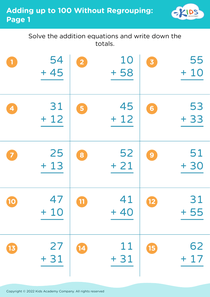
Explore our engaging "Fraction Simplification Adding up to 100 with Regrouping Worksheets" designed for ages 6-7 at Kids Academy! These worksheets seamlessly combine fraction simplification with addition exercises, promoting critical math skills in young learners. Using vibrant illustrations and age-appropriate problems, children will learn to simplify fractions and perform additions up to 100, including those needing regrouping. Our thoughtfully crafted exercises are perfect for making learning fun and effective, providing a strong foundation in math fundamentals. Boost your child’s confidence and proficiency in math by downloading these free printables today and watch them excel!
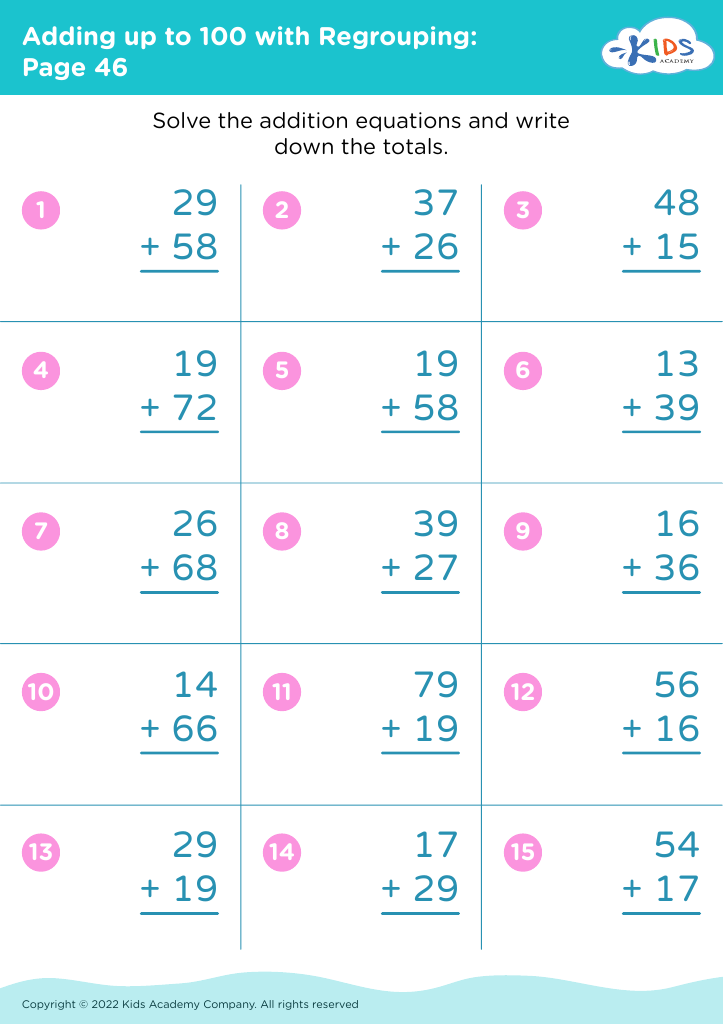
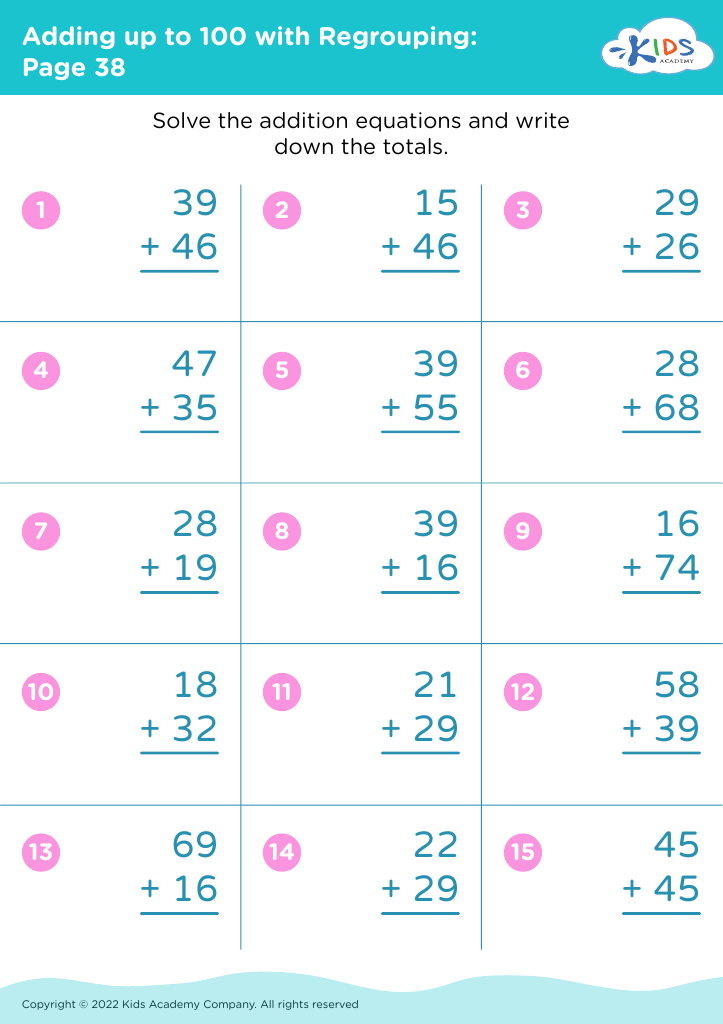
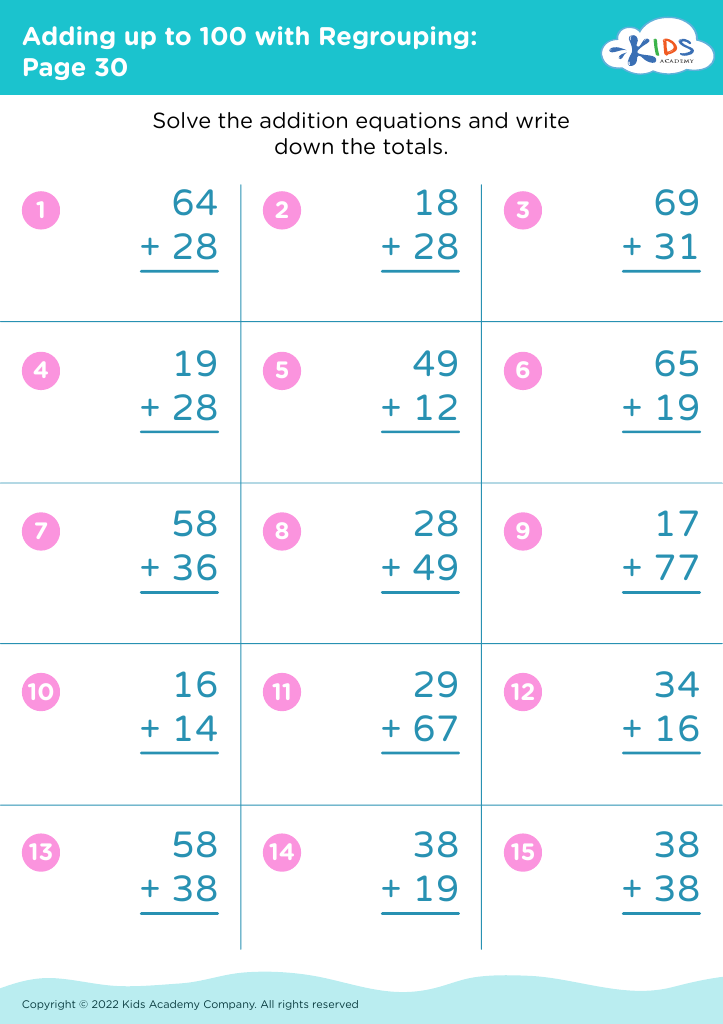
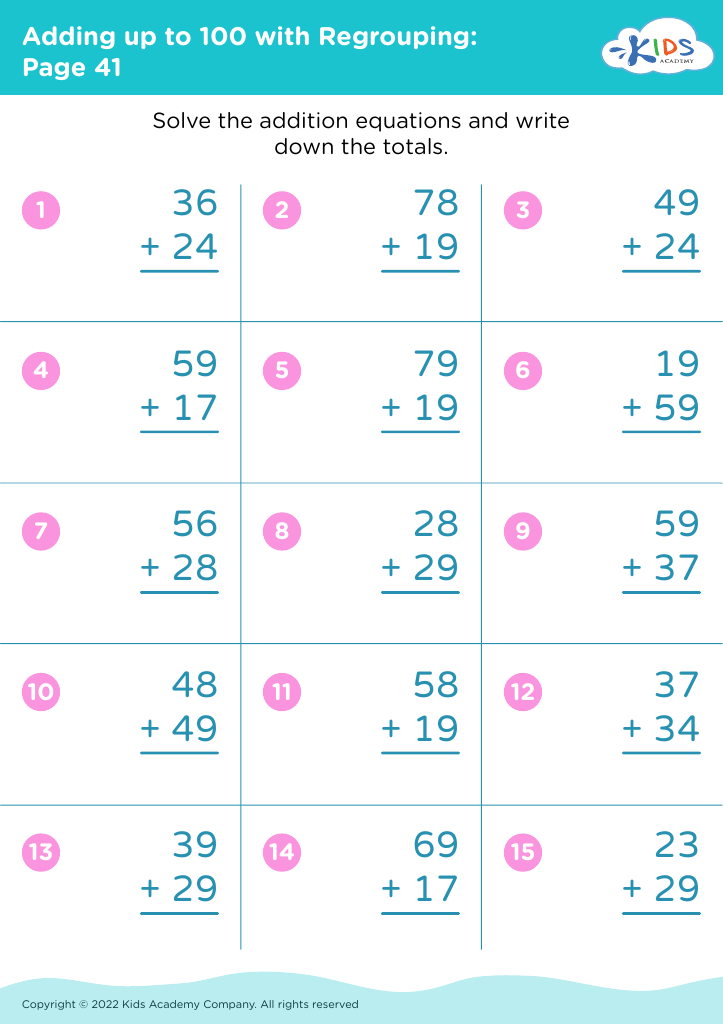
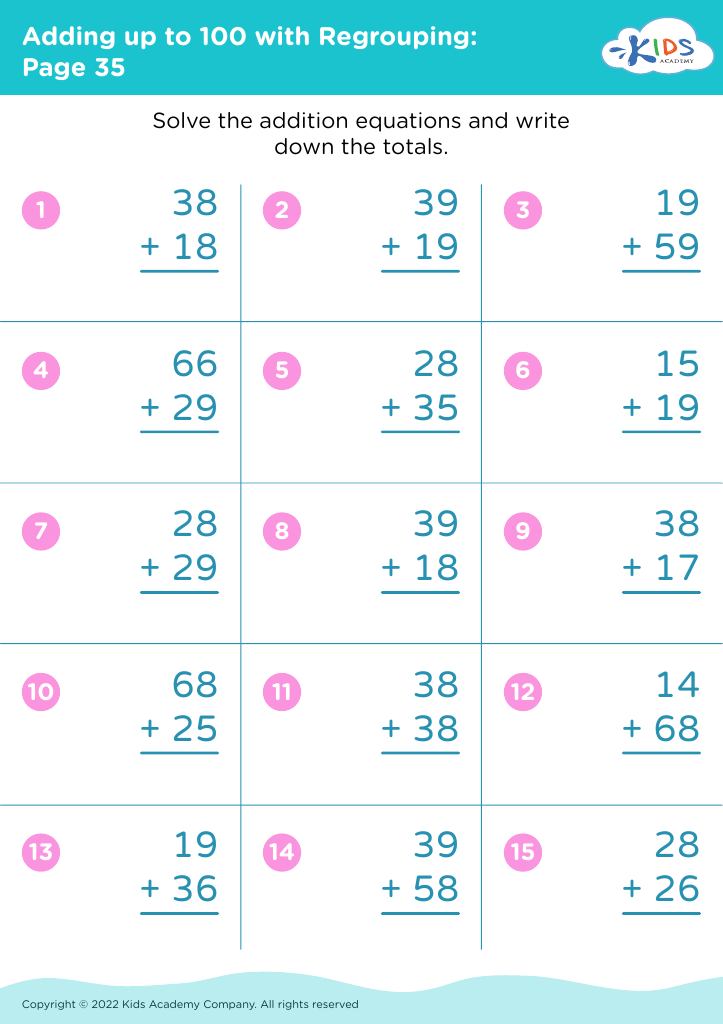
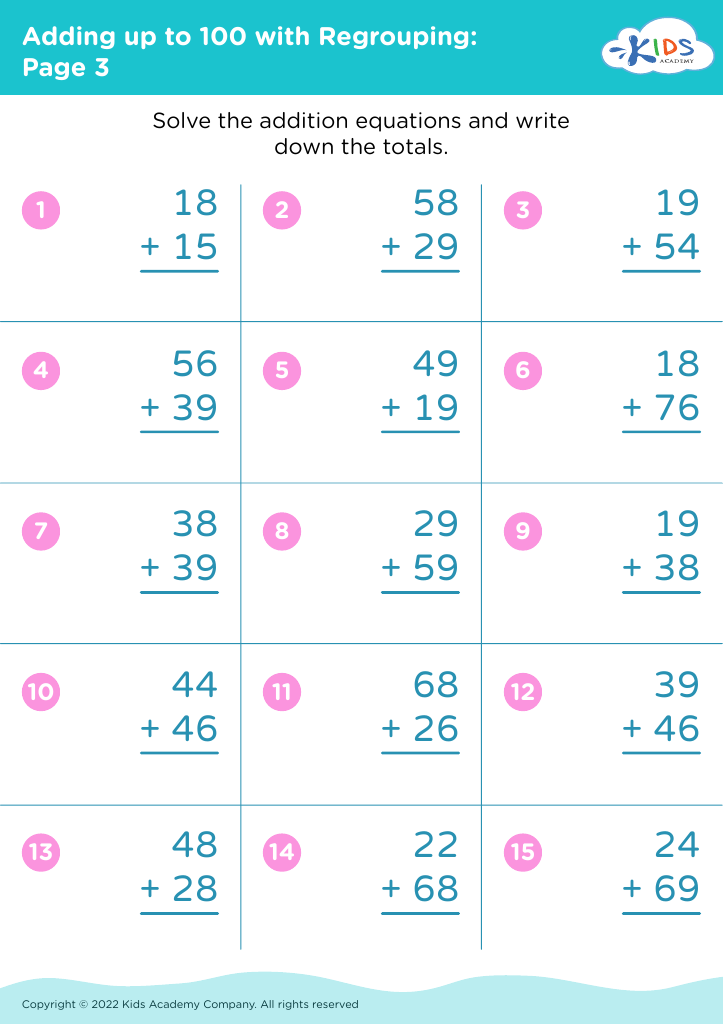
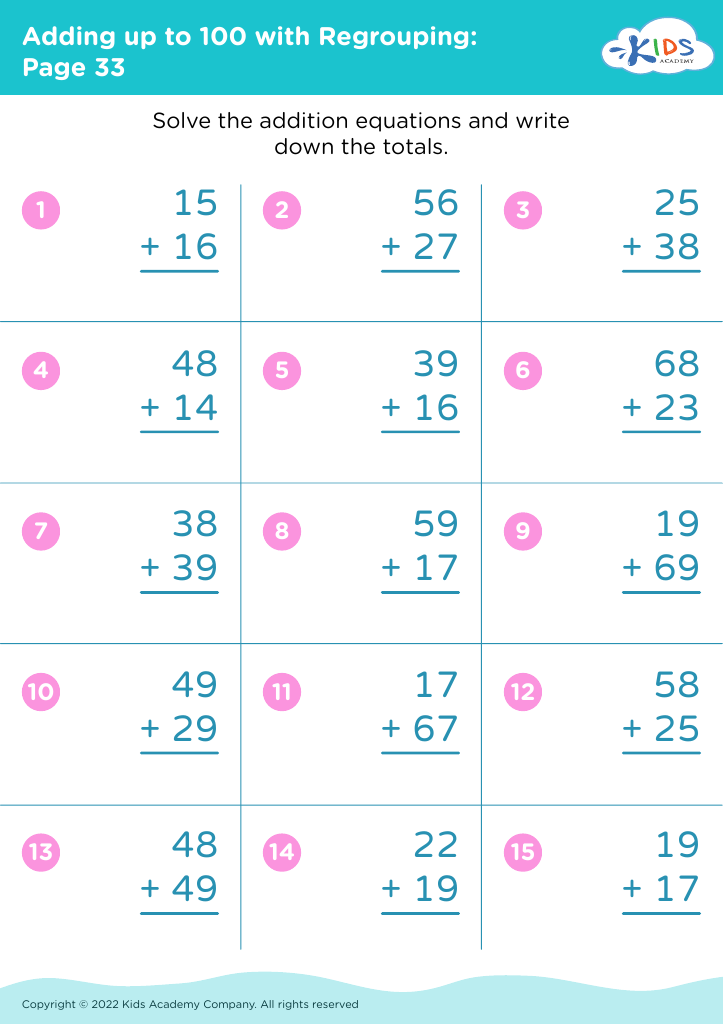




Parents and teachers should care about fraction simplification and adding up to 100 with regrouping for children ages 6-7 for several key reasons. First, mastering basic fractions and addition skills helps build a strong foundational understanding of mathematics. These early concepts are crucial for grasping more complex mathematical ideas later on.
Second, fraction simplification instills critical problem-solving and analytical skills. At this age, children are particularly receptive to visual and hands-on learning methods. Simplifying fractions encourages them to recognize patterns, make comparisons, and visualize parts of a whole, all important cognitive skills.
Third, adding up to 100 with regrouping enhances addition fluency and arithmetic confidence. Regrouping teaches children how to handle "carrying over" numbers in addition problems, a vital skill for more advanced arithmetic operations. It also improves their number sense and estimation abilities.
Lastly, these early math skills have real-world applications and improve a child's overall ability to think logically and systematically. They lay the groundwork for everyday tasks, like measuring ingredients for a recipe or making sense of time and money. By focusing on fraction simplification and addition with regrouping at a young age, parents and teachers can help children develop a lifelong confidence and interest in mathematics.