Identify shapes Adding up to 100 with Regrouping Worksheets for Ages 6-7
3 filtered results
-
From - To
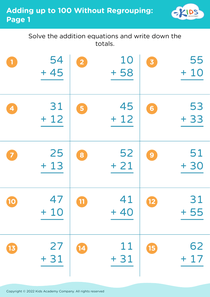
Enhance your child's mathematical skills with our "Identify Shapes: Adding Up to 100 with Regrouping Worksheets" designed specifically for ages 6-7. These engaging worksheets seamlessly combine shape recognition and addition concepts, helping young learners build a strong foundation in math. By practicing addition problems that require regrouping, children will develop critical thinking and problem-solving skills while identifying various shapes. Each worksheet is carefully crafted to ensure an enjoyable learning experience that makes math fun! Encourage your child to explore and master these essential early math skills today, setting them up for future success in their academic journey.
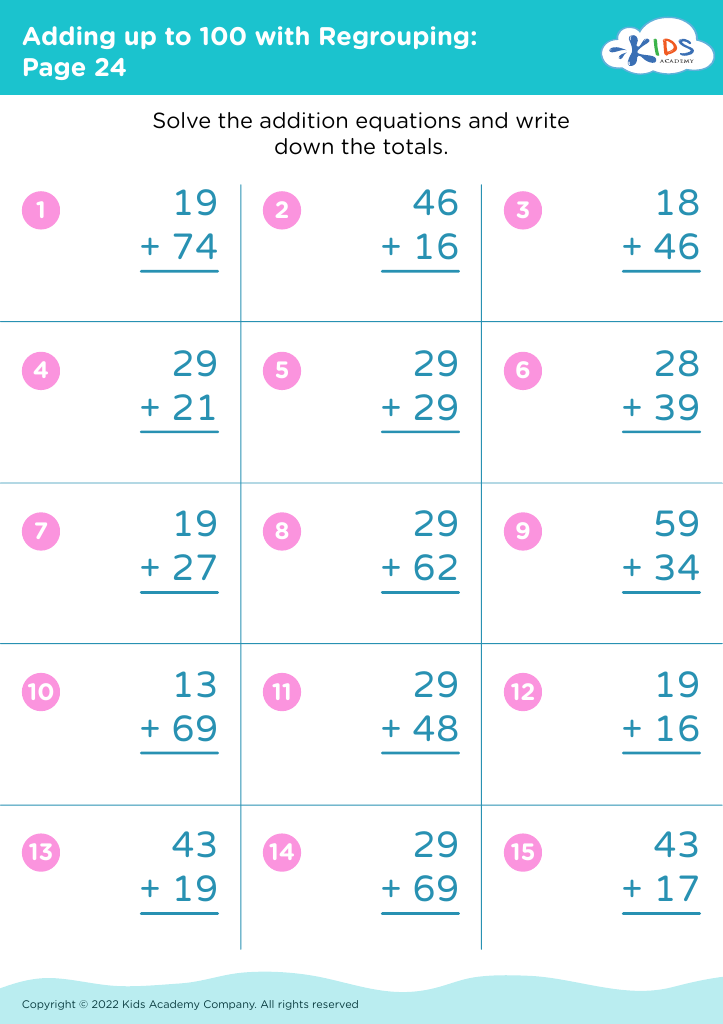
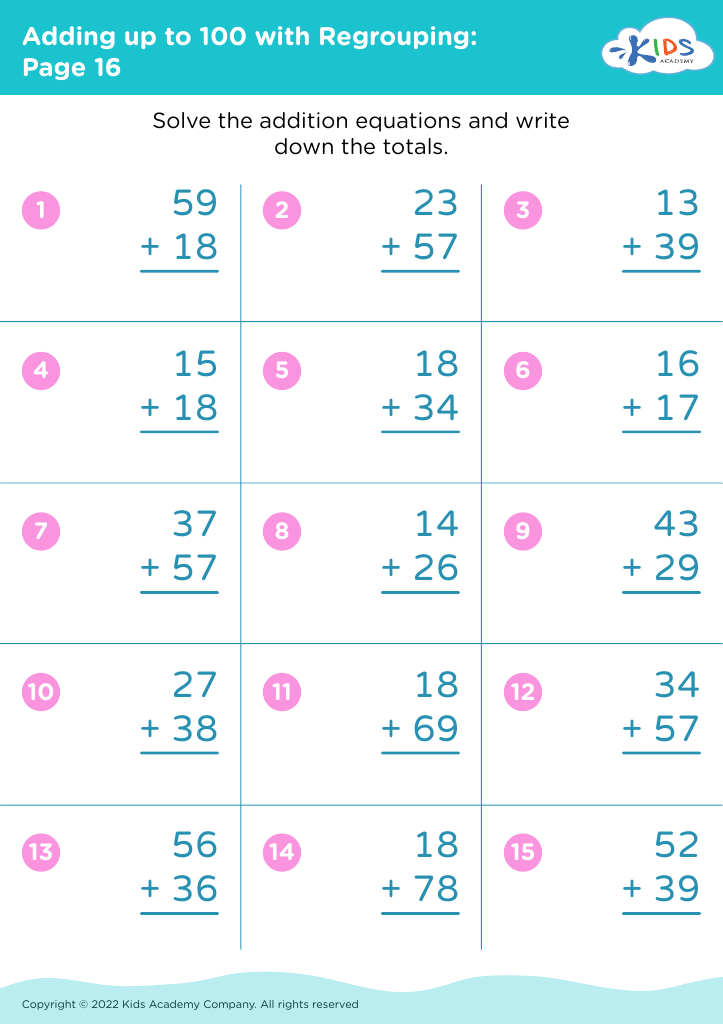
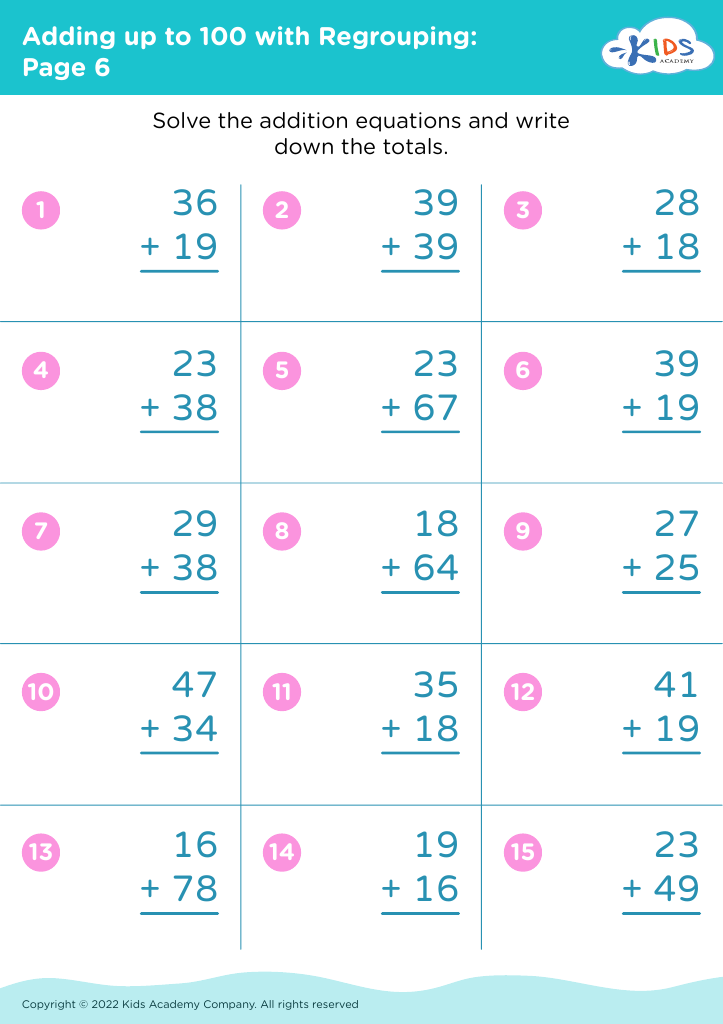




Identifying shapes and mastering the concept of adding up to 100 with regrouping are foundational skills in early education, particularly for children aged 6-7. Understanding shapes helps young learners develop spatial awareness, an essential skill that enhances problem-solving abilities and lays the groundwork for geometry in later years. Knowledge of different shapes also supports critical thinking and creativity, enabling children to categorize and differentiate between objects in their environment.
Similarly, the ability to add numbers up to 100 with regrouping embodies both mathematical fluency and a deeper understanding of number sense. This skill is crucial as it introduces children to more complex mathematical operations, fostering confidence and independence in their math skills. Regrouping reinforces the concept of place value, helping students grasp how numbers work together, which is critical for further mathematical concepts.
By focusing on these areas, parents and teachers can effectively set a strong academic foundation for children. Engaging in shape identification and regrouping activities not only promotes cognitive development but also encourages teamwork and communication skills when children collaborate. Ultimately, mastering these concepts empowers young learners to navigate their educational journey with assurance and enthusiasm, cultivating a lifelong love for learning.