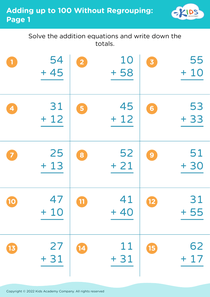
Recognize patterns Adding up to 100 with Regrouping Worksheets for Ages 6-7
3 filtered results
-
From - To
Discover the engaging "Recognize Patterns: Adding Up to 100 with Regrouping Worksheets" designed for children aged 6-7. These worksheets are perfect for young learners to enhance their mathematical skills while recognizing important patterns and relationships in numbers. Through fun exercises, students will practice adding up to 100 by regrouping efficiently and accurately. With a variety of colorful and interactive activities, children will become confident in understanding the concept of regrouping, enabling them to tackle more complex math problems in the future. Foster your child's love for math as they build foundational skills and recognize numerical patterns with these essential worksheets!
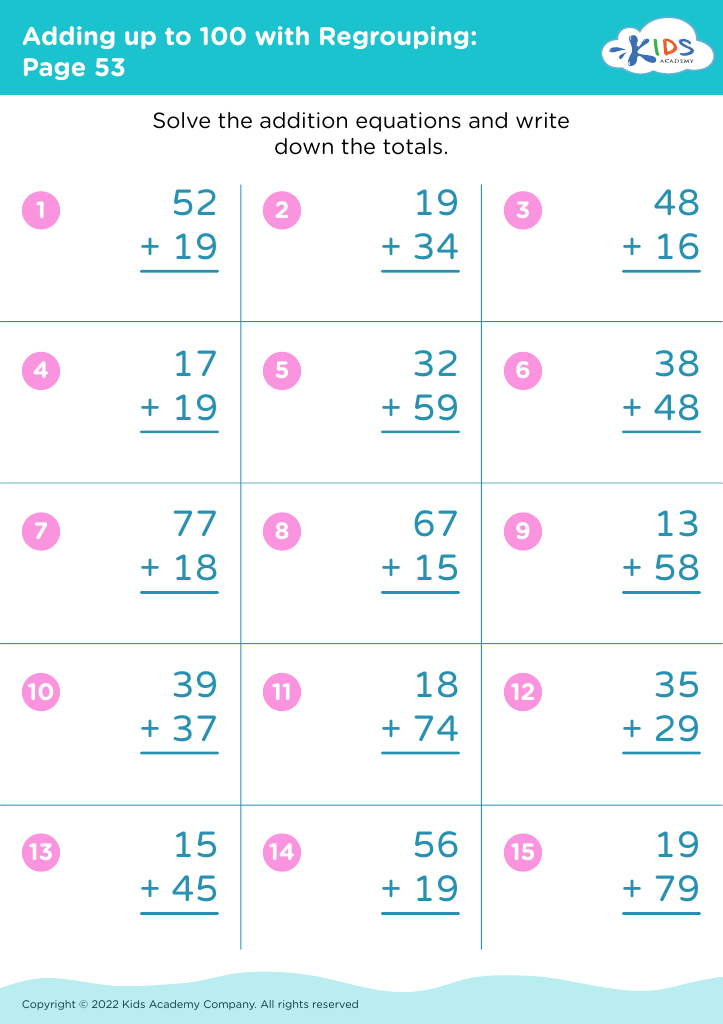
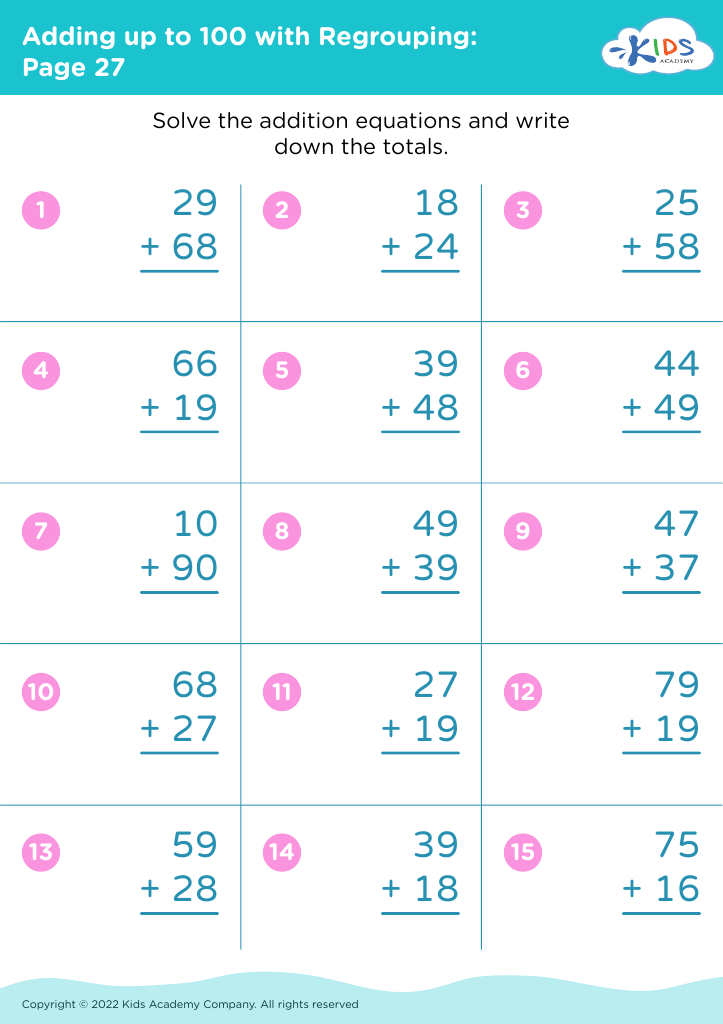
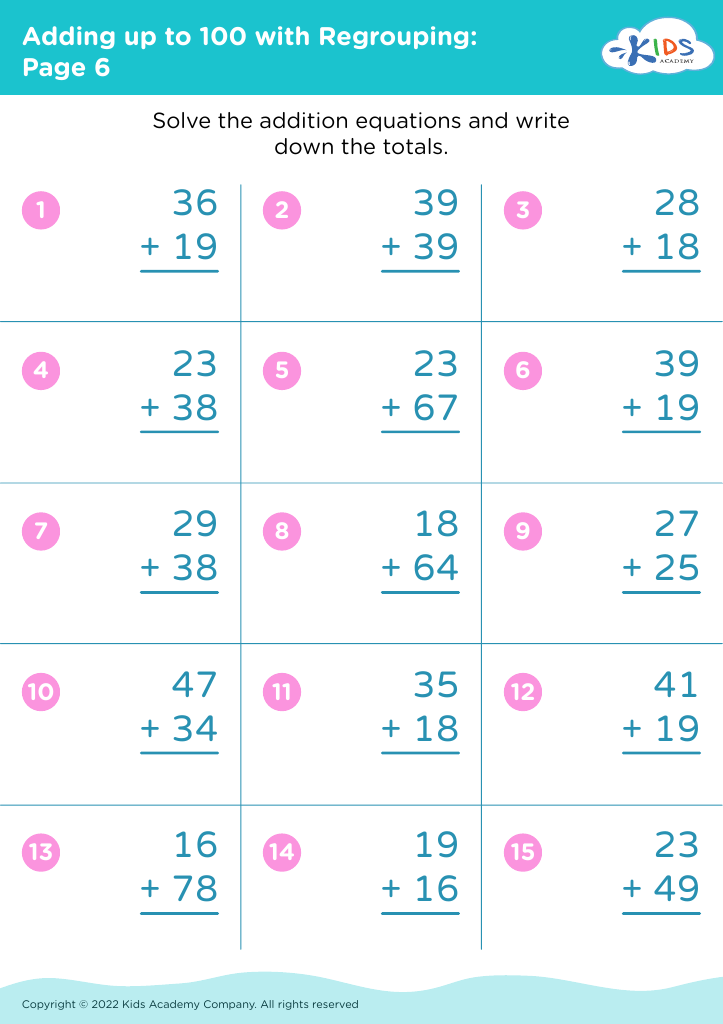




Recognizing patterns and mastering addition up to 100 with regrouping is fundamentally important for children ages 6-7 as it sets the groundwork for their mathematical comprehension and problem-solving skills. At this early stage, children are developing critical thinking and cognitive abilities that will serve them for years to come.
Understanding patterns helps young learners identify relationships between numbers, which can simplify complex calculations and enhance their ability to predict outcomes. When children grasp the concept of regrouping—shifting values in addition (e.g., carrying over tens)—they learn how to solve bigger problems systematically, preparing them for more advanced mathematical concepts in the future.
Additionally, proficiency in these skills fosters confidence. When students can recognize patterns and apply regrouping effectively, they feel empowered to approach math without anxiety, making learning more enjoyable. This lays a positive attitude towards mathematics that can influence their educational journey.
Overall, when parents and teachers emphasize skill mastery in recognizing patterns and regrouping, they are not just teaching math; they are nurturing young minds capable of logical reasoning and critical analysis, skills essential for academic success in all areas of learning.