Number Recognition Adding up to 100 Without Regrouping Worksheets for Ages 6-7
8 filtered results
-
From - To
Boost your child’s number skills with our comprehensive "Number Recognition Adding up to 100 Without Regrouping Worksheets." Designed specifically for children ages 6-7, these engaging worksheets help young learners practice essential math skills in a fun and effective way. With a variety of exercises that focus on number recognition, students gain confidence as they add numbers up to 100 without the complication of regrouping. Perfectly suited for early elementary students, these worksheets are an excellent resource for classroom activities or additional home practice. Encourage your child’s mathematical growth with these expertly crafted, easy-to-follow sheets!
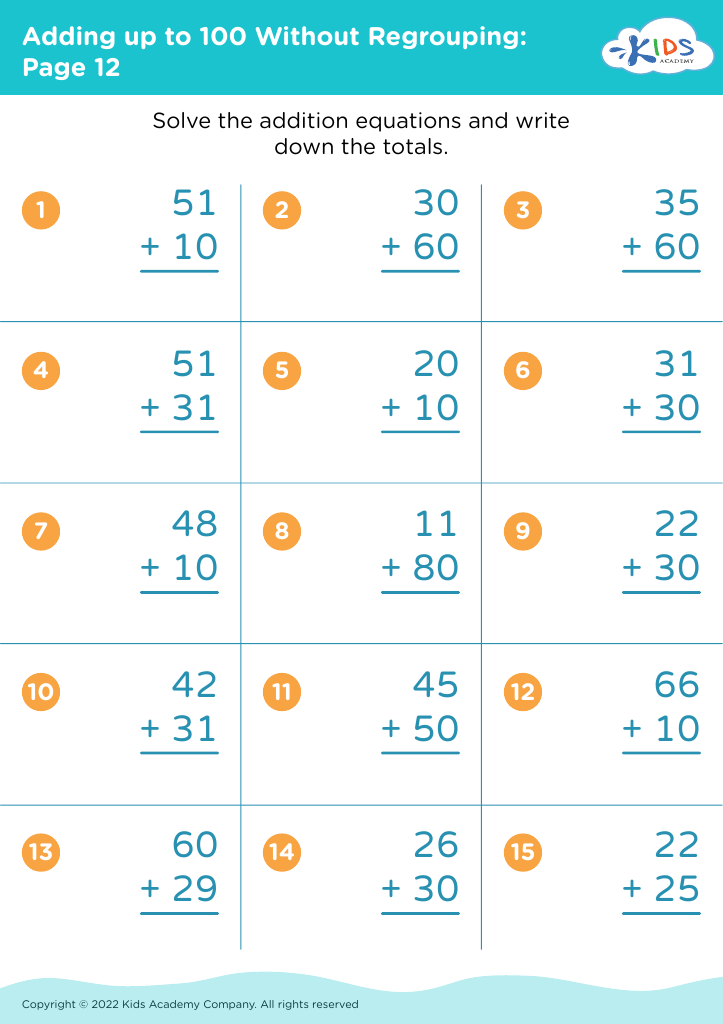
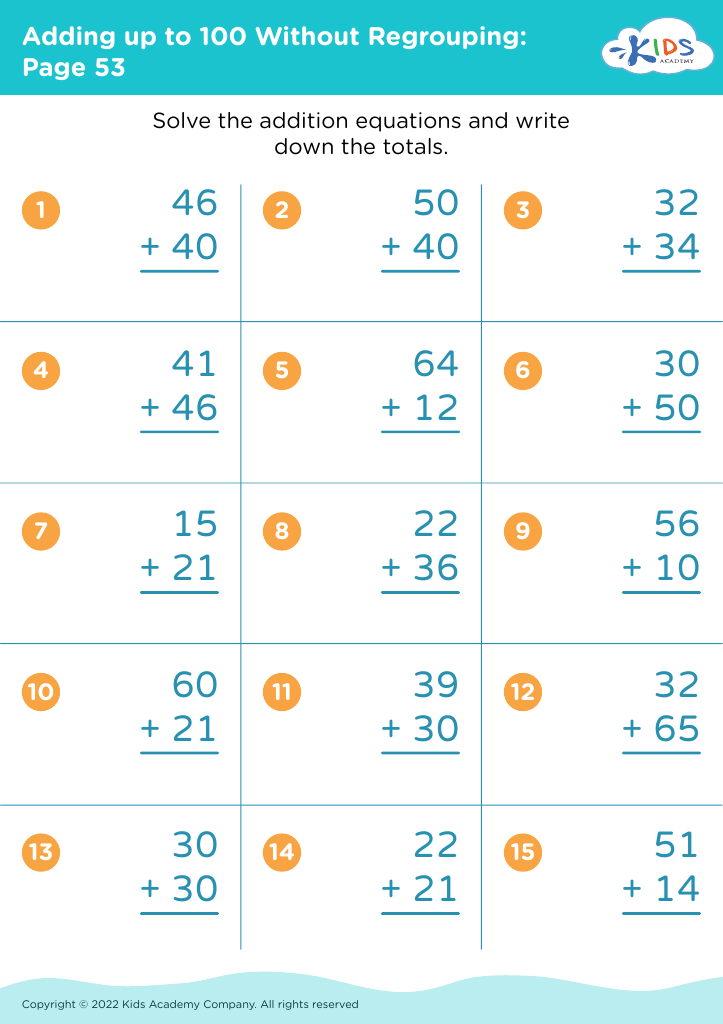
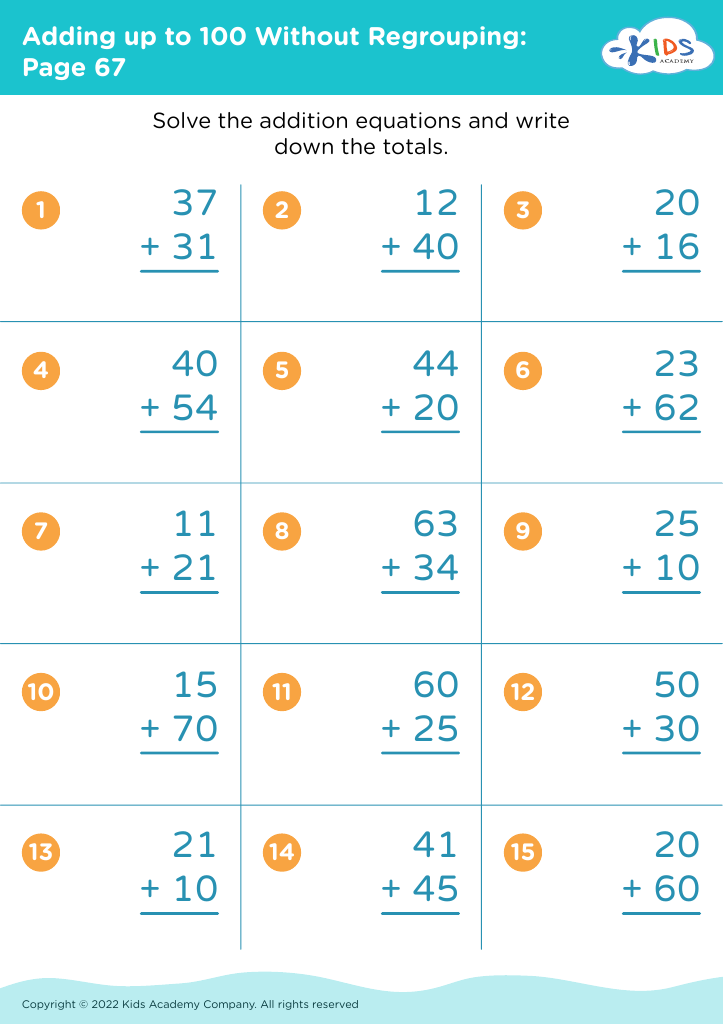
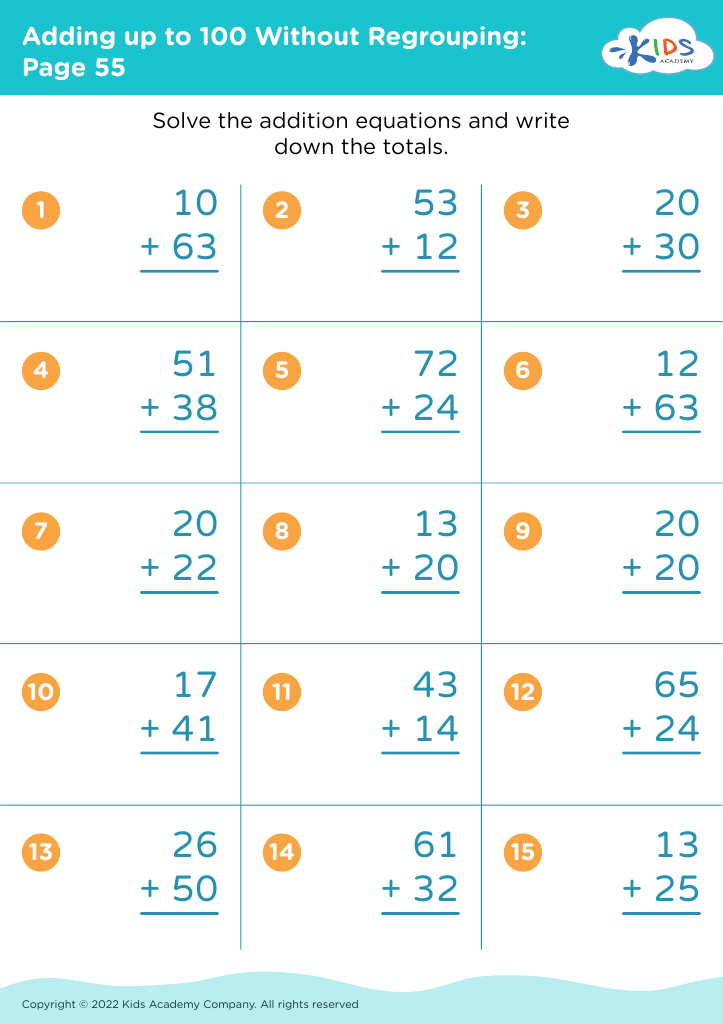
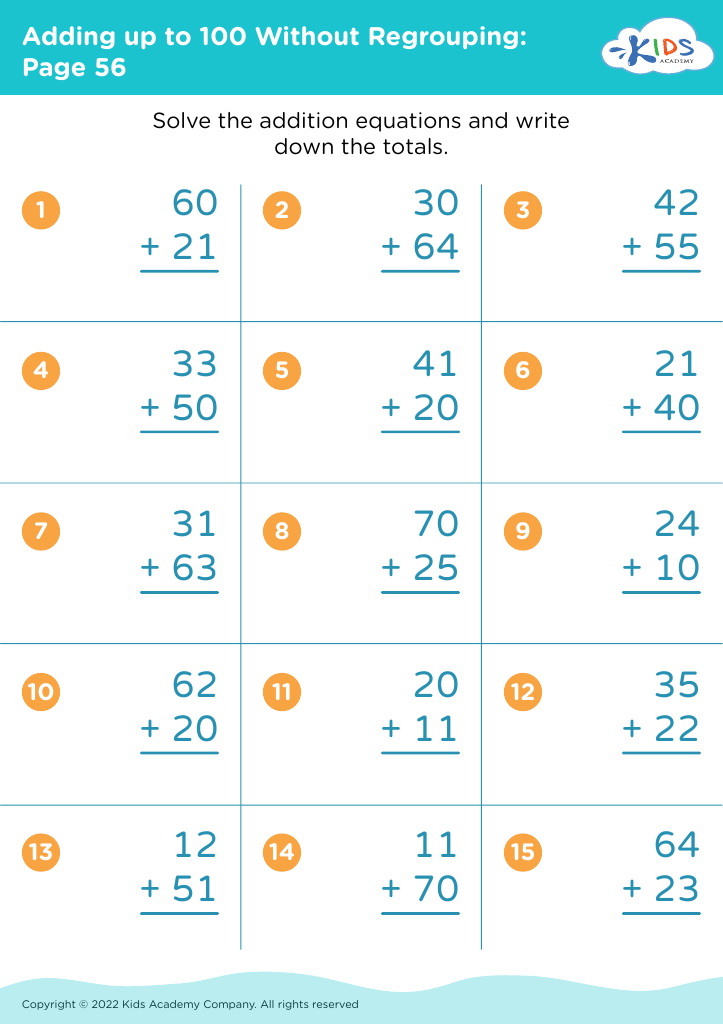
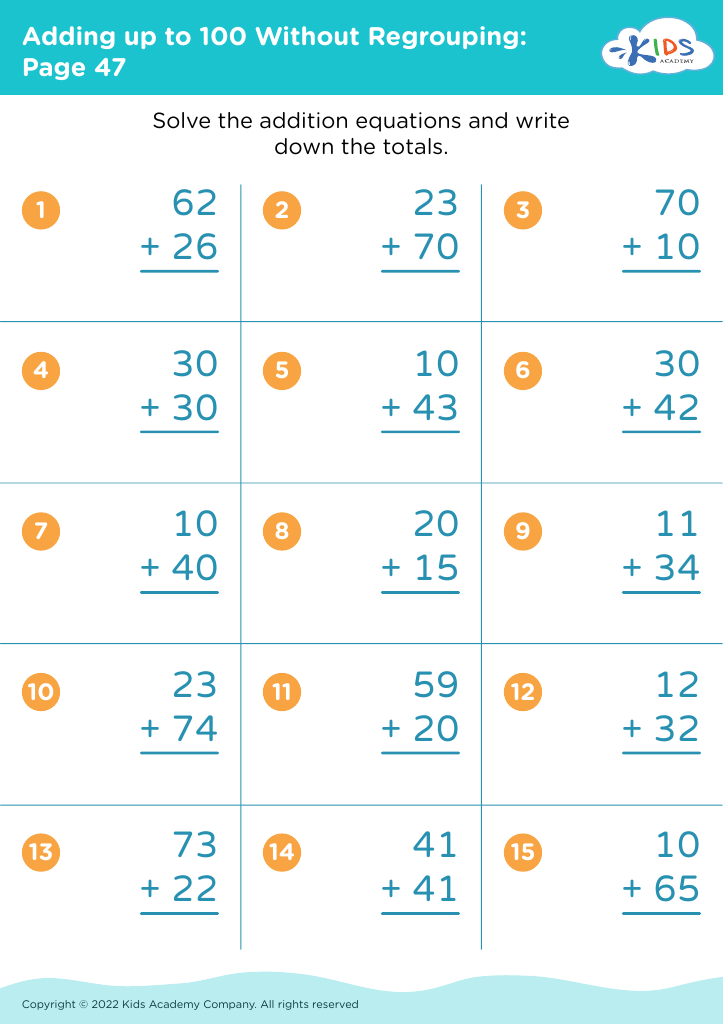
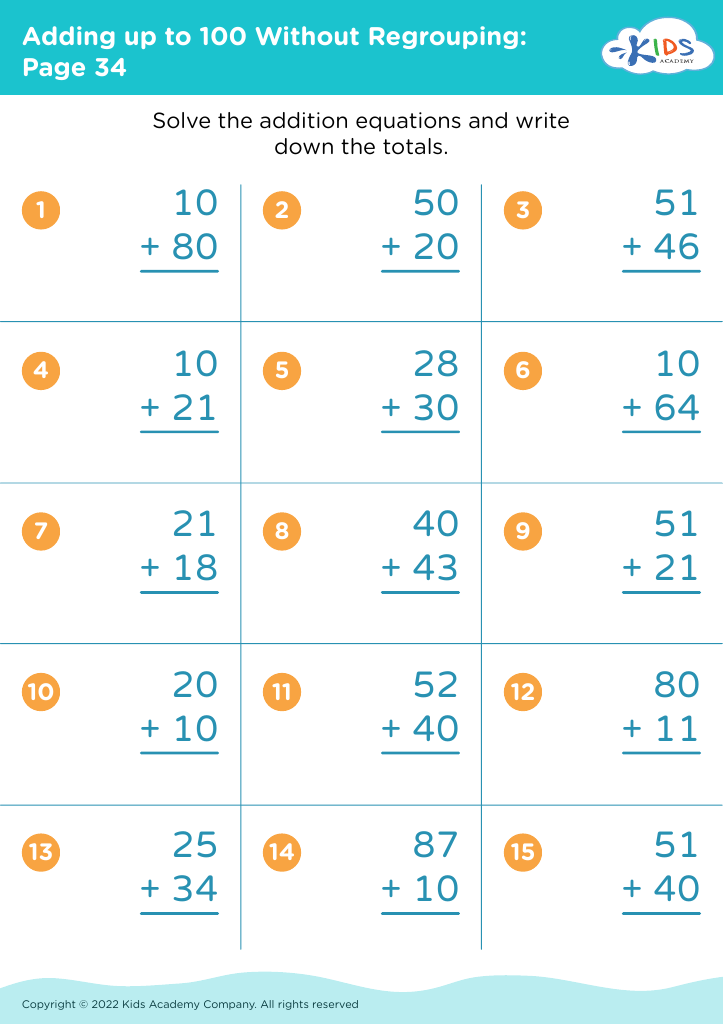
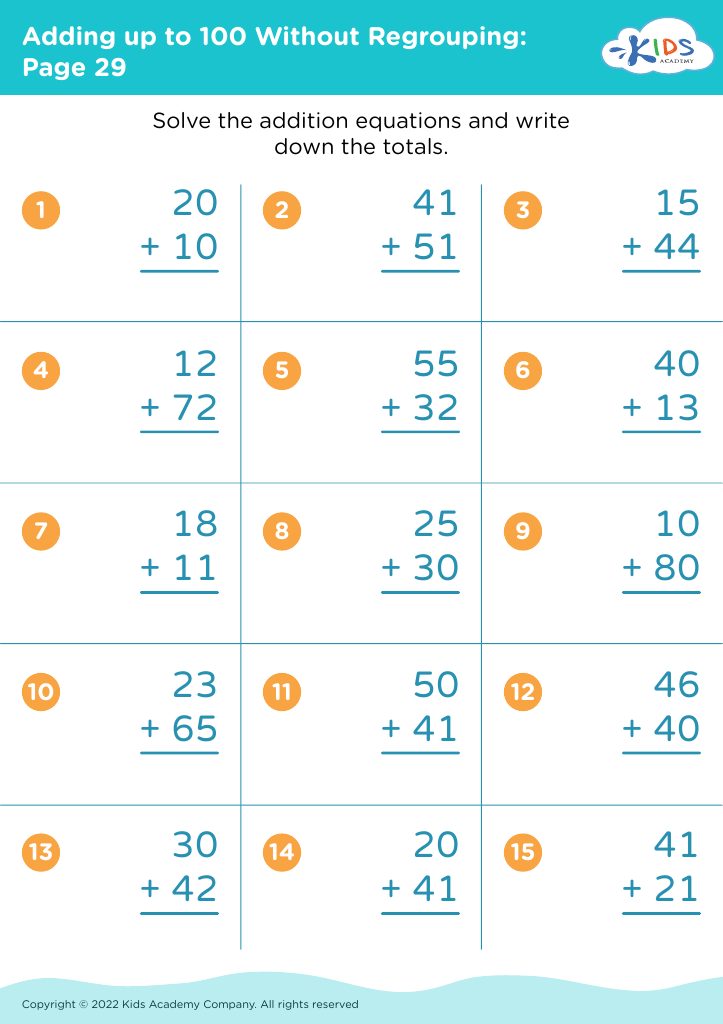




Number recognition and the ability to add numbers up to 100 without regrouping are fundamental skills for children aged 6-7. These early math skills form the foundation for more complex arithmetic and problem-solving abilities later on.
Firstly, basic number recognition helps children understand the value and order of numbers, which is critical for performing any mathematical operation. This understanding prepares them to tackle addition, subtraction, multiplication, and division in future grades.
Secondly, the ability to add up to 100 without regrouping encourages mental arithmetic and boosts computational fluency. This skill is essential for developing confidence in handling numbers and can foster a positive attitude towards math. It's particularly beneficial in everyday tasks like counting money or measuring ingredients while cooking.
Moreover, early mastery of these skills can provide a sense of accomplishment and build self-esteem. When children see they can solve problems independently, they gain confidence, which propels further learning and curiosity in other academic and life realms.
Understanding and practicing these concepts at a young age ensures children have a strong numeracy foundation, which is indispensable in their academic journey and everyday life. Consequently, parents and teachers should prioritize these skills to set children up for long-term success in both mathematics and overall cognitive development.