Understanding fractions Adding up to 100 Without Regrouping Worksheets for Ages 6-7

Filters

19 filtered results

Clear all filters
Favorites
With answer key
Interactive

19 filtered results

Difficulty Level

Grade


Explore our "Understanding Fractions: Adding up to 100 Without Regrouping Worksheets" designed for ages 6-7. These engaging worksheets introduce young learners to the concept of fractions through fun, interactive exercises. Students will strengthen their understanding of numbers and relationships by adding fractions that total up to 100, while avoiding the complexities of regrouping. Each worksheet features colorful visuals and age-appropriate problems, making it easy for kids to grasp essential math skills. Perfect for classroom activities or home practice, these resources not only build foundational fraction knowledge but also boost confidence in math, preparing students for more advanced concepts in the future.
Check out this FREE Trial Lesson on Adding up to 100 Without Regrouping for age 6-7!

Match Exactly the Same

Favorites
With answer key
Interactive
  • 6-7
  • Understanding fractions
  • Adding up to 100 Without Regrouping
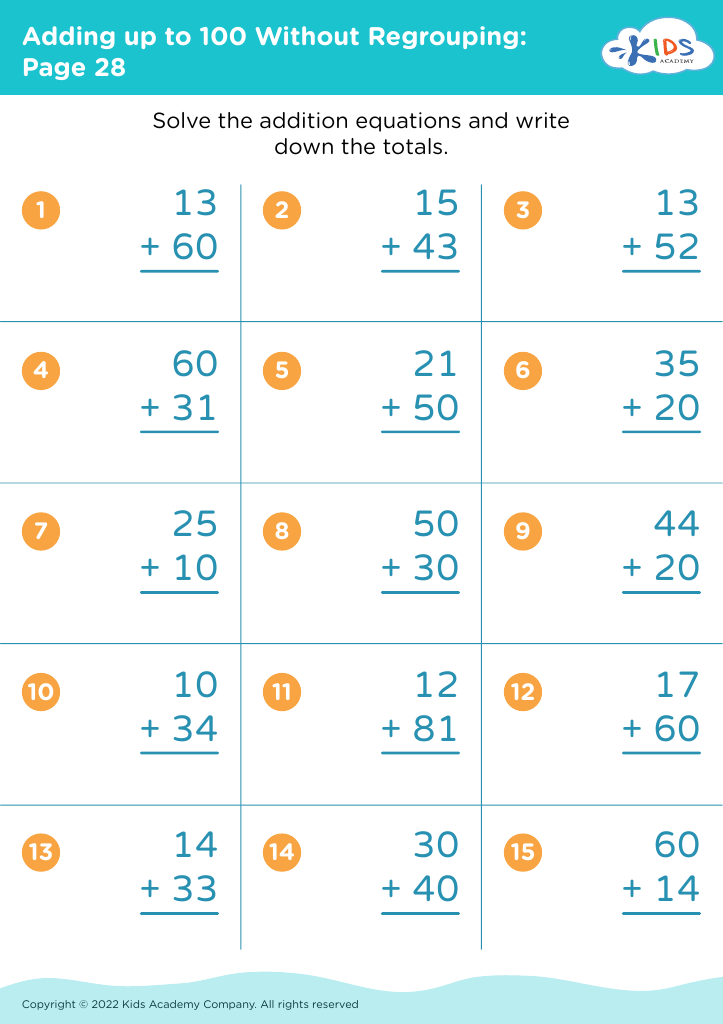
Adding up to 100 Without Regrouping: Page 28
Worksheet
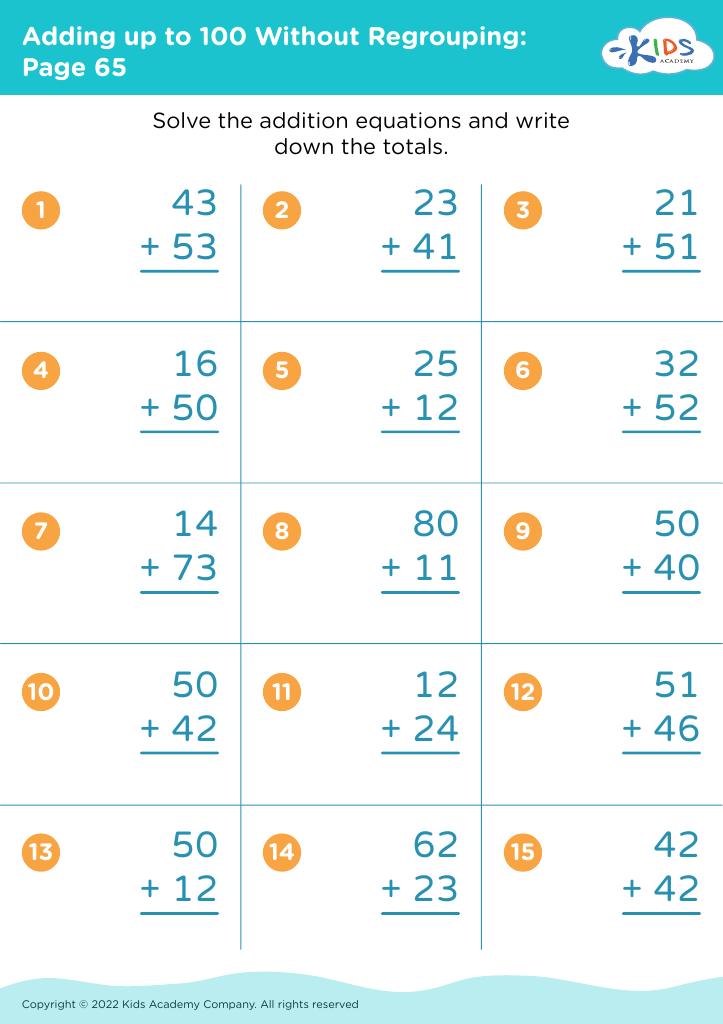
Adding up to 100 Without Regrouping: Page 65
Worksheet
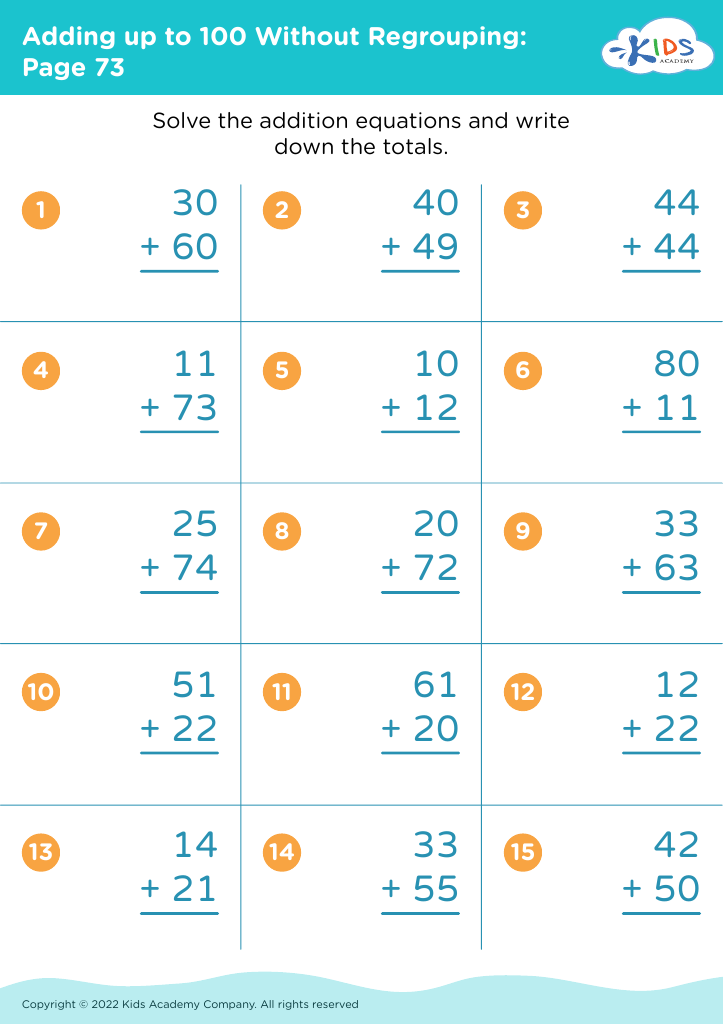
Adding up to 100 Without Regrouping: Page 73
Worksheet
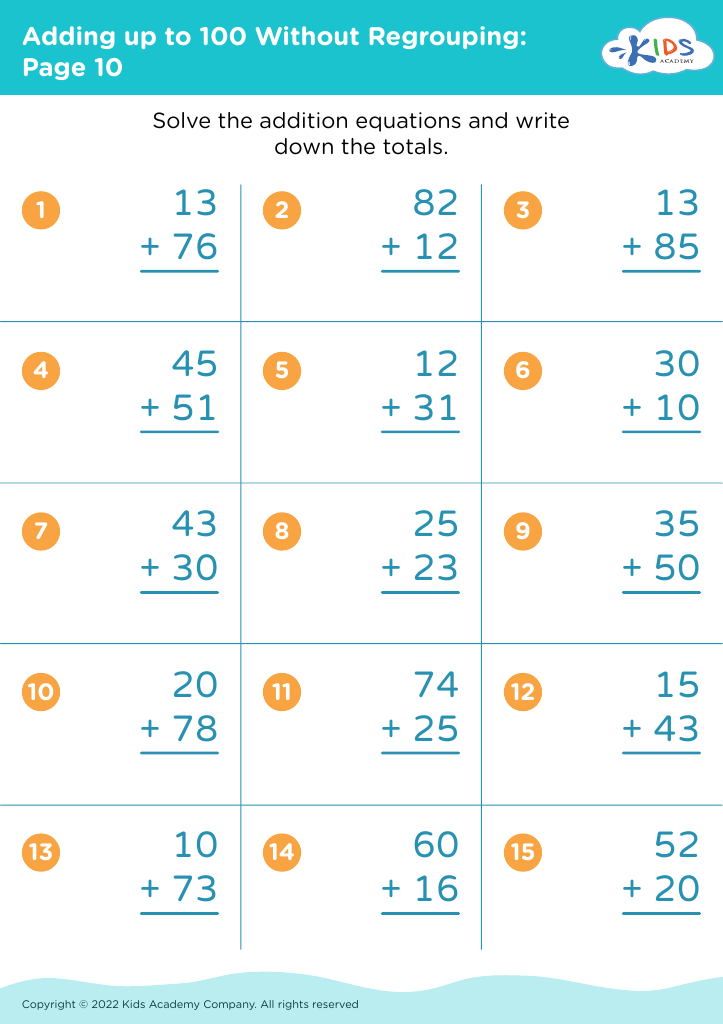
Adding up to 100 Without Regrouping: Page 10
Worksheet
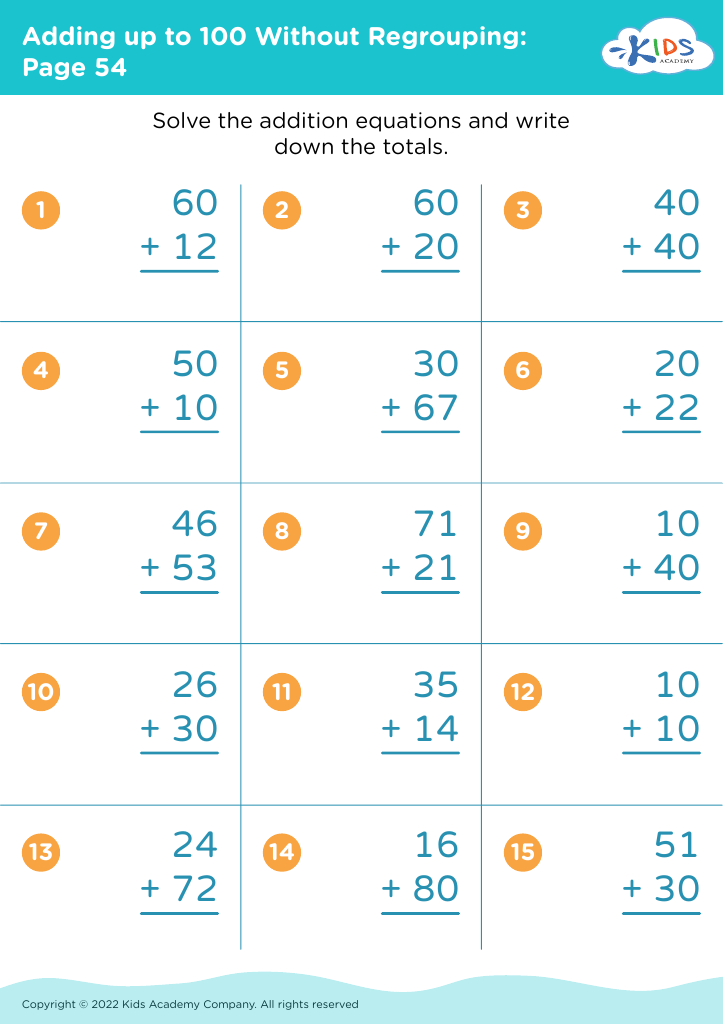
Adding up to 100 Without Regrouping: Page 54
Worksheet
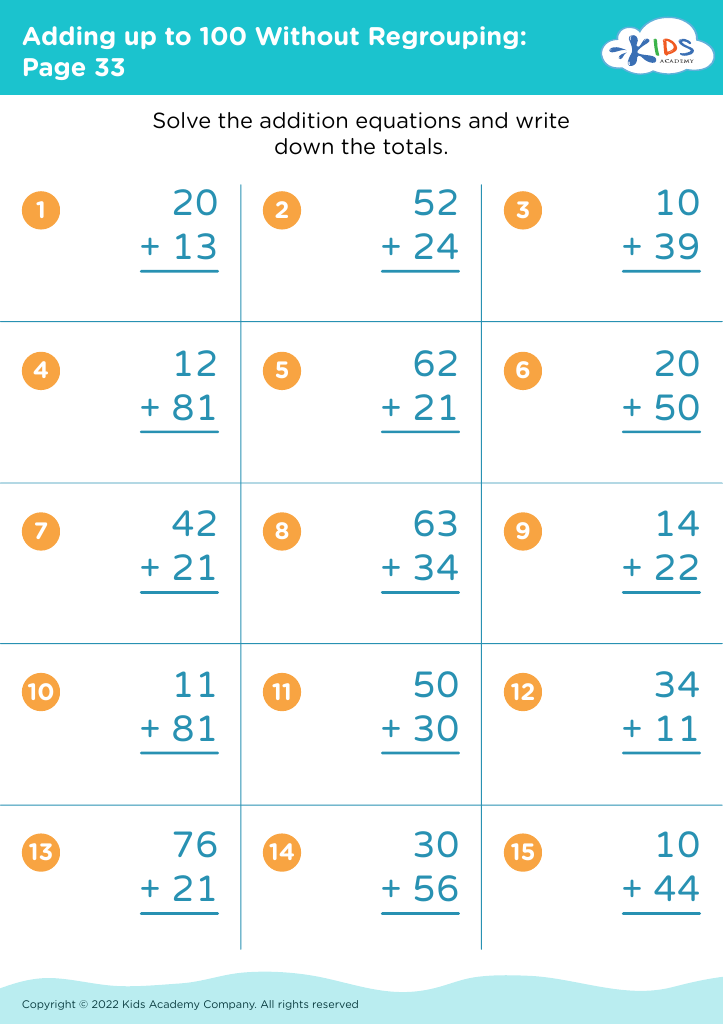
Adding up to 100 Without Regrouping: Page 33
Worksheet
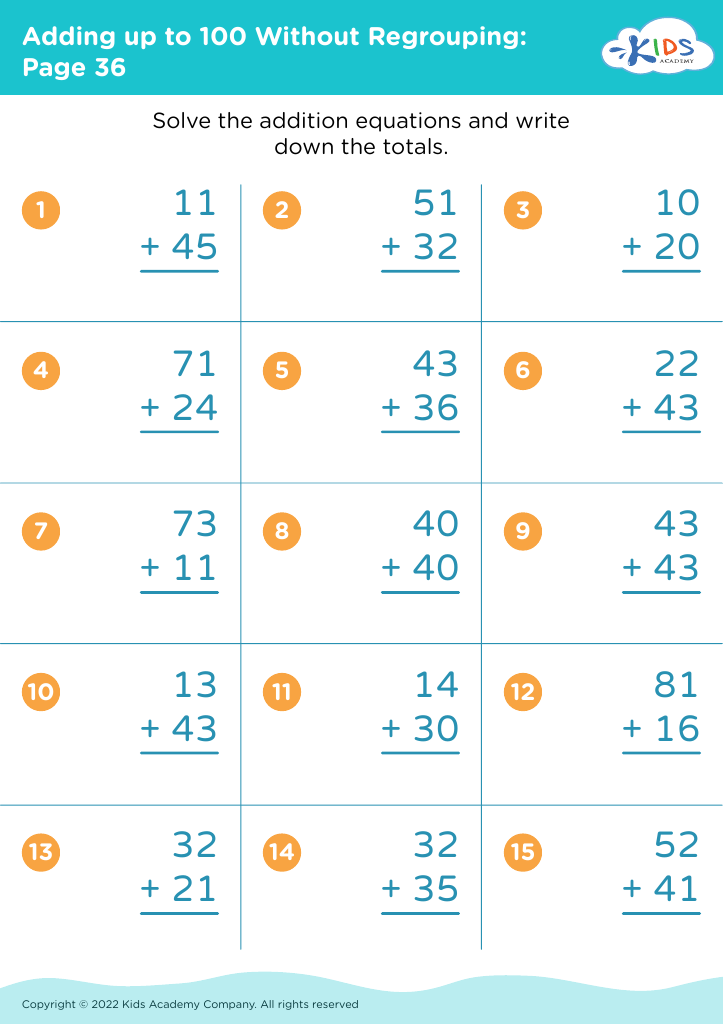
Adding up to 100 Without Regrouping: Page 36
Worksheet
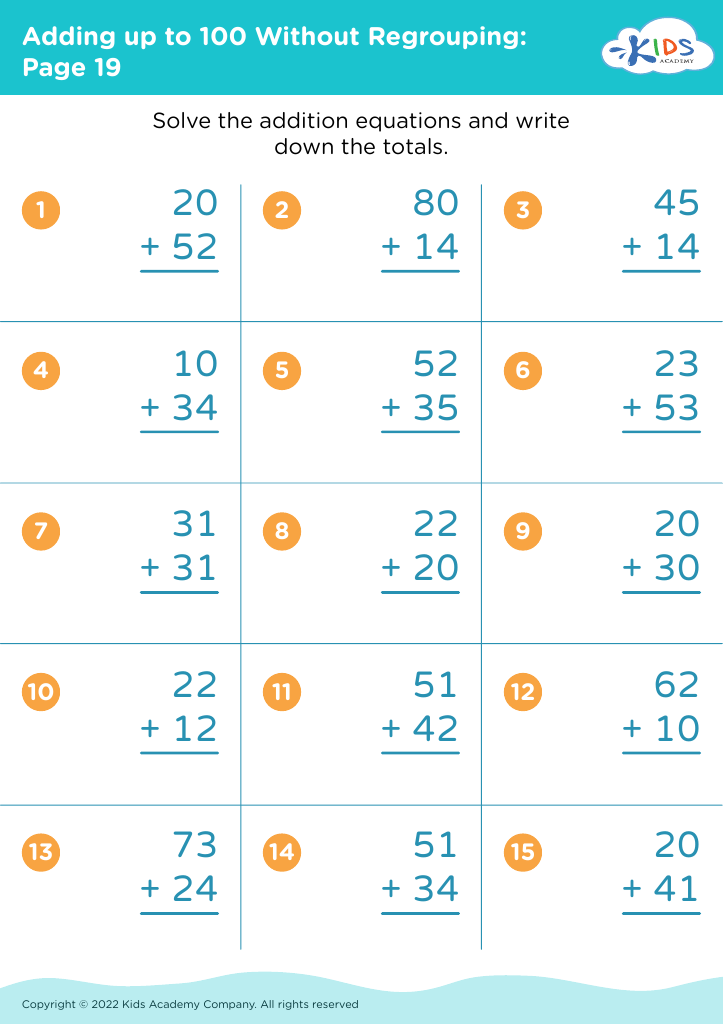
Adding up to 100 Without Regrouping: Page 19
Worksheet
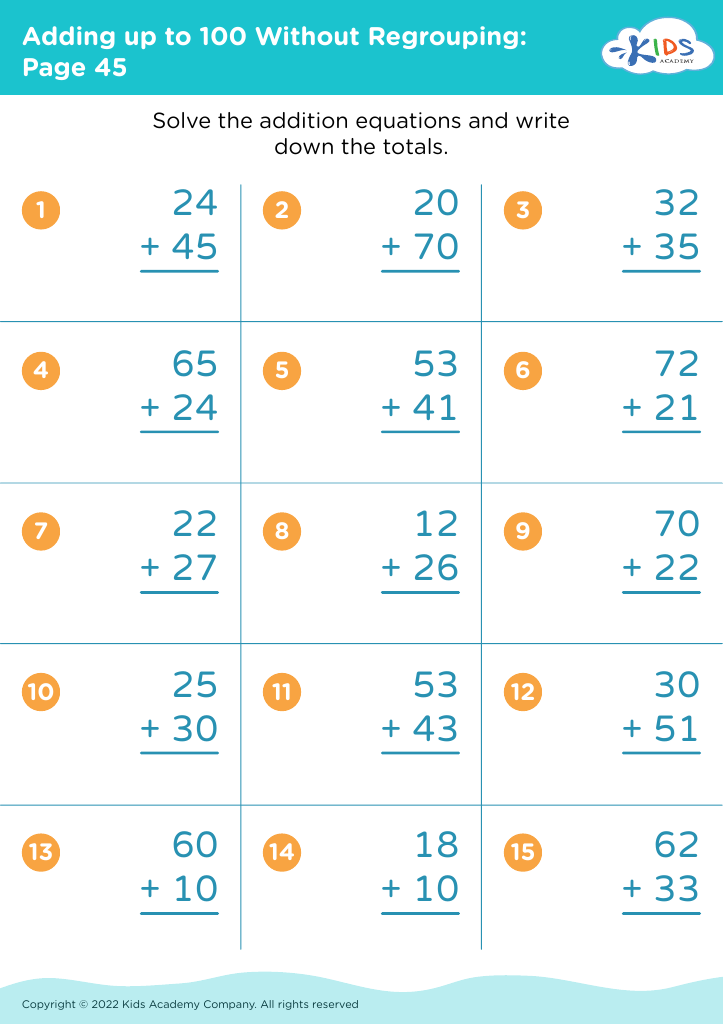
Adding up to 100 Without Regrouping: Page 45
Worksheet
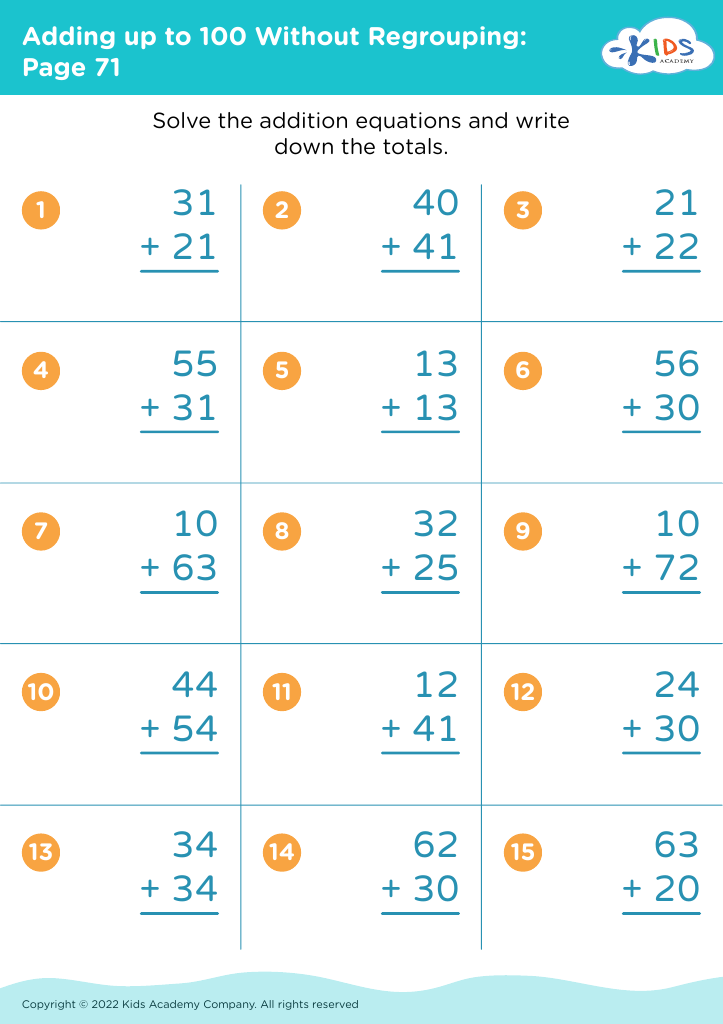
Adding up to 100 Without Regrouping: Page 71
Worksheet
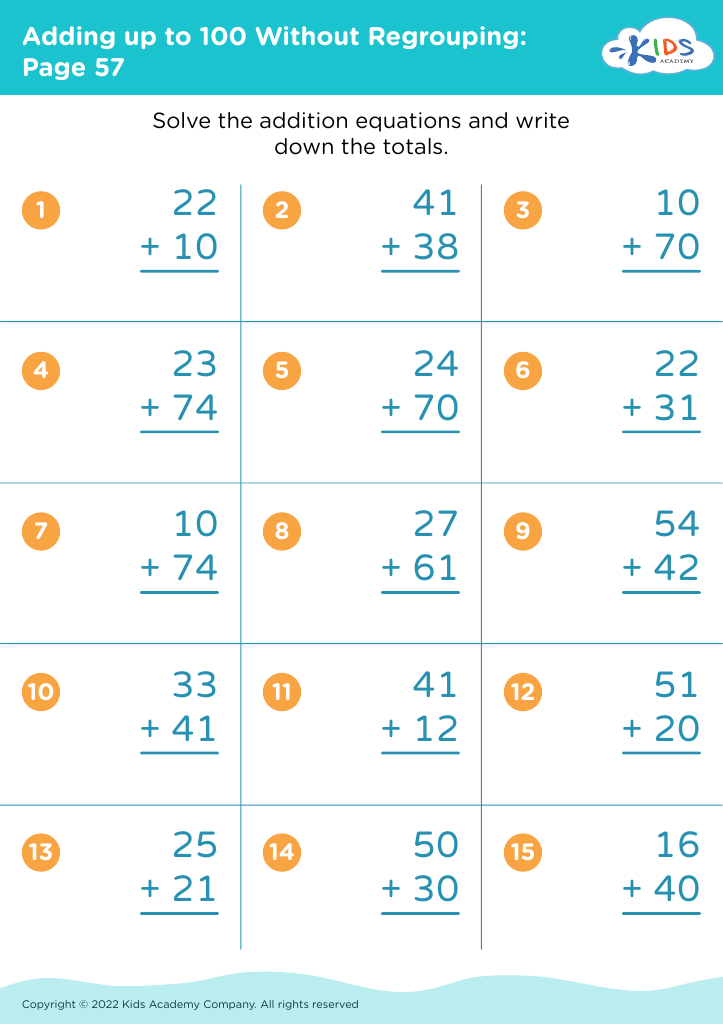
Adding up to 100 Without Regrouping: Page 57
Worksheet
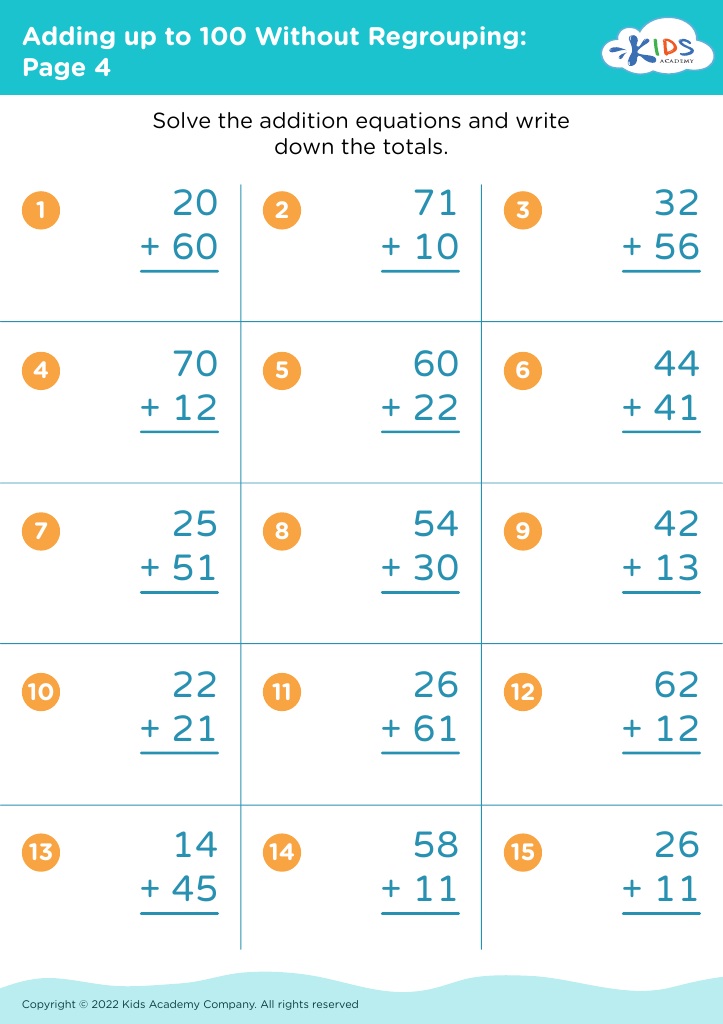
Adding up to 100 Without Regrouping: Page 4
Worksheet
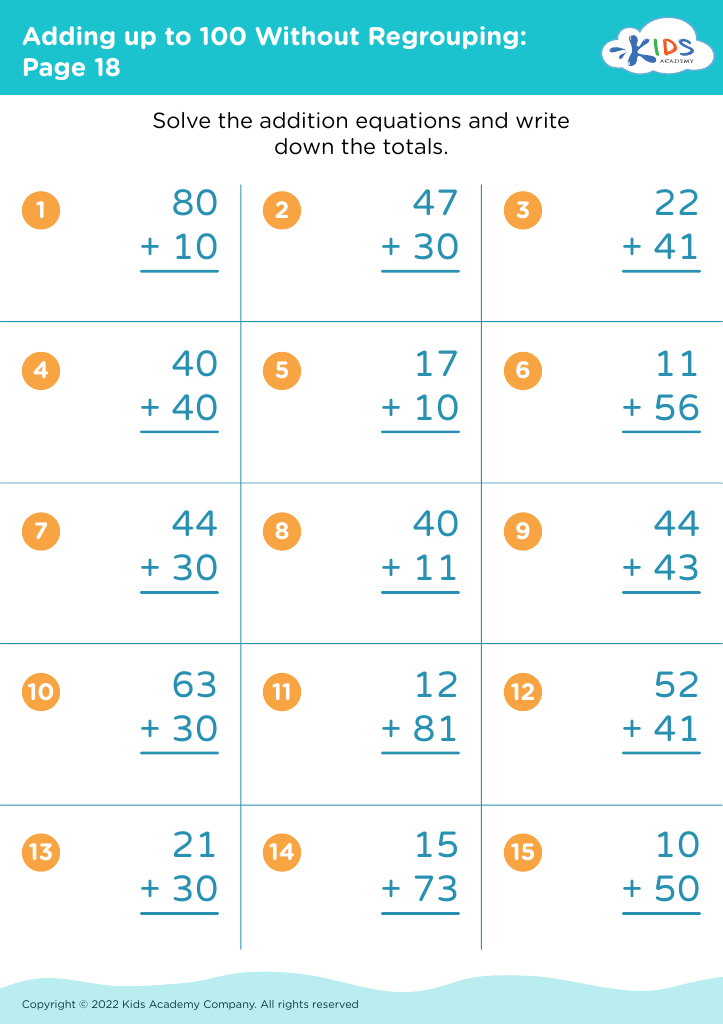
Adding up to 100 Without Regrouping: Page 18
Worksheet
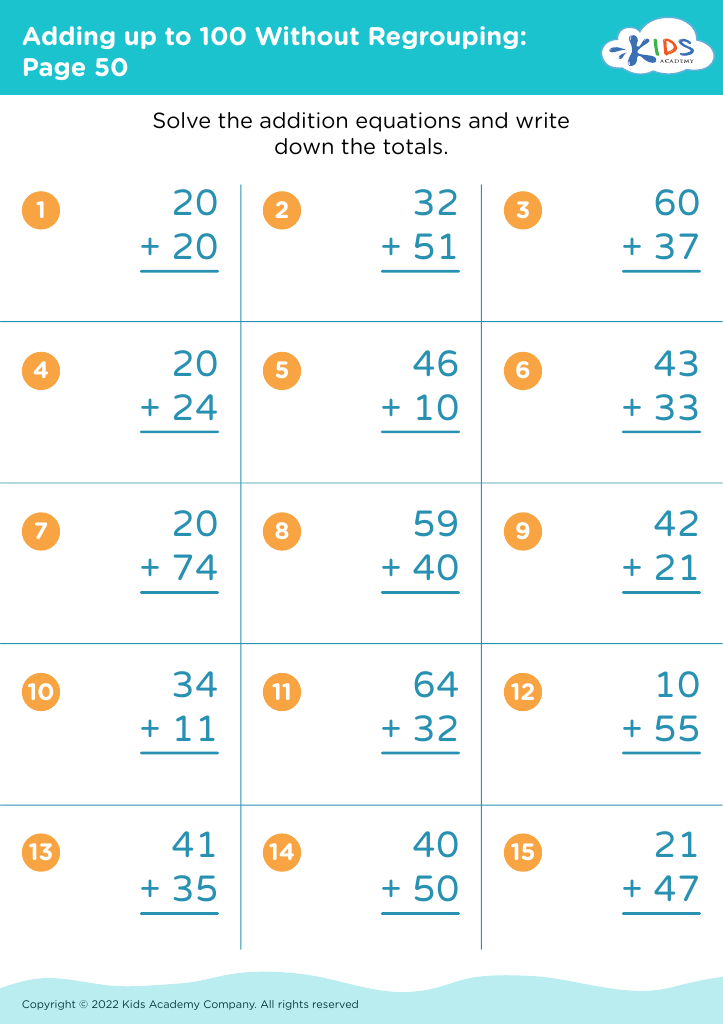
Adding up to 100 Without Regrouping: Page 50
Worksheet
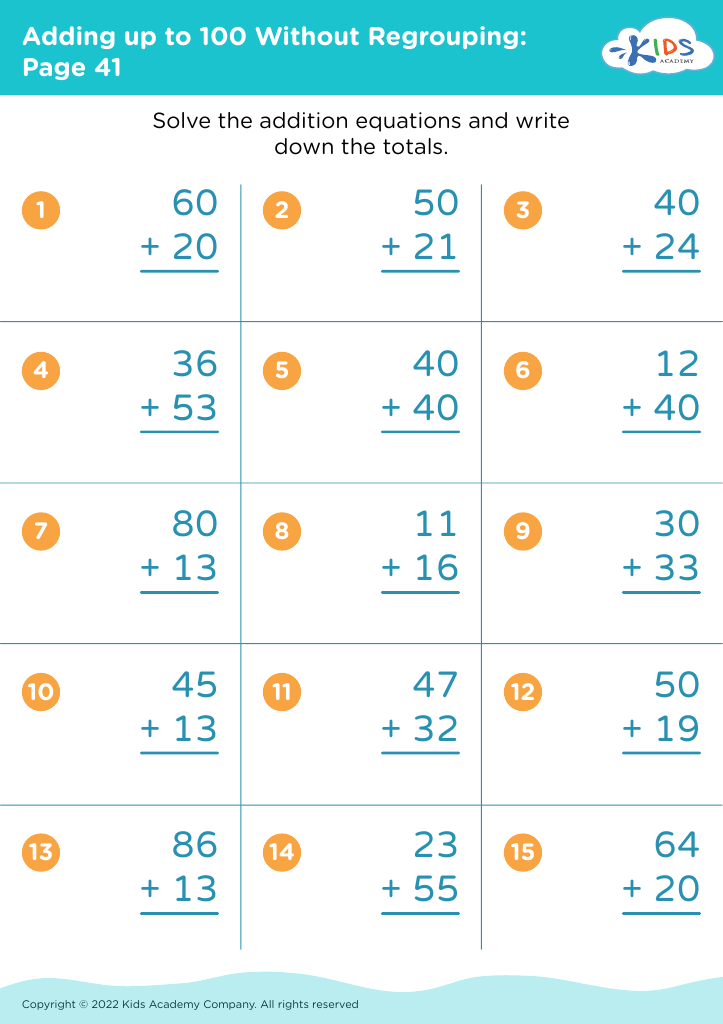
Adding up to 100 Without Regrouping: Page 41
Worksheet
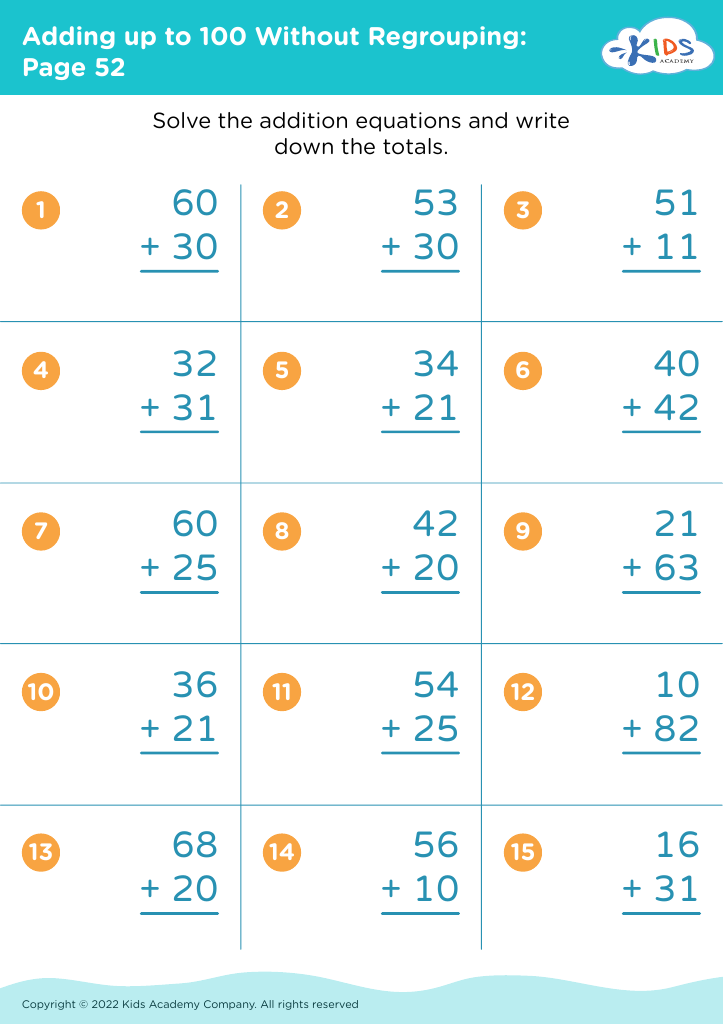
Adding up to 100 Without Regrouping: Page 52
Worksheet
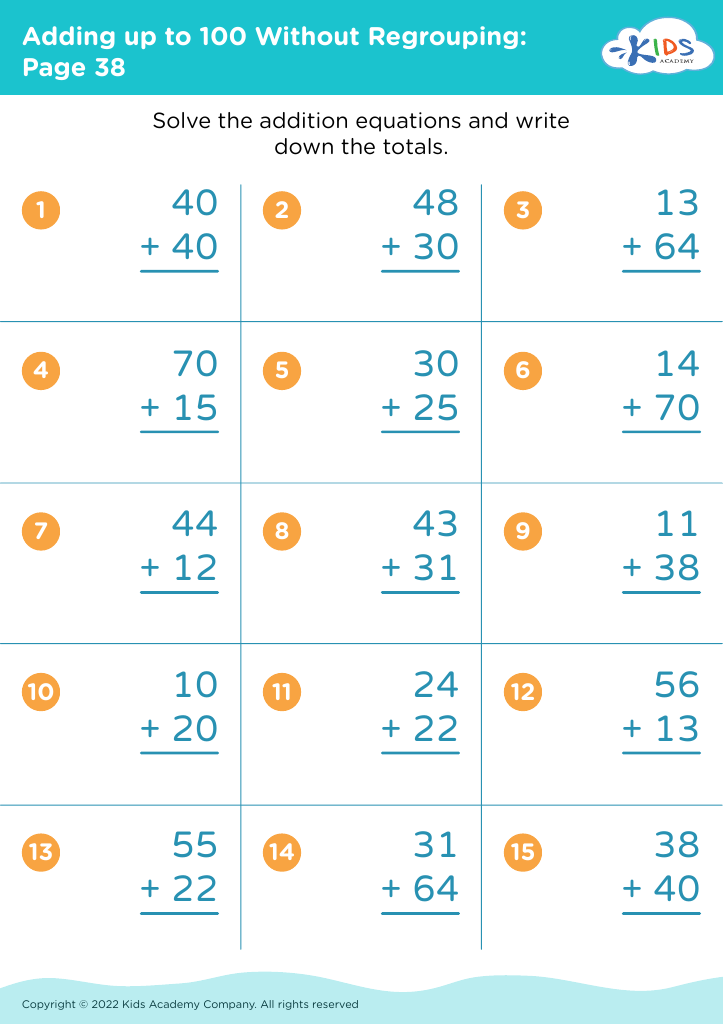
Adding up to 100 Without Regrouping: Page 38
Worksheet
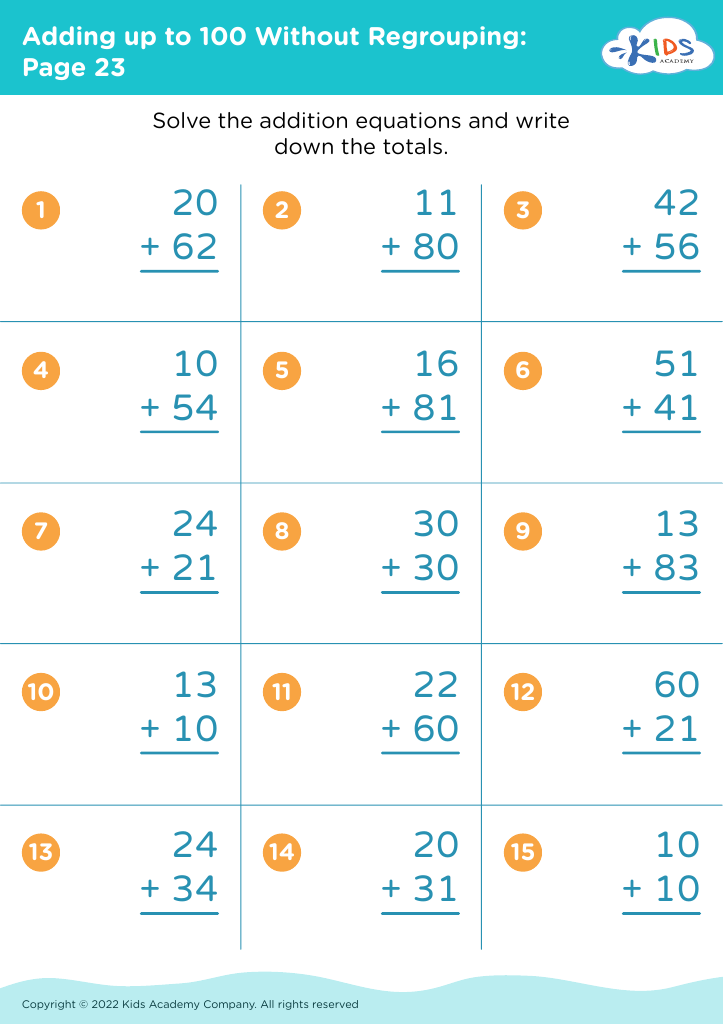
Adding up to 100 Without Regrouping: Page 23
Worksheet
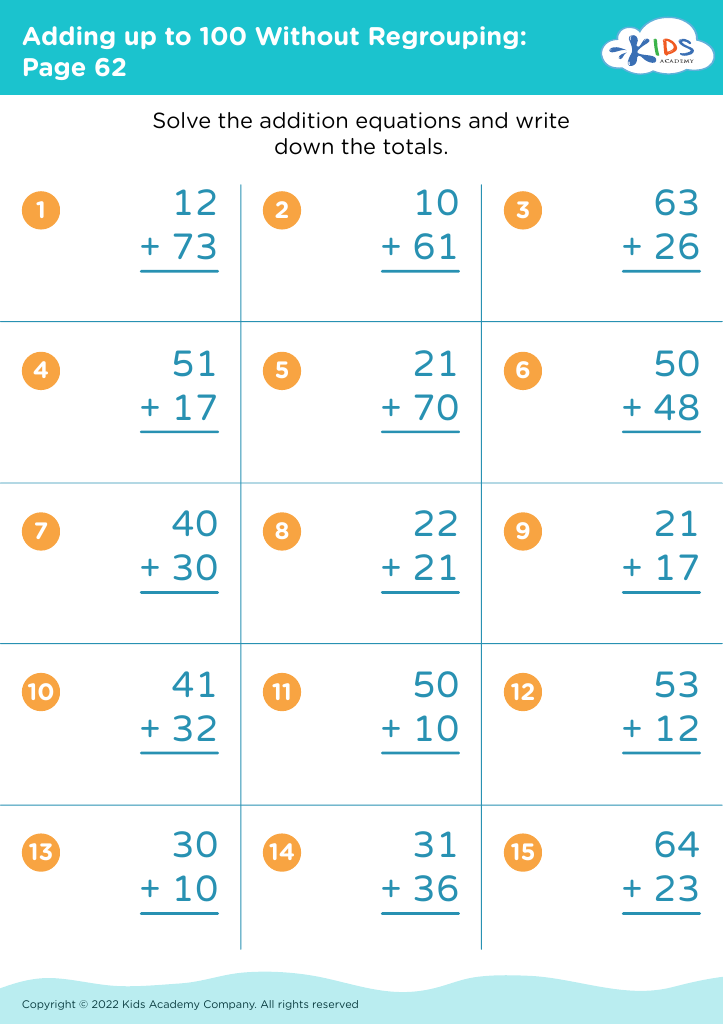
Adding up to 100 Without Regrouping: Page 62
Worksheet


Understanding fractions, particularly adding up to 100 without regrouping, is essential for children ages 6-7 for several reasons. First, it lays a solid foundation for their mathematical development. At this age, children are beginning to grasp basic concepts of fractions, which translates to skills they'll need for more complex calculations later on.

Teaching young learners to add fractions that total 100 encourages them to think critically and enhances their problem-solving skills. It fosters a deep understanding of part-whole relationships, which are crucial in mathematics. Engaging with such concepts offers them opportunities to visually represent fractions, aiding in their understanding and retention of information.

Moreover, understanding fractions helps with everyday tasks, such as cooking, measuring, and using money, making math relatable and practical. It cultivates a sense of confidence in their abilities, making them more willing to tackle challenging topics in the future.

For parents and teachers, promoting skills like adding fractions without regrouping creates a supportive environment where children feel empowered to explore math meaningfully. Overall, mastering these concepts is not just about numbers; it’s about building the analytical skills necessary for lifelong learning.