Understanding patterns Adding up to 100 Without Regrouping Worksheets for Ages 6-7
3 filtered results
-
From - To
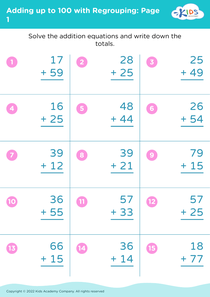
Explore our "Understanding Patterns Adding up to 100 Without Regrouping Worksheets" designed for young learners aged 6-7. These engaging resources help children grasp the fundamental concept of addition without regrouping while promoting pattern recognition skills. Through colorful visuals and interactive exercises, students will learn to identify and extend number patterns that total 100. Our worksheets encourage critical thinking, boost confidence in math abilities, and provide ample practice for mastering addition skills. Ideal for both classroom use and home practice, these worksheets ensure a fun and effective learning experience while preparing students for more advanced arithmetic concepts. Start enhancing your child's math journey today!
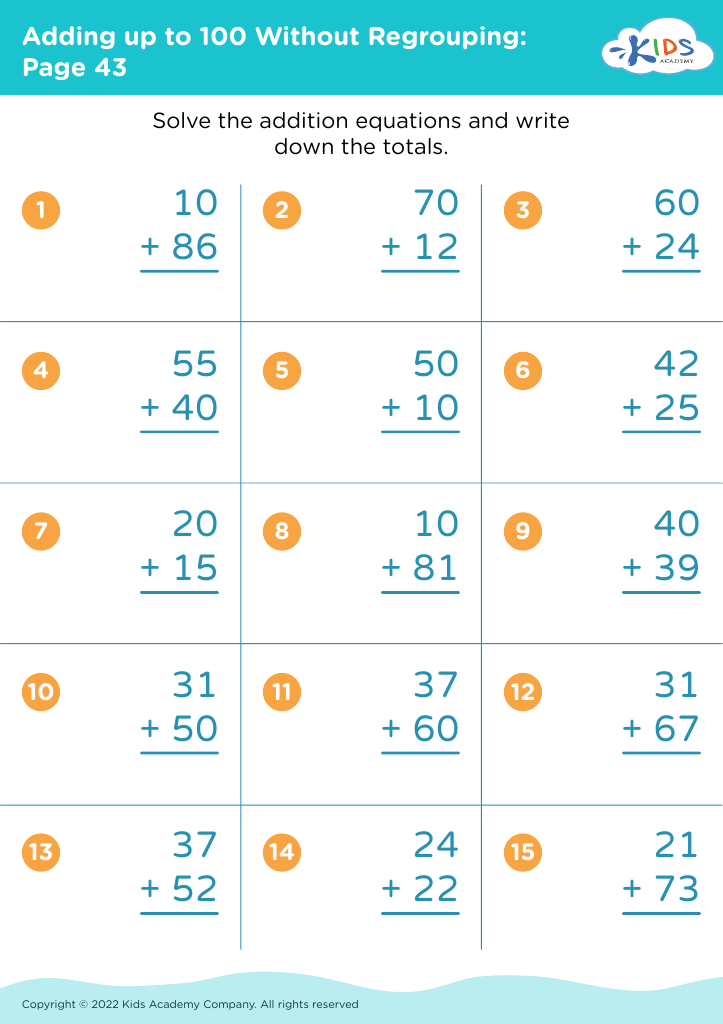
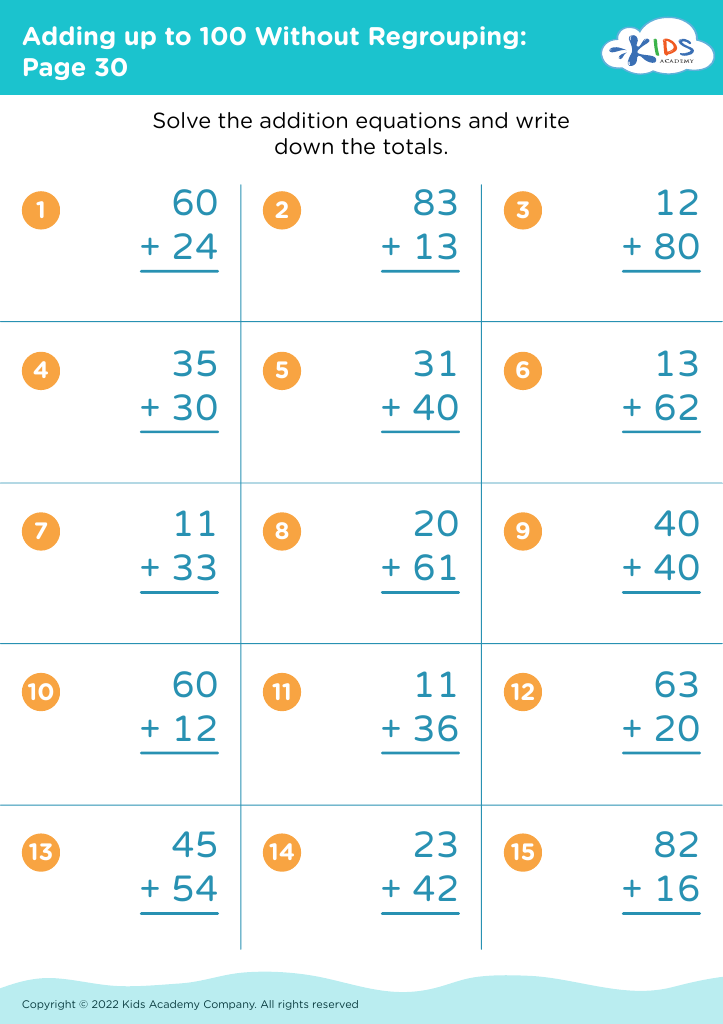
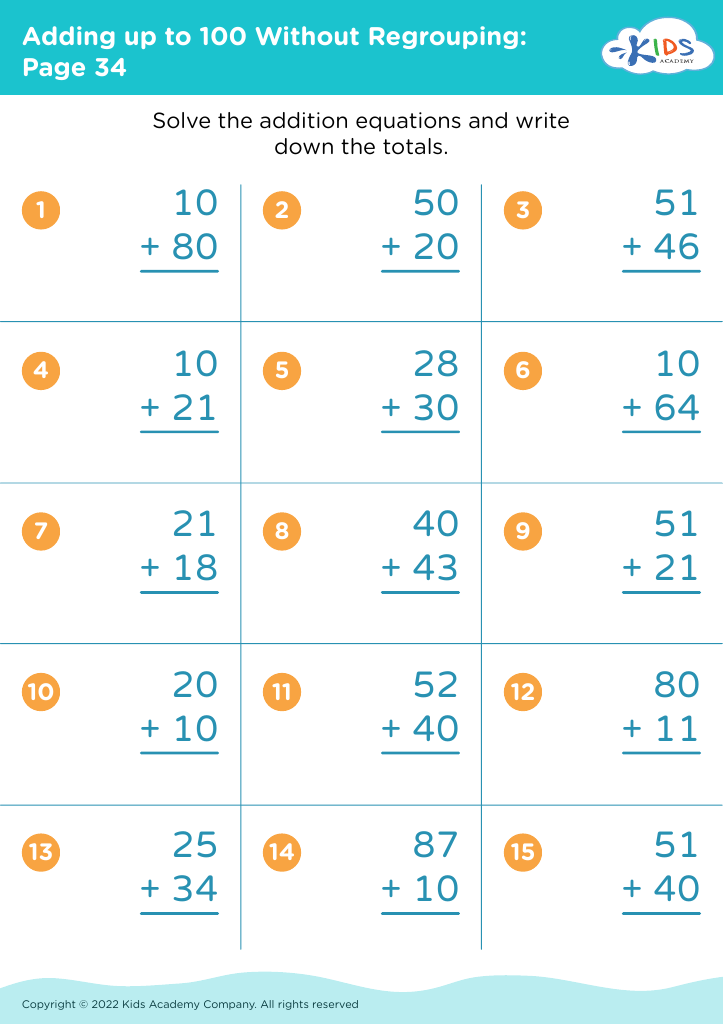




Understanding patterns when adding up to 100 without regrouping is vital for children aged 6-7 for several reasons. At this developmental stage, children are learning foundational math concepts that will serve as building blocks for future mathematics. Being able to recognize patterns enhances their ability to add larger numbers more efficiently, nurturing their confidence and problem-solving skills.
Learning to add by recognizing patterns fosters critical thinking. By understanding patterns, children can identify shortcuts in calculations, enabling them to complete math tasks more quickly and accurately. This skill not only aids in arithmetic but also enhances their overall cognitive development.
Additionally, early mastery of working with numbers up to 100 encourages engagement and fosters a positive attitude towards math. It demystifies complex operations, ensuring children don't feel overwhelmed as they progress to more challenging concepts.
Moreover, collaborative activities involving patterns increase social interaction and communication among peers, enhancing their teamwork skills. Parents and teachers play a pivotal role in nurturing these skills through encouragement and practical exercises, thus investing in children's long-term academic success and confidence in their mathematical abilities. Supporting this foundational understanding sets the stage for lifelong positive attitudes towards learning and problem-solving.