Comparing Fractions Adding up to 100 Worksheets for Ages 6-7 - Page 2
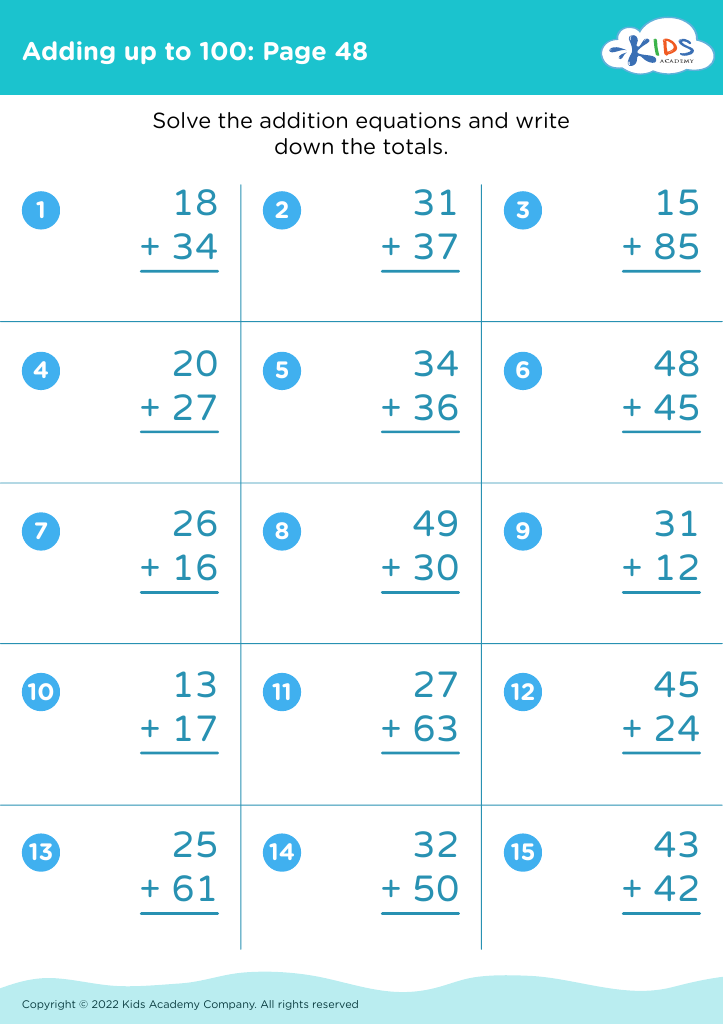
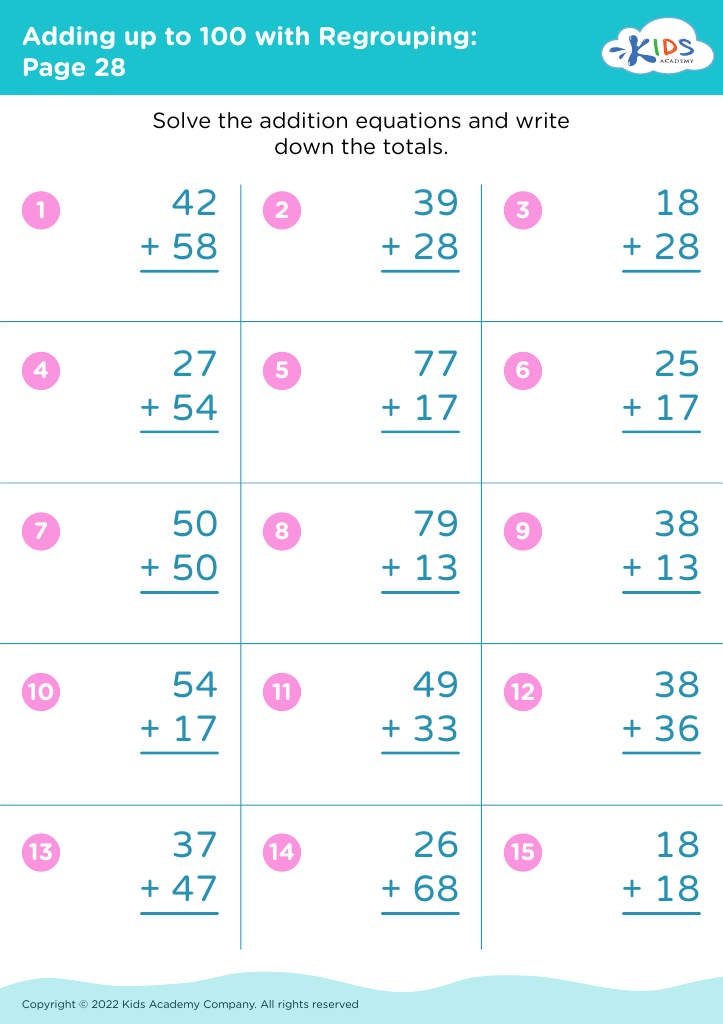
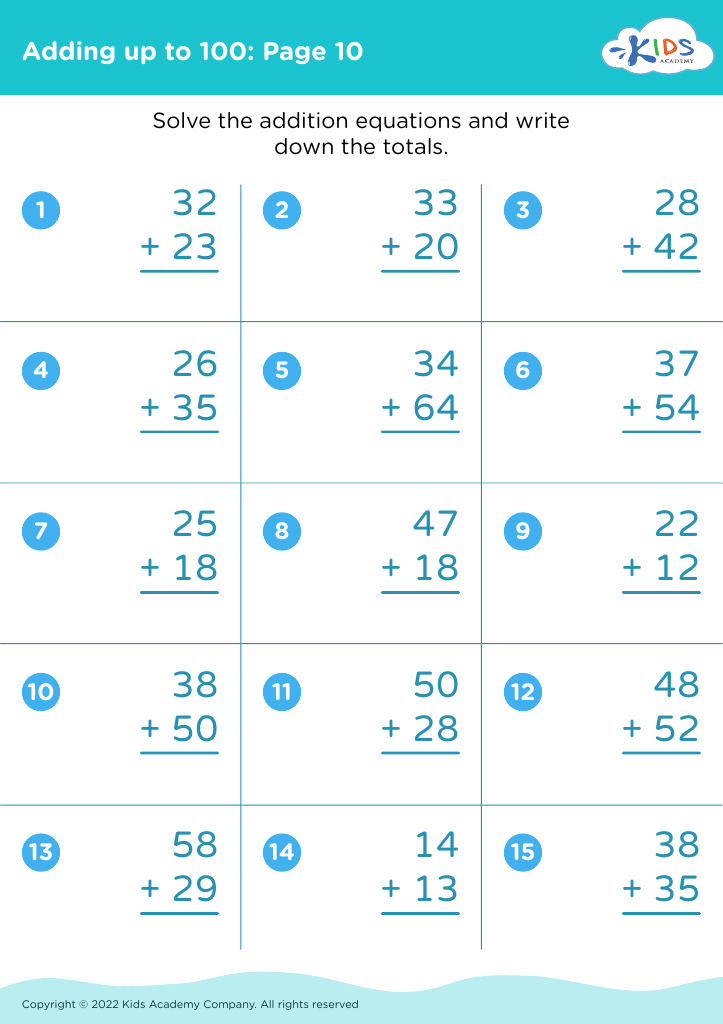
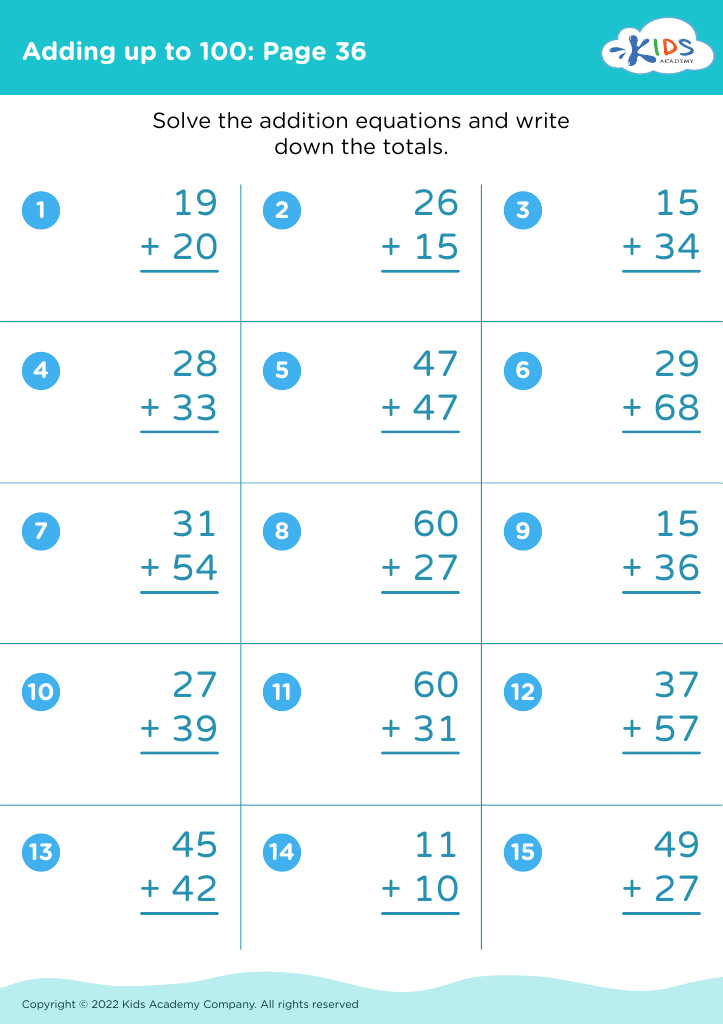
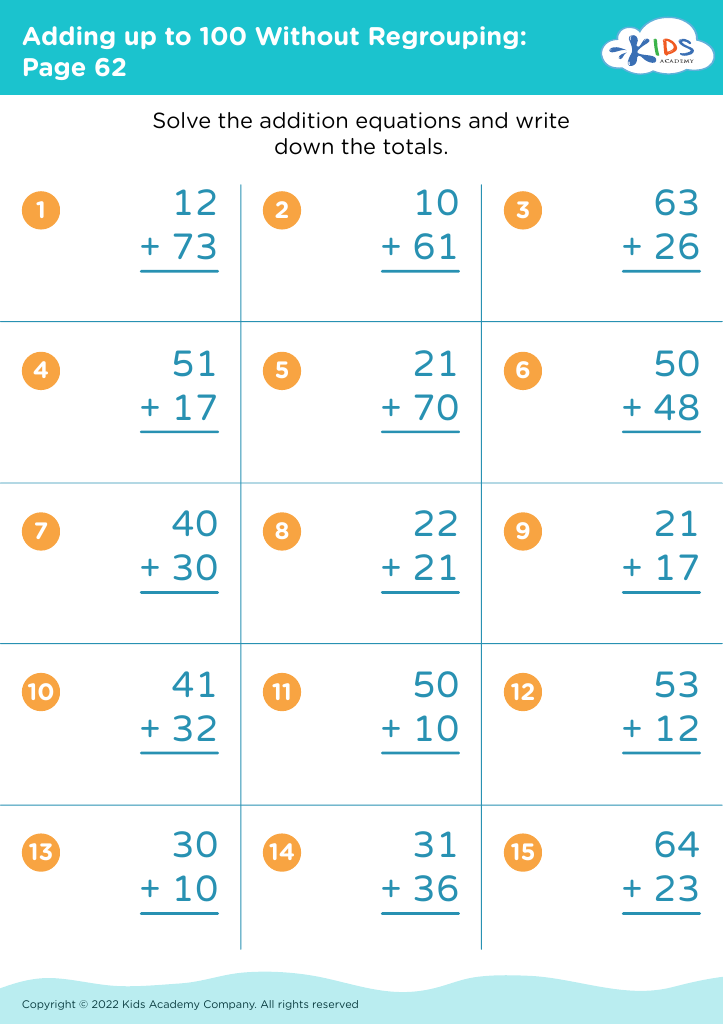
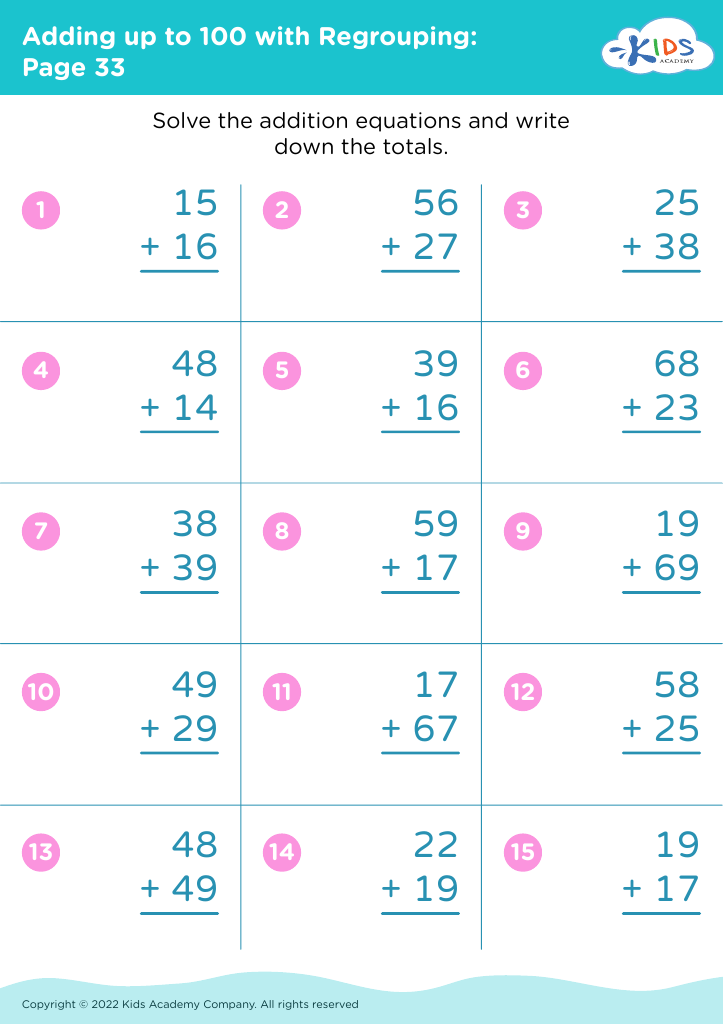








Understanding how to compare fractions that add up to 100 is essential for children ages 6-7 as it forms a foundational concept in mathematics, aiding in their overall cognitive development. At this early stage, children are starting to grasp abstract math concepts, and learning about fractions introduces them to parts of a whole, thereby enhancing critical thinking skills.
Parents and teachers should care because this understanding not only prepares students for more advanced mathematical operations but also strengthens foundational skills such as problem-solving and analytical reasoning. Furthermore, comparing fractions promotes the development of number sense, as children learn to quantify and make connections between different values.
Additionally, knowledge of fractions can enhance children's everyday life skills, whether they are cooking, sharing, or budgeting, enabling them to make informed decisions. Providing kids with meaningful ways to explore and visualize fractions, such as through real-life situations, will keep them engaged and eager to learn.
Ultimately, nurturing strong fraction comparison skills allows children to build confidence in their mathematical abilities and fosters a more profound appreciation for the subject, setting them up for future academic success.








