Critical Thinking Adding up to 100 Worksheets for Ages 6-7
5 filtered results
-
From - To
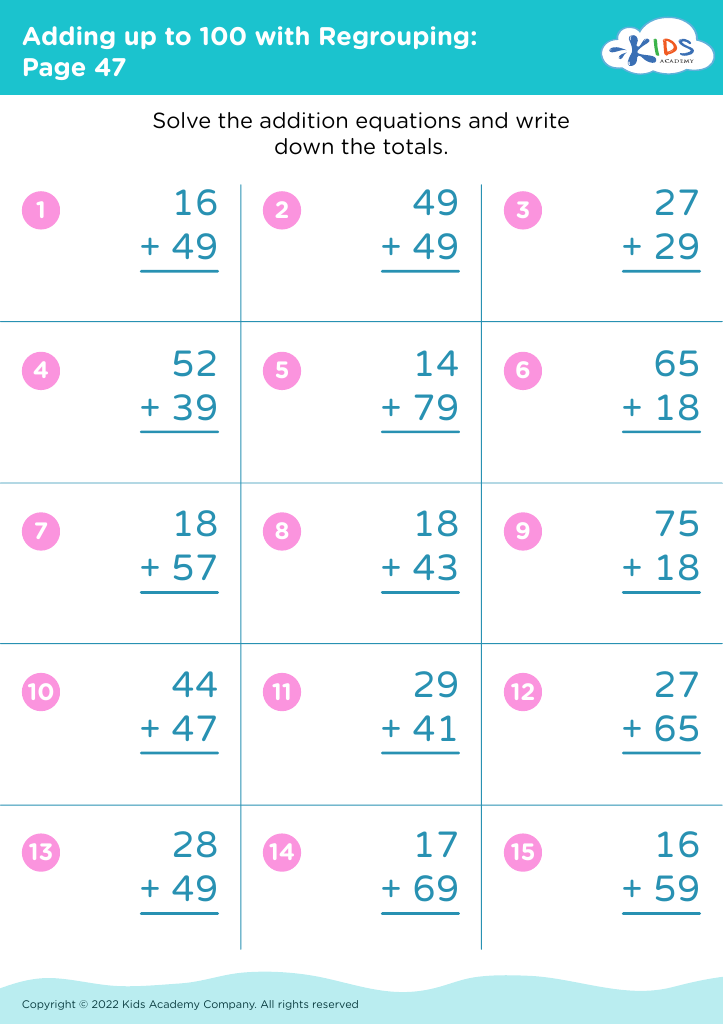
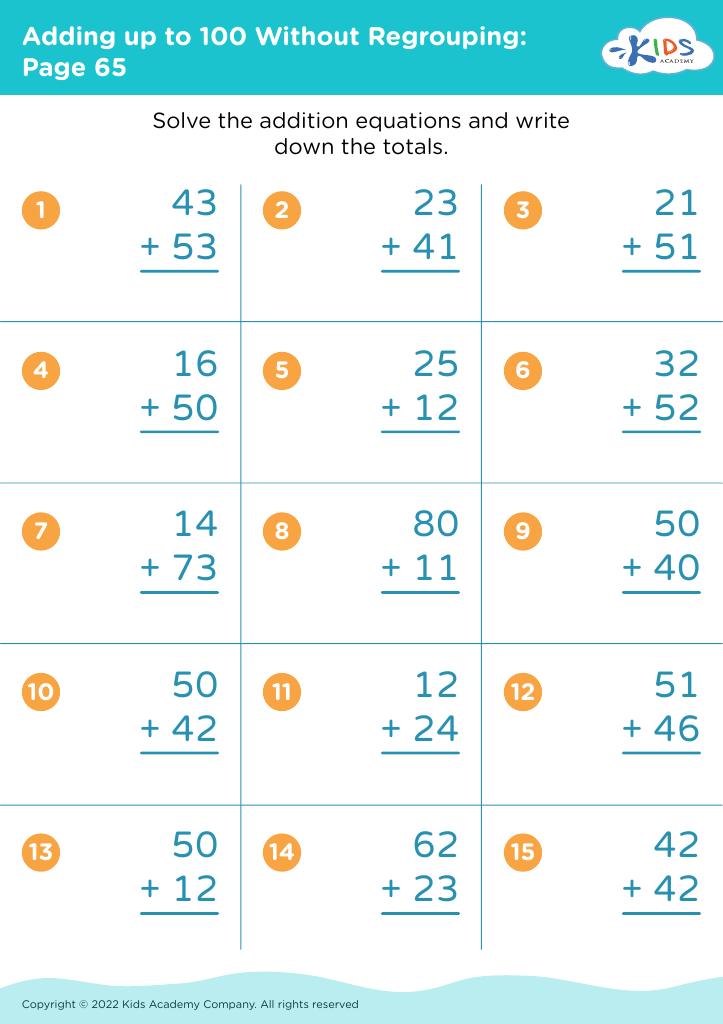
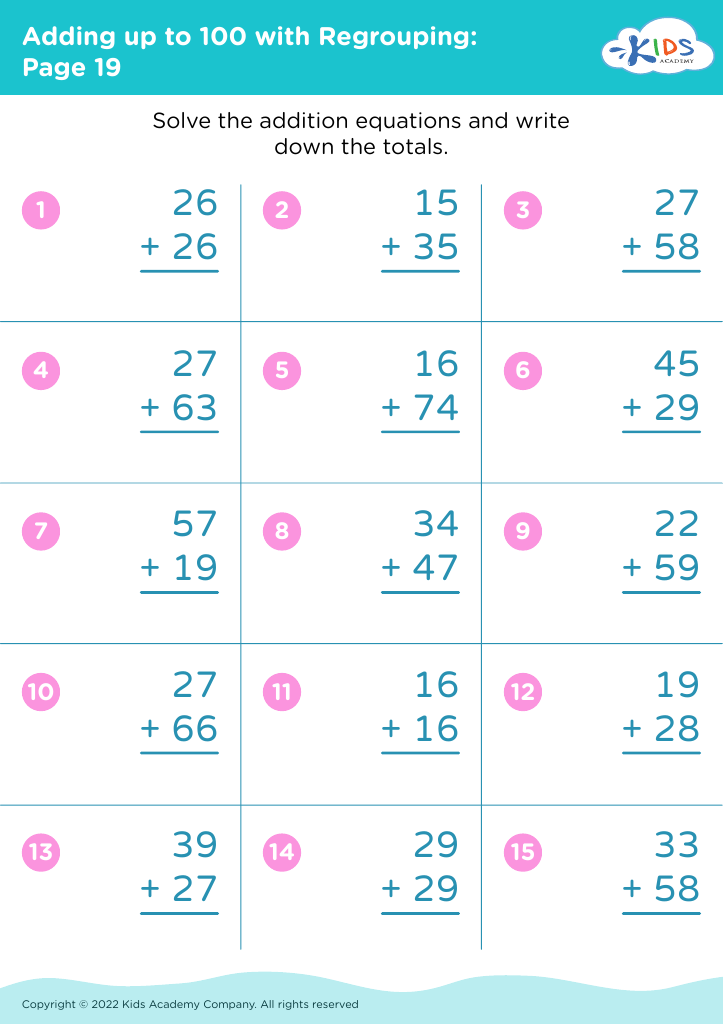
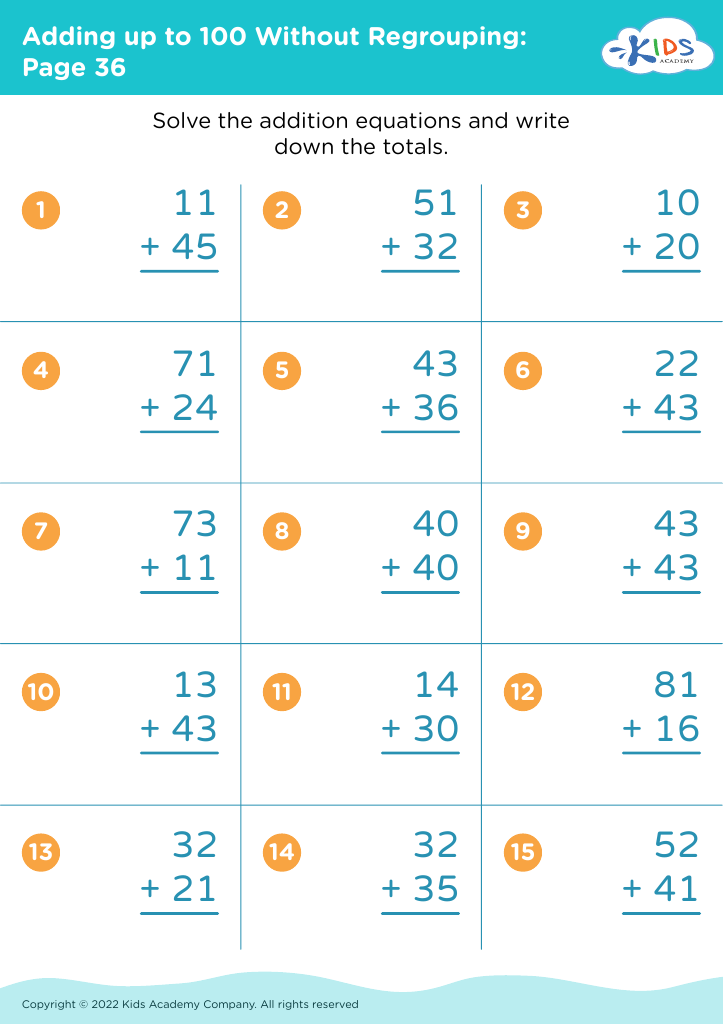
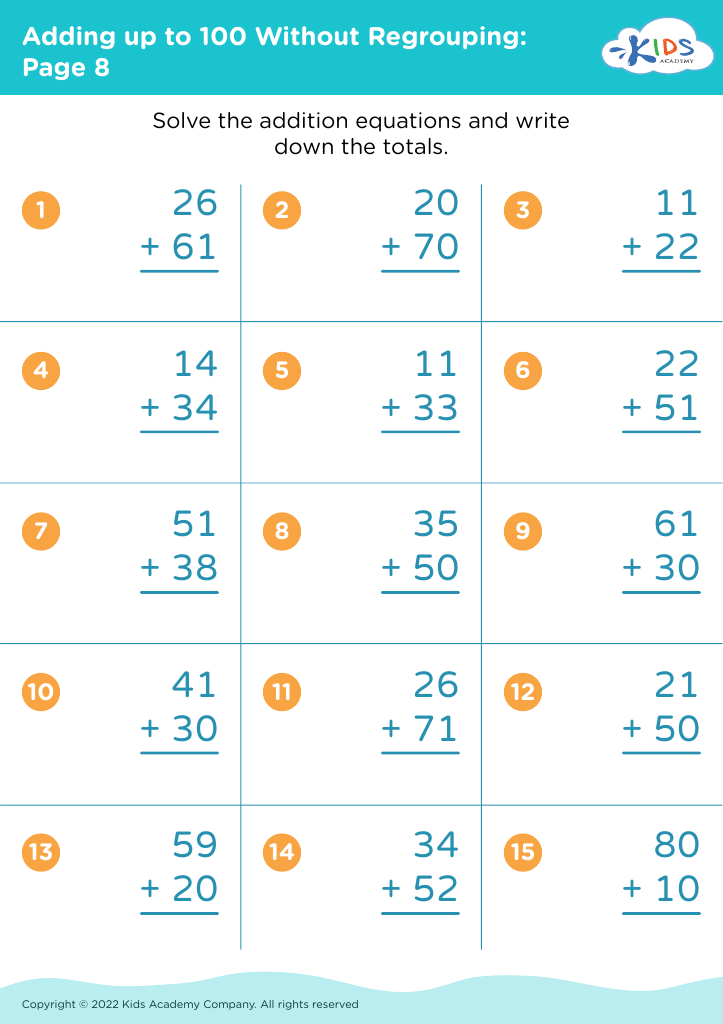
Enhance your child's critical thinking skills with our "Adding Up to 100 Worksheets" designed for ages 6-7. These engaging worksheets promote problem-solving and logical reasoning as kids practice addition up to 100 while exploring various strategies. Each activity encourages children to think critically about how to combine numbers, fostering a solid foundation in math concepts. Our worksheets are crafted to be fun and interactive, ensuring that learning remains enjoyable. Perfect for home or classroom use, these resources help develop essential skills that are vital for academic success. Help your child excel while gaining confidence in their math abilities!


%20(1).jpg)




Critical thinking is essential for children aged 6-7 because it fosters problem-solving skills, enhances understanding, and builds confidence. At this age, children are naturally curious and eager to explore their world. Encouraging critical thinking helps them navigate challenges and make sense of complex concepts, laying a strong foundation for lifelong learning.
Parents and teachers should care about nurturing critical thinking because it cultivates essential skills like analysis, evaluation, and reasoning. Activities that promote critical thinking, such as puzzles, games, and open-ended questions, engage children’s minds and encourage them to think independently. This mental engagement leads to better decision-making abilities, stronger academic performance, and improved communication skills.
Moreover, teaching critical thinking helps children develop a sense of empathy and perspective-taking, as they learn to consider different viewpoints. In a diverse and ever-changing world, these skills are invaluable for social interaction and emotional intelligence.
By investing in critical thinking at this early stage, parents and teachers empower children to become curious, capable individuals who are prepared to tackle challenges creatively and collaboratively. Overall, critical thinking is fundamental for developing well-rounded, adaptable young learners who will thrive in their future endeavors.








