Develop critical thinking Adding up to 100 Worksheets for Ages 6-7
5 filtered results
-
From - To
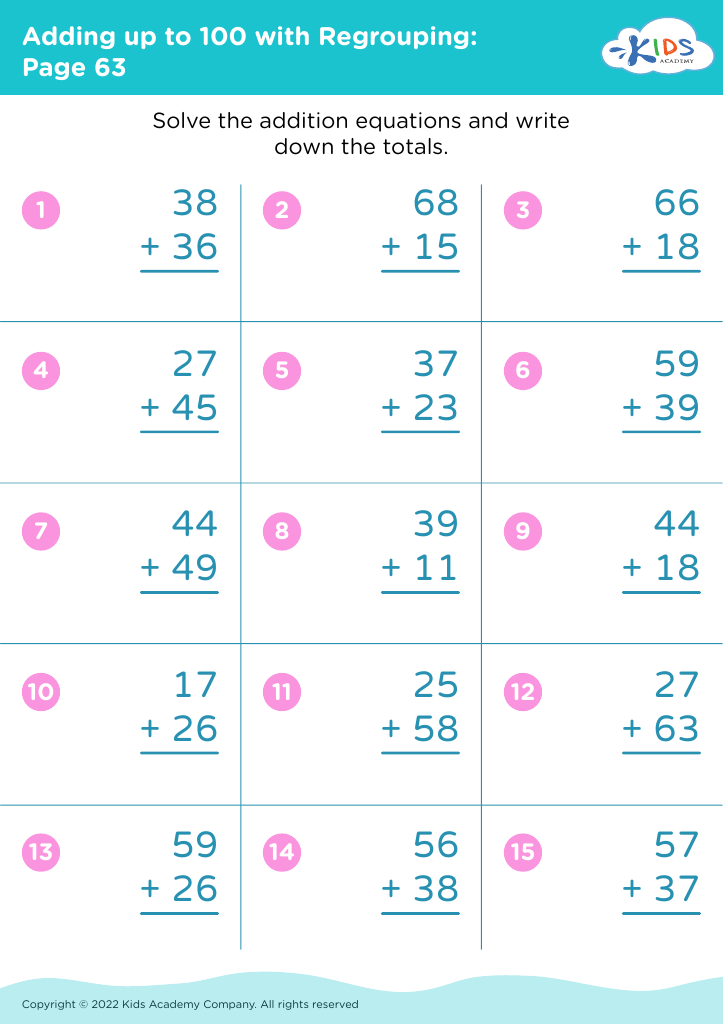
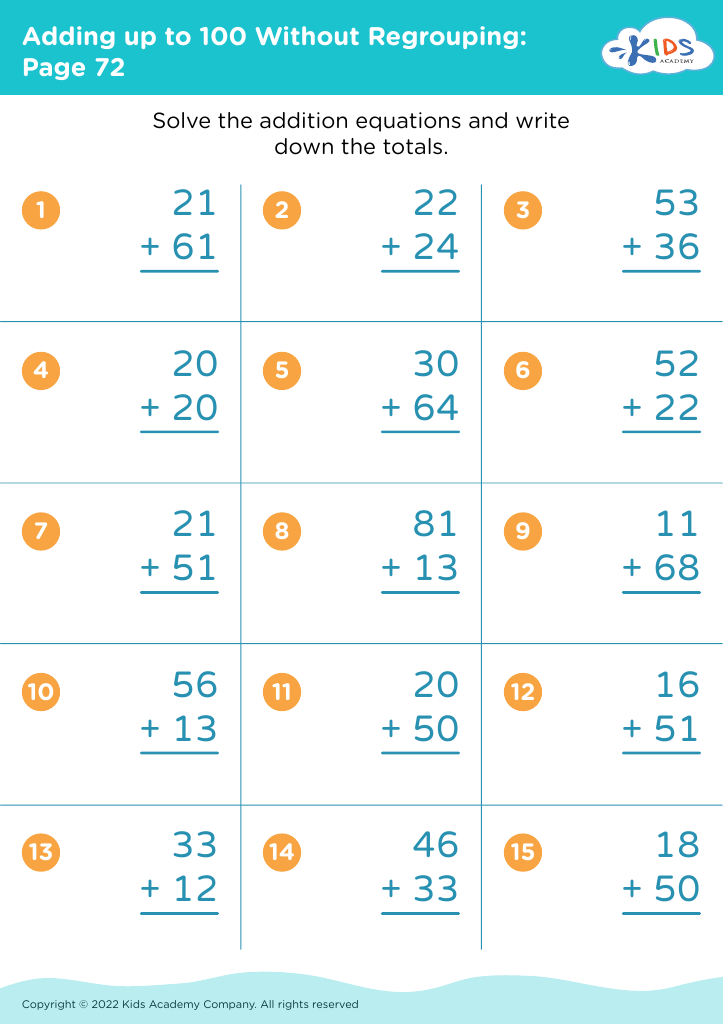
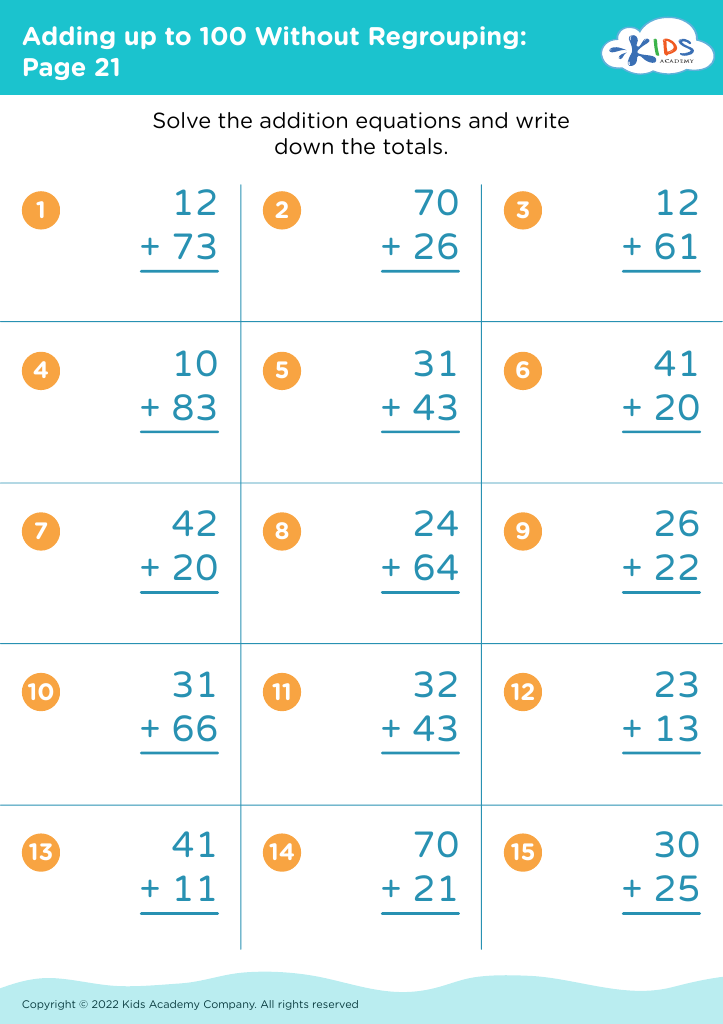
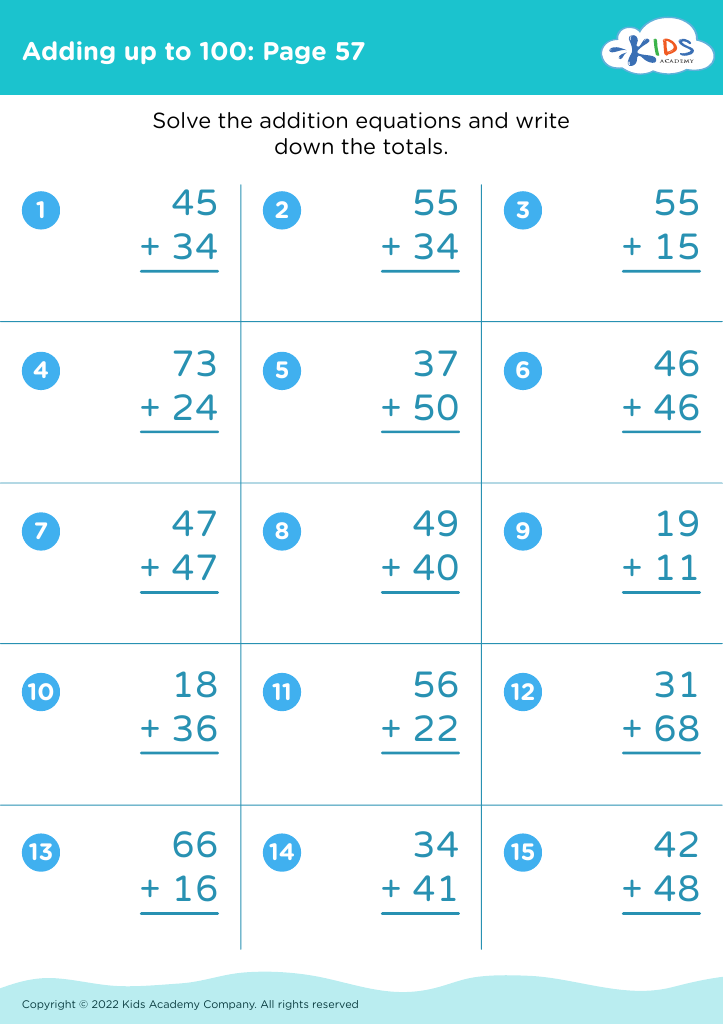
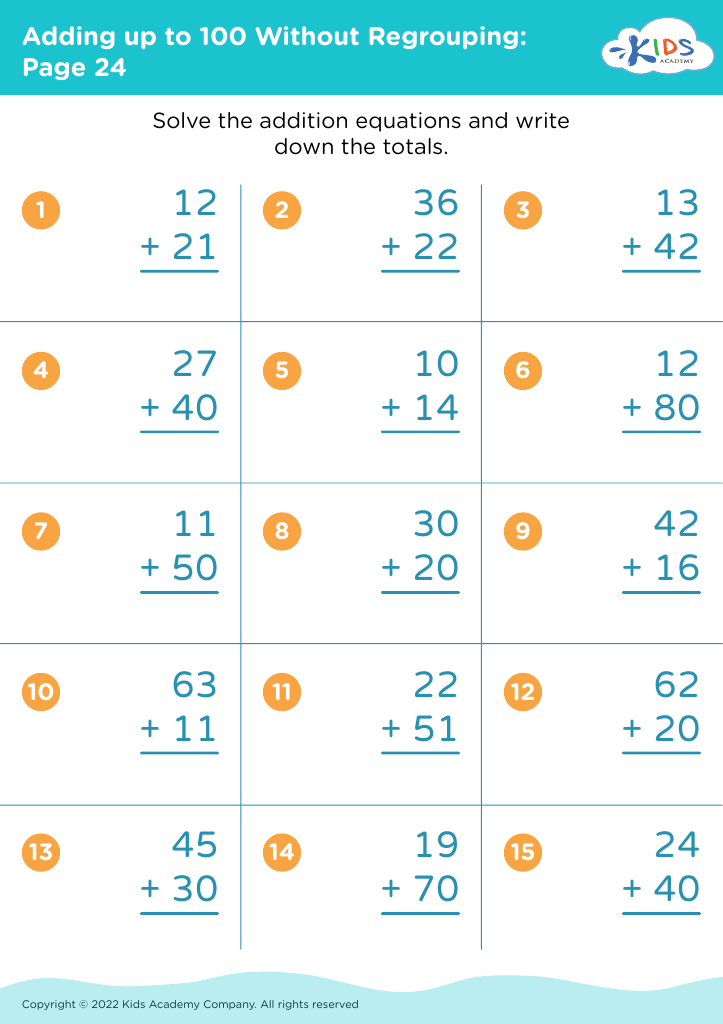
Discover our engaging "Develop Critical Thinking: Adding up to 100 Worksheets" specifically designed for kids aged 6-7. These interactive resources help young learners enhance their mathematical skills while promoting critical thinking and problem-solving abilities. Each worksheet encourages children to approach addition creatively by presenting real-life scenarios and challenging puzzles that stimulate their analytical minds. By engaging with these worksheets, students will not only improve their arithmetic proficiency but also develop a strong foundation for making thoughtful decisions. Perfect for classroom or at-home learning, our worksheets provide a fun and educational experience that prepares young thinkers for future academic success.






%20(1).jpg)
Developing critical thinking skills in children ages 6-7 is crucial for their overall cognitive growth and lifelong learning. This age is critical for laying foundational skills that enable children to analyze, evaluate, and synthesize information. When parents and teachers prioritize critical thinking, they empower children to question, reason, and make informed decisions.
Engaging in activities that promote critical thinking helps children enhance their problem-solving abilities. For example, through puzzles, storytelling, and open-ended questions, children learn to see different perspectives and explore various solutions. These skills are not just academic; they are vital for social interactions, as children learn to negotiate, collaborate, and empathize with others.
Moreover, fostering critical thinking ignites curiosity and motivation. Children who think critically are more likely to engage actively in their learning experiences, leading to improved concentration and retention. As they become better thinkers, they are more prepared for the challenges of the future and can adapt to changing environments.
In summary, prioritizing critical thinking during these formative years nurtures confident, independent learners who can tackle challenges, innovate, and contribute positively to society. Parents and teachers play an essential role in facilitating this growth, ensuring children are equipped for success both in school and beyond.








