Developing math skills Adding up to 100 Worksheets for Ages 6-7
3 filtered results
-
From - To
Welcome to our "Developing Math Skills: Adding Up to 100 Worksheets" designed specifically for children aged 6-7! Our engaging and interactive worksheets help young learners master addition concepts while building a strong mathematical foundation. Through fun exercises, kids will practice adding numbers, honing their problem-solving skills, and enhancing their number fluency. Each worksheet is crafted to align with educational standards and promote confidence in math. Ideal for both classroom settings and at-home learning, these resources promise to make math enjoyable and accessible. Download now to inspire your child's love for learning and watch their math skills flourish!
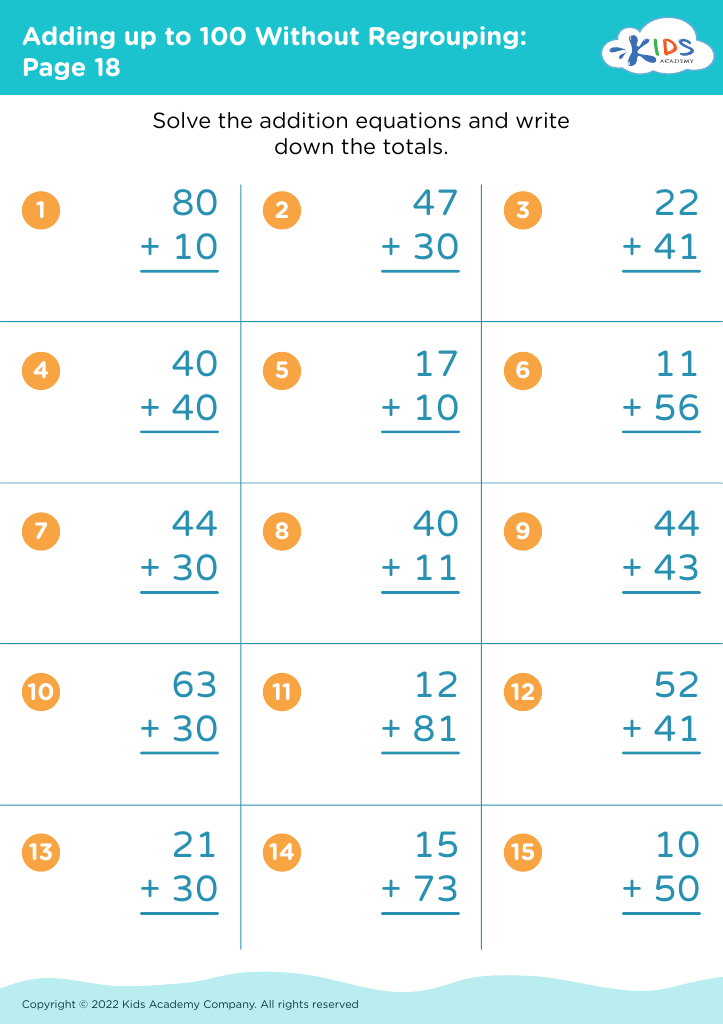
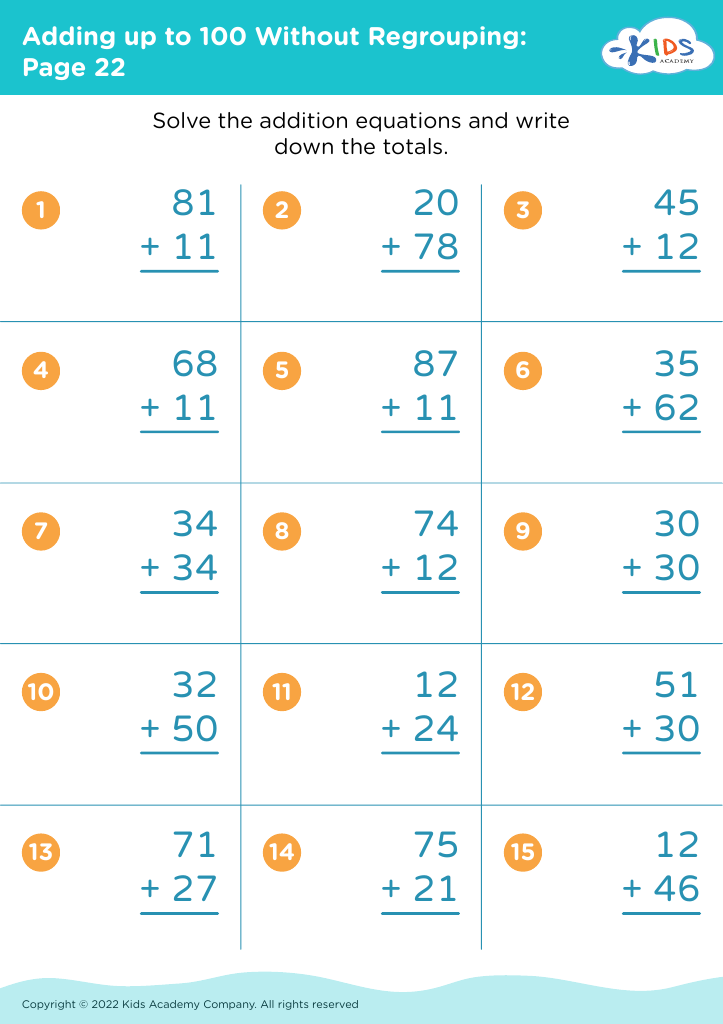
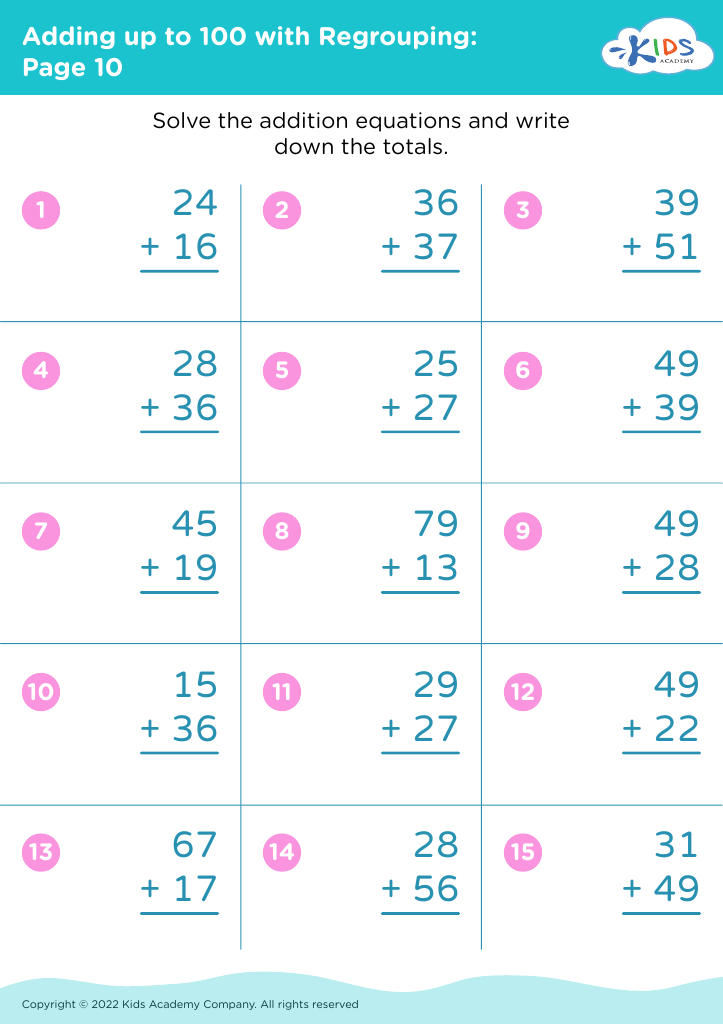






%20(1).jpg)
Developing math skills focused on adding up to 100 is crucial for children aged 6-7 as it lays a solid foundation for their mathematical understanding and problem-solving abilities. At this age, children are transitioning from concrete to abstract thinking, making it an ideal time to reinforce addition skills. Mastering addition to 100 enhances their confidence in handling larger numbers, which is essential for future math concepts, such as subtraction, multiplication, and division.
Additionally, this skill supports not only mathematical proficiency but also cognitive development. As children practice adding up to 100, they engage in critical thinking and recognize patterns, improving their overall reasoning abilities.
Parents and teachers can incorporate fun and interactive methods to teach these skills, using games, visual aids, and real-life examples, which make learning more enjoyable and effective. Moreover, consistent practice with addition fosters perseverance and resilience in students, essential traits for lifelong learning.
Finally, developing math skills contributes to children's academic success and equips them with the tools necessary for future educational challenges. By prioritizing the mastery of adding up to 100, parents and teachers play a pivotal role in fostering their children’s confidence and enthusiasm towards math, setting the stage for a positive attitude towards learning for years to come.








