Enhance critical thinking Adding up to 100 Worksheets for Ages 6-7
3 filtered results
-
From - To
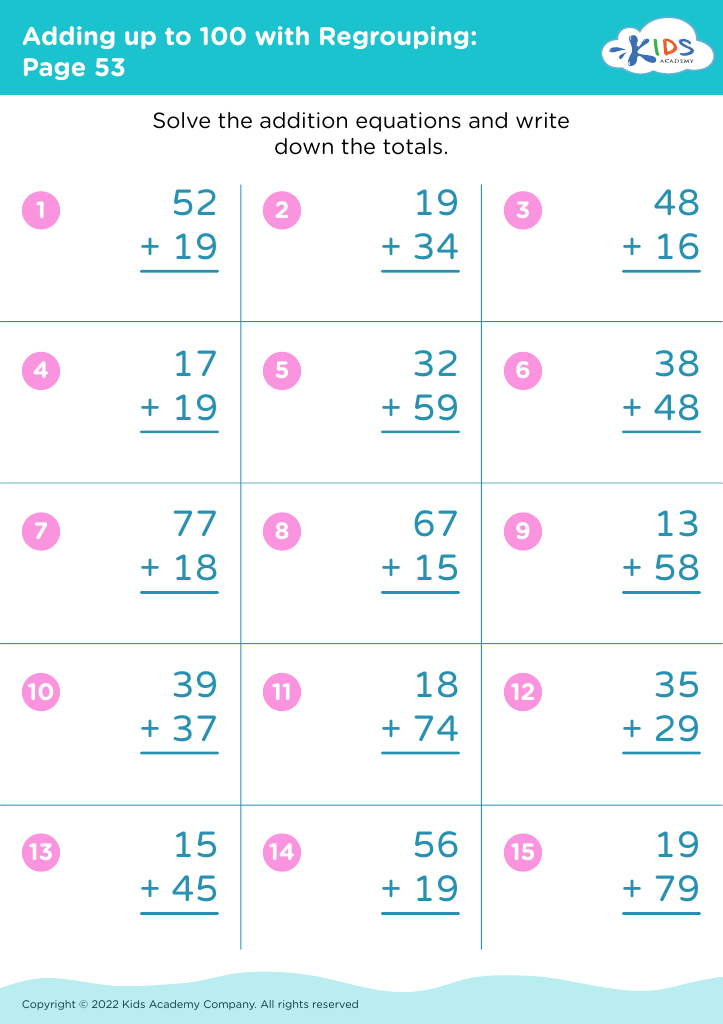
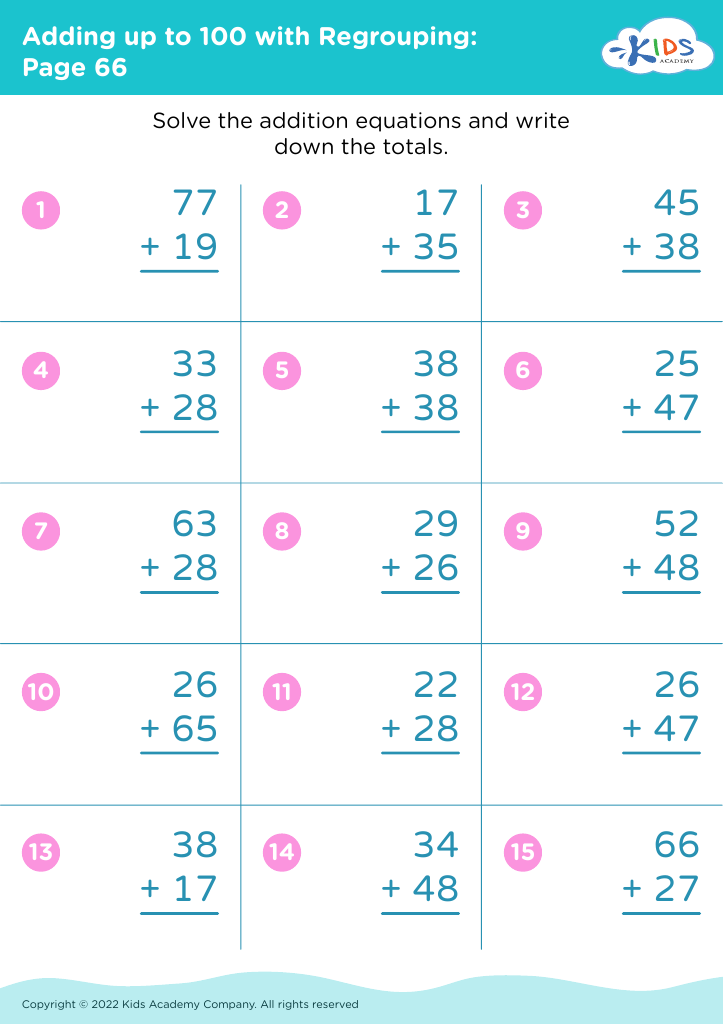
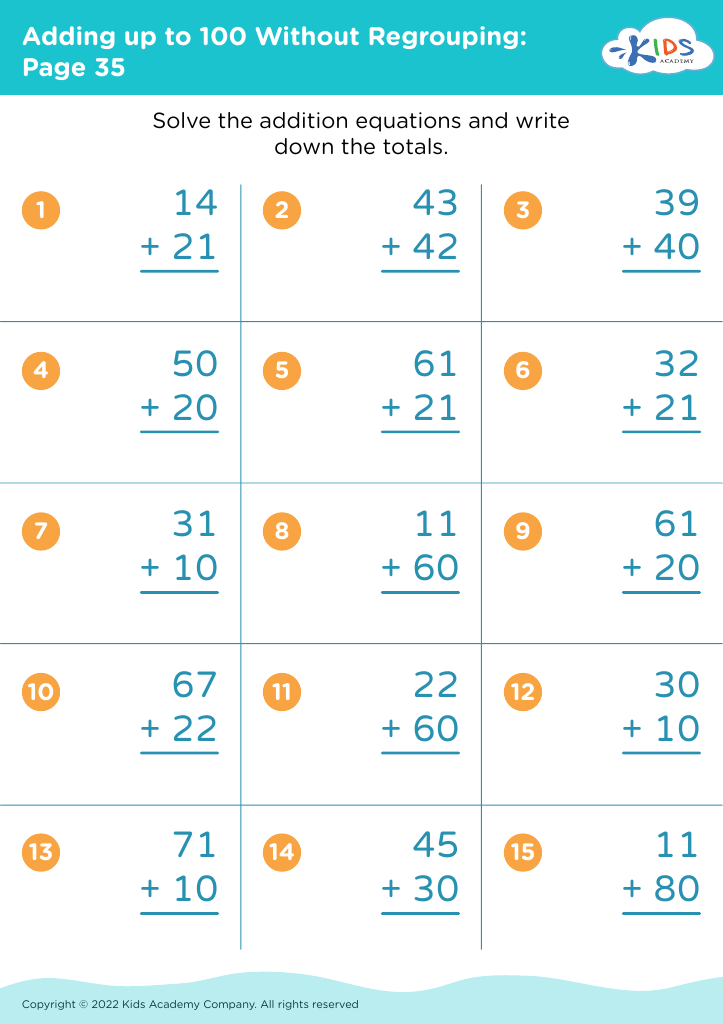
Enhance your child's critical thinking with our "Adding up to 100 Worksheets" for ages 6-7. These engaging and educational worksheets are meticulously designed to strengthen your child's addition skills while promoting logical reasoning and problem-solving abilities. Packed with fun exercises and colorful visuals, these activities transform learning into an enjoyable adventure. Ideal for students in early grades, our worksheets help solidify foundational math concepts, ensuring your child gains both confidence and competence in arithmetic. Boost your child's essential thinking skills and cultivate a love for numbers with our expertly crafted worksheets today.


%20(1).jpg)




Parents and teachers should prioritize enhancing critical thinking in addition to basic arithmetic skills for children aged 6-7 because this formative period serves as the foundation for future learning. Critical thinking fosters problem-solving abilities, encouraging children to ask questions, evaluate evidence, and analyze outcomes, moving beyond simple rote memorization.
When children practice adding up to 100, it goes beyond just learning numbers; it offers rich opportunities to instill logical reasoning, pattern recognition, and strategic thinking. For instance, children learn to see relationships between numbers, such as recognizing that adding 50 + 50 results in 100, which helps deepen their understanding of mathematical concepts. Exercises around achieving sums of 100 can be done through engaging activities like grouping, mental math, or even story problems, sparking curiosity and cognitive engagement.
Moreover, critical thinking skills extend well beyond math. They are essential for everyday decision-making, academic success, and future job skills. Young children with developed critical thinking are often better at explaining their thought processes, making connections in their learning, and adapting to new situations.
In sum, blending critical thinking skills with arithmetic lessons prepares children for a holistic education. Cultivating these habits early equips them with the tools they need for lifelong learning and problem-solving in an increasingly complex world.








