Enhance number recognition Adding up to 100 Worksheets for Ages 6-7
8 filtered results
-
From - To
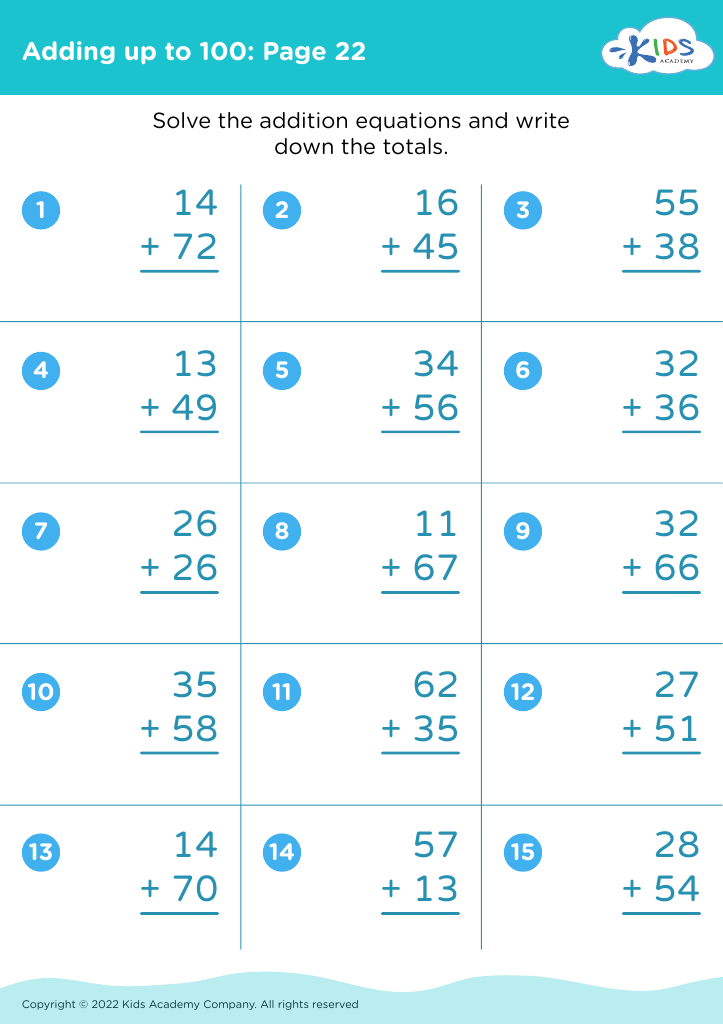
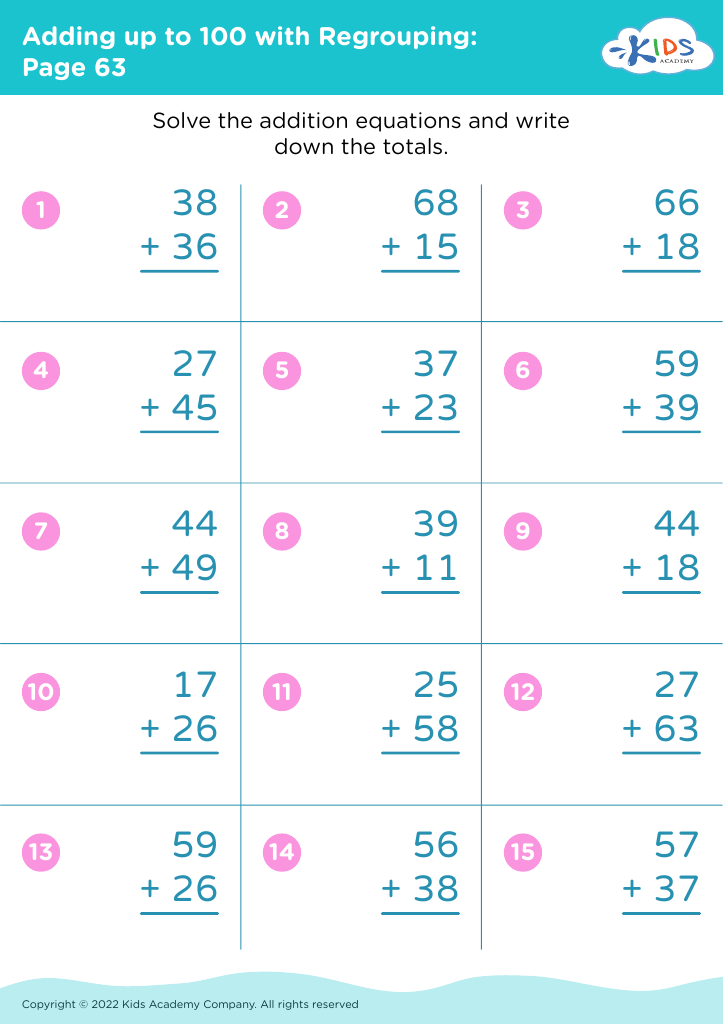
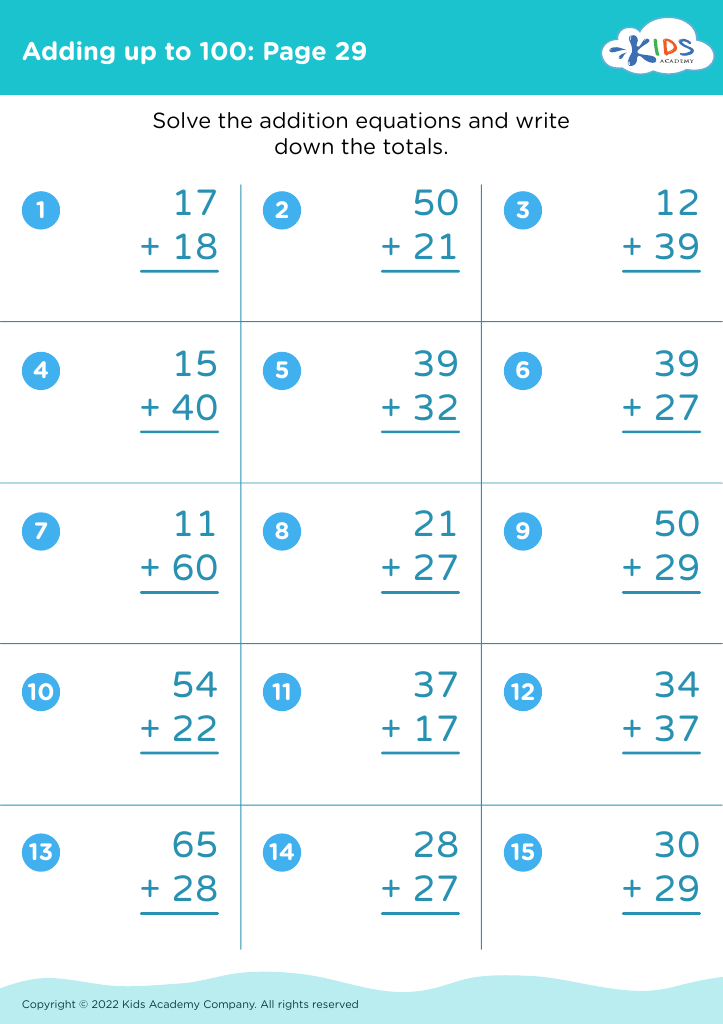
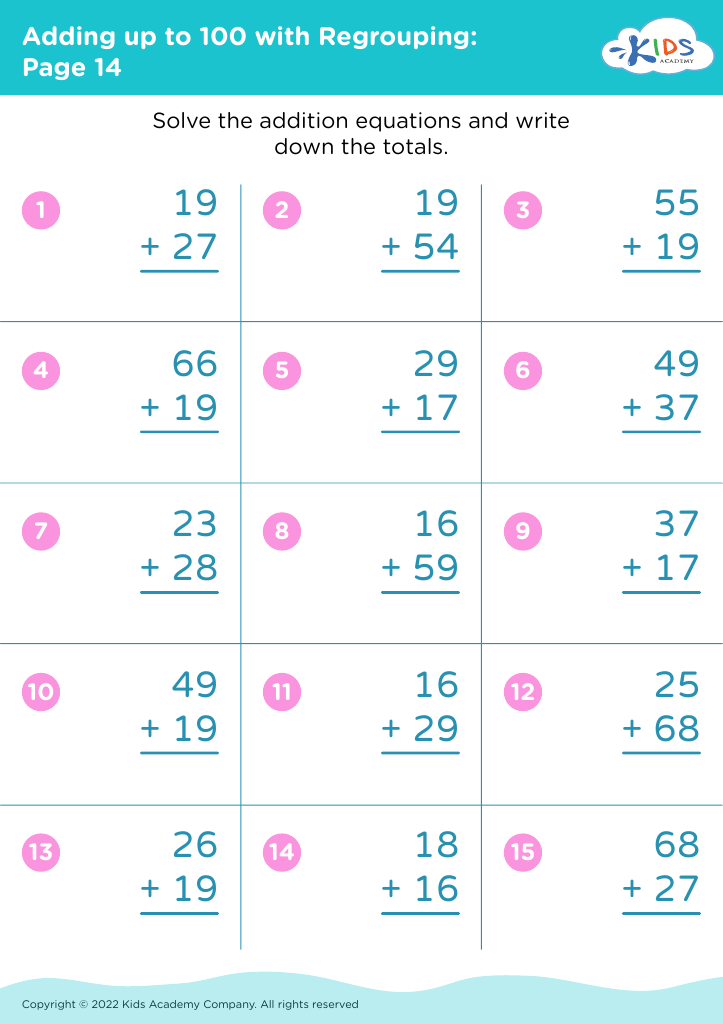
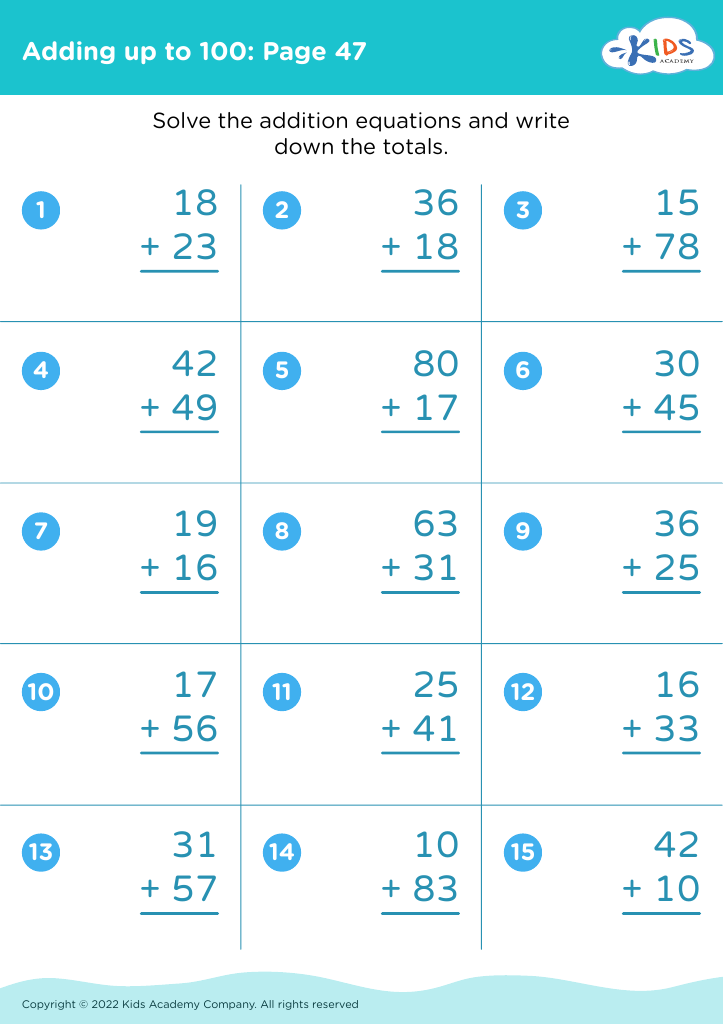
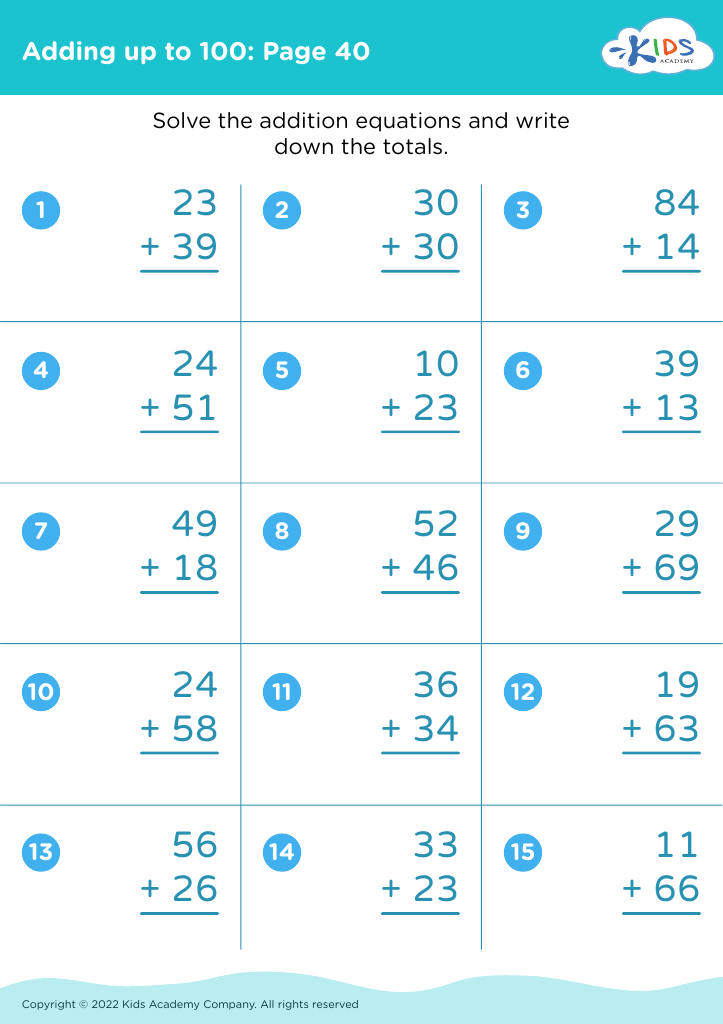
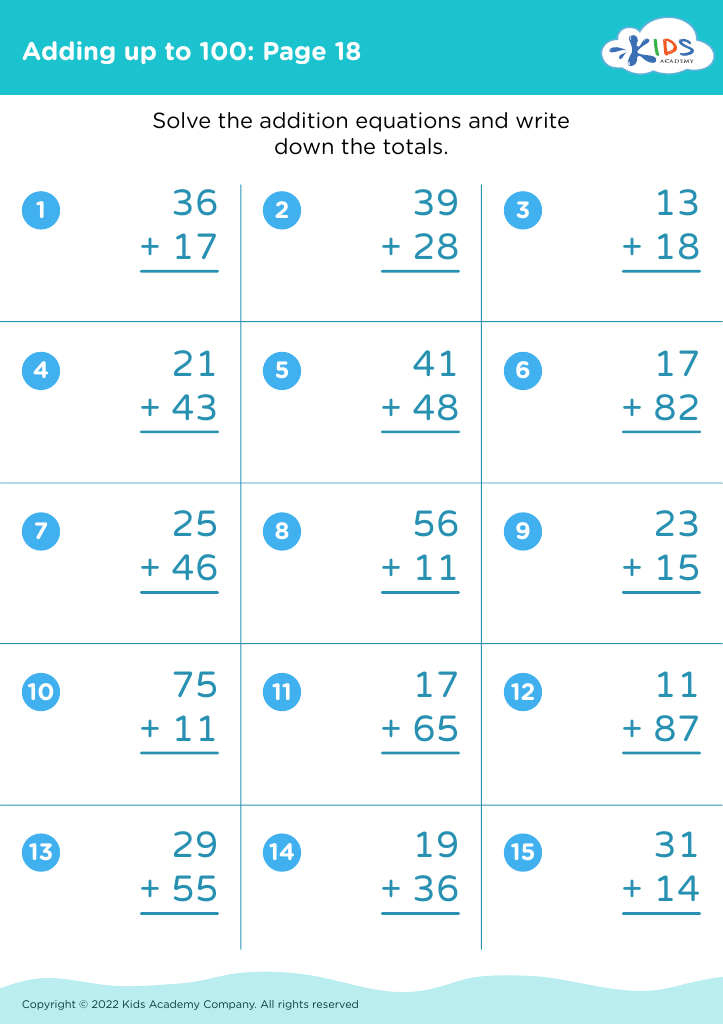
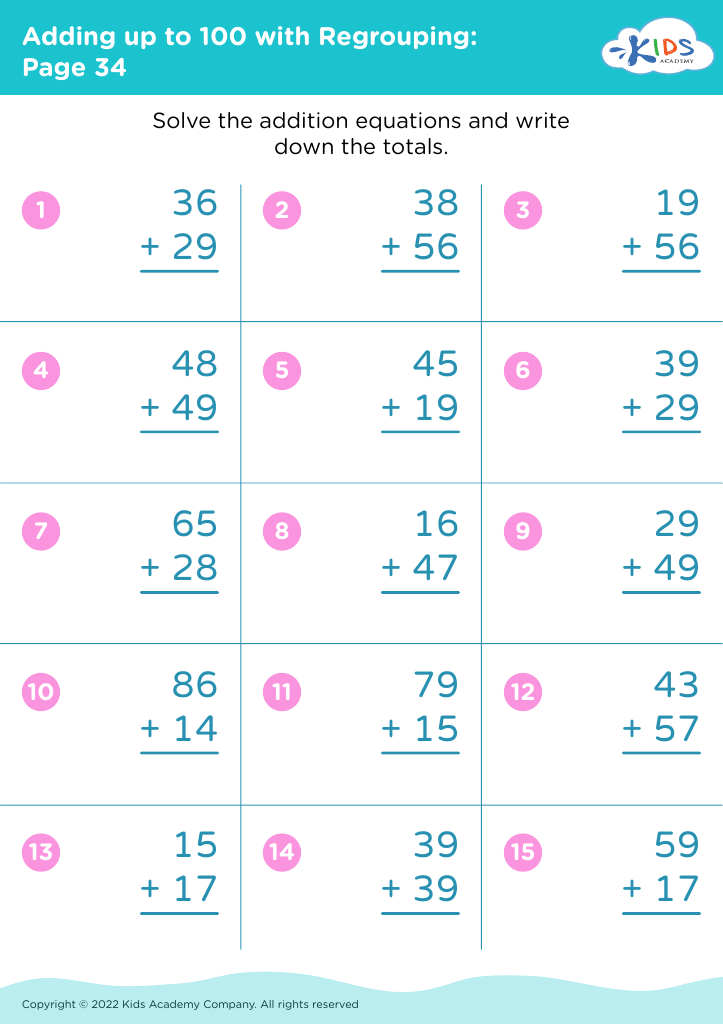
Boost your child's number recognition skills with our "Enhance Number Recognition Adding Up to 100 Worksheets," designed specifically for ages 6-7. These engaging and colorful worksheets provide a fun approach to mastering numbers while reinforcing addition skills. Each worksheet features a variety of activities that captivate young learners, helping them identify, compare, and sequence numbers up to 100. As students practice addition within this range, they'll gain confidence in their math abilities. Perfect for at-home learning or classroom use, these worksheets are an invaluable resource to support early math development and foster a positive attitude towards learning numbers. Start enhancing your child's number sense today!





%20(1).jpg)

Number recognition and basic addition skills, especially the ability to add up to 100, are fundamental building blocks in a child’s mathematical development for ages 6-7. At this stage, children are forming essential cognitive pathways that serve as the foundation for more complex math concepts later on. By enhancing number recognition, children become more confident in identifying numerals, understanding their values, and being able to manipulate them in various mathematical contexts.
Understanding how to add up to 100 is particularly important as it helps students develop a strong grasp of place value, which is crucial for multi-digit arithmetic. This is a transferable skill that's applicable in real-life situations, such as managing money or measuring distances. Moreover, becoming comfortable with numbers encourages critical thinking and problem-solving abilities, which are vital in and out of the classroom.
For parents and teachers, fostering these skills can lead to greater academic success and self-esteem in children. Early interventions in these fundamental skills can prevent future math anxiety and struggle, ensuring that children become lifelong learners who are capable of tackling challenges with a positive attitude. Therefore, prioritizing number recognition and addition up to 100 should be a shared goal for both parents and educators.








