Enhancing calculation skills Adding up to 100 Worksheets for Ages 6-7
4 filtered results
-
From - To
Boost your child's arithmetic abilities with our "Enhancing Calculation Skills: Adding up to 100" worksheets, tailored for ages 6-7. These engaging, printable worksheets from Kids Academy are designed to build a solid foundation in addition, helping young learners master adding up to 100. Through fun and interactive exercises, children will enhance their problem-solving skills while gaining confidence in math. Perfect for at-home practice or classroom use, these worksheets offer a variety of challenges to keep kids motivated and excited about learning. Empower your child to excel in math with our expertly crafted resources.
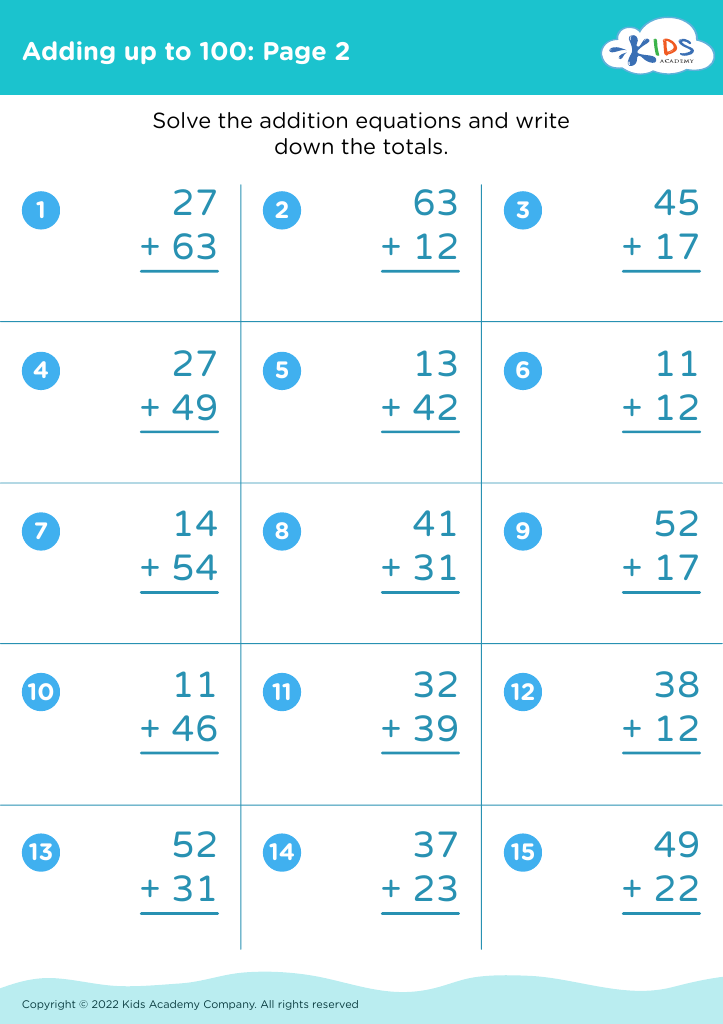
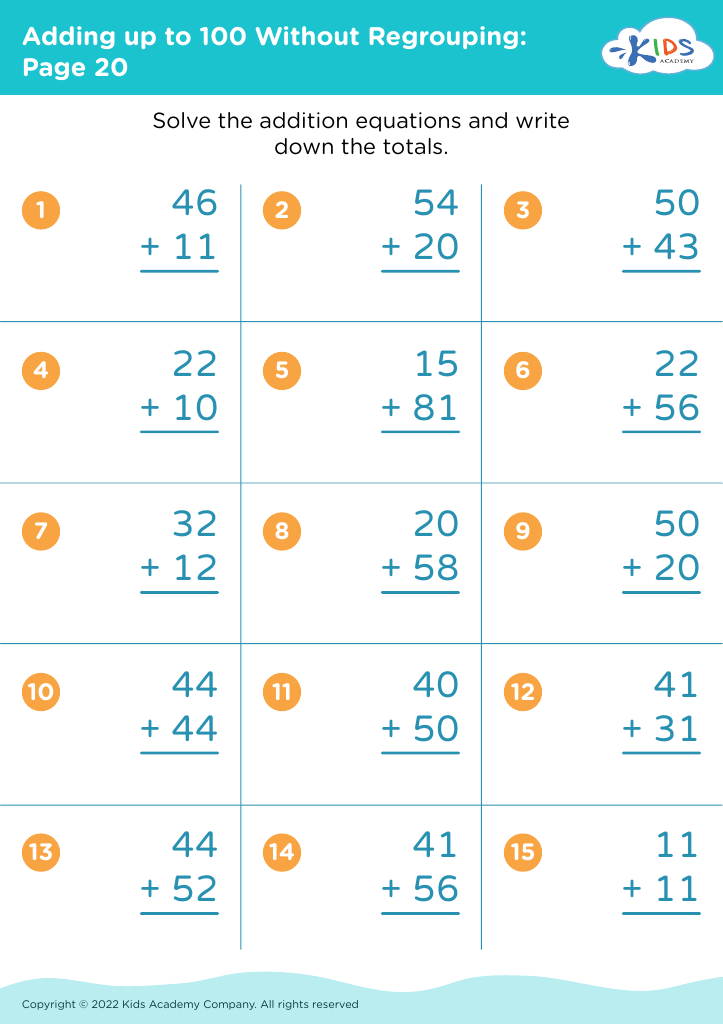
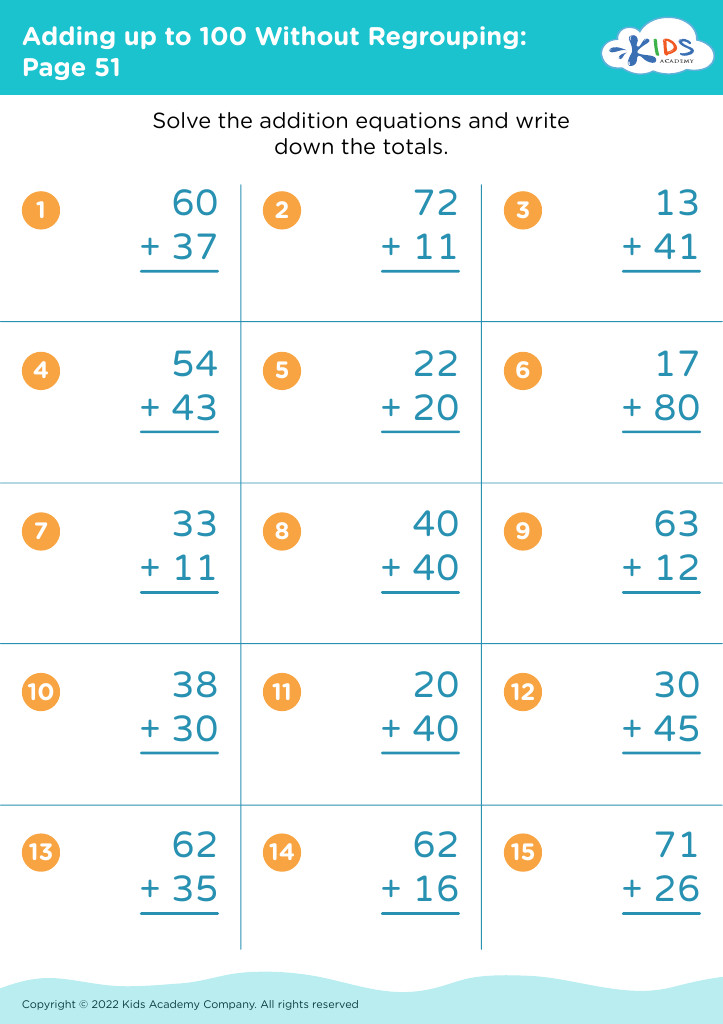
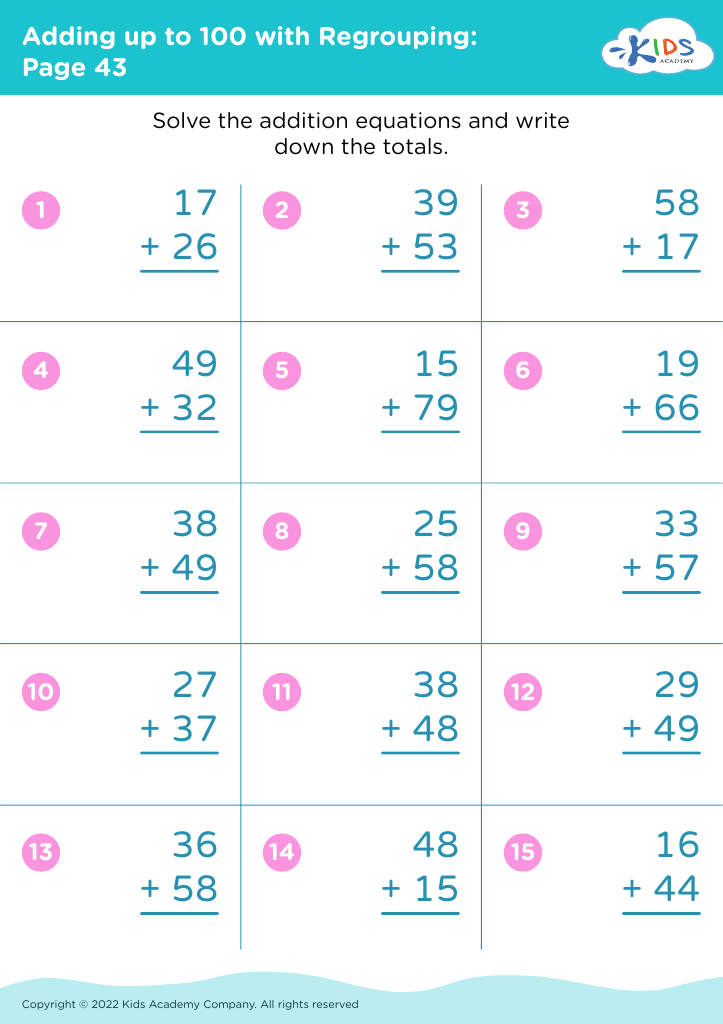






%20(1).jpg)
Enhancing calculation skills in children aged 6-7 is fundamental for their academic and cognitive development. At this stage, kids are beginning to grasp basic math concepts, and developing proficiency in addition up to 100 sets a strong foundation for future learning. This early mastery boosts their confidence and enthusiasm towards mathematics, making it more likely for them to engage positively with more complex concepts later on.
Strong calculation skills also enhance critical thinking and problem-solving abilities. As children learn to add numbers efficiently, they develop logical reasoning skills that are essential not just in math, but across all subjects. These cognitive benefits transfer to real-life situations, helping children approach problems methodically and with greater resilience.
Moreover, enhancing calculation skills supports overall numeracy, a critical life skill. Being comfortable with numbers increases day-to-day functionality, such as telling time, handling money, and understanding measurements, which are indispensable in daily life.
For parents and teachers, fostering these skills ensures children won't struggle in subsequent grades, reducing academic stress. Intervening at this developmental stage provides a supportive environment that stimulates curiosity and intellectual growth, ensuring students aren't left behind in the formative years of their education.








