Enhancing problem-solving skills Adding up to 100 Worksheets for Ages 6-7
3 filtered results
-
From - To
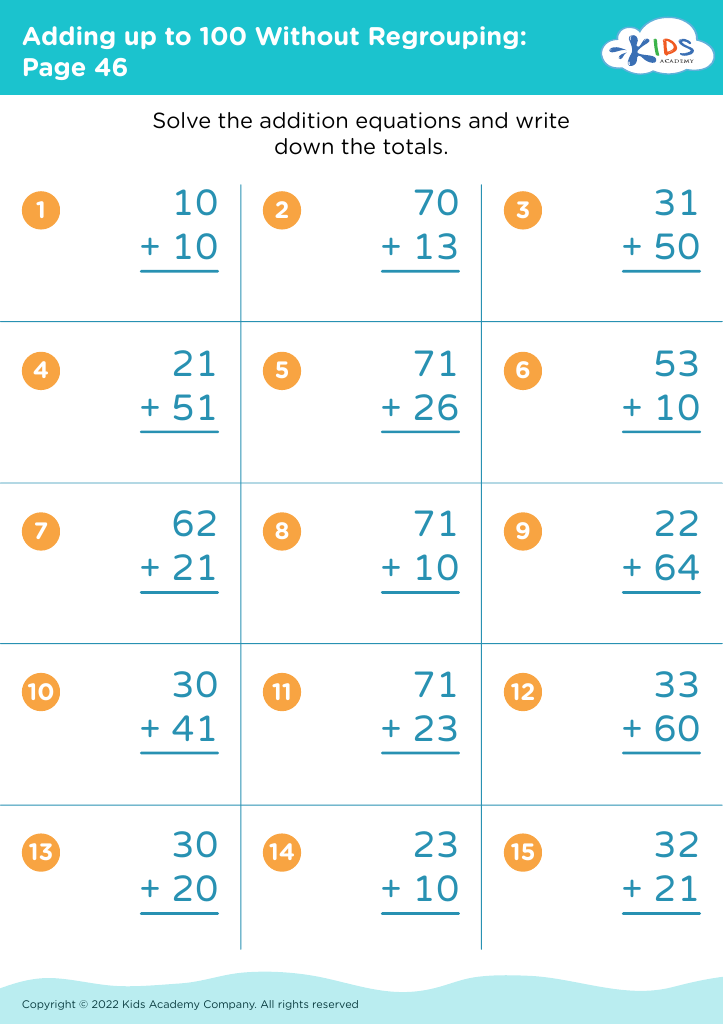
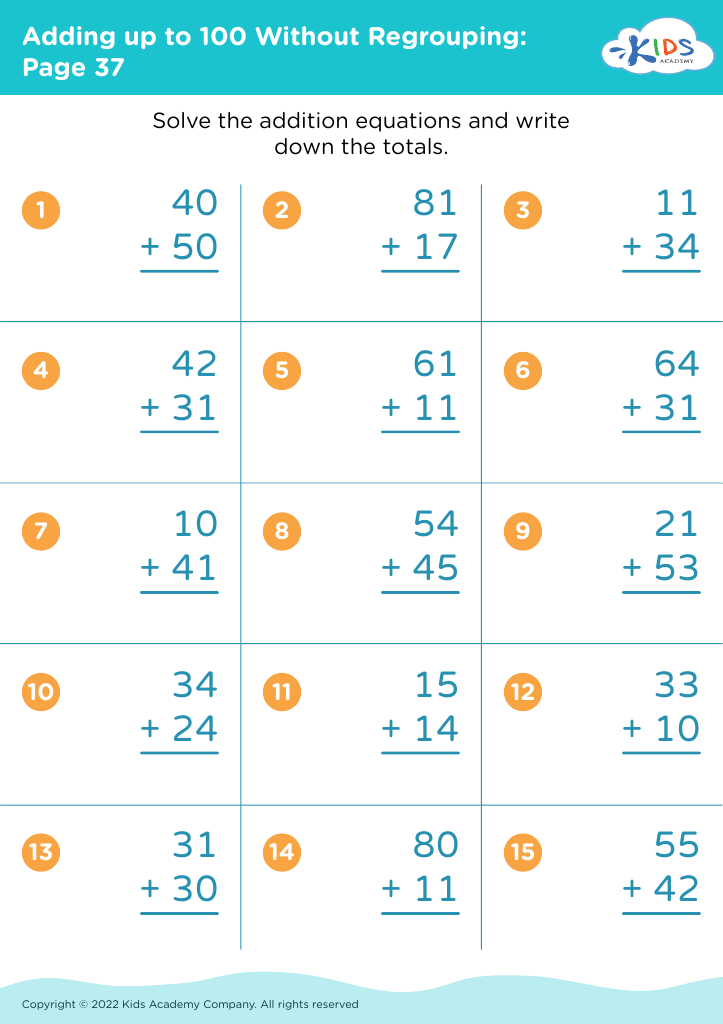
Unlock your child's potential with our "Enhancing Problem-Solving Skills: Adding Up to 100 Worksheets" designed specifically for ages 6-7. These engaging worksheets promote critical thinking and mathematical prowess by guiding students through a variety of problem-solving exercises focusing on addition. Each carefully crafted worksheet encourages kids to visualize numbers, understand relationships, and build a strong mathematical foundation while boosting their confidence. With a blend of fun themes and challenging problems, these printables not only enhance cognitive abilities but also foster a love for learning. Equip your young learners with the skills needed to tackle mathematical challenges with ease!






%20(1).jpg)

Enhancing problem-solving skills, particularly with concepts like adding up to 100, is crucial for children aged 6-7 for several reasons. This age is a foundational period where cognitive development and mathematical thinking truly flourish. By engaging children in concepts of addition, they develop not just numerical literacy but also critical thinking abilities that are essential for academic success.
Learning to add up to 100 helps students grasp the concept of number relationships and enhances their understanding of more complex math situations in the future. This skill builds the groundwork for more advanced topics like subtraction, multiplication, and even division. Moreover, problem-solving fosters resilience and perseverance in children. When they tackle challenging problems, they learn to approach tasks more strategically, an asset that extends beyond mathematics to real-life situations.
For parents and teachers, promoting these skills contributes to a child’s confidence and encouragement in math, a subject that can often be intimidating. Additionally, strong problem-solving abilities correlate with improved performance across various subjects, aiding overall academic achievement. By prioritizing and nurturing these skills, adults empower children to become analytical thinkers, preparing them for a successful educational journey and life challenges ahead.








