Fraction comparison Adding up to 100 Worksheets for Ages 6-7
6 filtered results
-
From - To
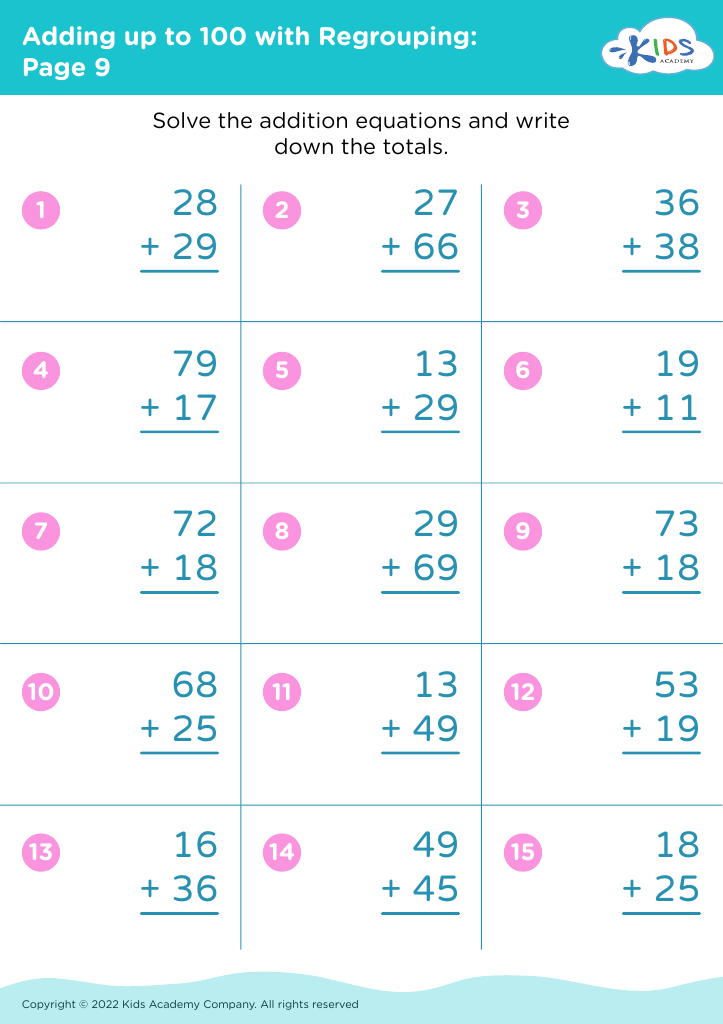
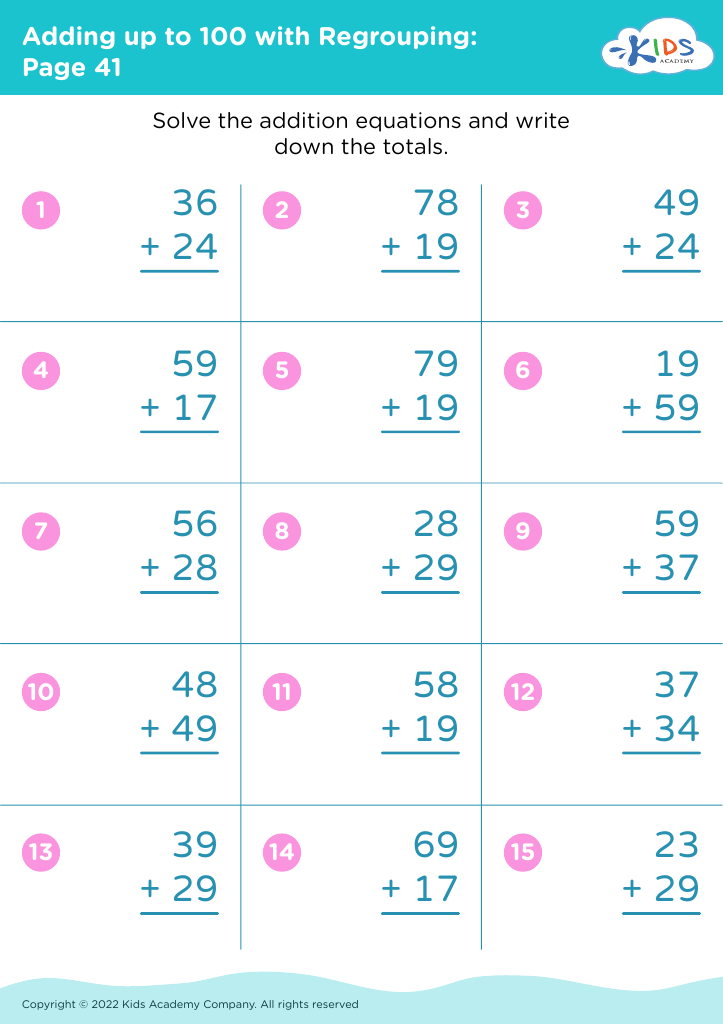
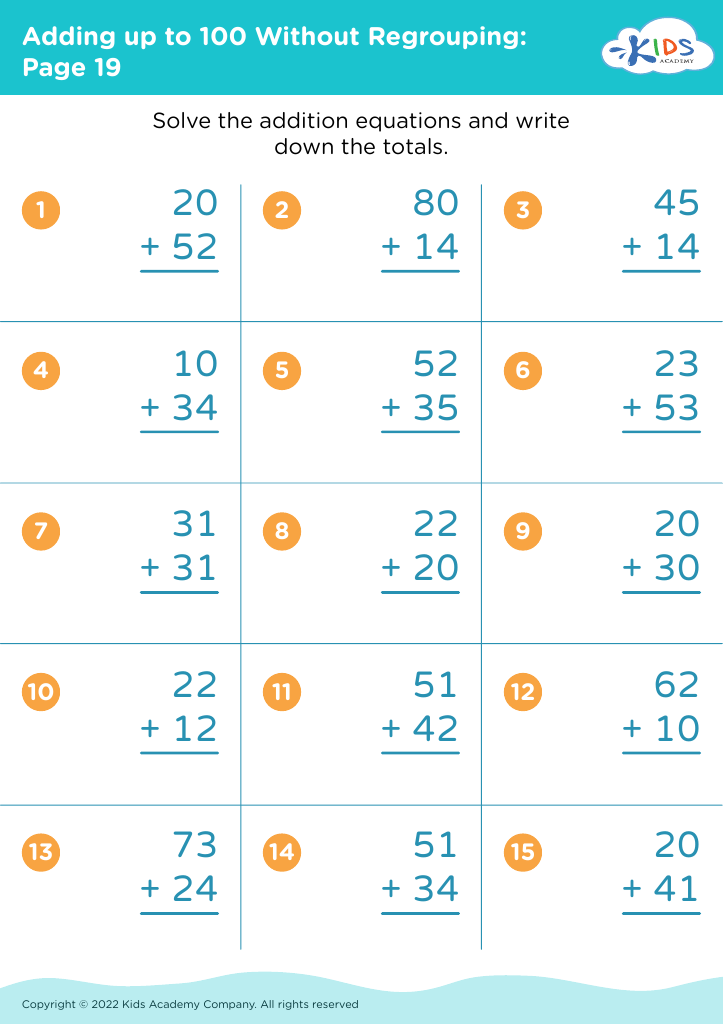
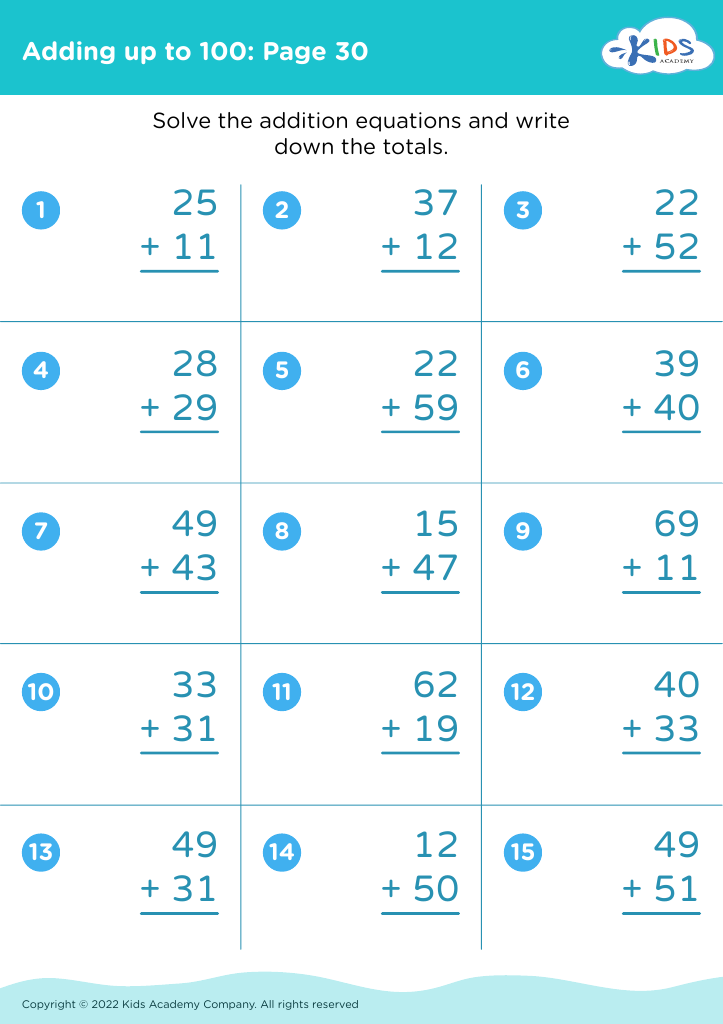
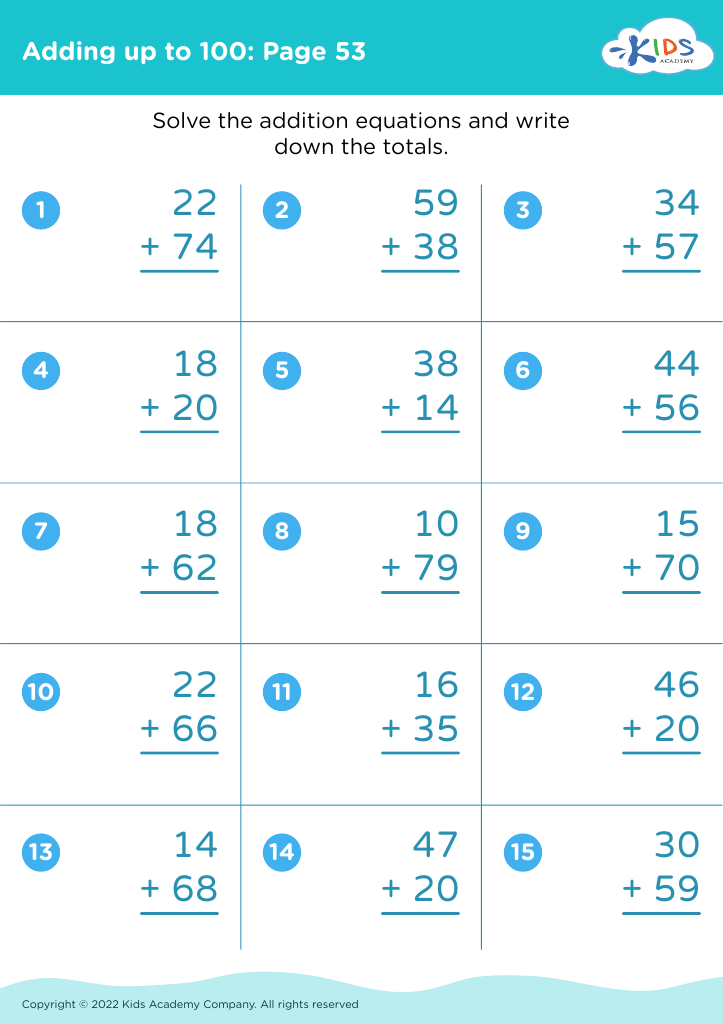
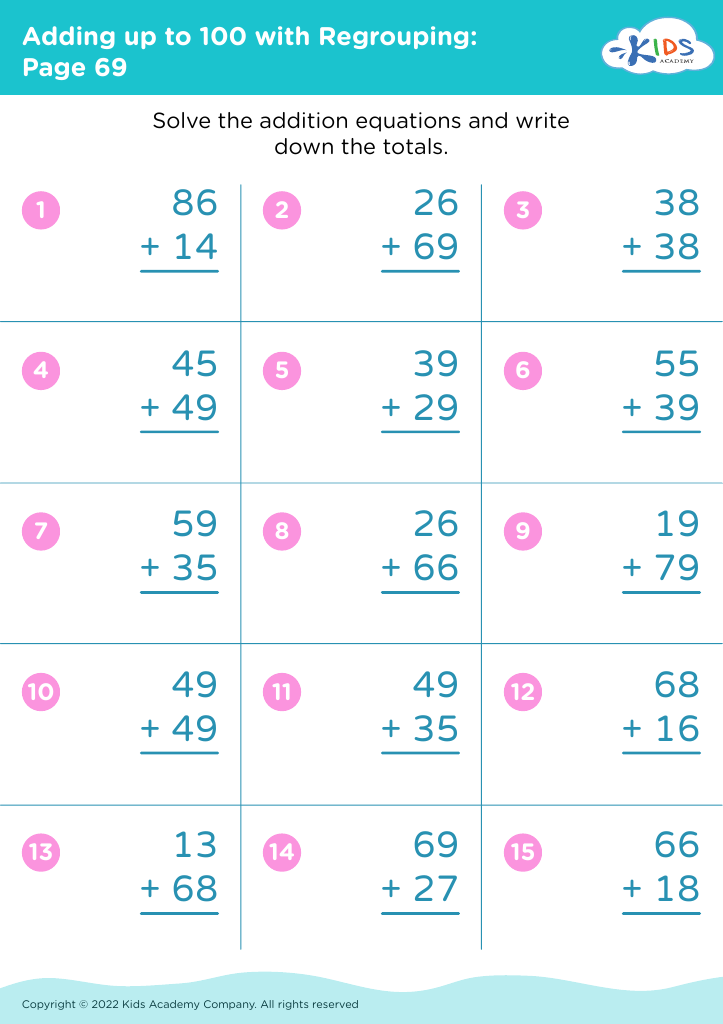
Discover exciting and educational Fraction Comparison Adding up to 100 Worksheets designed for ages 6-7 at Kids Academy! Our carefully crafted worksheets help young learners grasp essential math concepts such as fraction comparison and addition, ensuring a solid foundation in mathematics. Through engaging exercises and interactive problems, children will develop critical thinking and problem-solving skills while mastering fractions and adding up to 100. Perfect for both classroom use and home practice, these worksheets make learning enjoyable and effective. Navigate your child's mathematical journey with our expertly designed resources, and watch their confidence and proficiency grow!



%20(1).jpg)



As an early-grade teacher or parent, understanding and teaching the concept of fraction comparison and adding up to 100 for ages 6-7 is crucial for several reasons. Fractions form a foundational part of mathematical comprehension, and early exposure helps build a strong numerical sense. When young children learn to compare fractions, they not only grasp the idea that numbers can represent parts of a whole but also develop critical thinking skills necessary for higher-level mathematics.
At this age, kids typically engage with subjects in practical, tangible ways, such as dividing a pizza or sharing toys. Introducing fractions in such a context aligns their learning with everyday experiences, making math feel relevant and exciting. Additionally, adding fractions up to 100 helps kids understand the concept of the century mark, not just in abstract terms but through real numbers. This familiarity with numbers up to 100 can set a solid groundwork for future math topics, like percentages and more complex arithmetic.
Moreover, mastering these skills boosts children's confidence and academic performance, fostering a positive attitude toward math. Early successes in understanding and using fractions can lead to an appetite for more challenging mathematical concepts, thereby nurturing a lifelong love for learning and analytical thinking. Therefore, incorporating fraction comparison and adding exercises into the curriculum for 6-7-year-olds offers both immediate and long-term educational benefits.








