Hand-eye Coordination Adding up to 100 Worksheets for Ages 6-7
3 filtered results
-
From - To
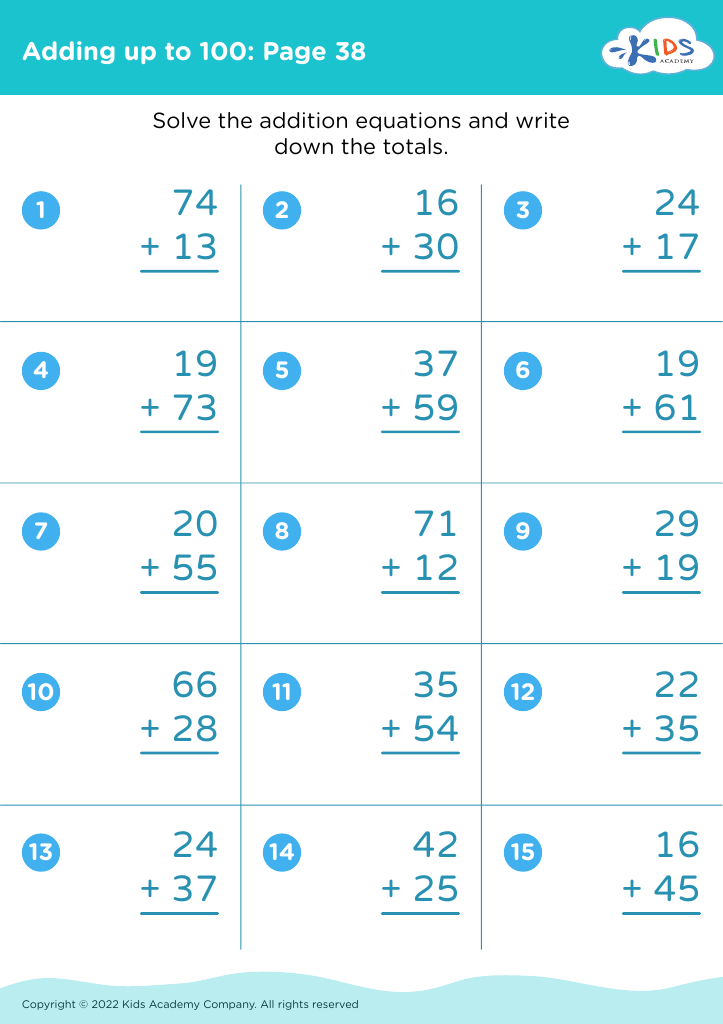
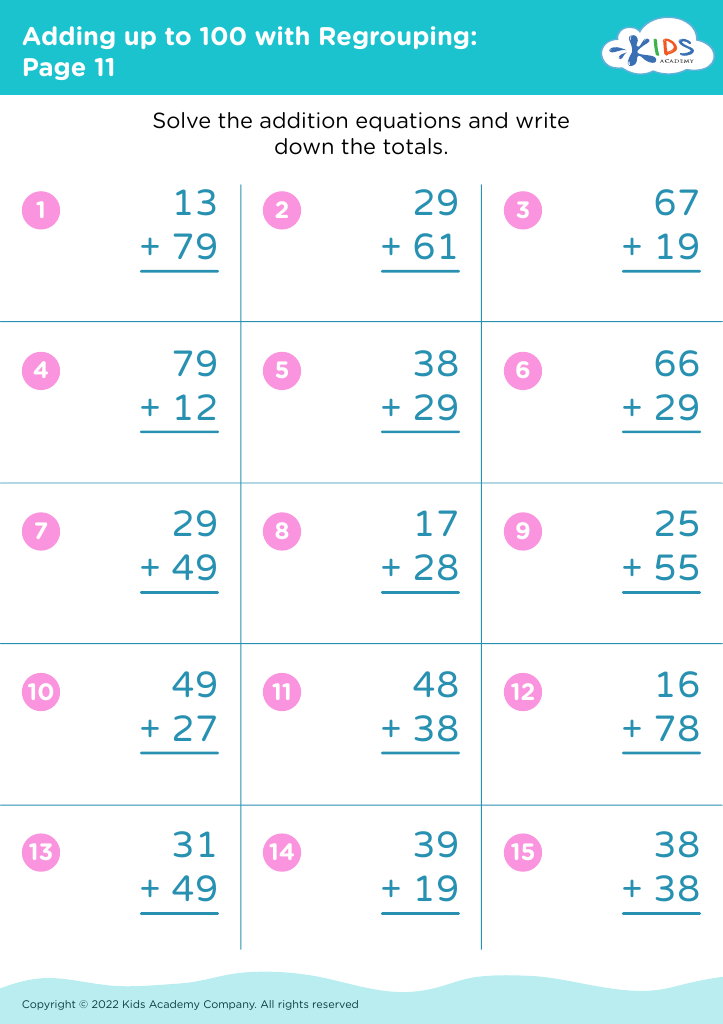
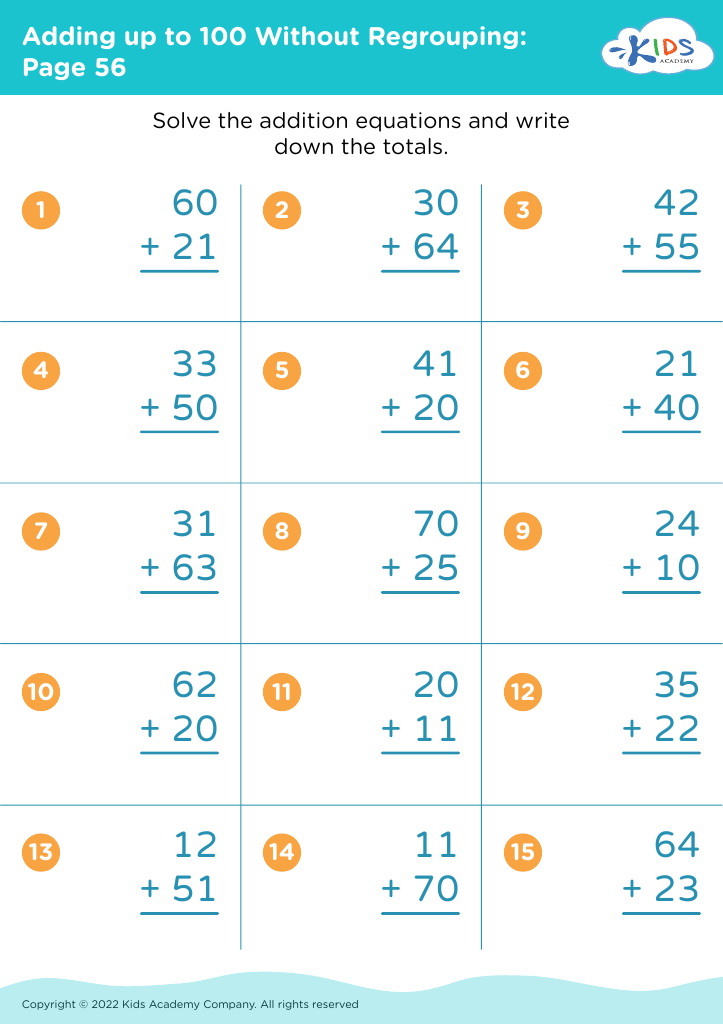
Boost your child’s math skills and hand-eye coordination with our "Hand-eye Coordination Adding up to 100 Worksheets for Ages 6-7". These engaging worksheets are designed to help young learners practice addition while enhancing their fine motor skills. Each page features colorful and interactive exercises tailored for first graders, providing a fun learning experience. By solving problems up to 100, children develop not only arithmetic proficiency but also improved handwriting and visual tracking abilities. Perfect for home or classroom use, these worksheets support early math development in an enjoyable and practical way. Download now from Kids Academy for happy learning!





%20(1).jpg)

Hand-eye coordination is crucial for children aged 6-7 as it forms the foundation for numerous essential skills, and "Adding up to 100" activities enhance this development in significant ways. At this age, children are refining their motor skills and beginning to perform more complex tasks that require the synchrony of visual input and hand movements. Activities that involve small, precise hand movements, such as writing numbers, drawing tally marks, or placing objects to represent sums, directly strengthen these skills.
Moreover, learning to add numbers up to 100 isn’t just a math exercise; it sharpens cognitive abilities by improving problem-solving, memory, and concentration. When children manipulate objects (like counting beads or markers) to aid their addition, they are better equipped to grasp abstract math concepts. This tactile experience consolidates their learning and deepens their understanding of numbers and arithmetic patterns.
For parents and teachers, supporting hand-eye coordination through interactive math activities means students are likely to experience academic success not only in mathematics but also in other areas that rely on fine motor skills, such as writing and arts and crafts. Advocating for these activities ensures children build a robust toolkit of skills early on, fostering greater confidence and enthusiasm for learning across disciplines.








