Identifying equivalent fractions Adding up to 100 Worksheets for Ages 6-7
5 filtered results
-
From - To
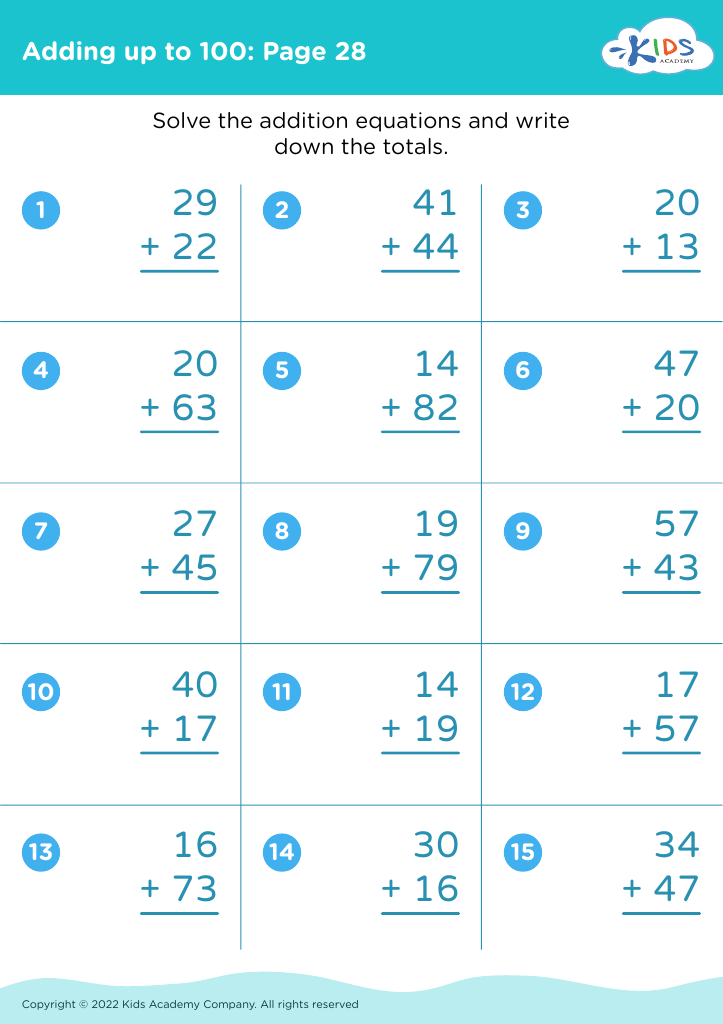
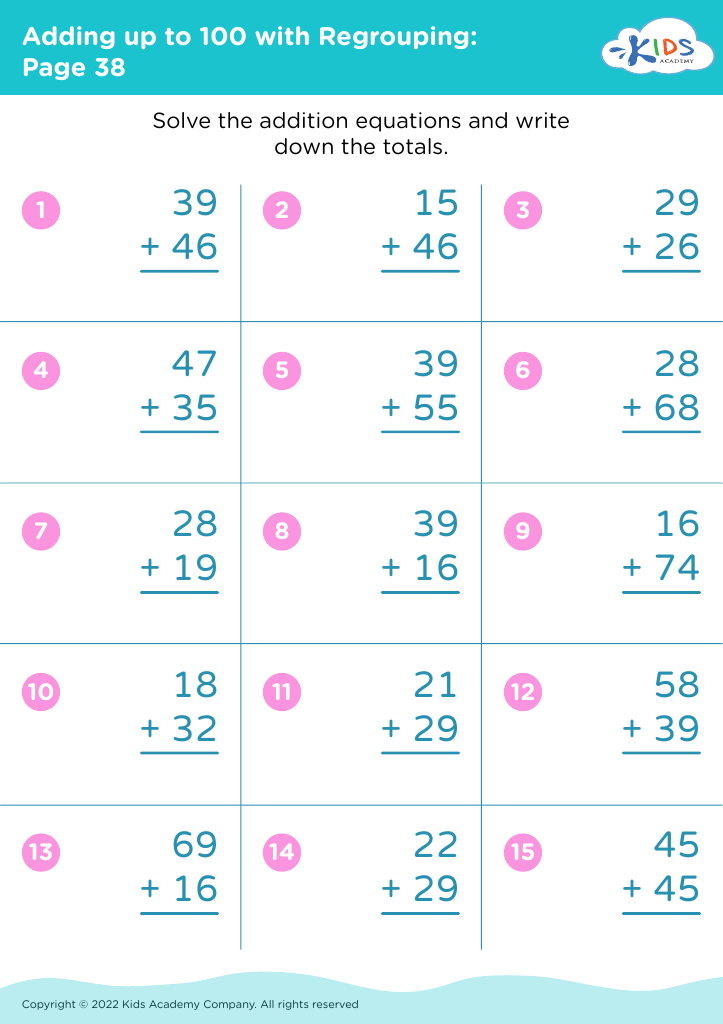
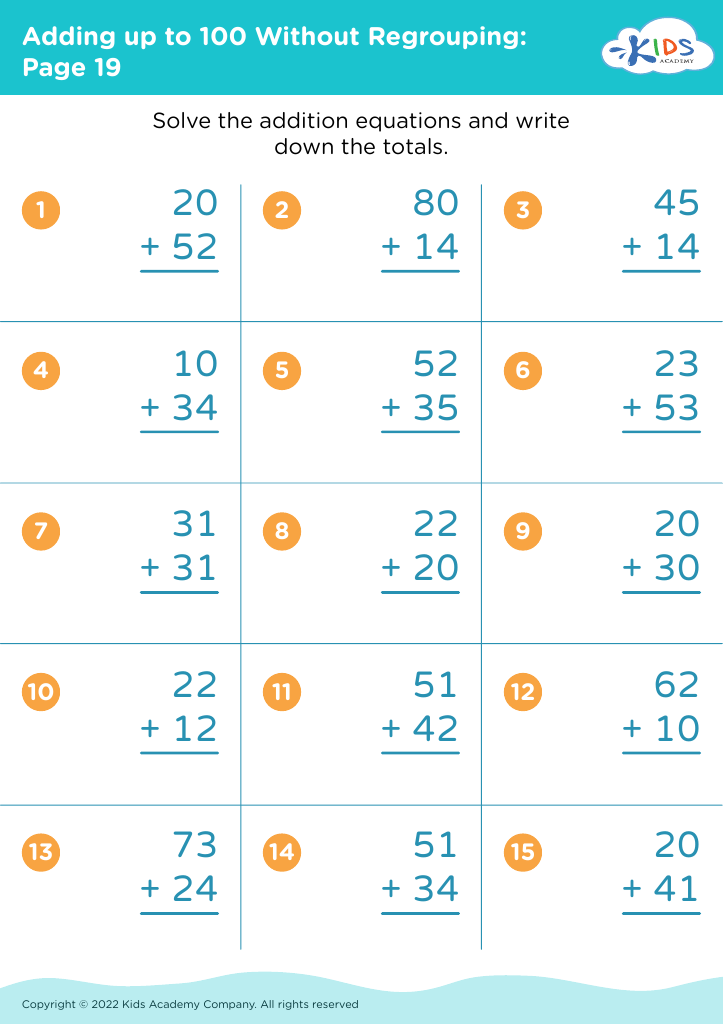
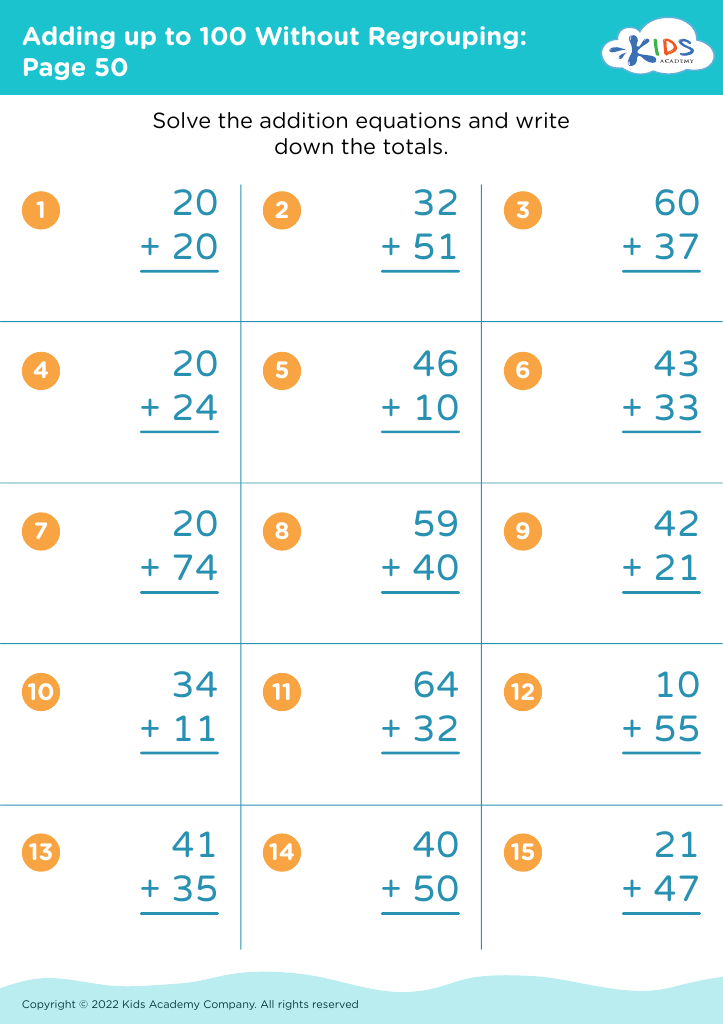
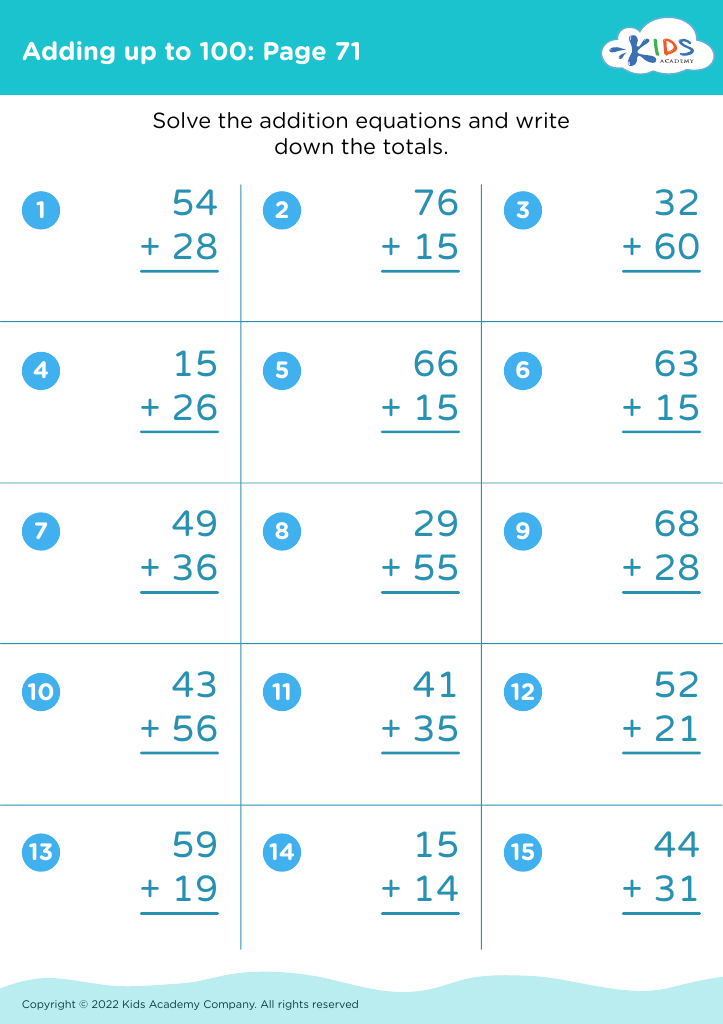
Discover our engaging "Identifying Equivalent Fractions Adding up to 100" worksheets, specially designed for kids aged 6-7. These worksheets make understanding equivalent fractions effortlessly fun while reinforcing basic addition skills up to 100. With colorful, child-friendly graphics and easy-to-follow instructions, young learners will develop crucial math skills in an enjoyable way. This resource fosters a solid foundation in fractions and equips children to build on their knowledge confidently. Ideal for parents and teachers aiming to enhance math proficiency, these printable worksheets are perfect for classroom use or at-home practice. Visit our site to explore and download today!





%20(1).jpg)

Identifying equivalent fractions and understanding simple adding concepts up to 100 are crucial skills for children ages 6-7 as they lay the groundwork for mathematical fluency. At this stage, young learners are just beginning to grasp the basics of arithmetic and number relationships. Identifying equivalent fractions helps children to understand that different fractions can represent the same quantity, which is foundational for more advanced math topics they will encounter later such as ratio, proportion, and algebra.
Moreover, the ability to add up numbers to 100 helps children develop mental math skills, fostering their confidence in handling numbers. These exercises improve their ability to perform accurate calculations quickly and understand the value of numbers, which is essential both in academic settings and in daily life activities such as handling money or measuring ingredients for a recipe.
For parents and teachers, focusing on these skills encourages a deeper engagement with mathematical concepts at an early age, promoting critical thinking and problem-solving abilities. By providing support and encouragement in these areas, adults help children build a strong mathematical foundation, setting them up for future success in more complex math tasks and boosting their overall numeracy skills. Thus, emphasizing these concepts makes math relatable, enjoyable, and relevant for young learners.








