Numeracy skills Adding up to 100 Worksheets for Ages 6-7
4 filtered results
-
From - To
Boost your child's math confidence with our "Numeracy Skills Adding Up to 100 Worksheets" designed for ages 6-7! These engaging worksheets help children practice and master addition within 100, providing a strong foundation in numeracy essential for future math success. Tailored to young learners, the exercises featuring fun themes and visual aids make learning enjoyable and effective. Ideal for both classroom use and at-home practice, these worksheets support kids in developing critical-thinking skills, improving accuracy, and enhancing their overall number sense. Start today and watch your child's math abilities flourish with our expertly crafted resources!
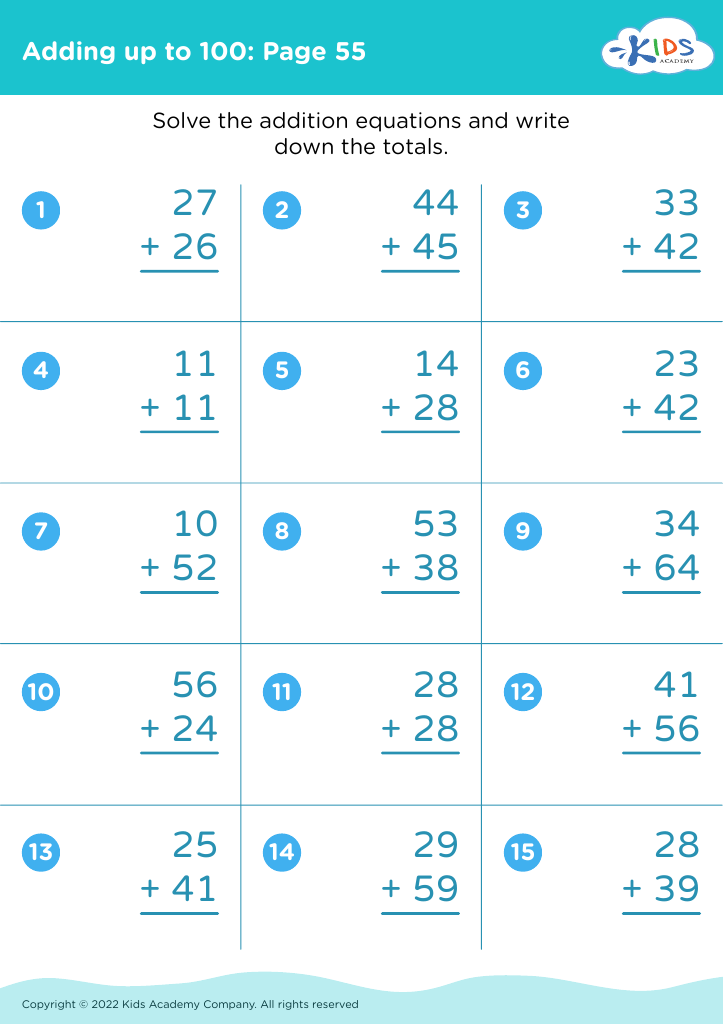
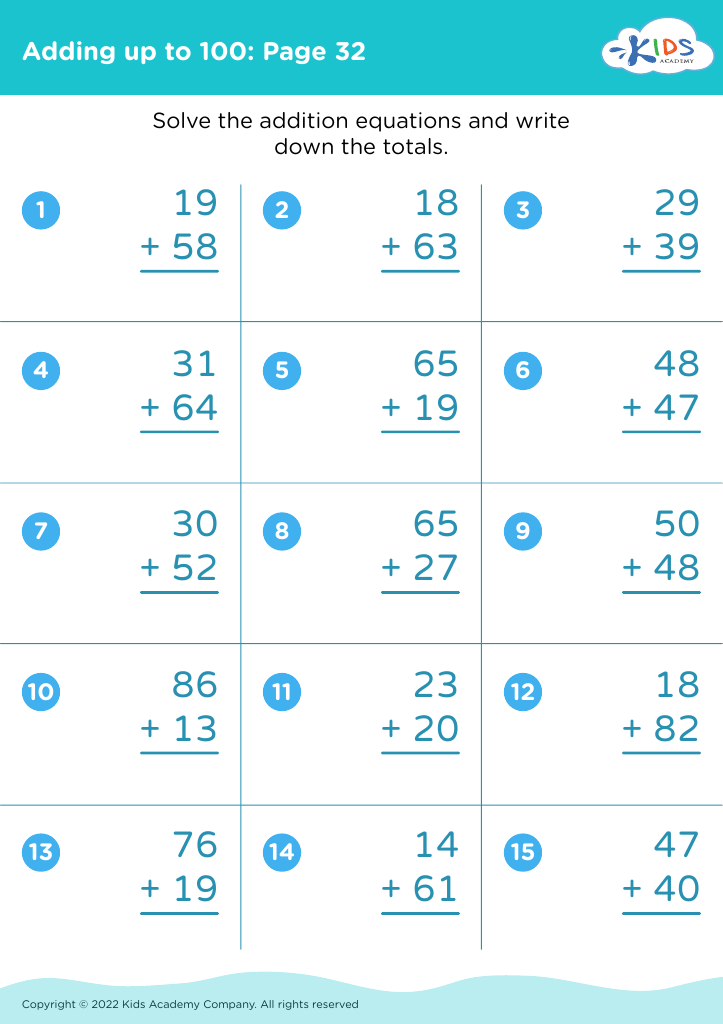
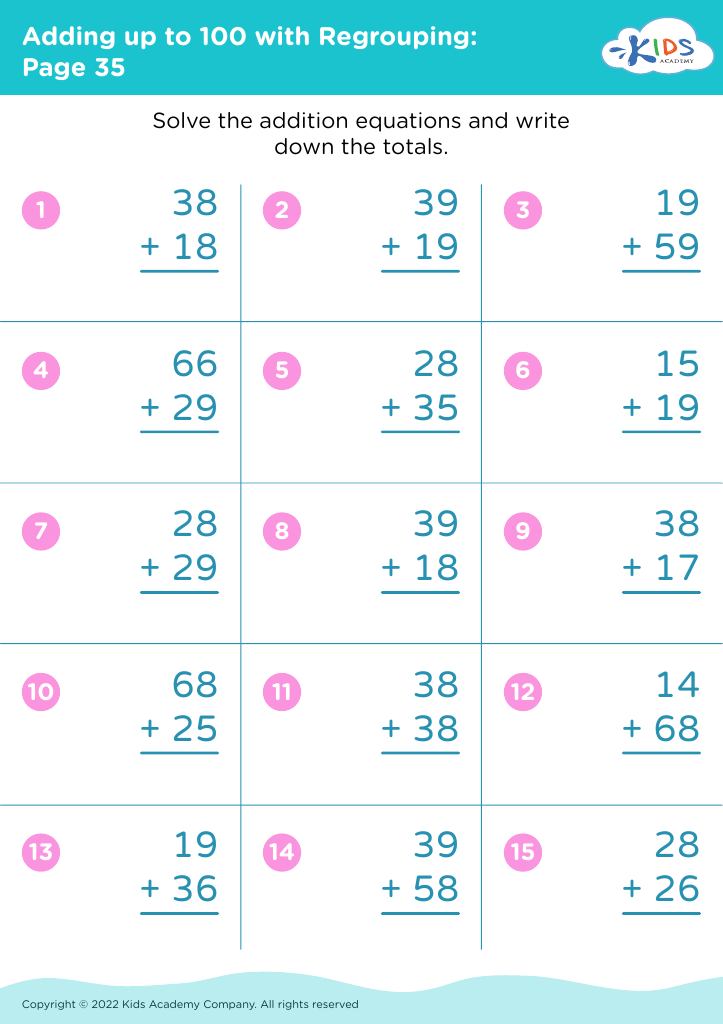
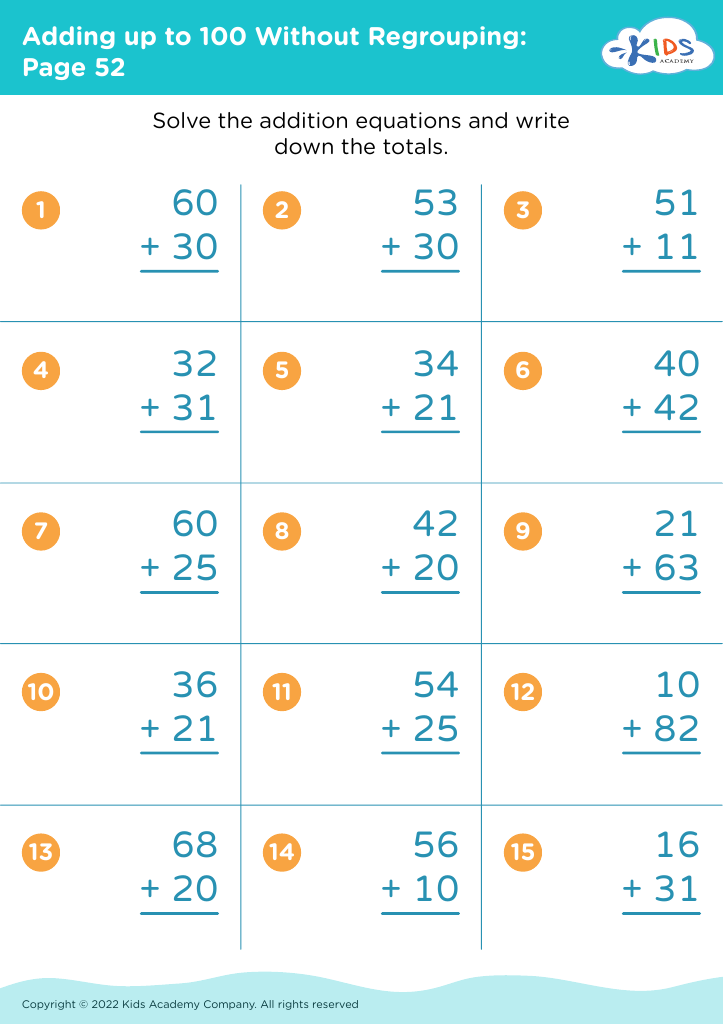





%20(1).jpg)

Numeracy skills, particularly the ability to add up to 100, are crucial for 6-7 year-olds as they form the foundation of mathematical understanding and future academic success. At this age, children's cognitive and problem-solving abilities are rapidly developing, making it a critical period for establishing strong number sense. Parents and teachers play a vital role in nurturing these skills, which help children grasp more complex math concepts like subtraction, multiplication, and division.
Proficiency in adding up to 100 boosts a child's confidence and fosters a positive attitude towards mathematics, reducing math-related anxiety in later years. These skills are not only vital for academic purposes but are also essential for everyday tasks, such as handling money, telling time, and measuring quantities while cooking or crafting. This practical application emphasizes the importance of numeracy in real-world contexts.
Moreover, early numeracy skills are linked to better overall cognitive development, including memory, logical reasoning, and critical thinking. Engaged parents and proactive teachers create a supportive learning environment, which encourages exploration, curiosity, and perseverance in solving problems. Ensuring children are comfortable and capable in basic math skills paves the way for their success both inside and outside the classroom, shaping a brighter future for them.








