Practice multiplication Adding up to 100 Worksheets for Ages 6-7
4 filtered results
-
From - To
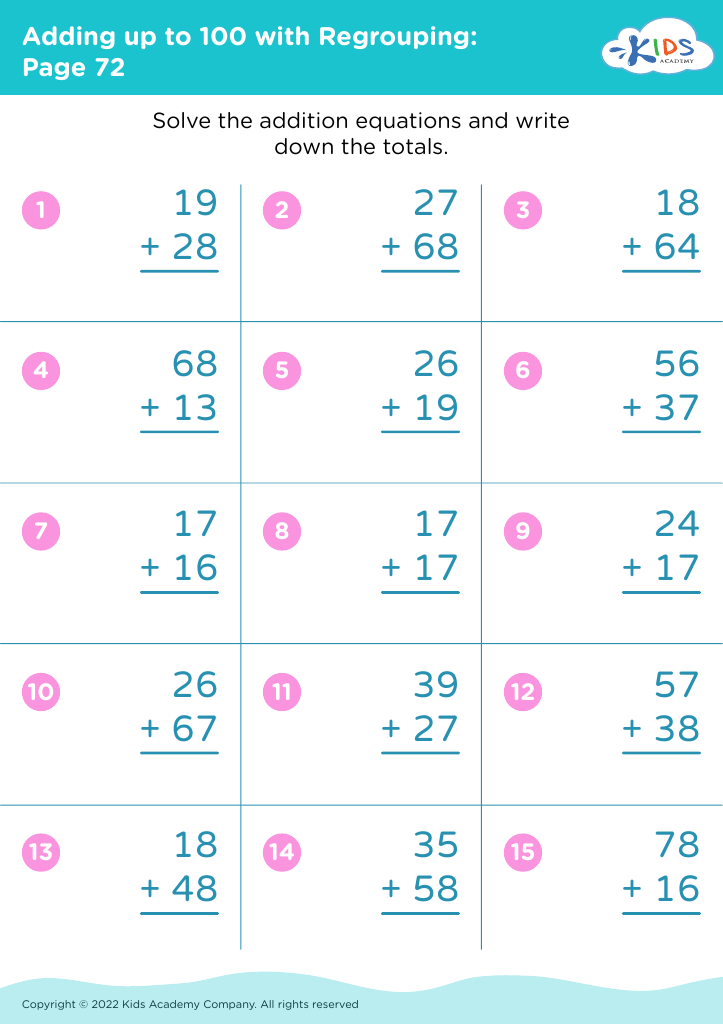
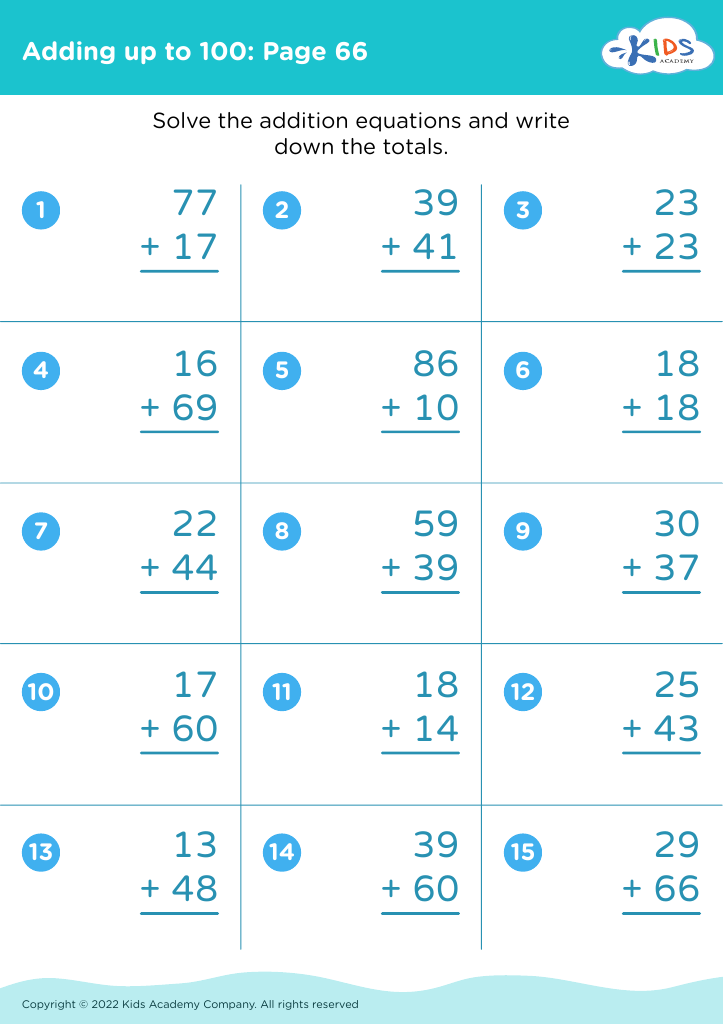
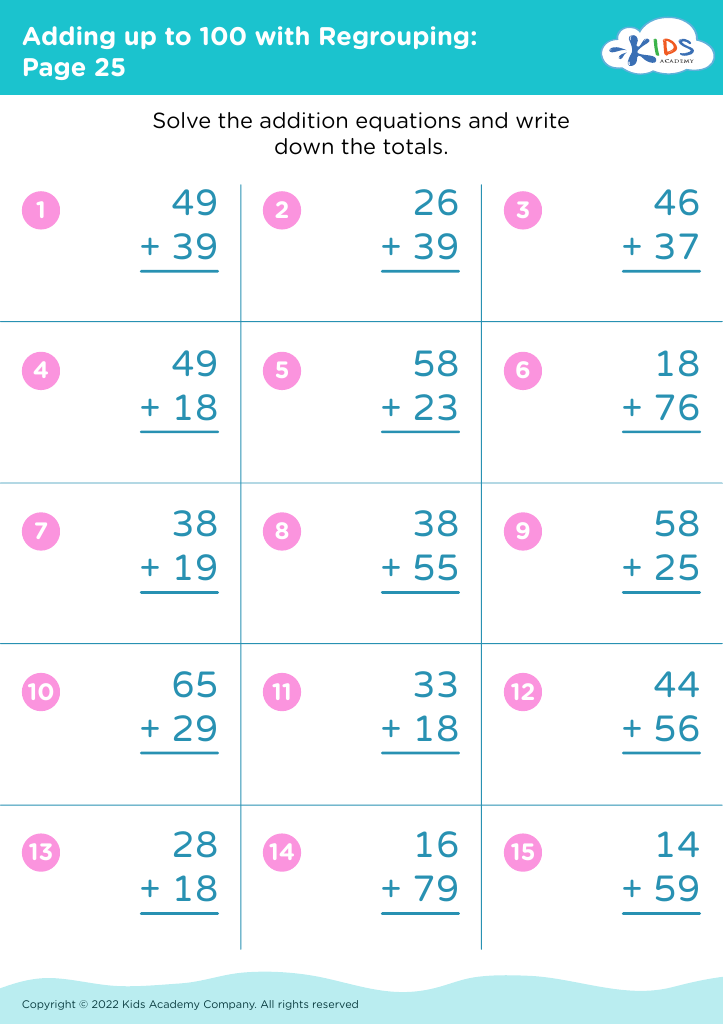
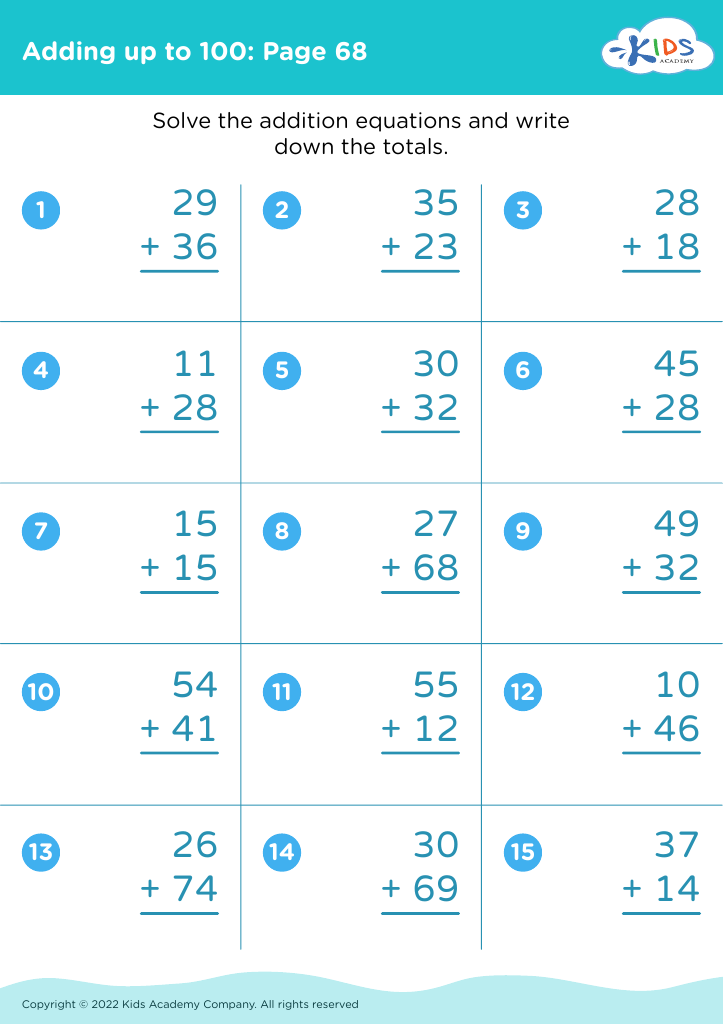
Welcome to our engaging multiplication worksheets designed specifically for children ages 6-7! Our "Practice Multiplication Adding Up to 100" section provides a fun and interactive way for young learners to enhance their math skills. With colorful visuals and age-appropriate exercises, kids will enjoy practicing multiplication concepts while building confidence in their abilities. These worksheets help reinforce foundational math skills, preparing students for more complex equations and fostering a love for learning. Perfect for classroom activities or at-home practice, our worksheets are the ideal tool to make mathematics exciting and accessible. Start boosting your child's math skills today!




%20(1).jpg)


Parents and teachers play a crucial role in a child's early mathematical development, particularly in foundational skills like multiplication, which begins with the concept of repeated addition. Focusing on multiplication practice that adds up to 100 for children aged 6-7 is essential for several reasons.
Firstly, mastering multiplication helps foster confidence and competence in math, which is vital as children progress through school. Understanding how to break down numbers and recognize patterns enhances critical thinking and problem-solving skills.
Secondly, multiplication serves as a gateway to more complex mathematical concepts, including fractions, division, and even early algebra. By solidifying their multiplication skills, children can better grasp later topics, thereby creating a smoother learning trajectory.
Furthermore, establishing a solid understanding of multiplication lays the groundwork for real-life applications, enabling children to comprehend concepts like time management, budgeting, and resource allocation earlier in their lives.
Involving parents in this practice fosters a collaborative learning environment, helping children associate math with positive experiences, thus promoting a lifelong appreciation for the subject. When families and educators work together in reinforcing these skills, children are more likely to develop a strong numerical foundation, setting them up for future success.








