Practice problem-solving Adding up to 100 Worksheets for Ages 6-7
3 filtered results
-
From - To
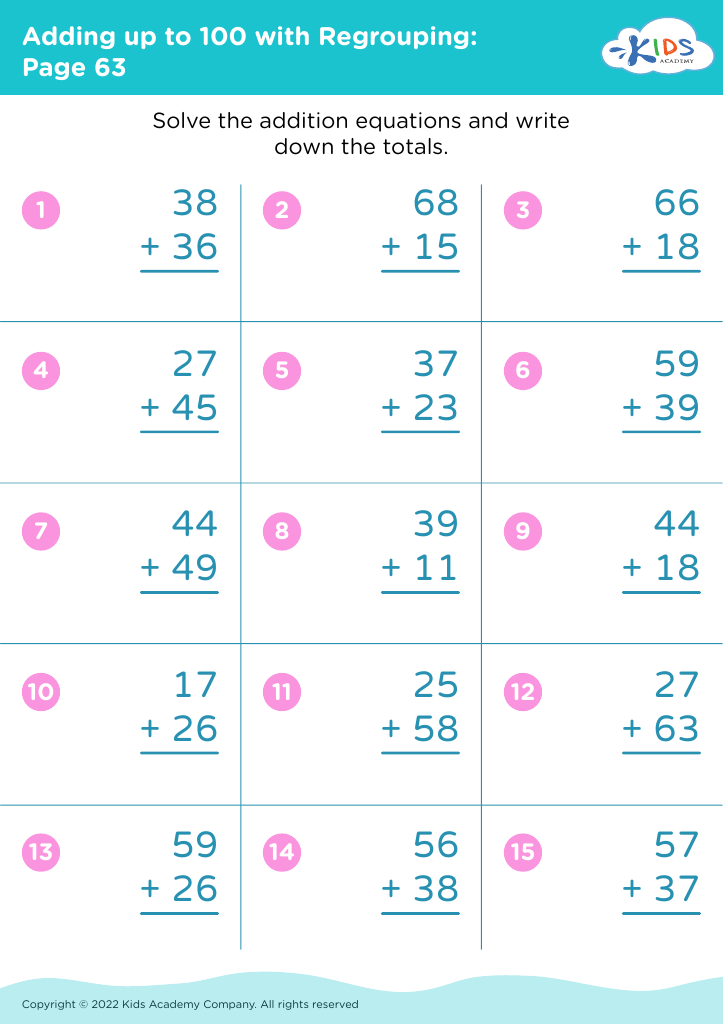
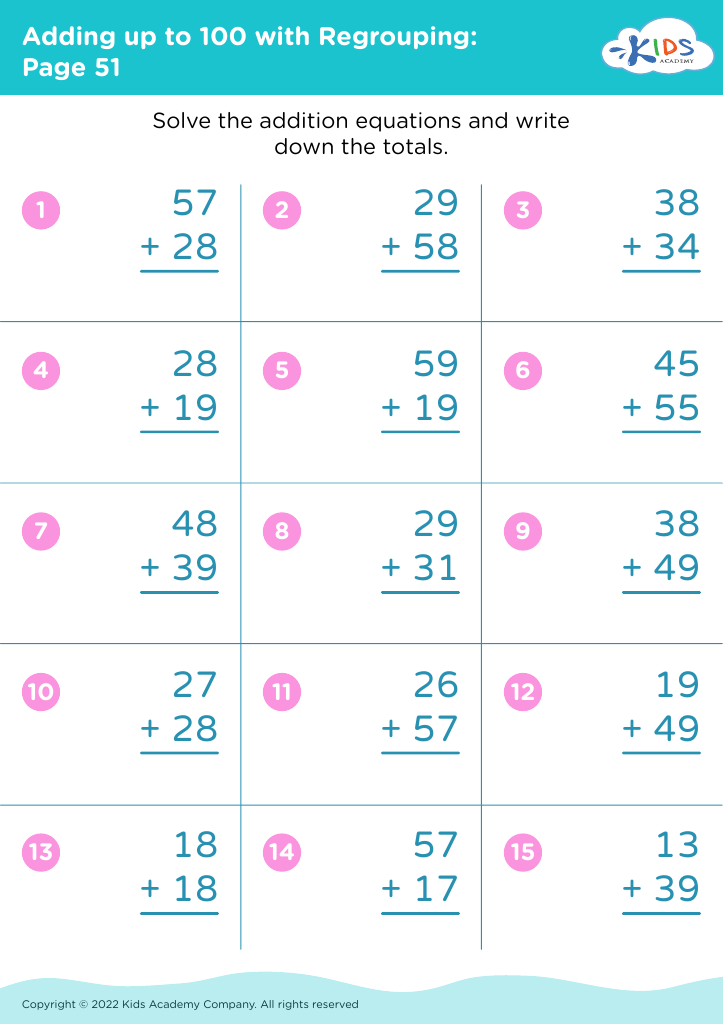
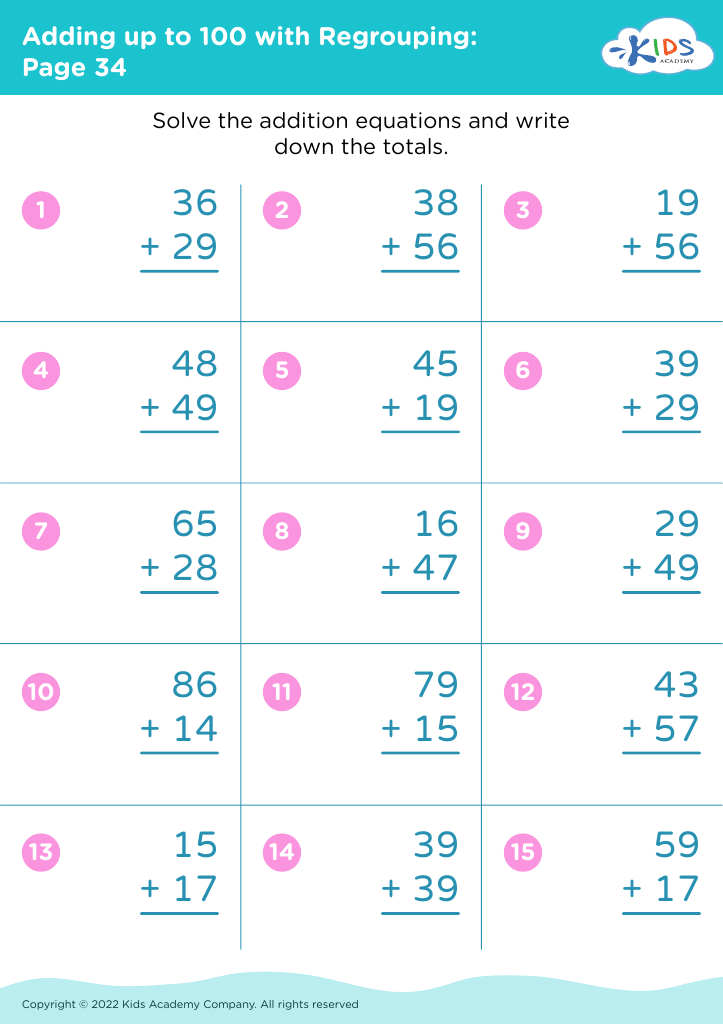
Welcome to our "Practice Problem-Solving Adding Up to 100 Worksheets" tailored for ages 6-7! These engaging worksheets are designed to enhance your child's math skills through fun, interactive problem-solving activities. Your young learners will explore addition concepts, developing their ability to solve problems while gaining confidence in their arithmetic abilities. Each worksheet features a variety of exercises that challenge kids to think critically and creatively, all while making learning enjoyable. Perfect for both classroom use and at-home practice, our resources will help establish a strong mathematical foundation early on. Start fostering a love for math today with our targeted worksheets!




%20(1).jpg)


Parents and teachers should care about practice problem-solving, particularly with adding up to 100 for ages 6-7, because it lays a crucial foundation for math skills and critical thinking. At this developmental stage, children are beginning to understand numbers and relationships, and mastering addition helps them build confidence and competence in math. Problem-solving encourages them to think critically and develop strategies for tackling challenges, fostering a growth mindset.
Moreover, achieving mastery in basic arithmetic strengthens their ability to approach more complex problems in the future. Engaging in these practices also promotes cognitive development, as children learn to organize their thoughts, work systematically, and explore different methods to reach a solution. Additionally, partnering with parents and teachers in this journey creates a supportive learning environment that reinforces skills and encourages a love for learning.
Lastly, incorporating problem-solving activities can be interactive and fun, making math enjoyable. Whether through games, puzzles, or real-world scenarios, children are more likely to develop a positive attitude towards math. Therefore, prioritizing practice in problem-solving for addition up to 100 is vital for nurturing young learners' overall development, laying the groundwork for future academic success.








