Practicing multiplication Adding up to 100 Worksheets for Ages 6-7
4 filtered results
-
From - To
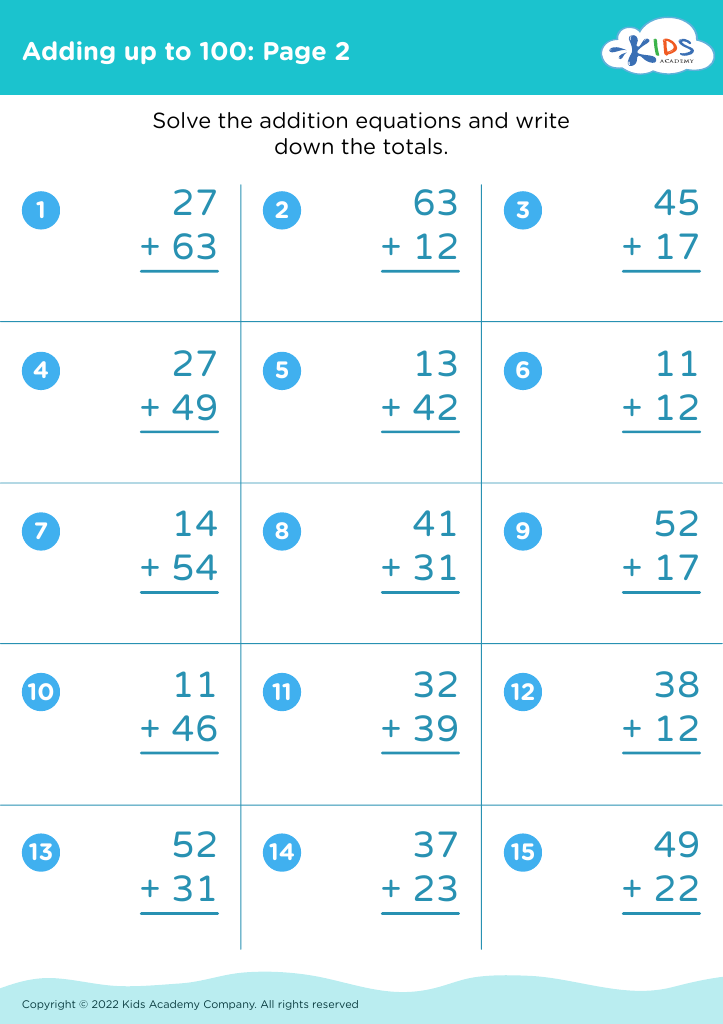
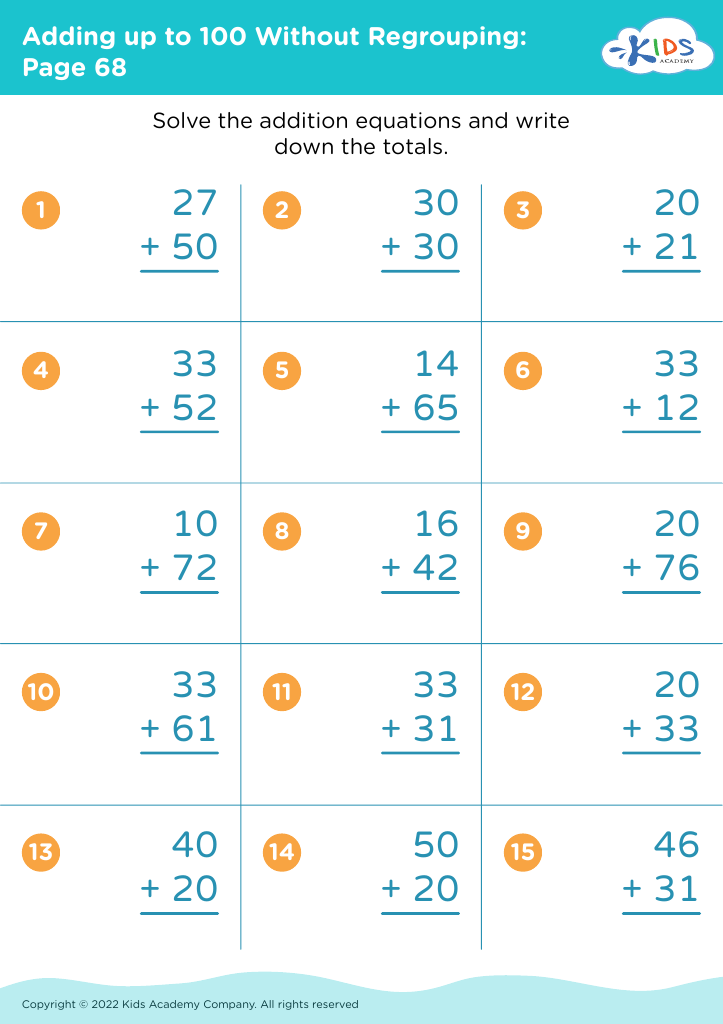
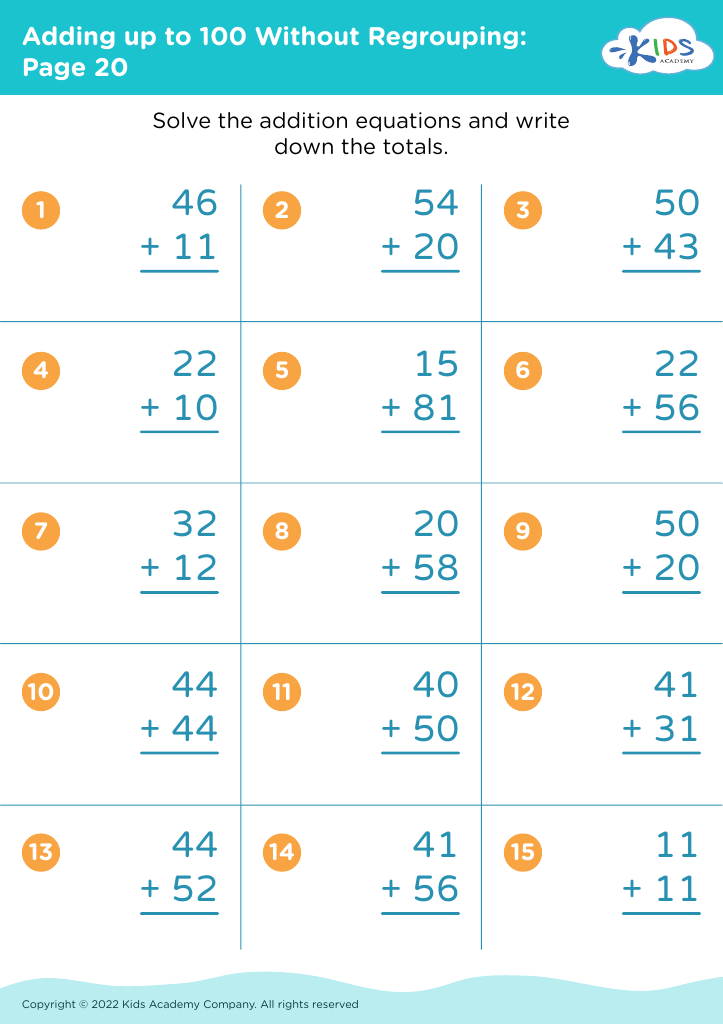
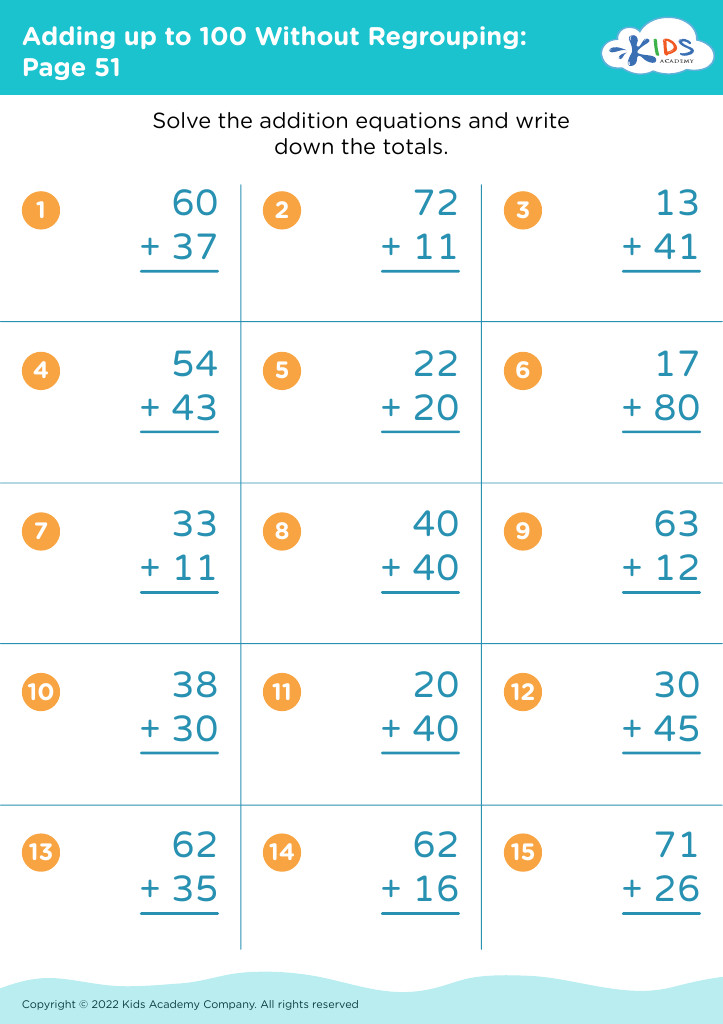
Discover our engaging "Practicing Multiplication Adding Up to 100 Worksheets" designed especially for children aged 6-7. These worksheets provide a fun and interactive way for young learners to grasp multiplication concepts while developing their addition skills as they add numbers up to 100. With colorful illustrations and age-appropriate challenges, students will enjoy building their confidence in math. Ideal for classroom settings or at-home practice, our worksheets encourage independent learning and critical thinking. Foster a strong mathematical foundation for your child and watch as they master multiplication through practice and play! Start their journey to math proficiency today!


%20(1).jpg)




Practicing multiplication and addition skills, particularly focusing on numbers that add up to 100 for children ages 6-7, is crucial for their cognitive development and mathematical foundation. At this age, children are typically in the process of transitioning from concrete counting to more abstract mathematical concepts. Familiarizing them with multiplication introduces essential skills such as grouping and repetitive addition, which fosters a better understanding of numbers.
Moreover, mastering basic multiplication and addition enhances problem-solving abilities and boosts confidence in their mathematical skills. Children who practice these math operations are likely to develop good habits, which will benefit them as concepts become more complex in later grades. Engaging in activities that incorporate multiplication and sums leading to 100 encourages mental agility and strengthens their ability to compute efficiently, promoting numerical fluency.
Additionally, these foundational skills are crucial for real-life applications, such as handling money, telling time, and measuring. By reinforcing these concepts through interactive practices, teachers and parents can make learning enjoyable, ensuring that children stay motivated and enthusiastic about mathematics. Investing effort in these early skills lays the groundwork for future academic success and fosters a lifelong appreciation for learning and problem-solving.








