Problem-solving practice Adding up to 100 Worksheets for Ages 6-7
5 filtered results
-
From - To
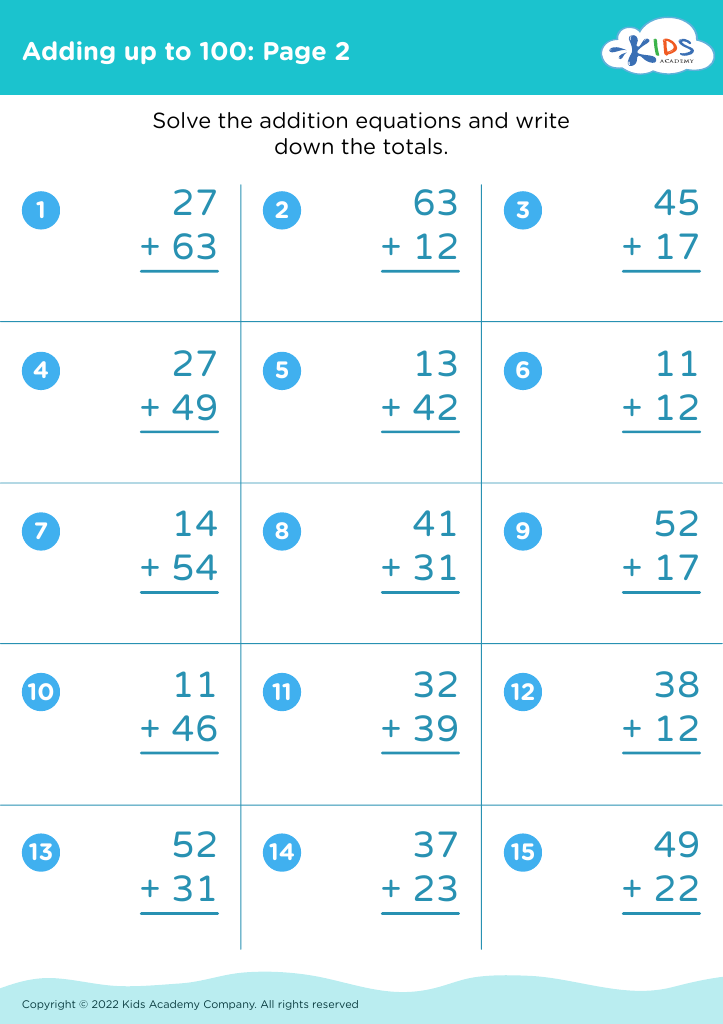
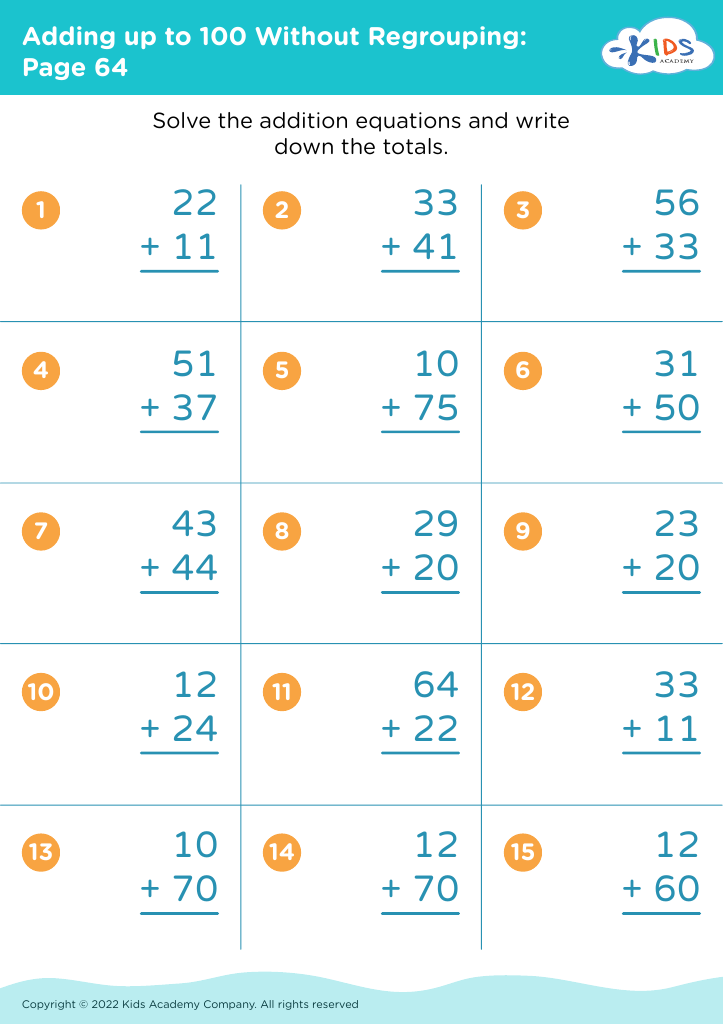
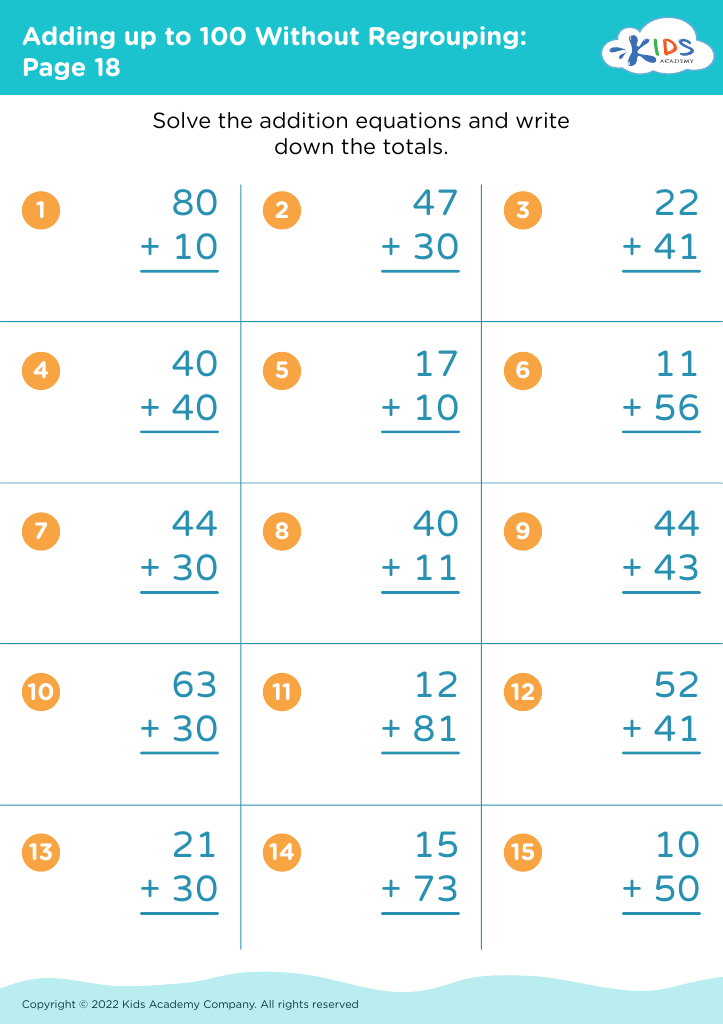
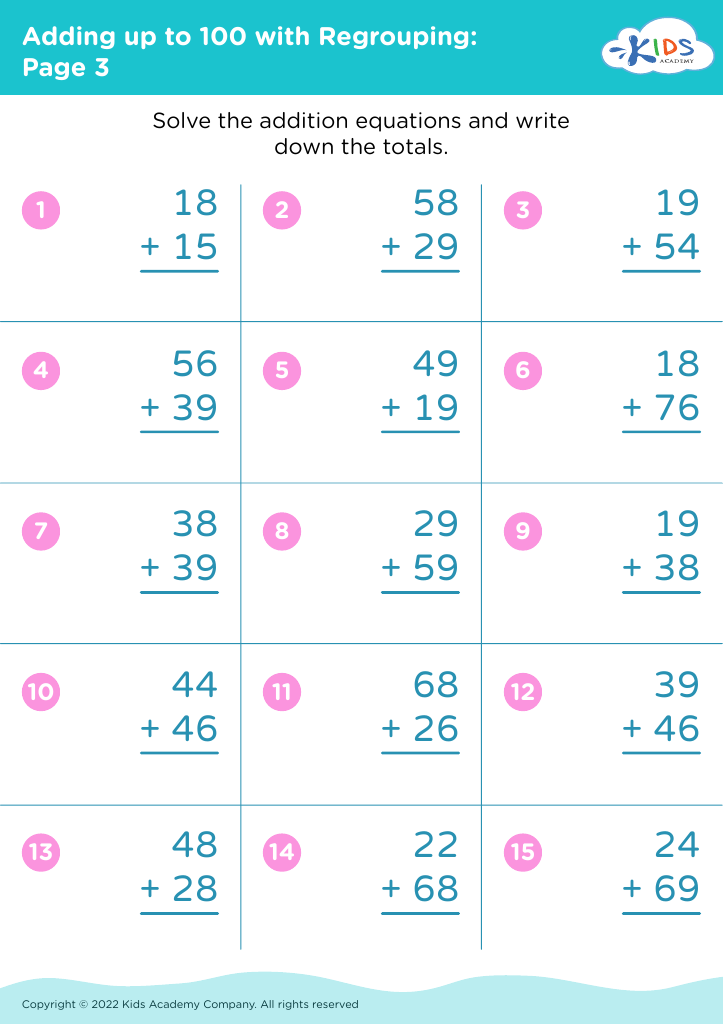
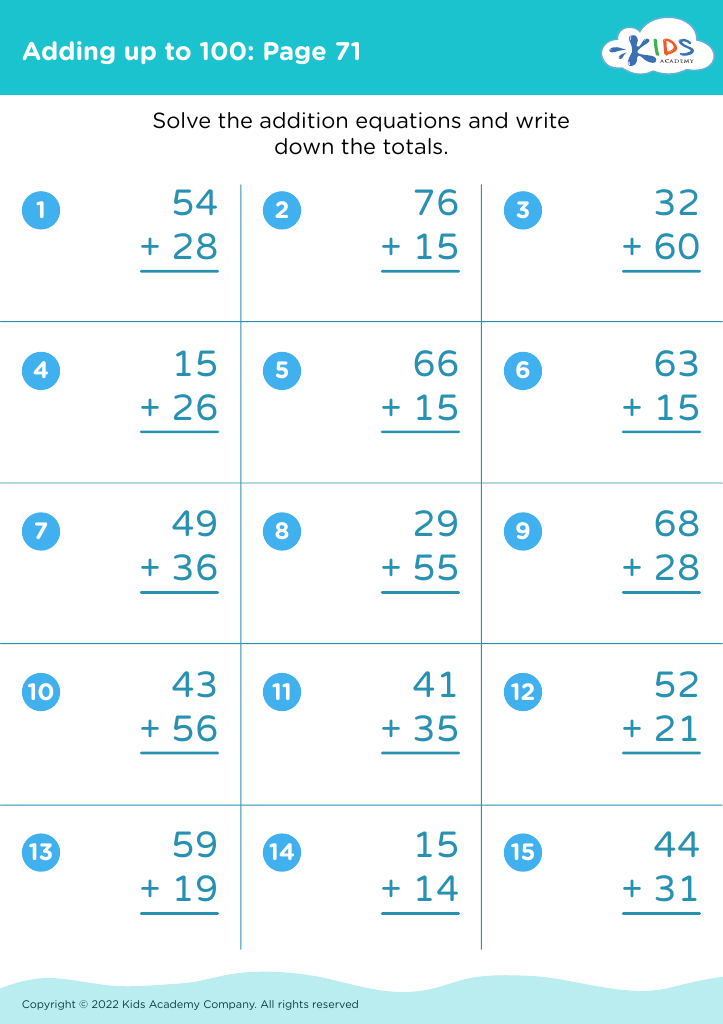
Introduce your young learners to essential math skills with our "Problem-solving Practice: Adding up to 100 Worksheets" designed specifically for ages 6-7. These engaging worksheets help children develop their addition abilities while fostering critical thinking and problem-solving skills. Each exercise encourages kids to apply their knowledge in various contexts, enhancing their confidence in handling numbers up to 100. With a variety of formats and interactive activities, this resource makes learning fun and effective. Perfect for classroom settings or home practice, these worksheets effectively support young students on their mathematical journey, ensuring solid foundational skills for future success. Explore the joy of learning today!


%20(1).jpg)




Problem-solving practice, especially focusing on adding up to 100, is crucial for children aged 6-7 as it lays the foundation for their mathematical understanding and critical thinking skills. During these formative years, children develop cognitive abilities that are essential for more complex mathematical concepts later in life. Engaging in problem-solving tasks helps students understand not just how to perform addition, but also why it is important in everyday situations.
When parents and teachers prioritize this practice, they foster a growth mindset in children, helping them become resilient thinkers who are not afraid to tackle challenging problems. Additionally, learning to add up to 100 promotes number sense, enabling children to recognize relationships between numbers, and encouraging mental math strategies that bolster confidence in their abilities.
Furthermore, these activities can enhance social skills when done collaboratively, as children learn to communicate their thought processes and solutions with peers. This collaboration encourages empathy and teamwork, vital skills in any educational setting. Overall, consistent practice in problem-solving around addition not only strengthens mathematical skills but also aids in the overall cognitive and emotional development of young learners. Therefore, both parents and teachers should see its value as integral to a child’s education.








