Recognizing Patterns Adding up to 100 Worksheets for Ages 6-7
5 filtered results
-
From - To
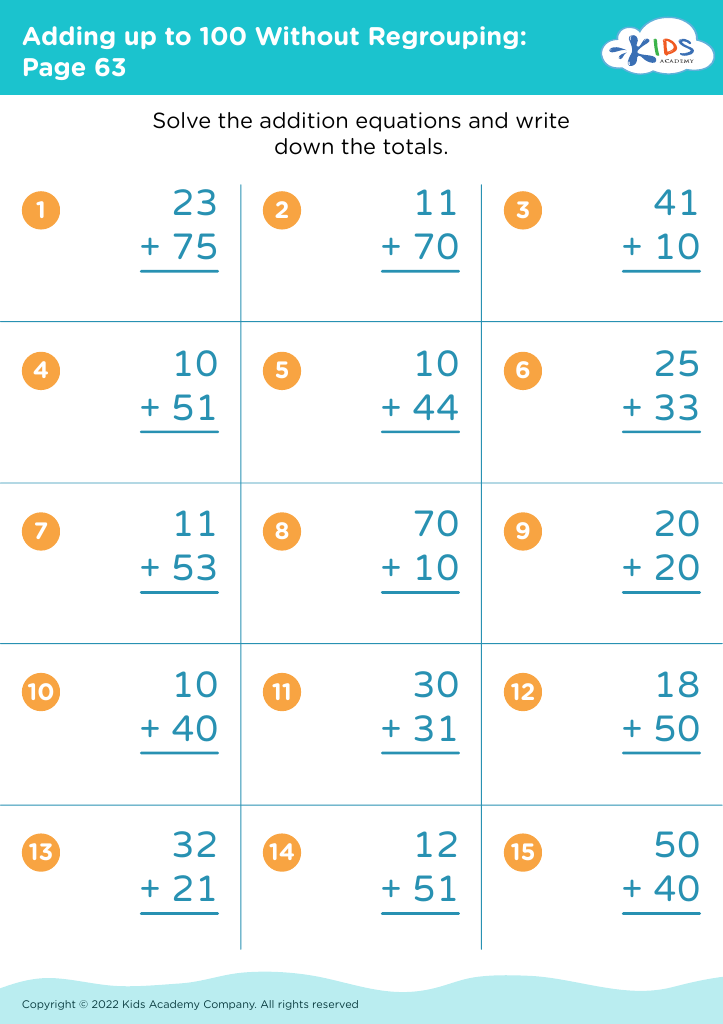
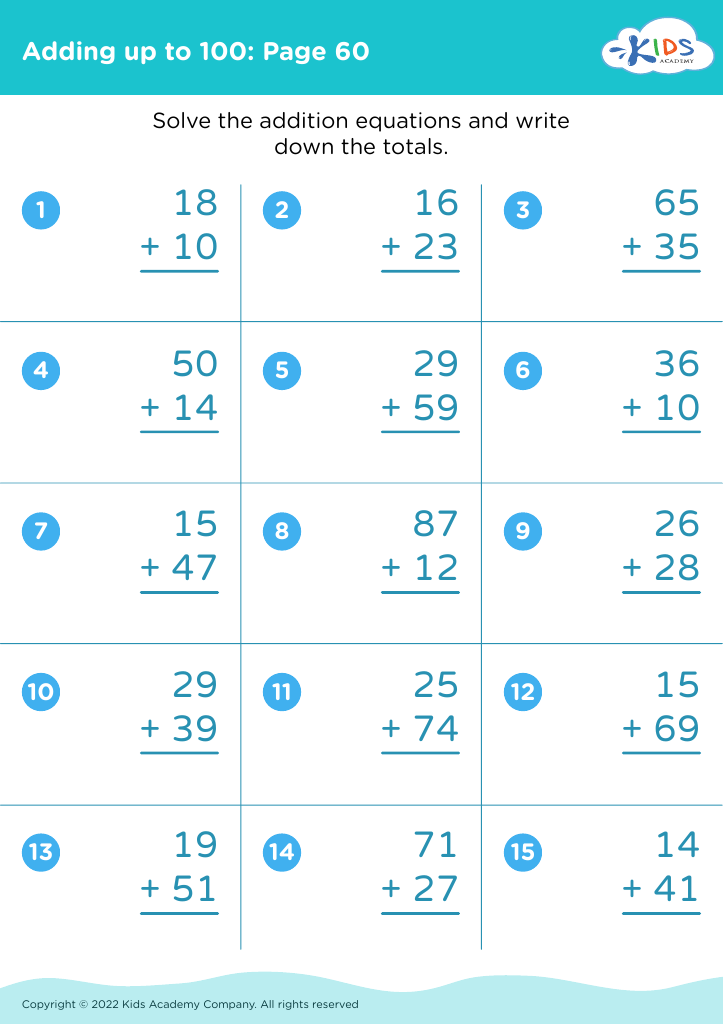
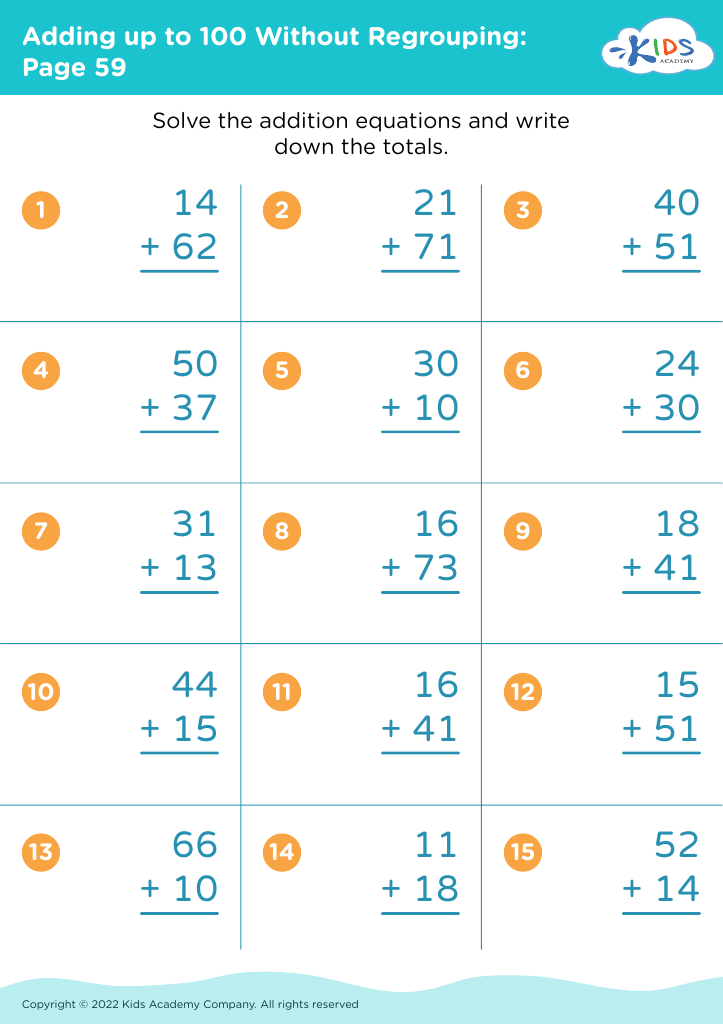
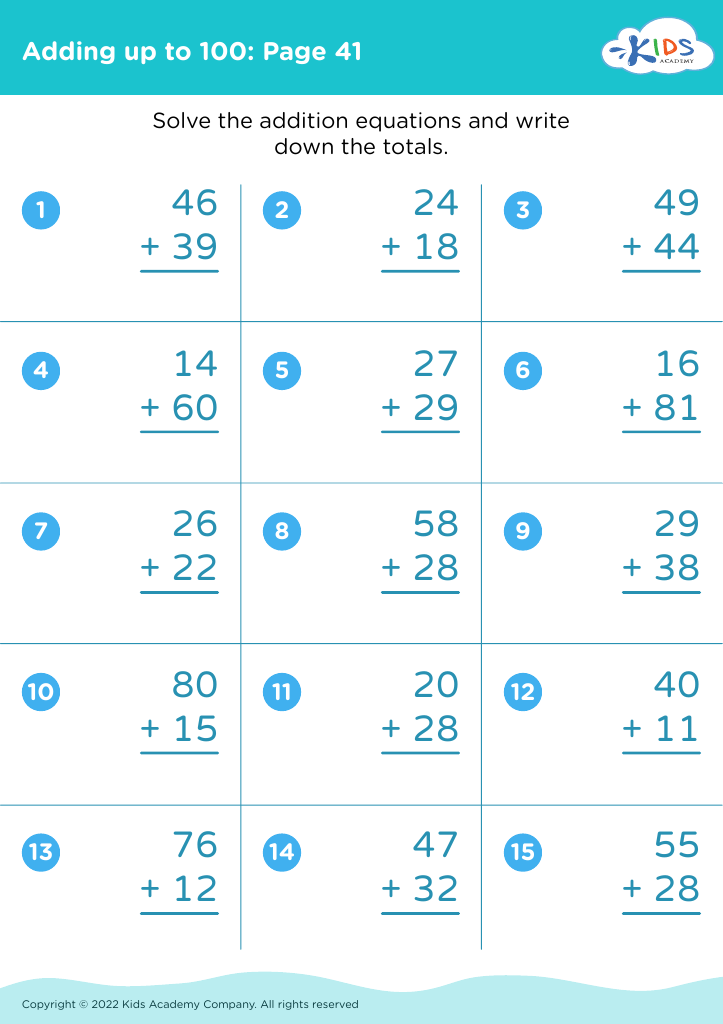
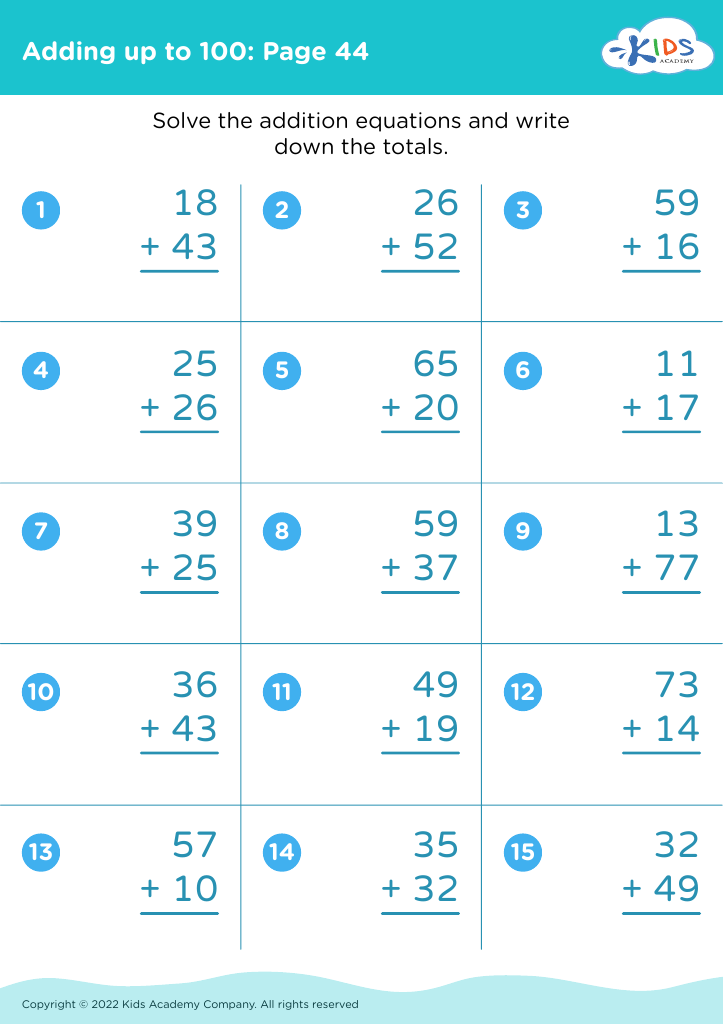
Discover the joy of learning with our "Recognizing Patterns Adding up to 100 Worksheets for Ages 6-7" at Kids Academy! Perfectly designed for young mathematicians, these worksheets enhance key skills including addition and pattern recognition. Your child will engage with fun, educational activities that build a strong math foundation. Unlock their potential as they practice adding numbers up to 100, identify and complete patterns, and boost their confidence in math. Make learning interactive and exciting with our expertly crafted worksheets, ensuring a bright mathematical future. Dive into a world of numbers and patterns today!


%20(1).jpg)




Recognizing patterns and learning to add up to 100 are foundational skills for children aged 6-7, serving as crucial building blocks for their future mathematical understanding. Parents and teachers should emphasize these skills to foster a strong numeracy foundation. Recognizing patterns helps children anticipate what comes next, aiding in the development of logical thinking and problem-solving skills, which are essential in both math and everyday situations.
By familiarizing themselves with patterns, children begin to understand the relationships between numbers, which is vital for arithmetic operations and algebra in higher grades. Simultaneously, mastering addition up to 100 strengthens mental math abilities, promotes confidence, and speeds up their ability to solve more complex problems in the future. It lays the groundwork for understanding place value, a critical concept for all subsequent mathematical operations.
Moreover, these skills extend beyond math class, enhancing a child's cognitive functions such as memory, concentration, and analytical abilities. Recognizing patterns and adding effectively can also integrate into daily activities, making math more relevant and less abstract. By fostering these skills early on, parents and teachers equip children with the tools they need for academic success and everyday life applications, ensuring a well-rounded cognitive development.








