Shape identification Adding up to 100 Worksheets for Ages 6-7
3 filtered results
-
From - To
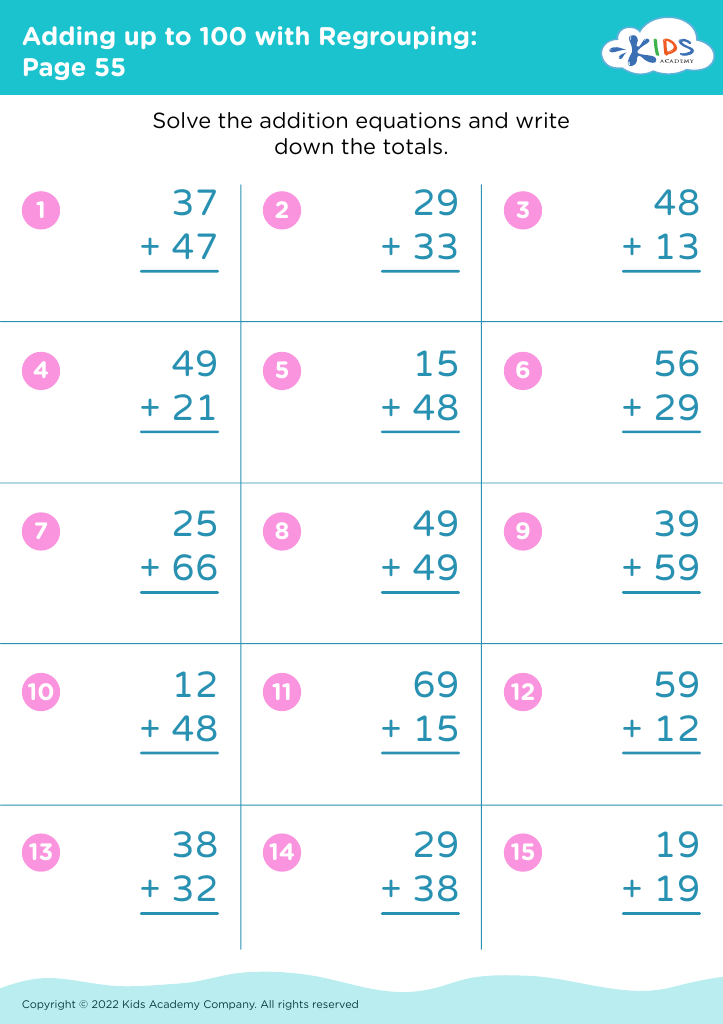
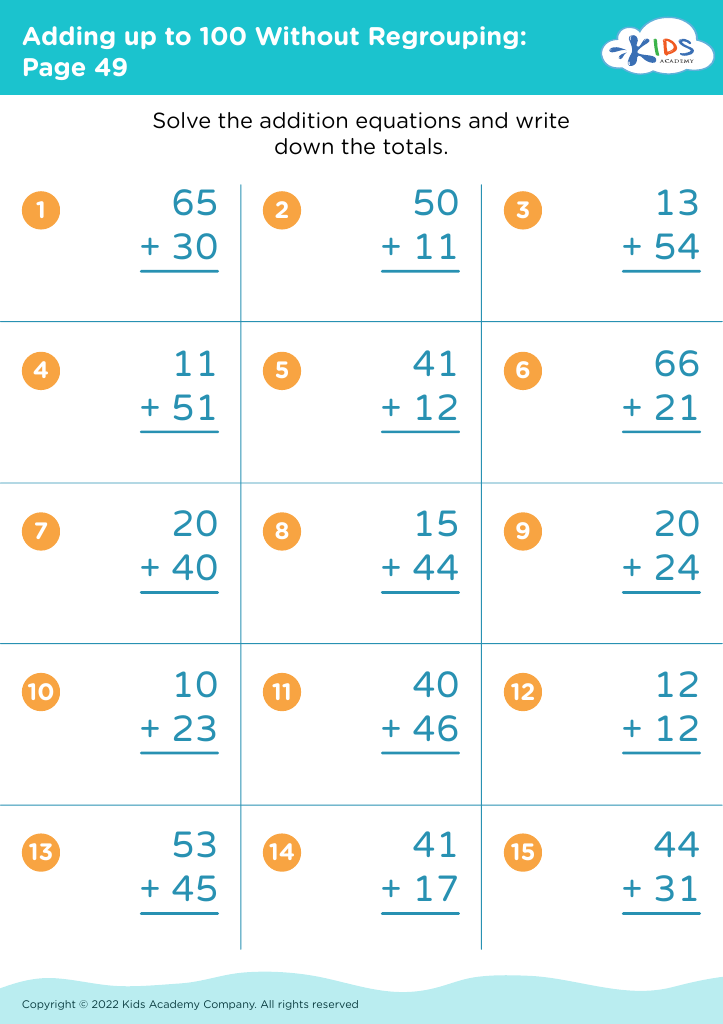
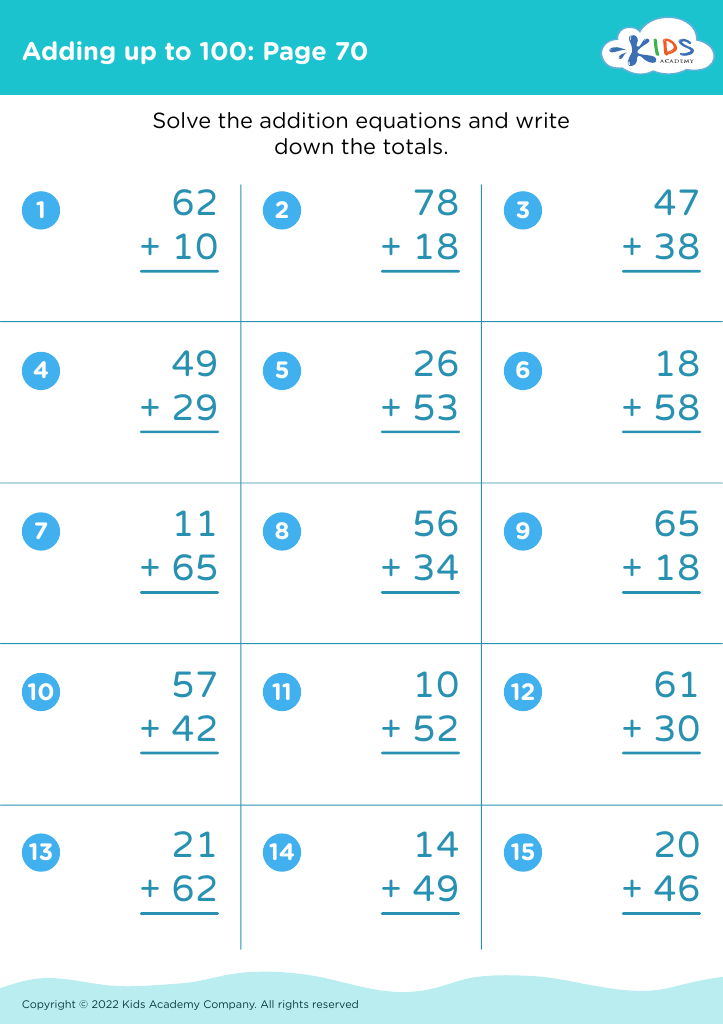
Discover our "Shape Identification Adding Up to 100 Worksheets," designed specifically for children ages 6-7. These engaging math worksheets are perfect for young learners to enhance their shape recognition skills while practicing addition up to 100. Through vibrant visuals and interactive exercises, children will explore various geometric shapes while building their math confidence. Each worksheet provides a fun and educational way to integrate art and math, allowing students to identify shapes and combine numbers effectively. Ideal for both classroom and at-home learning, our worksheets create an enjoyable learning experience and set the foundation for essential math concepts. Start your math journey today!



%20(1).jpg)



Shape identification and addition up to 100 are essential foundational skills for children aged 6-7. Understanding shapes helps children develop spatial awareness, which is crucial for problem-solving and everyday tasks. It provides a basis for understanding geometry and encourages observation of their environment. When kids identify shapes like squares, circles, and triangles, they learn not just about geometry but also about categorization and patterns, fostering critical thinking skills.
Simultaneously, arithmetic skills, such as adding up to 100, are vital for early mathematical development. mastering this skill supports future learning in mathematics by reinforcing concepts of quantity, number relationships, and mental math. It enables children to engage confidently with math in practical settings, like counting their toys or adding scores during games.
Moreover, proficiency in these areas promotes confidence and motivation, laying the groundwork for a love of learning. Parents and teachers can support this development through engaging, hands-on activities that incorporate both shape recognition and arithmetic problems. Encouraging a playful approach helps children see math and geometry as enjoyable parts of their daily lives. As they gain mastery, children develop the skills necessary to tackle more complex subjects in later grades, establishing a stronger educational foundation overall.








