Shape Recognition Adding up to 100 Worksheets for Ages 6-7
8 filtered results
-
From - To
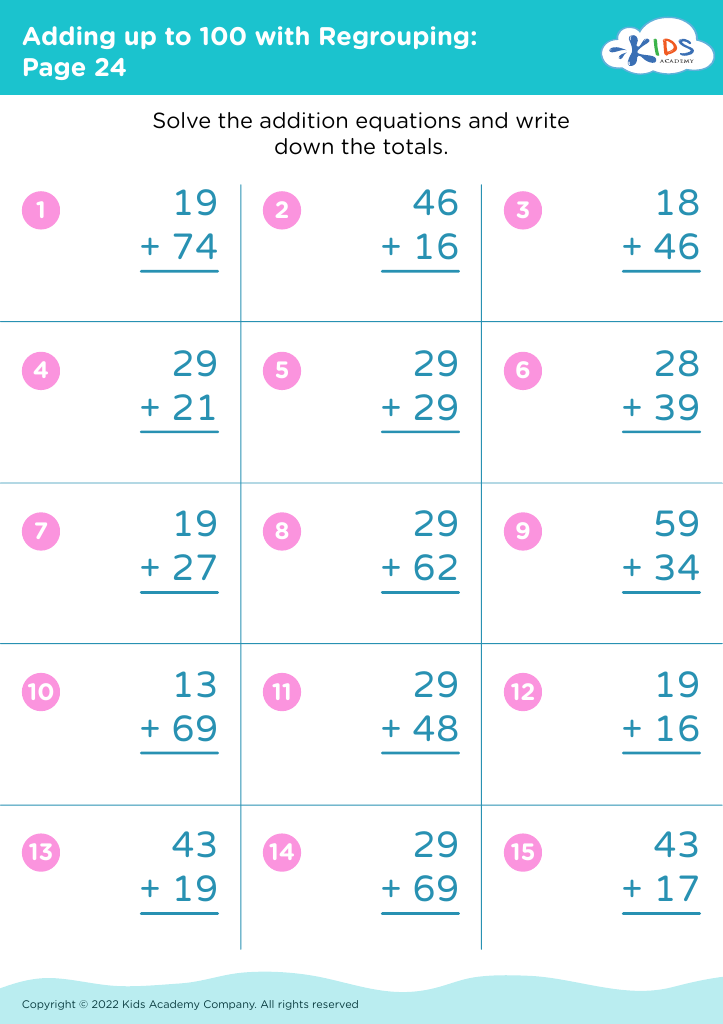
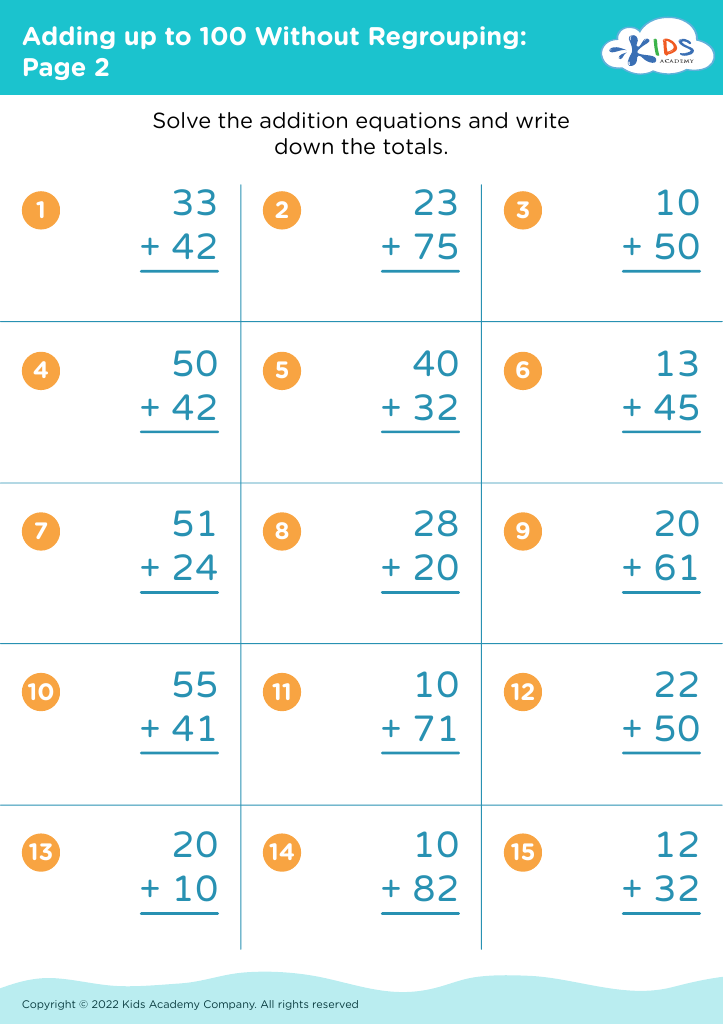
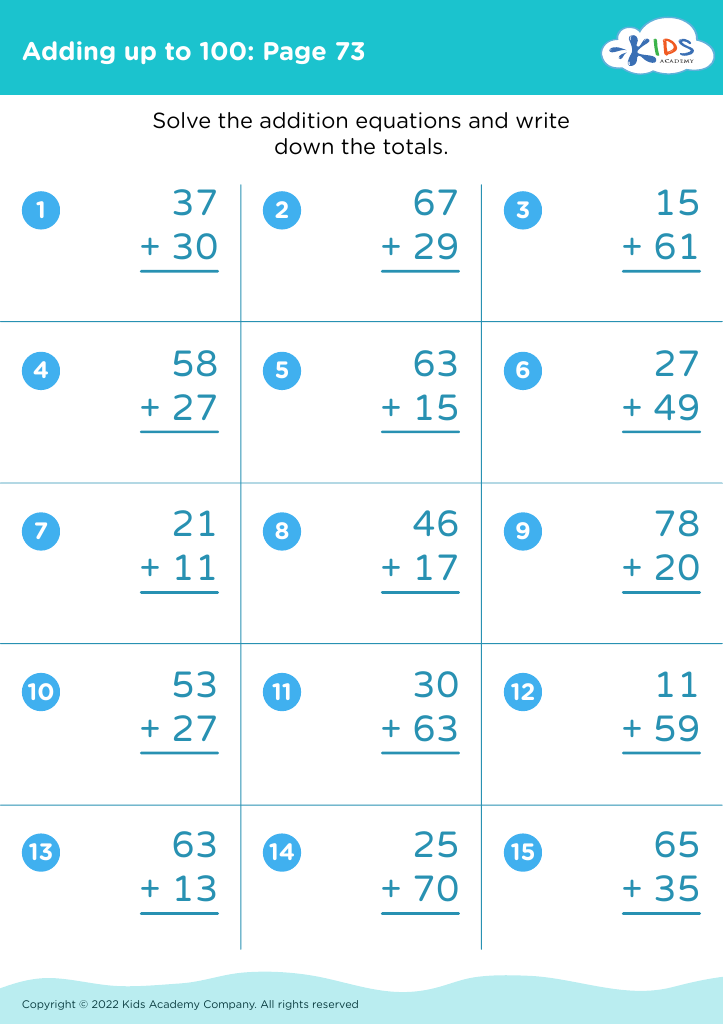
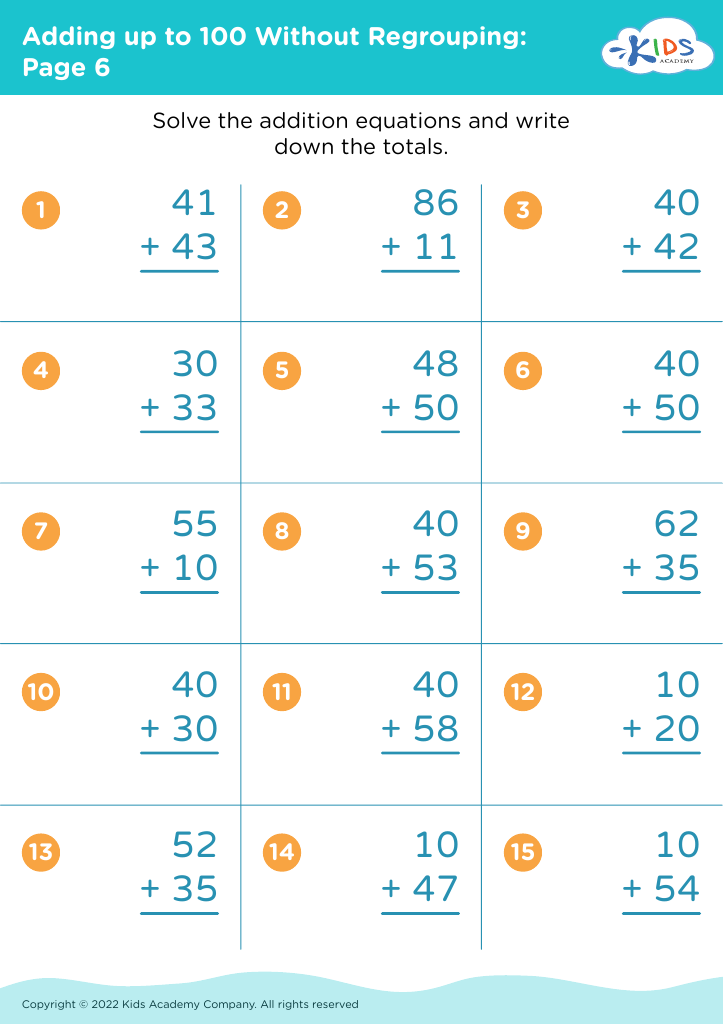
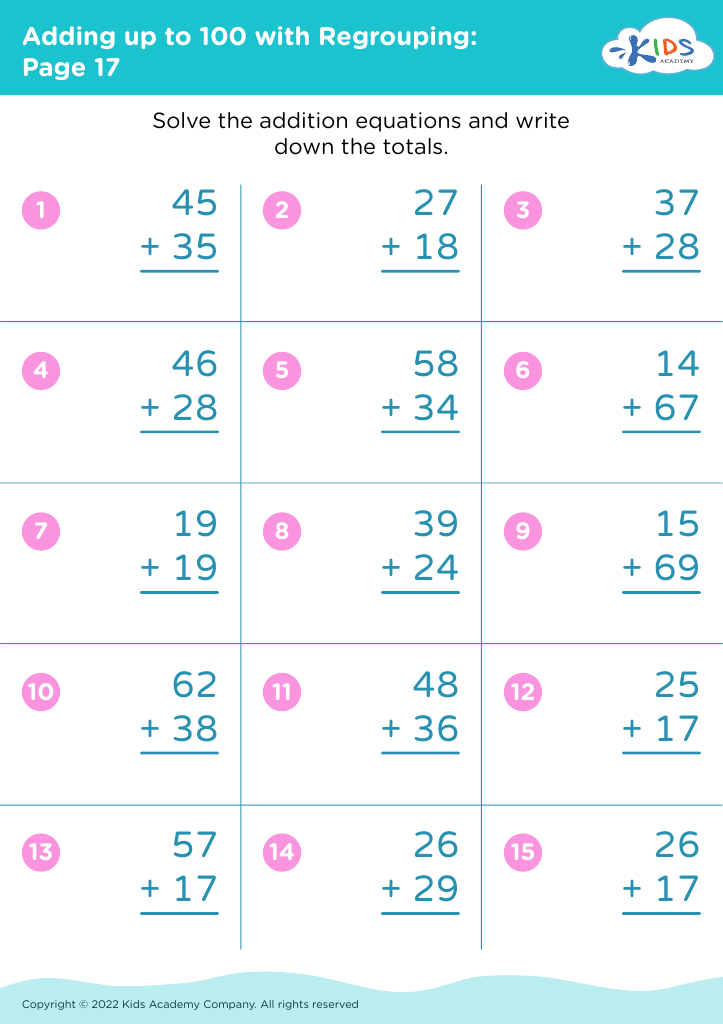
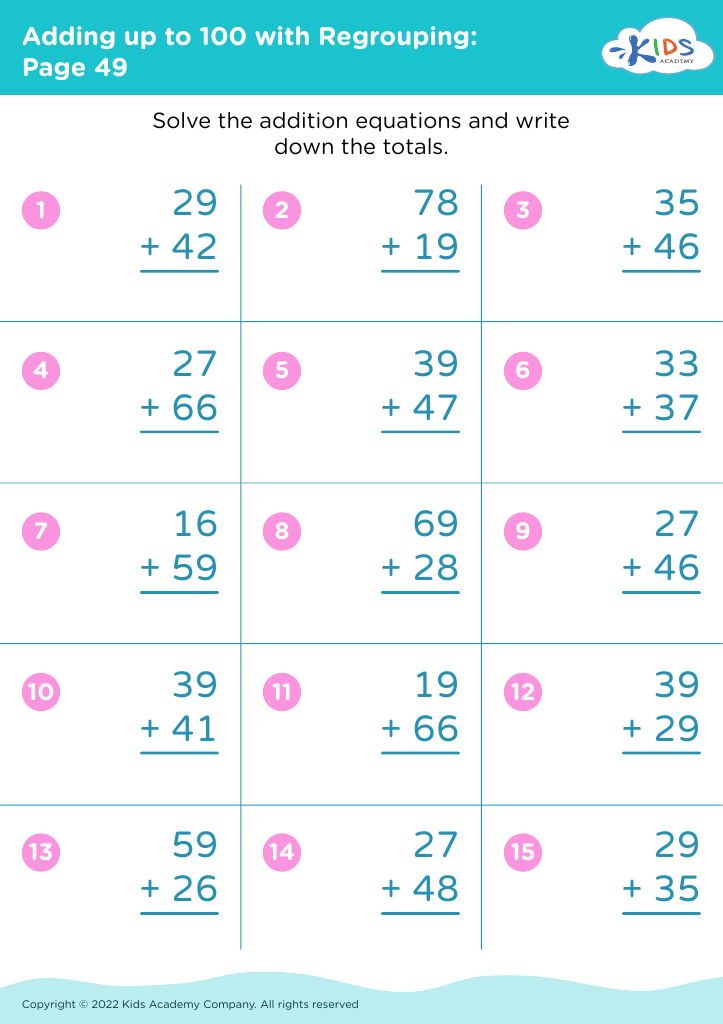
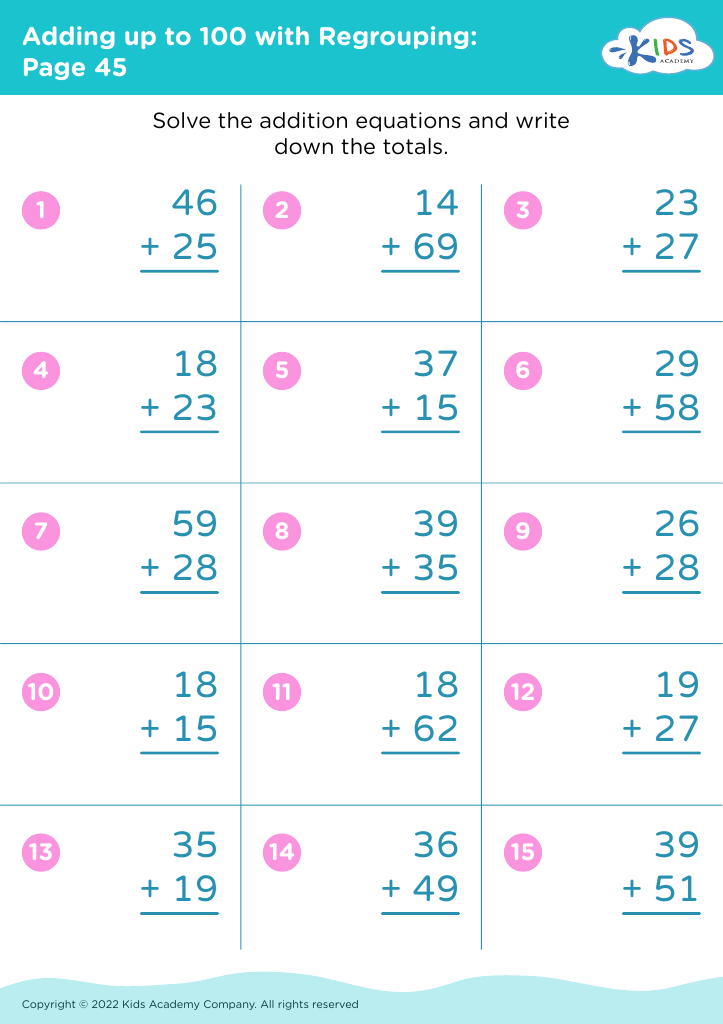
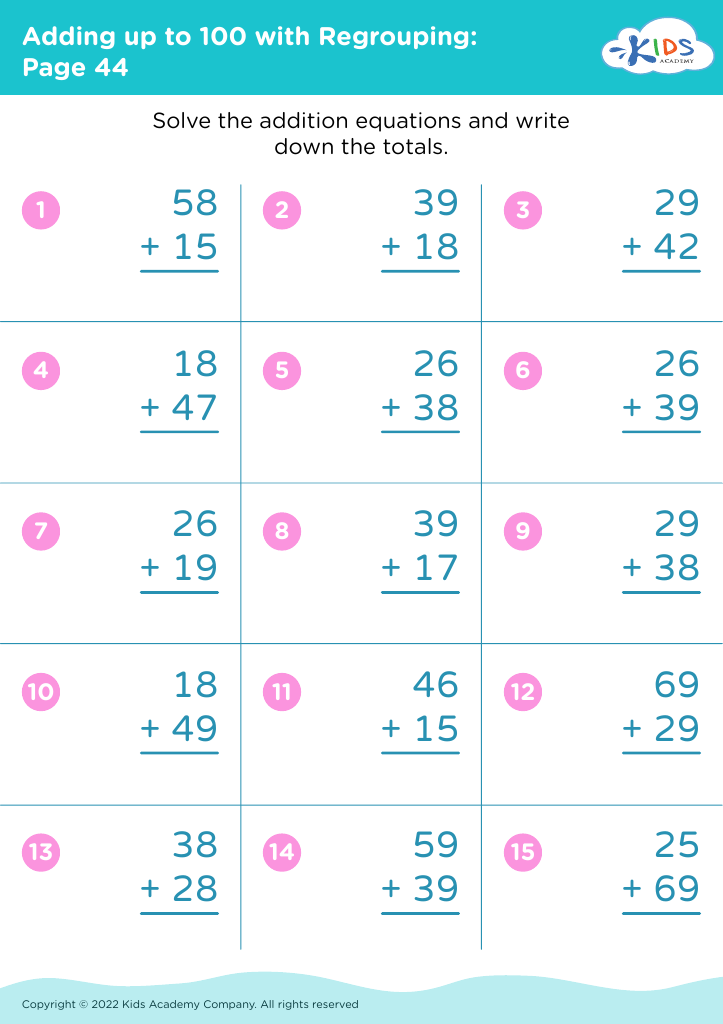
Welcome to our Shape Recognition Adding Up to 100 worksheets designed specifically for ages 6-7! These engaging and educational worksheets help young learners enhance their mathematical skills while exploring the world of shapes. Through fun activities, children will practice recognizing various shapes, adding numbers to reach 100, and developing essential problem-solving abilities. Our carefully crafted exercises promote both critical thinking and creativity, making learning enjoyable and effective. Perfect for classroom use or home exploration, these worksheets encourage foundational math skills and shape recognition in a playful and interactive way. Download now and watch your child's confidence grow!


%20(1).jpg)




Shape recognition and addition skills are fundamental to a child's early mathematical understanding and cognitive development. For students aged 6 to 7, mastering these concepts lays the groundwork for more complex math skills in later years. Shape recognition nurtures visual-spatial awareness, helping children understand their environment and grow in creativity and problem-solving abilities. It enhances their ability to categorize and organize information, crucial for effective learning in subjects such as geometry and art.
Additionally, learning to add up to 100 strengthens foundational arithmetic skills, promoting number sense and confidence in handling numbers. This is vital for performing everyday tasks, such as telling time, managing money, and understanding quantities.
Moreover, these skills are interconnected; recognizing shapes involves counting vertices, sides, and angles, which requires mathematical reasoning. Therefore, mastery in these areas not only prepares children for future academic challenges but also supports overall cognitive development and critical thinking.
Parents and teachers should emphasize these skills as they are essential for building a well-rounded mathematical foundation, encouraging children to engage with math positively. Early investment in these abilities ensures a higher likelihood of success as learners encounter more advanced mathematical concepts in subsequent grades.








