Understand fractions Adding up to 100 Worksheets for Ages 6-7
5 filtered results
-
From - To
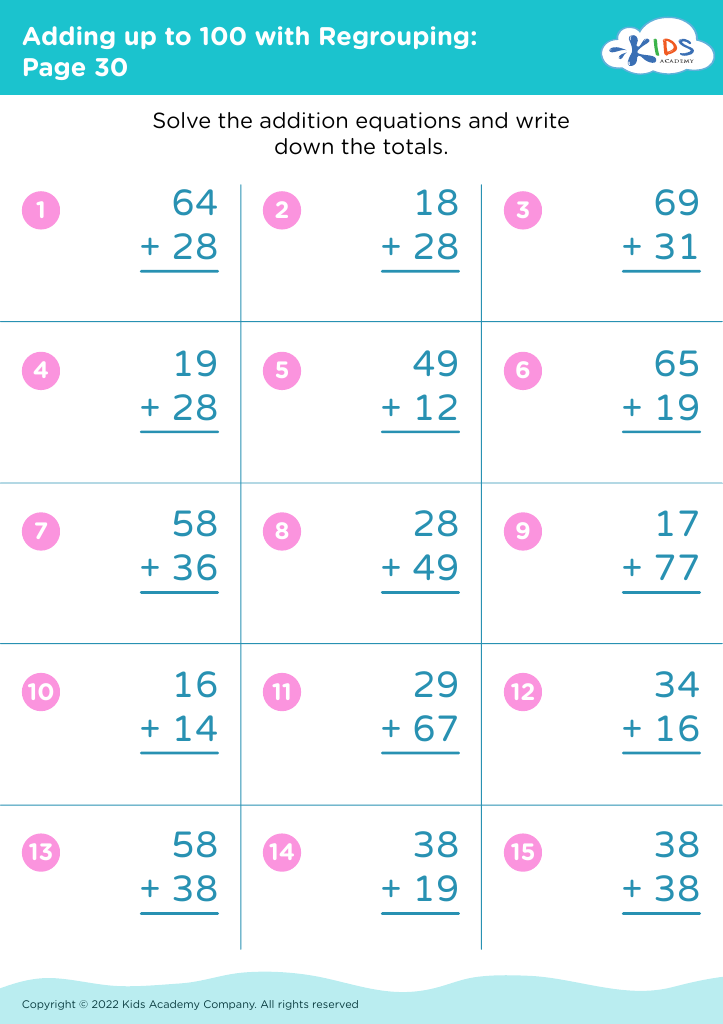
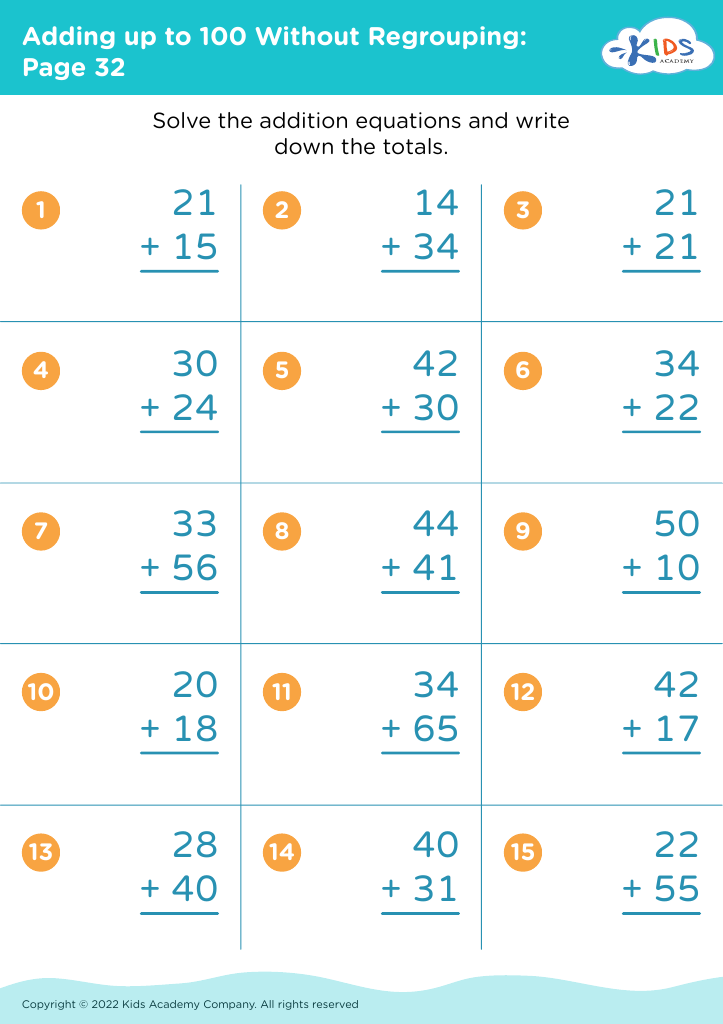
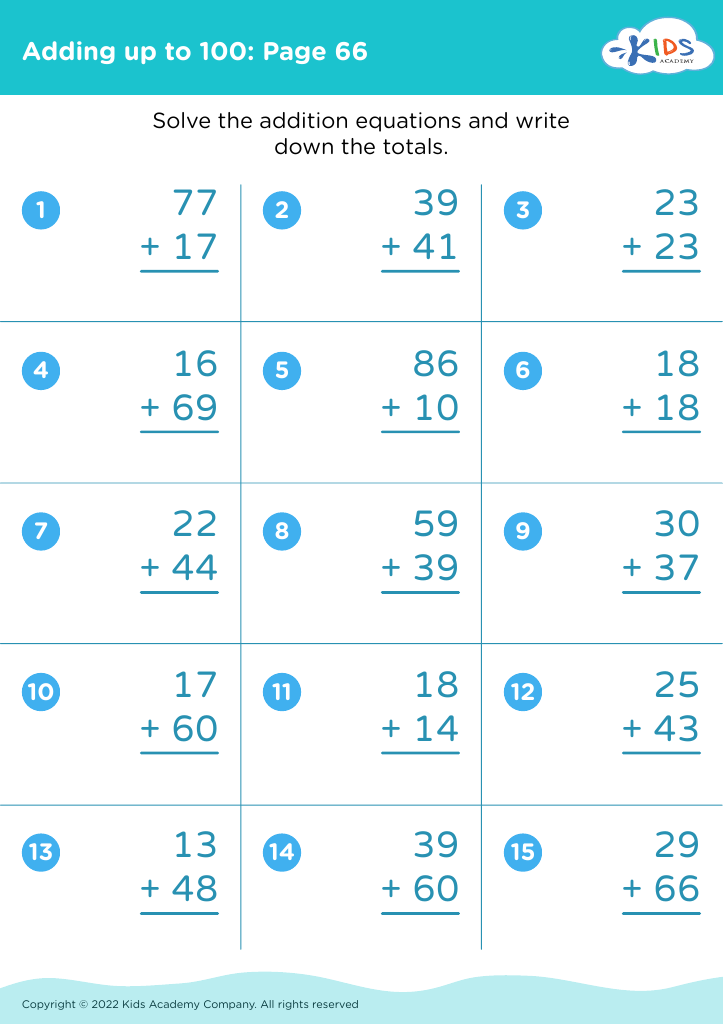
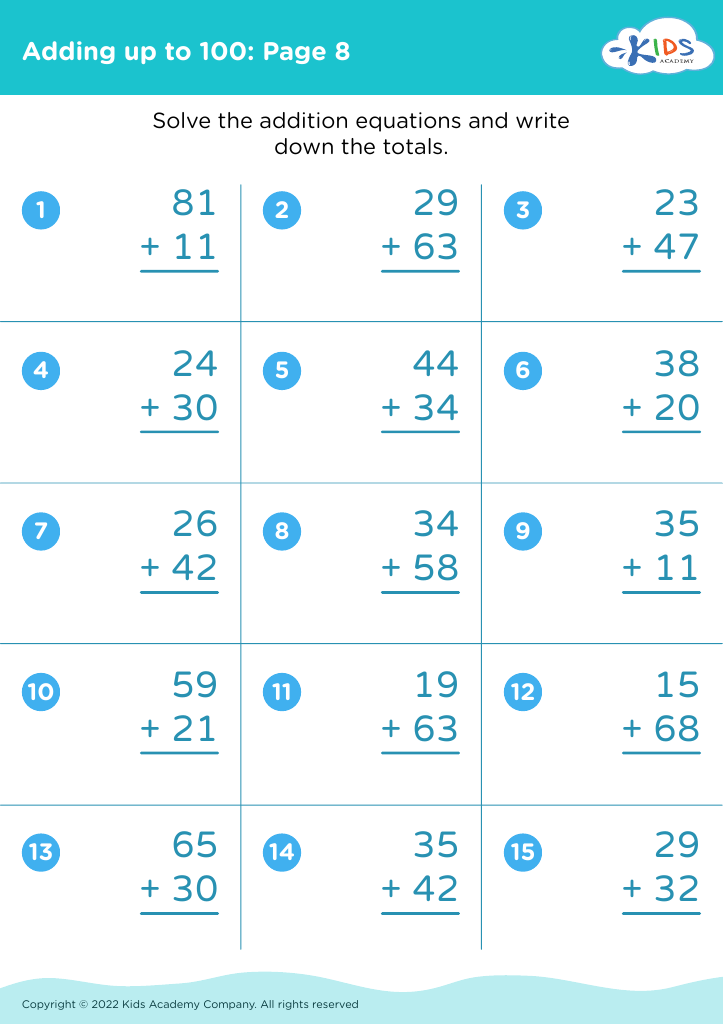
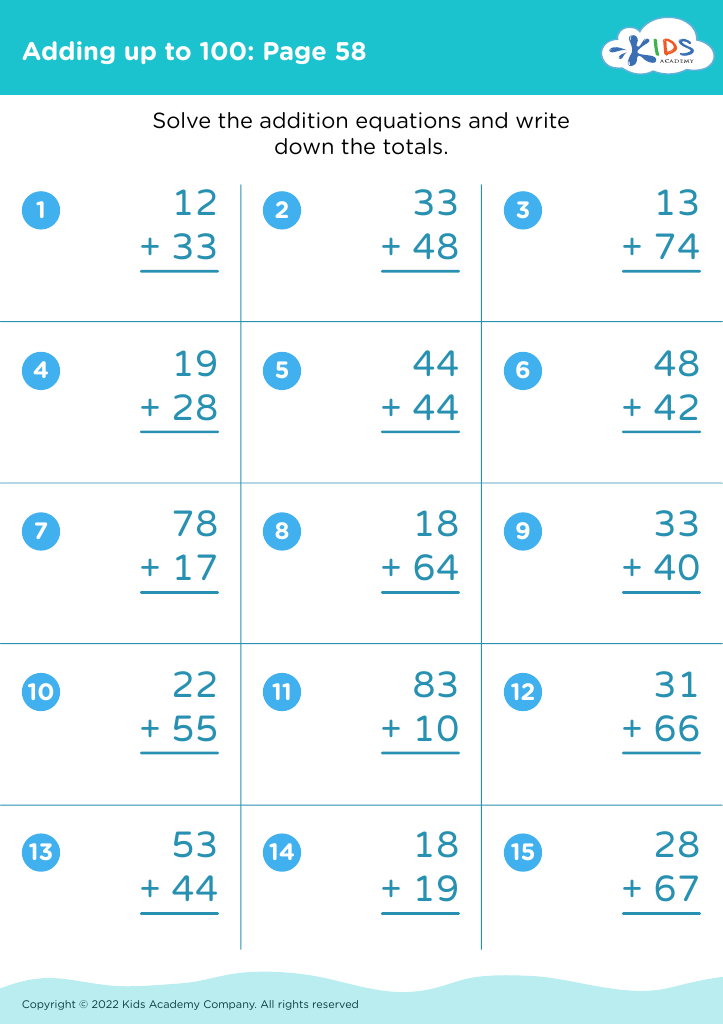
Help your child grasp the essentials of fractions with our "Understand Fractions Adding Up to 100 Worksheets," tailored for ages 6-7. These engaging and interactive worksheets are designed to simplify complex concepts, allowing young learners to explore fractions within the context of adding up to 100. Your little ones will enjoy hands-on activities and colorful visuals, making the learning process fun and effective. Guided exercises will enhance their understanding and proficiency in handling fractions, setting a strong foundation for future math skills. Download these worksheets today to empower your child's mathematical journey and foster a love for learning! Perfect for home or classroom use.




%20(1).jpg)


Understanding fractions and the concept of adding up to 100 is crucial for young learners aged 6-7. At this developmental stage, children start to grasp foundational math concepts that will serve as building blocks for more complex mathematical skills in the future.
Fractions introduce children to the idea of parts of a whole, nurturing their ability to categorize and make sense of the world around them. As they explore fractions, they learn crucial skills such as division, sharing, and proportional reasoning, which support their overall cognitive development.
When integrated into the concept of adding up to 100, fractions become even more meaningful. This exercise cultivates number sense, allowing children to comprehend how different parts combine to form a whole. Such understanding reinforces their skills in both addition and subtraction, creating a strong mathematical foundation for future learning.
Furthermore, helping children see fractions as a vital part of everyday life—calculating ingredients in cooking or understanding time—can foster a more significant interest in math. Ultimately, when parents or teachers prioritize these concepts, they empower children with skills that transcend the classroom, instilling confidence and fostering a positive attitude toward mathematics.








