Understanding symmetry Adding up to 100 Worksheets for Ages 6-7
5 filtered results
-
From - To
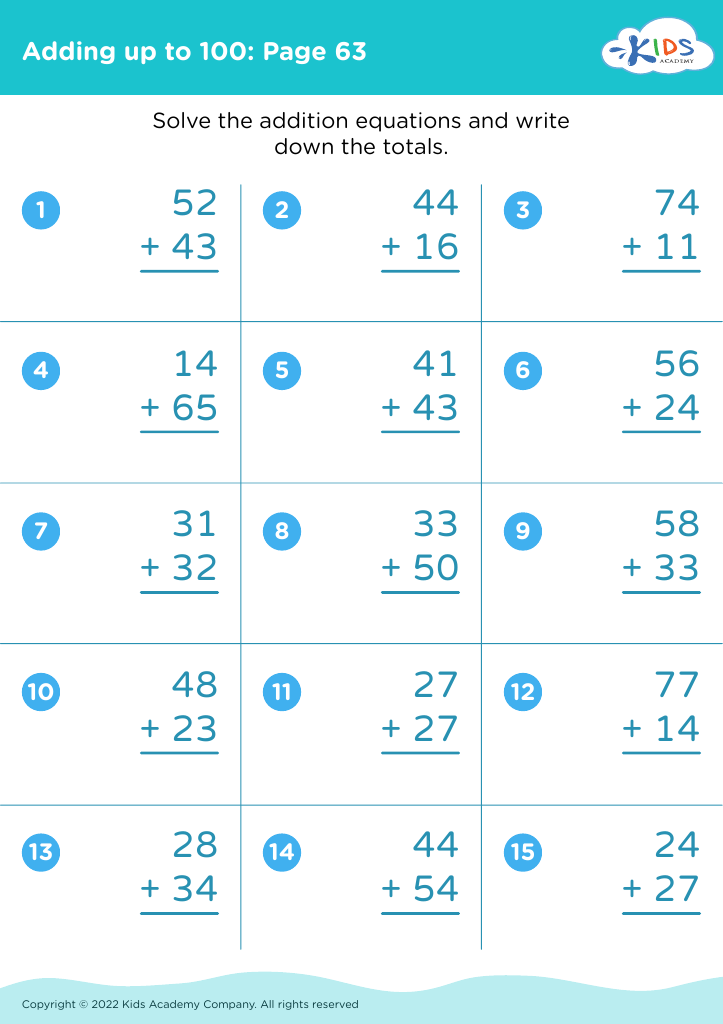
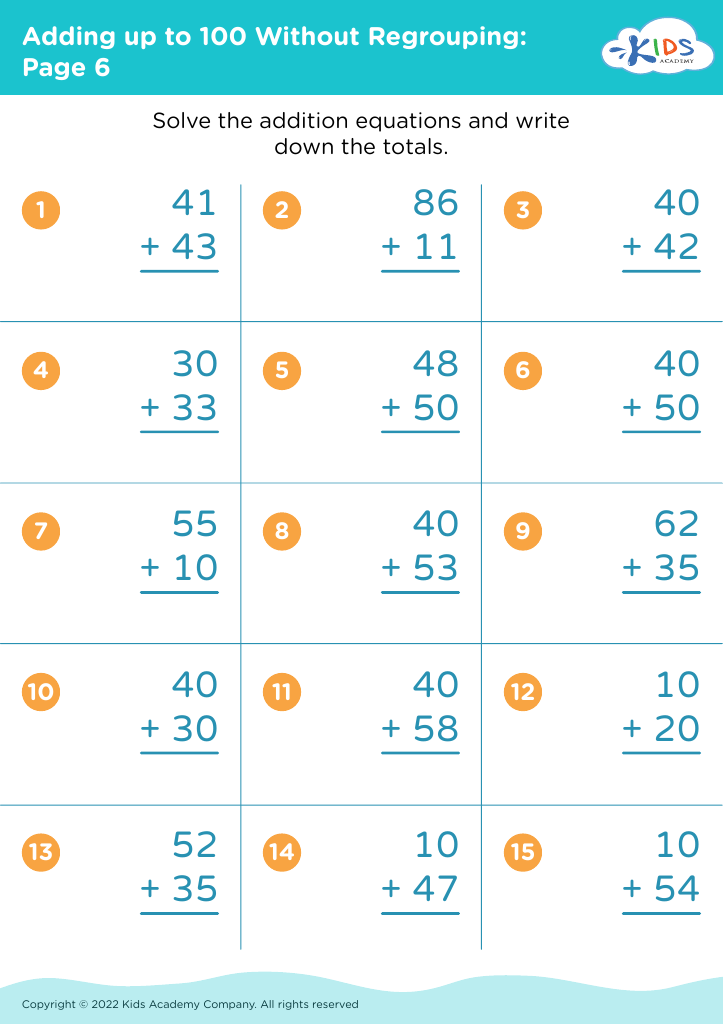
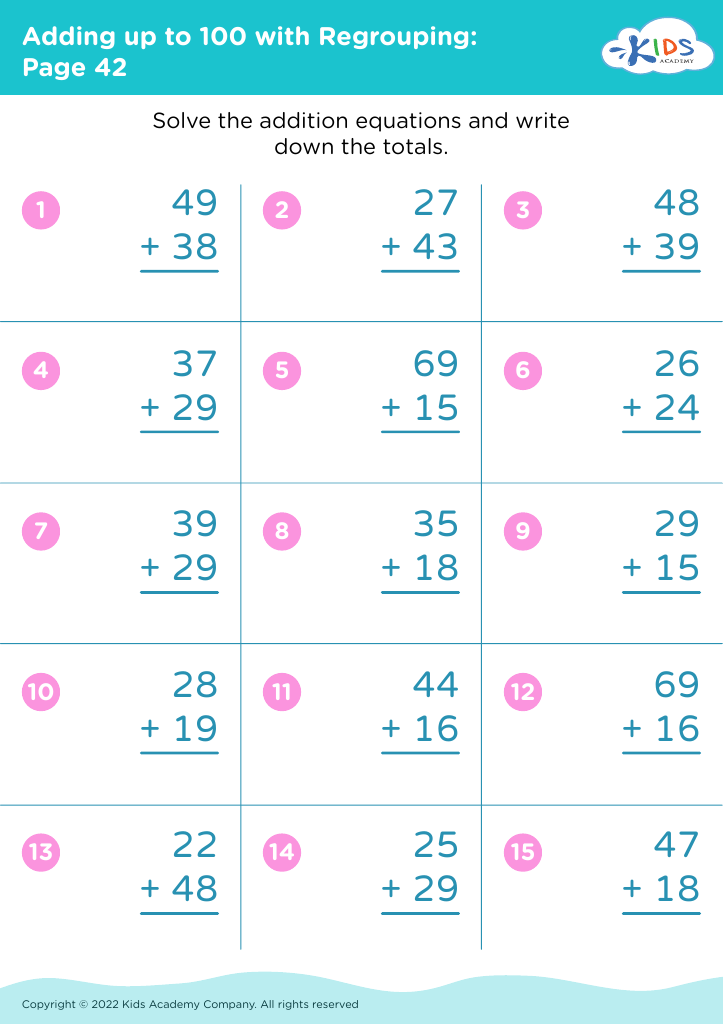
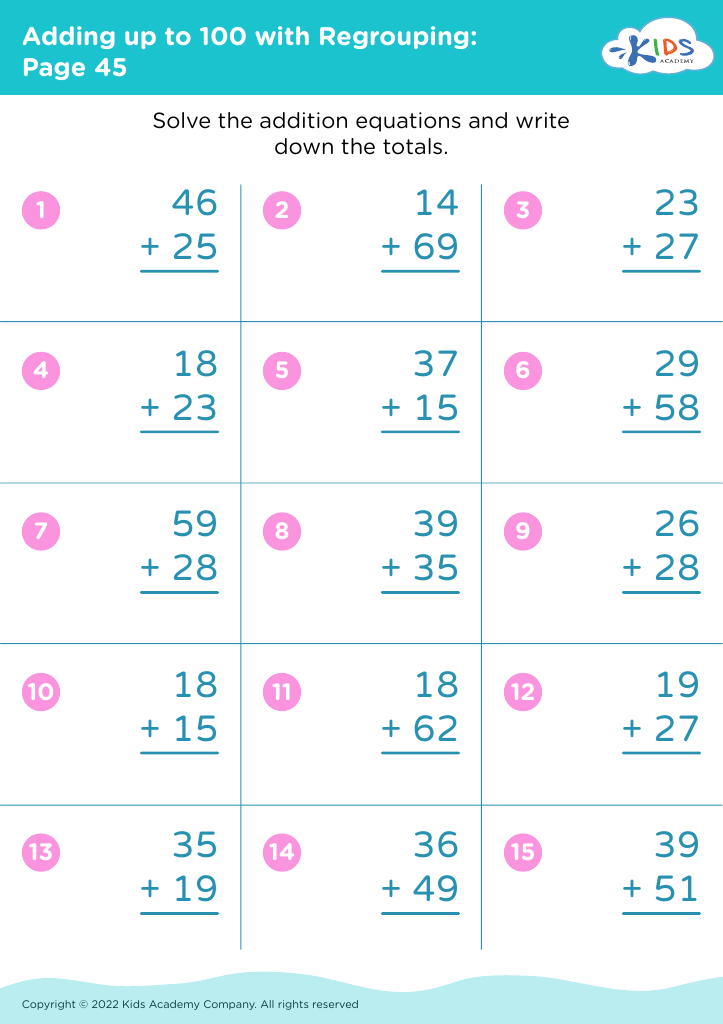
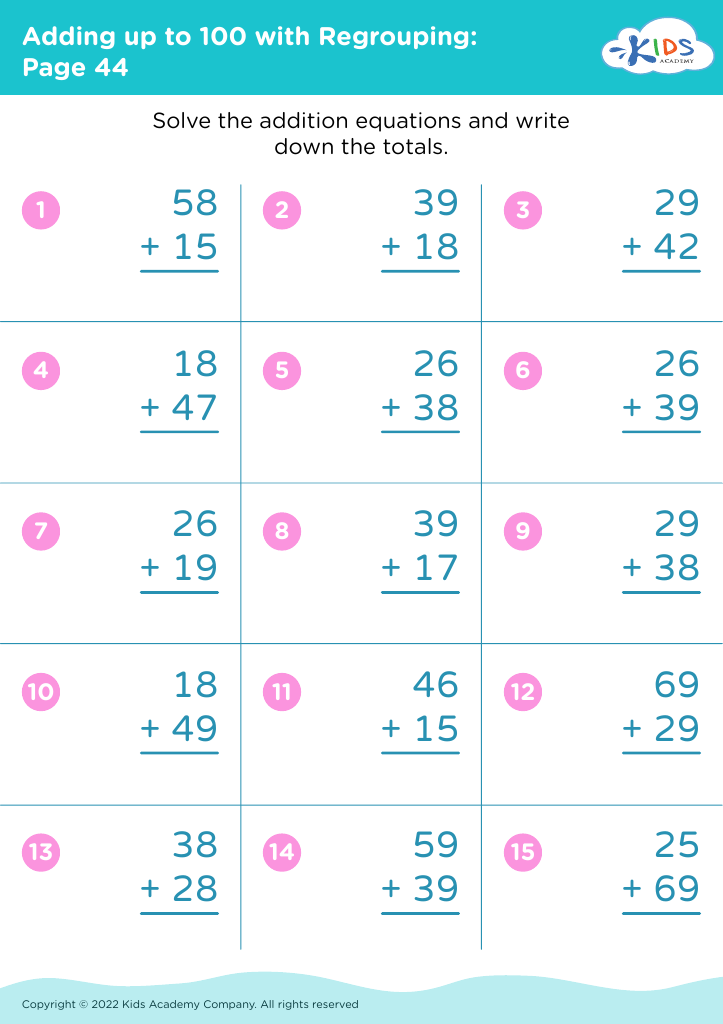
Discover our "Understanding Symmetry: Adding Up to 100" worksheets designed for children ages 6-7. These engaging activities help young learners explore the concept of symmetry while mastering addition skills that sum up to 100. With vibrant illustrations and interactive tasks, students will enhance their critical thinking and problem-solving abilities. Each worksheet encourages creative expression and reinforces math concepts in a fun, accessible way, making learning enjoyable. Ideal for classroom use or extra practice at home, our resources are perfect for fostering a deep understanding of symmetry while balancing foundational math skills. Download now to inspire young mathematicians!






%20(1).jpg)
Understanding symmetry and the concept of adding up to 100 are foundational skills for children aged 6-7, and they hold significant importance in both education and daily life. Symmetry, often observed in nature, art, and geometry, helps children develop spatial awareness and critical thinking skills. Recognizing symmetrical patterns enhances their ability to identify patterns in mathematics and fosters creativity in problem-solving.
On the other hand, learning to add up to 100 is crucial for developing number sense. This skill serves as a stepping stone towards more complex mathematical concepts. Mastering addition within this range supports the understanding of place value, addition, and subtraction, which are essential for constructing a solid math foundation. Additionally, when children grasp these concepts, they gain confidence in their academic abilities, encouraging a positive attitude toward learning.
Incorporating symmetry and adding up skills not only strengthens mathematical competencies but also enhances cognitive development, encouraging analytical thinking and creativity. As parents and teachers, fostering these skills helps guide children toward becoming competent problem solvers, preparing them for future academic challenges and real-world applications. Hence, emphasizing these concepts benefits both their educational journey and everyday experiences.








