
Vocabulary enhancement Adding up to 100 Worksheets for Ages 6-7
3 filtered results
Difficulty Level
Grade
Age
-
From - To
Subject
Activity
Standards
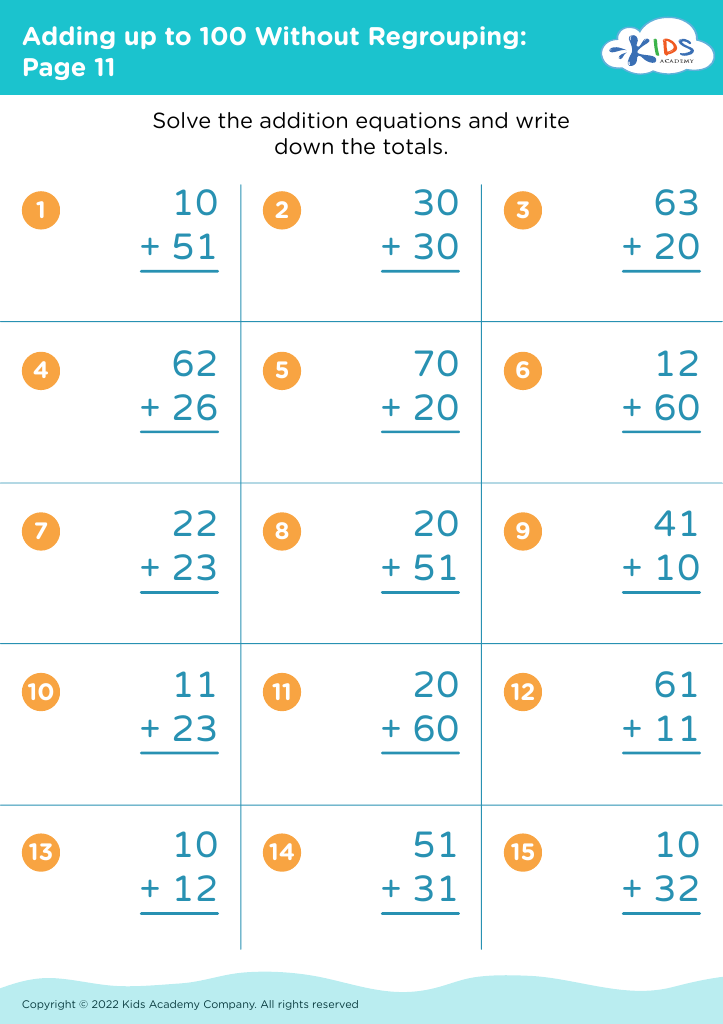
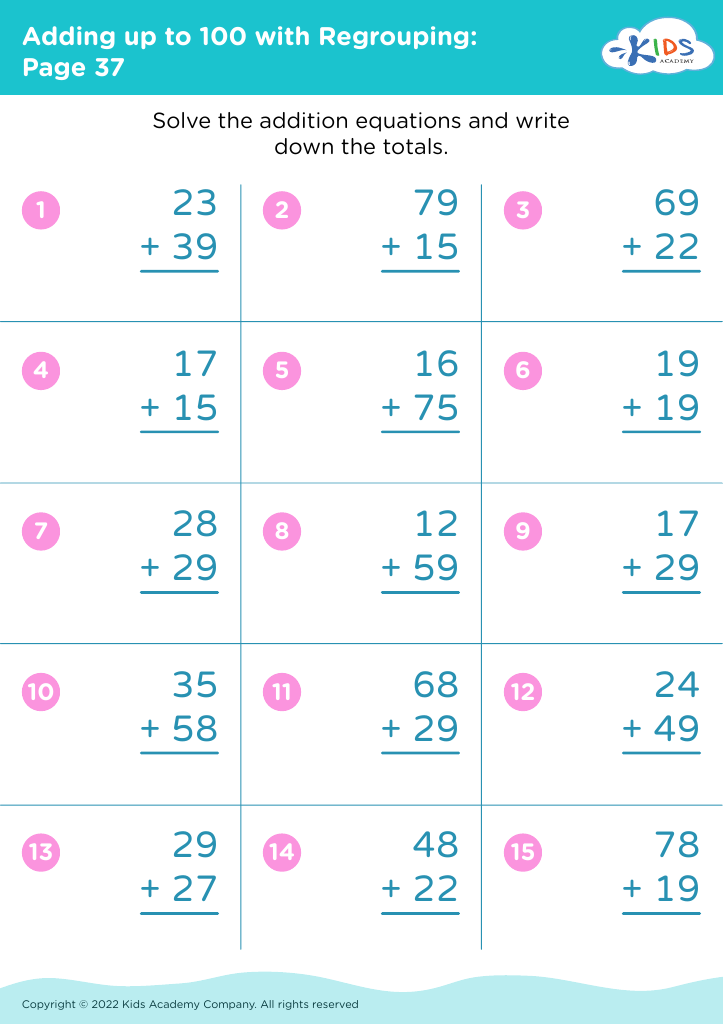
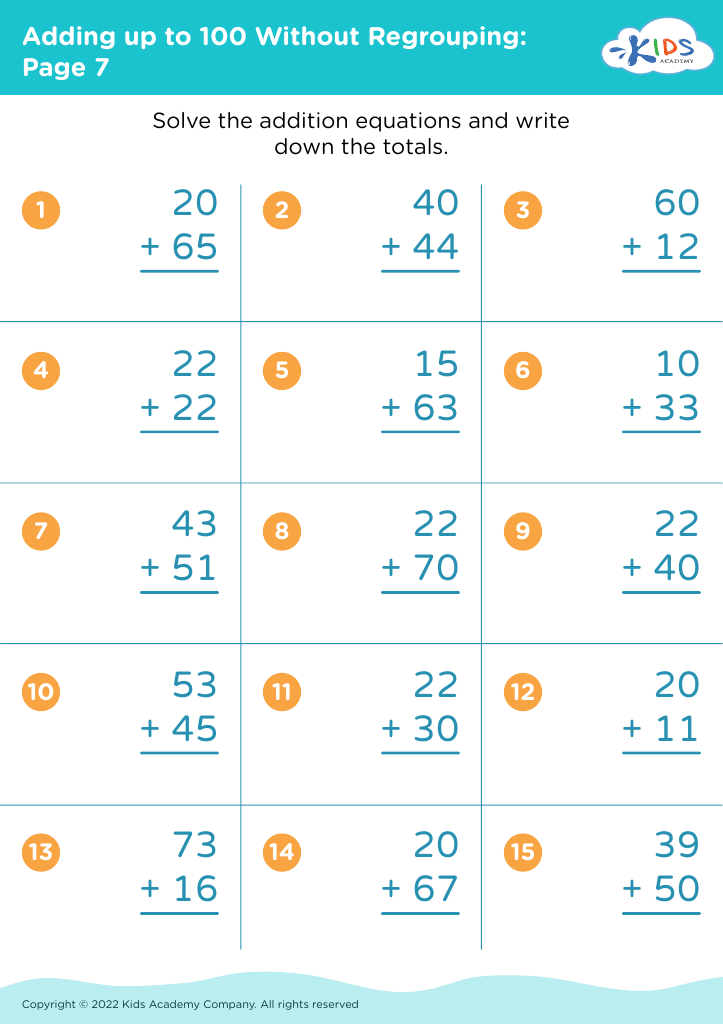
Boost your child's vocabulary with our "Vocabulary Enhancement: Adding Up to 100" worksheets designed specifically for ages 6-7. This comprehensive collection features 100 engaging worksheets that blend math skills with language development. Each activity encourages children to explore essential mathematical terms, enhancing their understanding of addition and numbers while expanding their vocabulary. Perfect for in-classwork or at-home learning, these worksheets promote critical thinking and help kids grasp mathematical concepts in a fun and interactive way. Empower your young learners with the tools they need to succeed in both math and language arts, setting a strong foundation for future academic growth!
Favorites
With answer key
Interactive
Join Kids Academy for Free
Who is primarily going to use this learning content?





%20(1).jpg)

Vocabulary enhancement is crucial for children aged 6-7 as it forms the foundation for effective communication and comprehension. At this age, children are developing their language skills and are heavily reliant on vocabulary for learning across various subjects. Expanding their vocabulary not only improves their ability to express ideas but also boosts their confidence in participating in conversations and classroom activities.
Furthermore, a rich vocabulary aids in reading comprehension. As children encounter new words in texts, a strong vocabulary helps them understand meaning, context, and nuance, fostering a love for reading. This, in turn, supports their academic growth by enabling them to absorb complex concepts in subjects like math and science more easily.
Additionally, vocabulary development is linked to social-emotional skills. Children with diverse word knowledge can articulate their feelings and thoughts more clearly, which aids in building relationships and resolving conflicts.
Teachers and parents play a vital role in this enhancement through engaging activities such as storytelling, word games, and encouraging verbal expression. By nurturing vocabulary at an early age, adults are setting the stage for lifelong learning, improved academic performance, and enhanced social interactions for children. Investing time in vocabulary development ultimately cultivates well-rounded individuals ready to thrive in society.








