Filters

20 filtered results

Clear all filters
Favorites
With answer key
Interactive

20 filtered results

Difficulty Level

Grade


Discover our engaging Fraction Simplification and Adding Up to 50 Worksheets, designed especially for children aged 6-7. These printable worksheets from Kids Academy combine fun with learning, offering young minds the chance to grasp basic fraction concepts while practicing addition up to 50. Each worksheet features age-appropriate exercises to simplify fractions and solve addition problems, turning math into a delightful adventure. Perfect for in-class activities or at-home practice, our worksheets help build foundational math skills, ensuring your child thrives in their educational journey. Start enhancing your child's math skills today with Kids Academy’s expertly crafted resources!
Check out this FREE Trial Lesson on Adding up to 50 for age 6-7!

Z

Favorites
With answer key
Interactive
  • 6-7
  • Fraction simplification
  • Adding up to 50
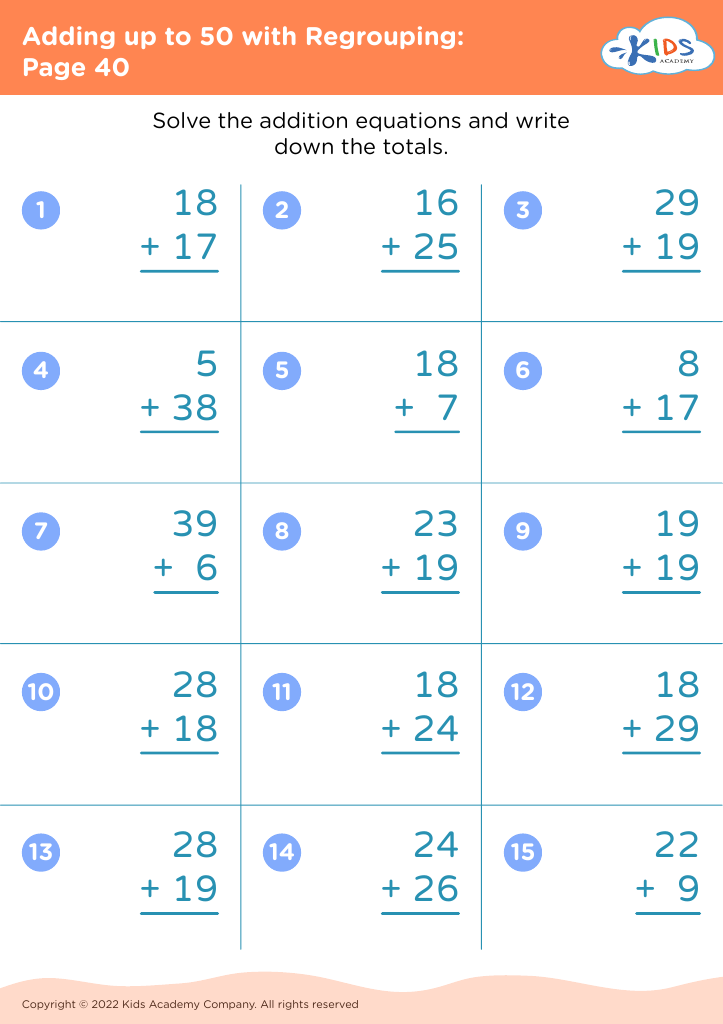
Adding up to 50 with Regrouping: Page 40
Worksheet
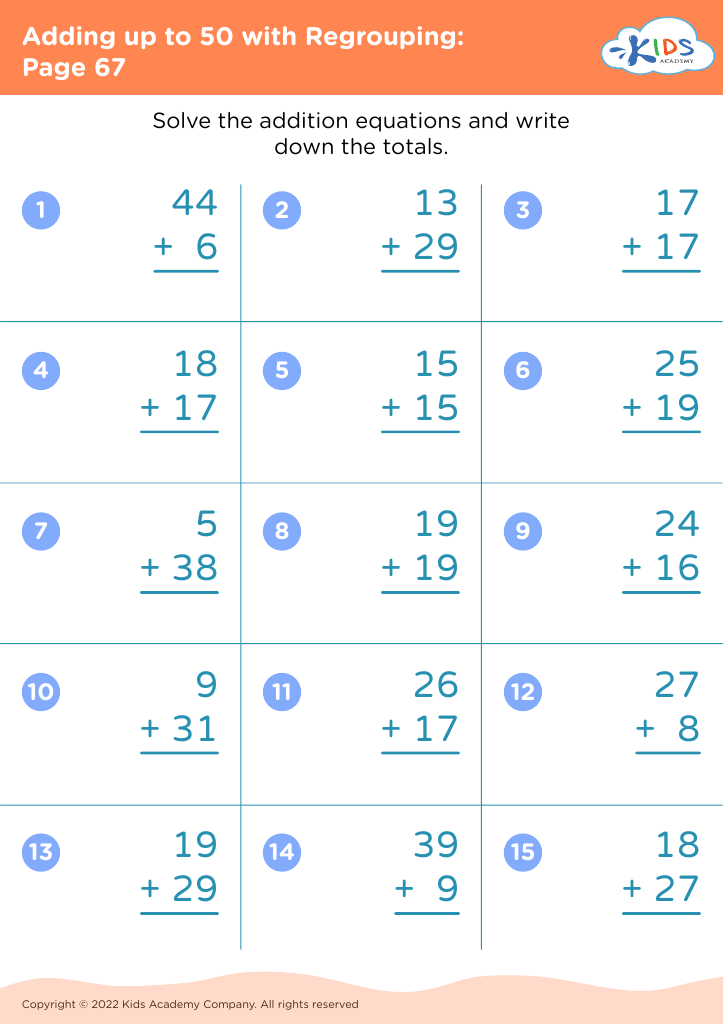
Adding up to 50 with Regrouping: Page 67
Worksheet
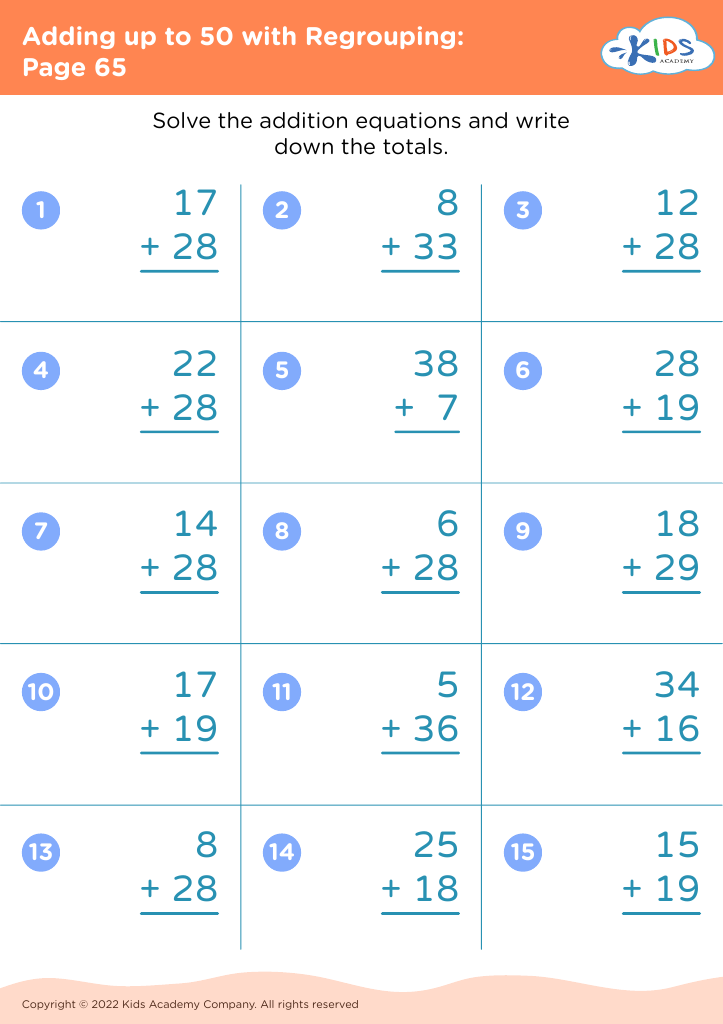
Adding up to 50 with Regrouping: Page 65
Worksheet
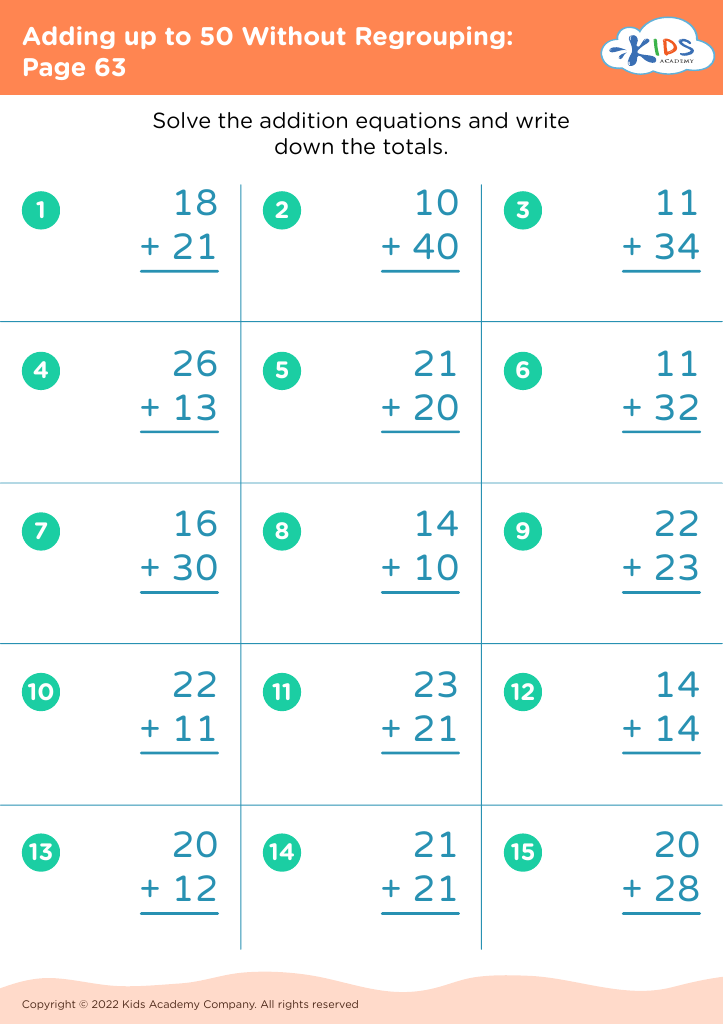
Adding up to 50 Without Regrouping: Page 63
Worksheet
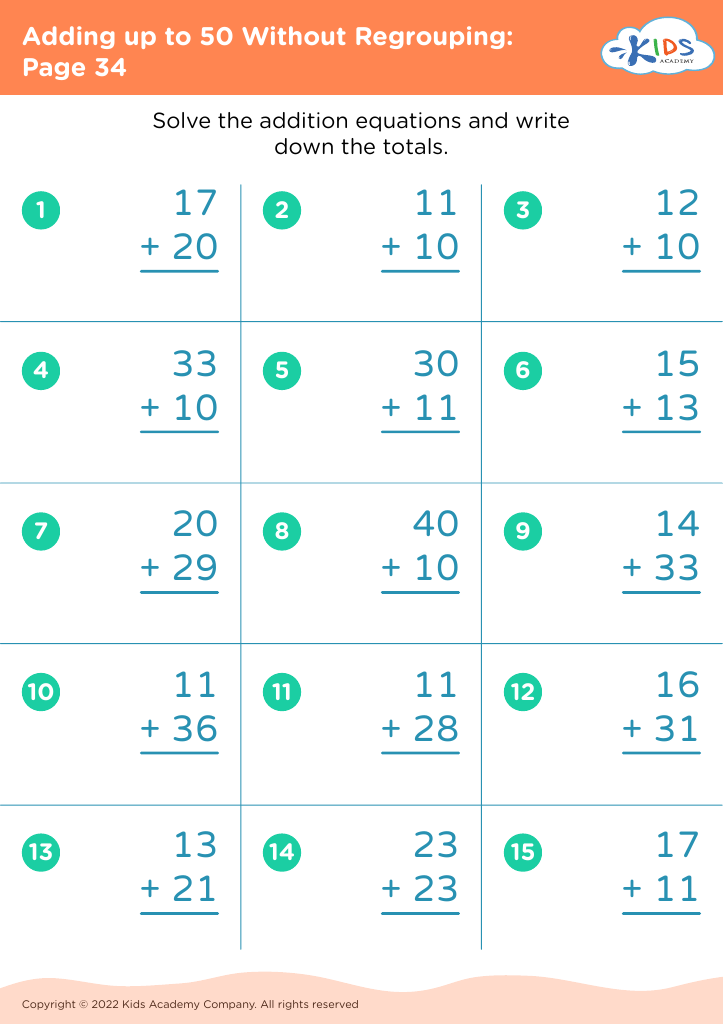
Adding up to 50 Without Regrouping: Page 34
Worksheet
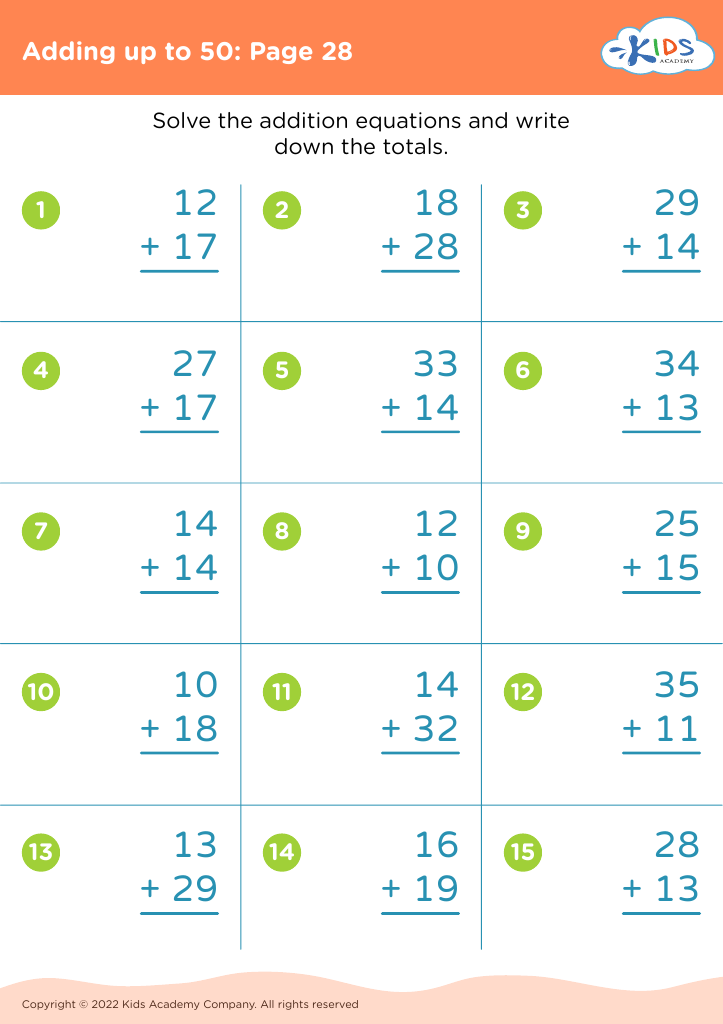
Adding up to 50: Page 28

Adding up to 50: Page 28

Adding up to 50: Page 28
Worksheet
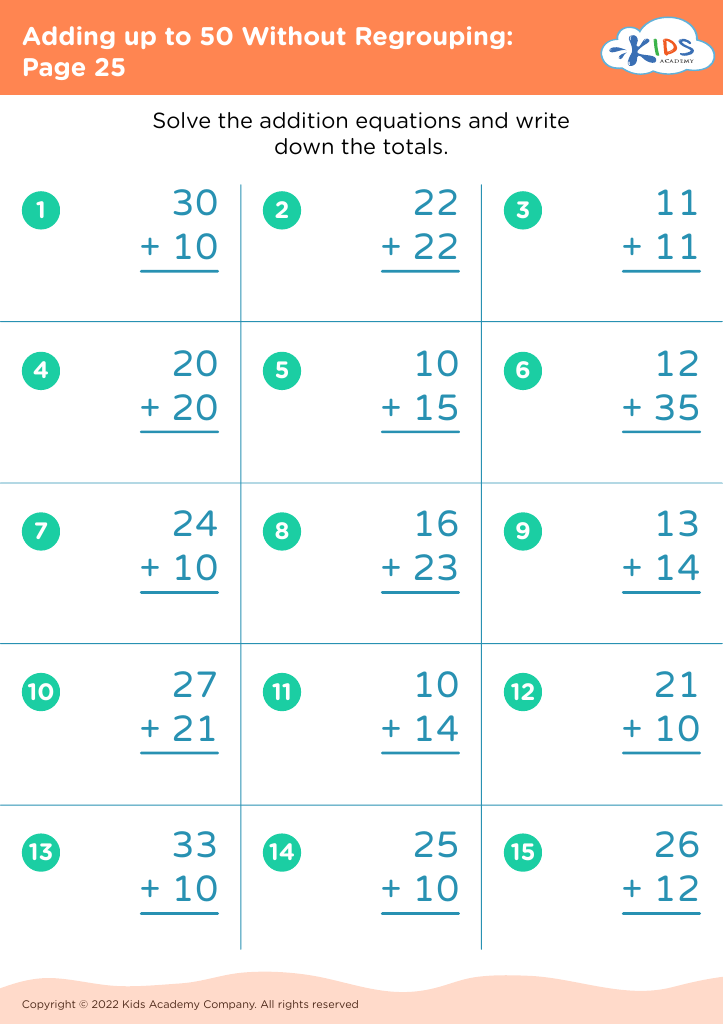
Adding up to 50 Without Regrouping: Page 25
Worksheet
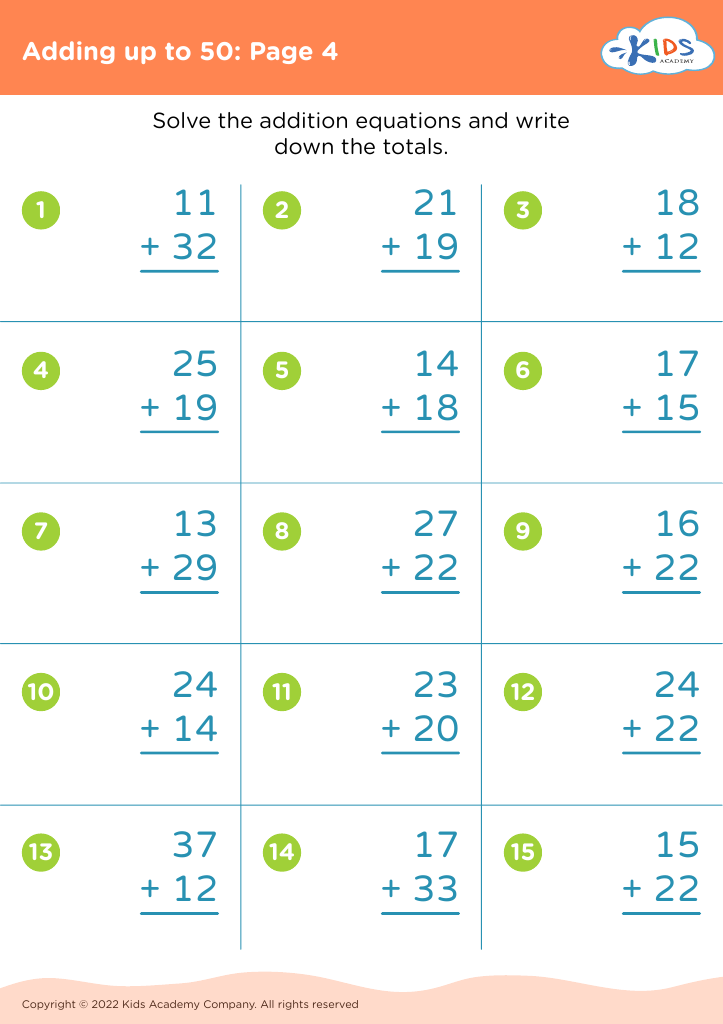
Adding up to 50: Page 4

Adding up to 50: Page 4

Adding up to 50: Page 4
Worksheet
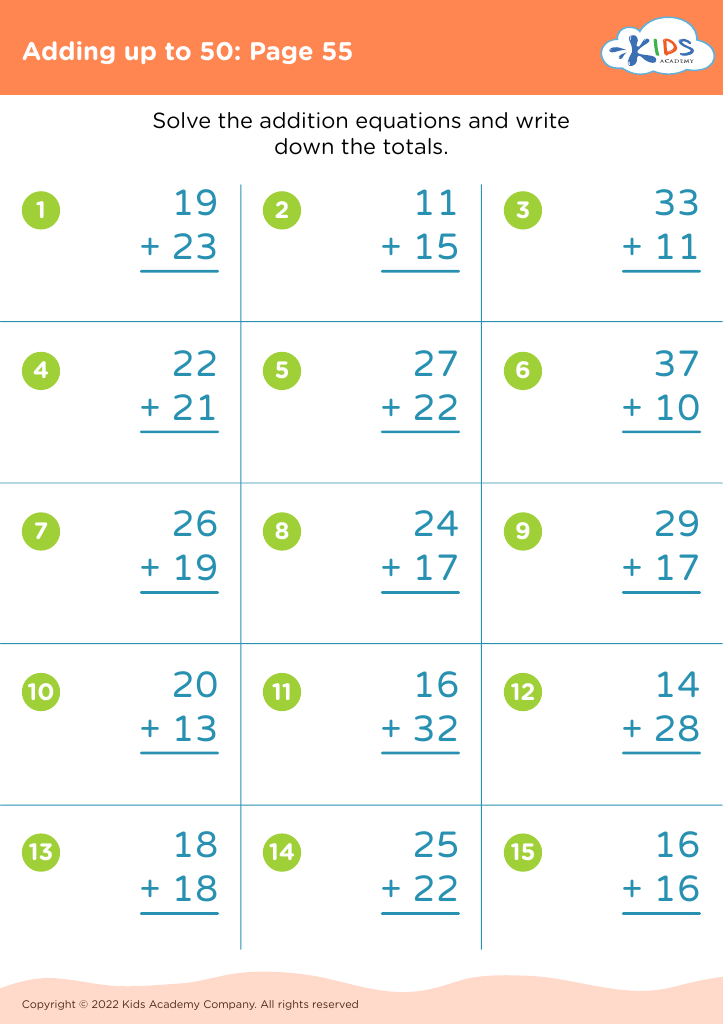
Adding up to 50: Page 55

Adding up to 50: Page 55

Adding up to 50: Page 55
Worksheet
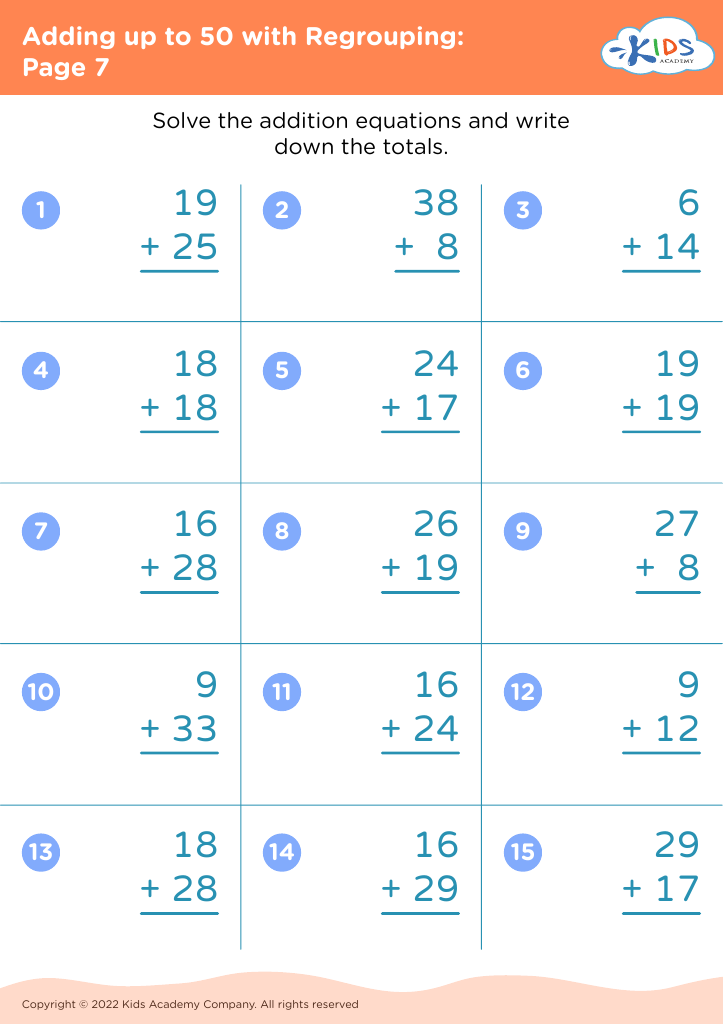
Adding up to 50 with Regrouping: Page 7
Worksheet
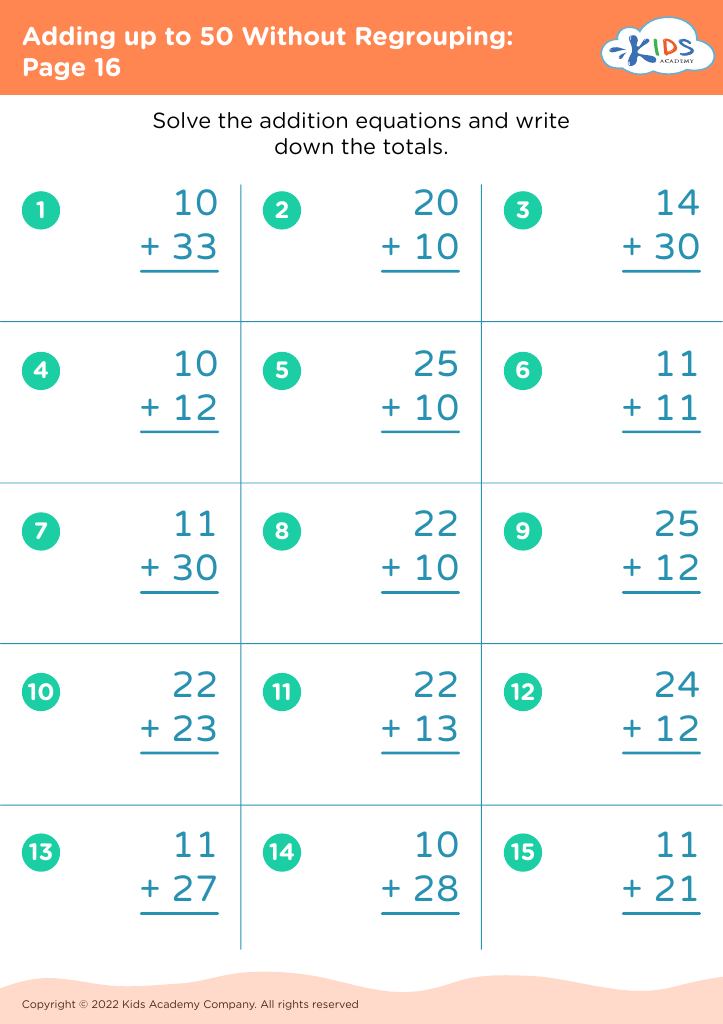
Adding up to 50 Without Regrouping: Page 16
Worksheet
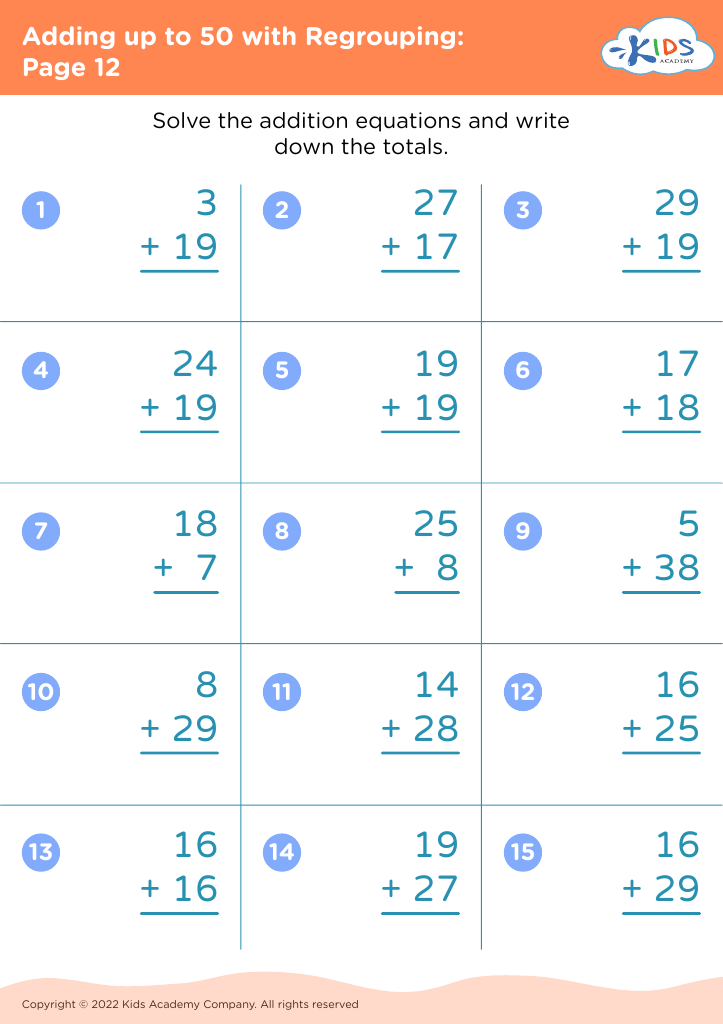
Adding up to 50 with Regrouping: Page 12
Worksheet
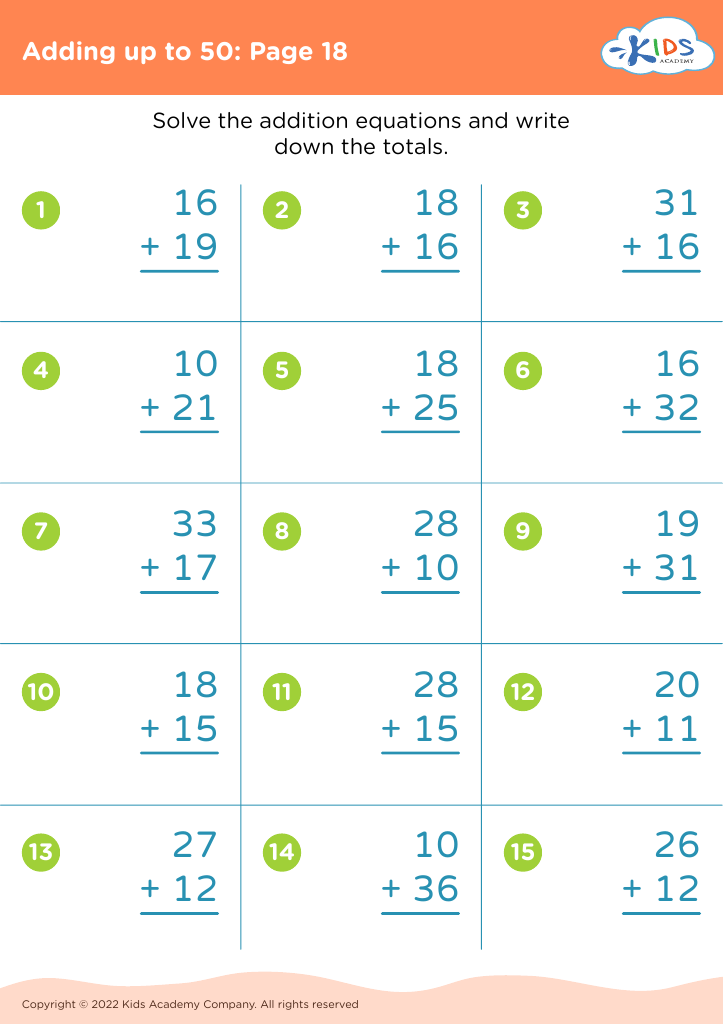
Adding up to 50: Page 18

Adding up to 50: Page 18

Adding up to 50: Page 18
Worksheet
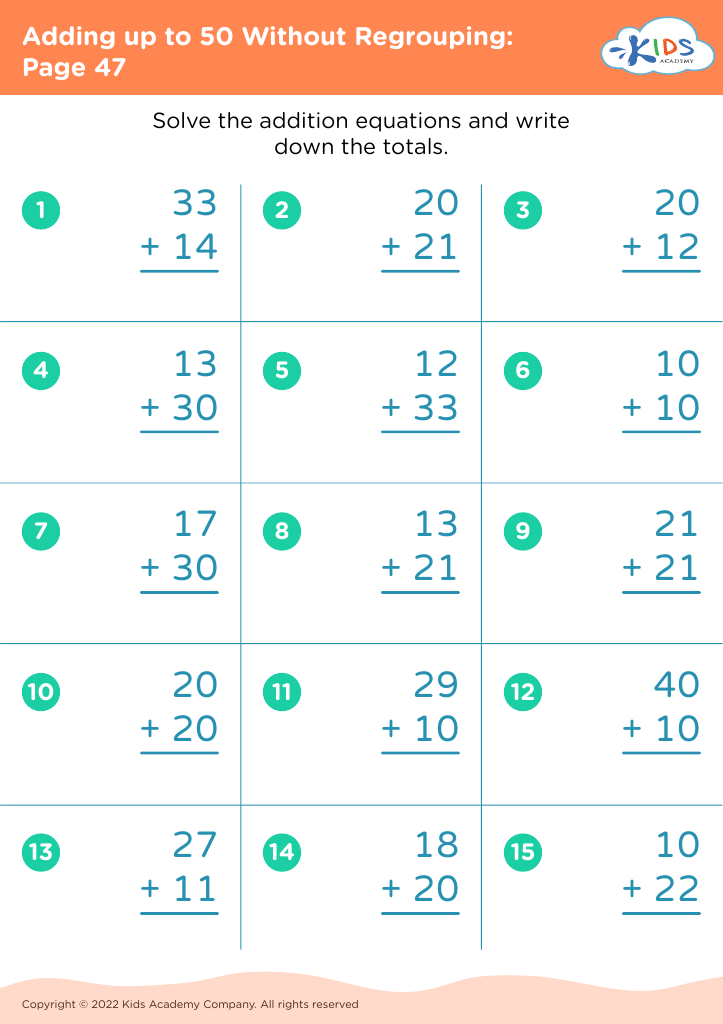
Adding up to 50 Without Regrouping: Page 47
Worksheet
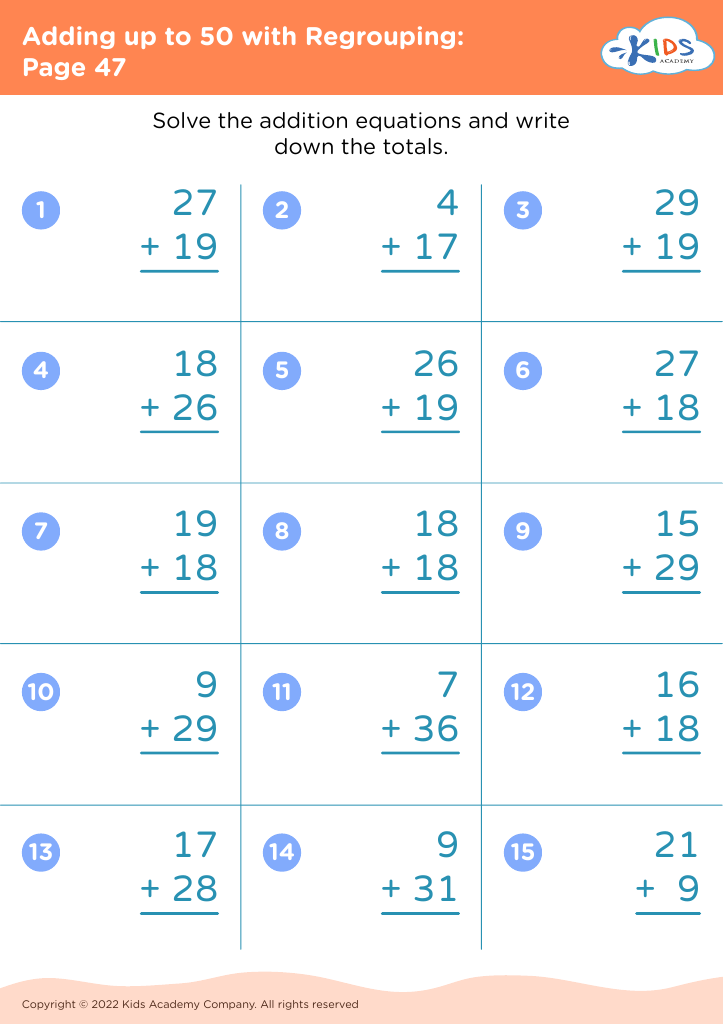
Adding up to 50 with Regrouping: Page 47
Worksheet
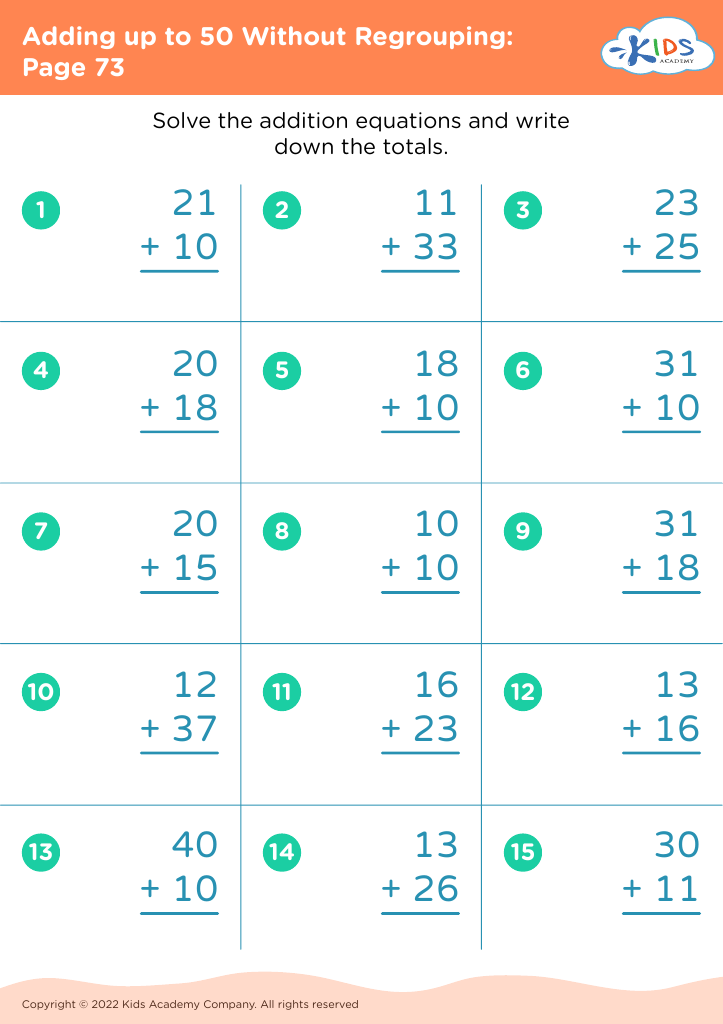
Adding up to 50 Without Regrouping: Page 73
Worksheet
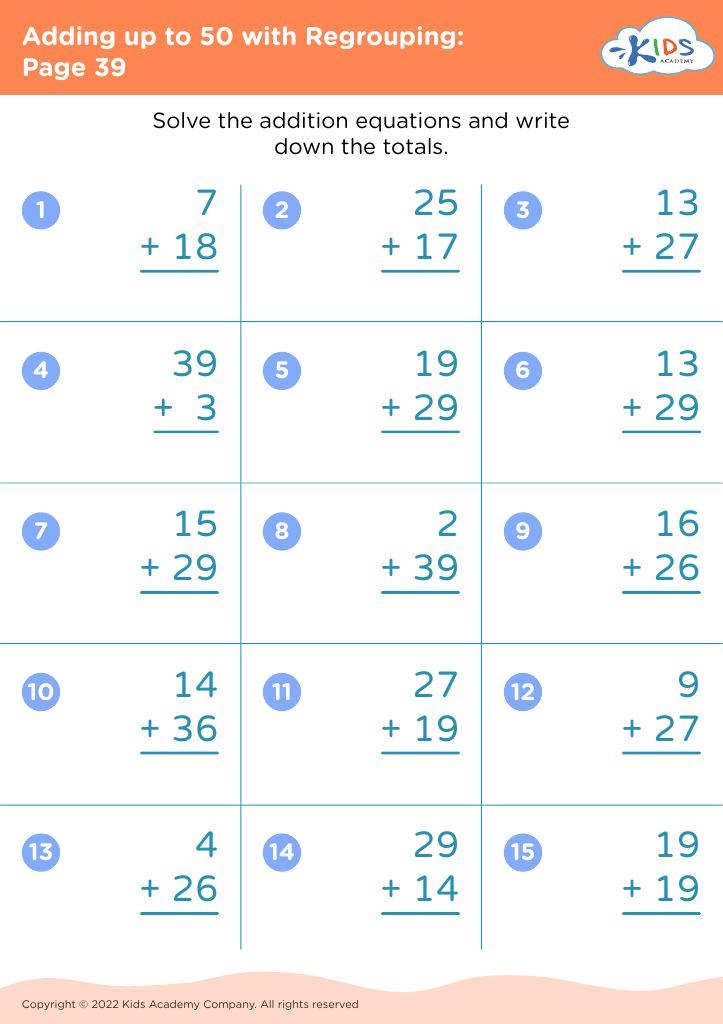
Adding up to 50 with Regrouping: Page 39
Worksheet
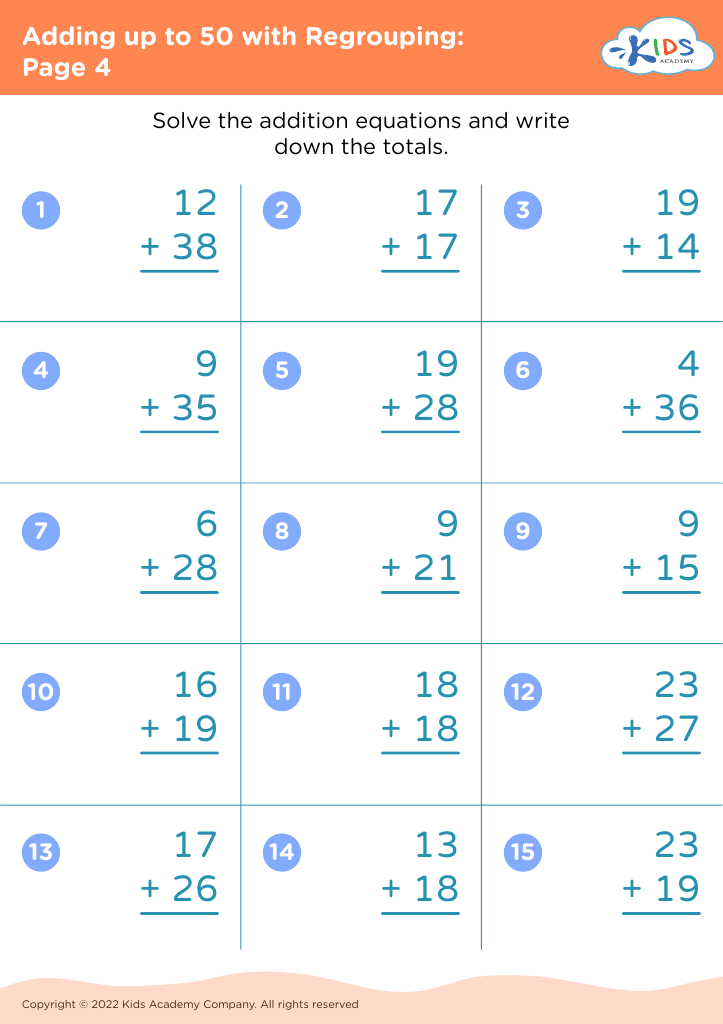
Adding up to 50 with Regrouping: Page 4
Worksheet
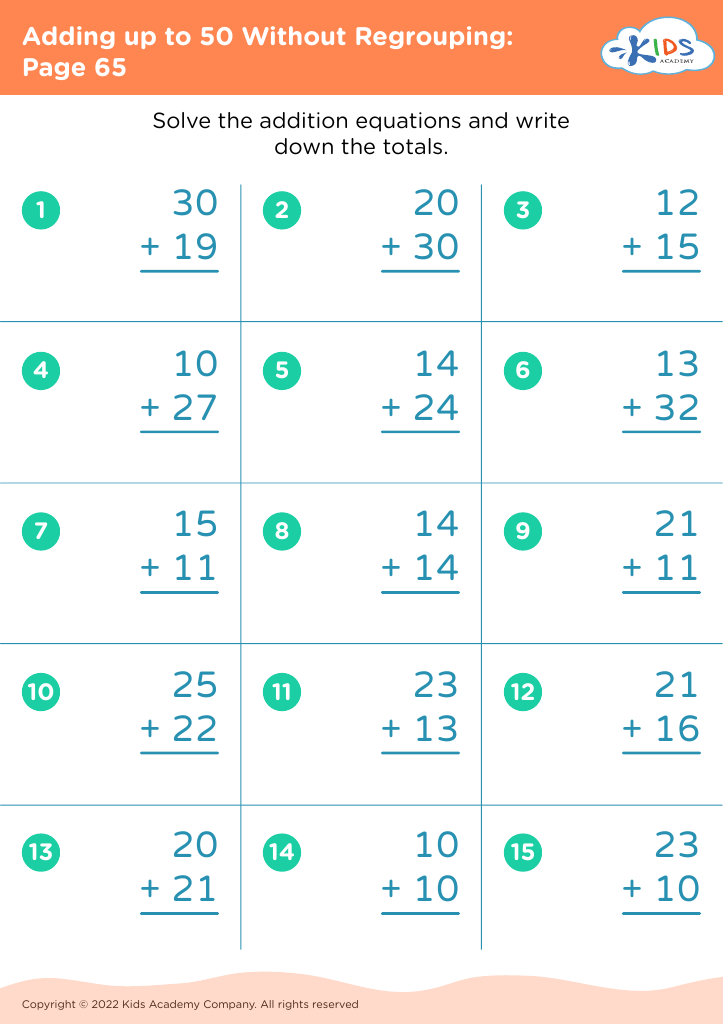
Adding up to 50 Without Regrouping: Page 65
Worksheet
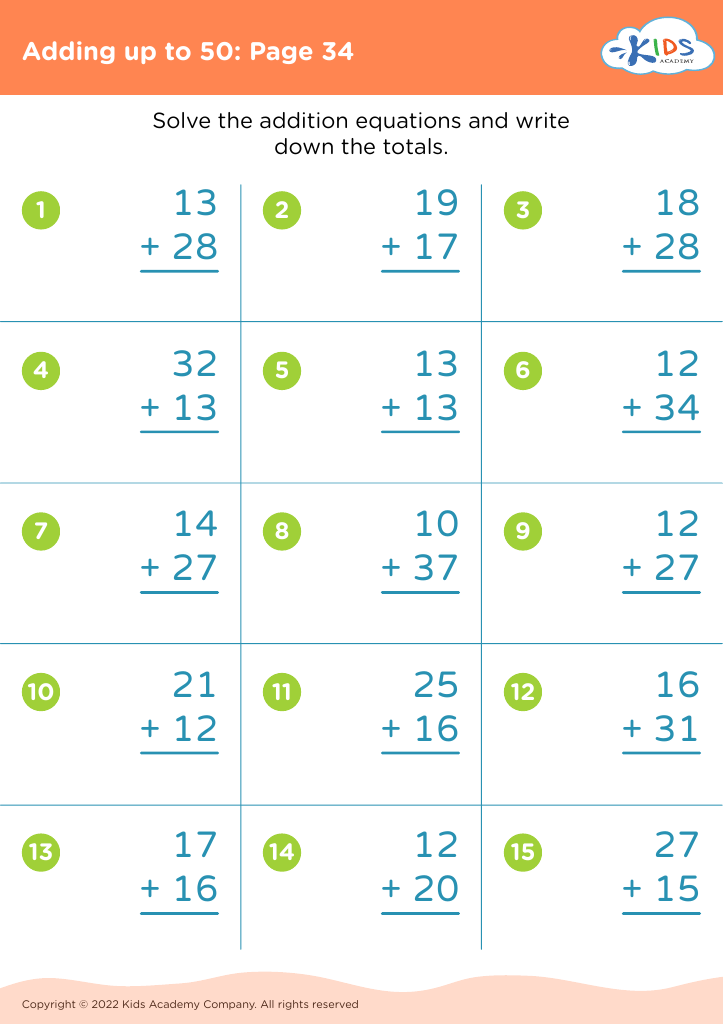
Adding up to 50: Page 34

Adding up to 50: Page 34

Adding up to 50: Page 34
Worksheet


Understanding fraction simplification and expanding numerical awareness to sums within a range, such as up to 50, is foundational for young learners, particularly ages 6-7. At this age, children are developing conceptual mathematical skills and introducing them to the idea of simplifying fractions fosters a deeper understanding of numbers, proportions, and division.

Fraction simplification helps in building problem-solving skills. It encourages students to find common patterns and relationships among numbers, enhancing their mental arithmetic abilities. These skills are crucial for advanced math topics such as algebra and geometry that they will encounter later in their academic journey.

Moreover, ensuring that children are comfortable with adding numbers up to 50 establishes a solid base for more complex multi-digit arithmetic. This practice enhances their ability to make quick estimations and helps in daily life scenarios, fostering confidence in handling numbers. It also improves memory retention as they start recognizing number combinations instinctually.

Attending to children’s early numeracy skills, through simple fractions and manageable sums, sets a positive lifelong attitude towards mathematics. Parents and teachers play a crucial role in creating an engaging and supportive learning environment, thus paving the way for the children’s future academic achievements and practical life skills.